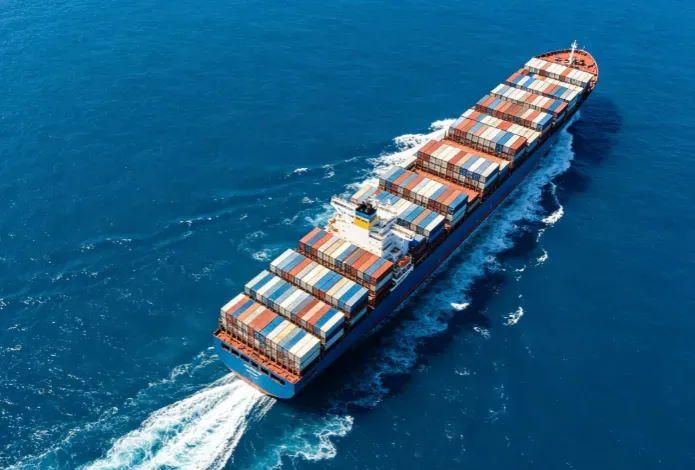
Argentina spent most of 2022–2023 as one of the hardest countries in the world to import into: import licenses (SIRA) were rationed, payments were delayed, and containers sat at the port. Then the deregulation wave of late 2024 changed the game — SIRA was abolished, the PAIS tax on imports was eliminated, and the tax agency was reorganized. In 2026, shipping from Shanghai to Argentina is simpler and more predictable than at any point in a decade, and China remains Argentina’s No. 2 trading partner after Brazil, with imports from China worth roughly US$12 billion a year — machinery, electronics, auto parts, chemicals, textiles and consumer goods.
This guide covers everything you need for 2026: why Shanghai is the natural origin for this lane, real Q3 2026 FCL and LCL rates to Buenos Aires, air freight from Pudong (PVG), transit times, and the full ARCA tax stack — duties, IVA and the refundable withholdings — with a worked example. Start with our shipping from China to Argentina overview for the country-level picture.
Why Ship from Shanghai? The World’s Busiest Container Port
Shanghai has been the world’s busiest container port since 2010, handling over 50 million TEU a year — more than any port in history. For Argentina-bound cargo, the key loading areas are:
| Terminal Area | Location | Notes |
|---|---|---|
| Yangshan Deep-Water Port | Hangzhou Bay islands, 32 km offshore | World’s largest automated container terminal (Phase 4); most mainline South America calls |
| Waigaoqiao | Pudong, north bank of the Yangtze | Core container terminals; feeder and regional services |
| Wusongkou | Baoshan district | Coastal and river services, plus breakbulk |
What actually ships from Shanghai to Argentina? The Yangtze River Delta supplies a huge share of what Argentina imports: electronics and smartphones, machinery and industrial equipment, auto parts (Shanghai is China’s largest auto-manufacturing city — home to SAIC, Tesla and joint ventures), chemicals, textiles, furniture, toys and tools. If your supplier is in Jiangsu, Zhejiang or Anhui, container shipping from Shanghai to Argentina beats trucking to Ningbo or Shenzhen — and Shanghai’s weekly sailing frequency to the Río de la Plata is unmatched. To compare with other Chinese origins, see our shipping from Shanghai to Colombia guide.
Q3 2026 Sea Freight Rates from Shanghai to Argentina
Argentina sits at the far end of the Asia–South America lane, and rates reflect it: fewer direct strings than Chile or Peru, longer transit, and higher destination port costs. The ranges below are realistic all-in ocean freight quotes for Q3 2026 (excluding Argentine import taxes):
| Shanghai → | 20ft FCL | 40ft FCL | 40ft HQ |
|---|---|---|---|
| Buenos Aires | $3,000–$4,900 | $4,500–$7,500 | $4,700–$7,800 |
| Dock Sud | $3,100–$5,000 | $4,600–$7,600 | $4,800–$7,900 |
| Rosario (Paraná) | $3,300–$5,300 | $4,900–$8,000 | $5,100–$8,300 |
Q3 2026 reality check: the Argentina lane runs 15–25% above west-coast South America rates because of longer transit and fewer direct services. Peak-season surcharges (August–October) can add another 10–20%. Booking 3–4 weeks ahead locks in standard pricing.
What is inside an FCL quote? Ocean freight, BAF/CAF fuel surcharges, origin THC and documentation at Shanghai, and destination charges at Buenos Aires (THC, terminal handling, customs systems fee). Argentine duties and IVA are collected separately by ARCA — see the tax section below.
LCL (Less than Container Load) from Shanghai
| Cargo Volume | Typical LCL Rate | Notes |
|---|---|---|
| 1 CBM | $120–$220 | Minimum charge applies |
| 5 CBM | $600–$1,100 | Typical first-time importer shipment |
| 10 CBM | $1,100–$2,000 | Consider FCL above ~15 CBM |
Add a $30–$60 consolidation fee at Shanghai and deconsolidation charges in Buenos Aires. For a full LCL walkthrough, our LCL shipping from China to Brazil guide covers the identical consolidation mechanics.
Air Freight from Shanghai (PVG) to Buenos Aires (EZE)
For urgent or high-value cargo, Pudong International Airport (PVG) — one of the world’s top air-cargo hubs — connects to Buenos Aires Ezeiza (EZE), usually via Europe (Amsterdam, Madrid) or the Americas (Miami, São Paulo):
| Service | Rate (Q3 2026) | Transit |
|---|---|---|
| Consolidated air (100–300 kg) | $6.0–$10.5 per kg | 6–10 days |
| Direct/priority air (300+ kg) | $5.8–$9.5 per kg | 5–8 days |
| Express courier (small parcels) | $11–$16 per kg | 4–6 days |
A $50–$150 minimum charge applies to most air shipments.
Air vs. sea from Shanghai to Argentina:
| Factor | Air Freight | Sea Freight |
|---|---|---|
| Door-to-door transit | 4–10 days | 40–60 days |
| Typical cost per kg | $5.8–$10.5 | $0.40–$0.80 |
| Best for | High-value, urgent, light, seasonal cargo | Heavy, bulky, cost-sensitive cargo |
| Minimum charge | $50–$150 | ~$200–$400 (LCL) |
| Inventory capital tied up | Days | 6–9 weeks |
How air freight is priced (volumetric weight): airlines charge on the greater of actual weight and volumetric weight (length × width × height ÷ 6000, in cm). A 100 kg carton of bulky, lightly-packed goods can easily be billed at 200+ kg. Keep packaging dense and compact to control your billable weight.
When air makes sense from Shanghai: first trial orders, urgent restocks, spare parts for industrial equipment, high-value electronics and samples. Many importers fly the first 1–2 shipments, then switch to sea once volume justifies containers.
Transit Times: Shanghai → Buenos Aires
| Route | Typical Transit | Notes |
|---|---|---|
| Shanghai → Buenos Aires (direct) | 35–42 days | Direct services on the Asia–East Coast South America strings |
| Via transshipment (Singapore/Hong Kong/Santos) | 42–52 days | Adds 5–10 days; sometimes the only option in low season |
| LCL (add consolidation) | +3–7 days | Waiting time for a full groupage |
| Air PVG → EZE | 5–10 days | Door-to-door including clearance |
Transit time ≠ door-to-door time: add 3–7 days for arrival, ARCA clearance and delivery in Buenos Aires or inland trucking to Córdoba, Rosario or Mendoza. For the port-to-port versus door-to-door decision, see our door-to-door vs. port-to-port shipping guide.
Argentina Customs & Taxes (ARCA): The 2026 Cost Stack
Argentine customs is managed by ARCA (Agencia de Recaudación y Control Aduanero, the reorganized AFIP) through the VUCEA single window, where importers register shipments electronically. Clearance typically takes 2–5 working days for a clean, correctly documented container.
The 2026 tax stack:
| Tax | Rate | Base | Notes |
|---|---|---|---|
| Import duty (arancel) | 0–35%, avg ~13% | CIF value | MERCOSUR common external tariff; most consumer goods 12–20% |
| IVA (VAT) | 21% | CIF + duty | 10.5% for some capital goods |
| IVA advance withholding | ~20% | CIF + duty | Refundable/creditable against the importer’s IVA position |
| Income tax advance | ~6% | CIF value | Refundable/creditable for registered importers |
| PAIS tax | 0% since Dec 2024 | — | Eliminated; no longer applies to imports |
| China FTA | None | — | No FTA between China and Argentina — the duty applies in full |
Example calculation: A Shanghai shipment with FOB value $10,000, ocean freight $2,000 and insurance $120 gives a CIF value of $12,120. With a typical 13% duty: duty is $1,576 and IVA at 21% on CIF + duty adds $2,876 — real cost $4,452. On top, the importer advances ~20% IVA perception ($2,424) and ~6% income tax perception ($727), both refundable against their tax position. Plan your cash flow for the full stack even though part comes back later.
Step-by-Step: Shipping from Shanghai to Argentina
- Get a quote — send cargo details (dimensions, weight, product, Incoterm preference) to your forwarder
- Book space — secure the sailing 3–4 weeks ahead; East Coast South America services fill up in peak season
- Deliver to the terminal — your supplier ships EXW/FOB to Yangshan or Waigaoqiao
- Export clearance in China — the forwarder handles customs, documentation and loading
- Ocean transit — 35–52 days depending on direct or transshipment service
- Argentine import clearance — your importer registers the shipment in VUCEA and the broker clears with ARCA (2–5 days)
- Final delivery — trucking to Buenos Aires, Córdoba, Rosario, Mendoza or your warehouse
The whole door-to-door process typically runs 42–60 days from factory pickup to final delivery. To understand how a strong forwarding partner manages this end to end, see our sea freight forwarder from China guide. For the full cost picture on this country, our how much does shipping from China to Argentina cost guide breaks down every charge line by line.
Frequently Asked Questions
Q: How much does it cost to ship from Shanghai to Argentina in 2026?
A: A 20ft container runs $3,000–$4,900 and a 40ft container $4,500–$7,500 from Shanghai to Buenos Aires in Q3 2026, excluding Argentine import taxes. LCL is $120–$220 per CBM and air freight $6.0–$10.5 per kg.
Q: How long does shipping from Shanghai to Argentina take?
A: Direct sailings reach Buenos Aires in 35–42 days; transshipment adds 5–10 days. Add 3–7 days for ARCA clearance and delivery. Air freight from Pudong takes 6–10 days door-to-door.
Q: Do I need an import license to ship from Shanghai to Argentina in 2026?
A: No. The SIRA licensing regime was eliminated in December 2024 and replaced with automatic registration through the VUCEA single window. Most shipments no longer need prior import approval.
Q: What taxes do I pay importing from Shanghai to Argentina?
A: Import duty of 0–35% (most consumer goods 12–20%) under the MERCOSUR common external tariff, plus IVA of 21% on CIF plus duty, plus advance withholdings of ~20% (IVA) and ~6% (income tax) that are refundable. The PAIS tax was eliminated in December 2024, and there is no FTA between China and Argentina.
Q: Which Argentine port should I ship to from Shanghai?
A: Buenos Aires and Dock Sud together handle ~90% of containerized imports and are the default gateway. Rosario serves the Paraná corridor; Bahía Blanca and Zárate handle specialized cargo. Most importers clear in Buenos Aires and truck inland.
Q: Is Shanghai or Shenzhen cheaper for shipping to Argentina?
A: Base ocean rates are very similar. Shanghai wins when your supplier is in the Yangtze River Delta or when you need the widest choice of direct services — it has more weekly sailings to Buenos Aires than any other Chinese port.
Ship from Shanghai to Argentina with Confidence
Argentina’s import system has gone from the region’s most unpredictable to one of its most straightforward: no SIRA licenses, no PAIS tax, automatic registration through VUCEA, and normal clearance times at Buenos Aires. Combined with Shanghai’s unmatched sailing frequency and the sheer scale of the Yangtze River Delta supply base, 2026 is the best year in a decade to build an Argentina import line from Shanghai.
Ready to ship? Contact Dantful.US for a free, itemized quote — we handle everything from Shanghai terminal pickup to Argentine doorstep delivery.