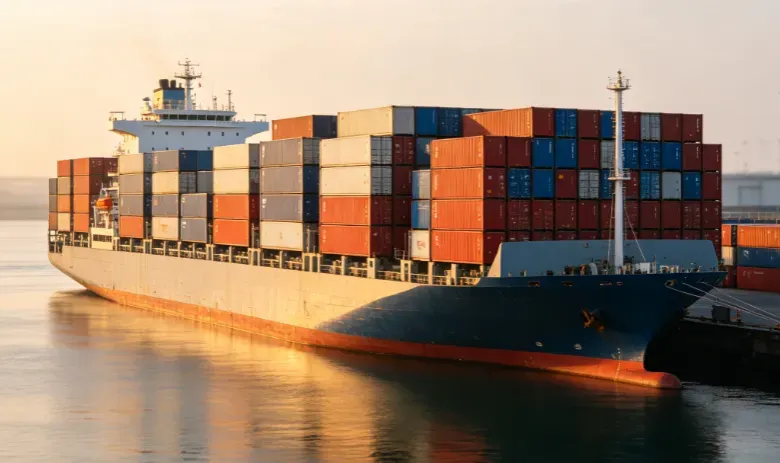
Colombia is one of the fastest-growing import markets in Latin America, and China is its largest or second-largest source of imports in most recent years — ahead of the United States in several annual rankings — with machinery, electronics, textiles, chemicals, auto parts and household goods arriving in a steady stream. A remarkable share of that cargo originates in Shanghai, the world’s largest container port, whose terminals move roughly 49 million TEU a year and connect Colombia through the most frequent sailings of any Chinese port.
This guide covers everything you need to know about shipping from Shanghai to Colombia in 2026: FCL and LCL rates from Yangshan and Waigaoqiao, real transit times to Buenaventura and Cartagena, air freight costs from Shanghai Pudong (PVG), and the Colombian customs process (DIAN, 19% IVA) — based on 15 years of hands-on freight forwarding experience at Dantful.US International Logistics. For a full overview of your options, start with our shipping from China to Colombia guide.
When to Ship from Shanghai to Colombia?
When should you choose Shanghai as your origin for Colombia? It comes down to a few practical checks:
- Where is your supplier? If your factory or trading partner is in the Yangtze River Delta — Shanghai, Suzhou, Hangzhou or the Ningbo hinterland — Shanghai is the natural gateway: no cross-China inland trucking leg and lower origin costs. If your supplier sits in the Pearl River Delta, Guangzhou or Shenzhen usually win on price instead, so compare all-in quotes before you book
- Do you need maximum sailing frequency? Shanghai runs the most frequent services to Colombia of any Chinese port, which means the widest carrier choice and the strongest rate leverage — useful when you ship regularly or need space at short notice
- Is your product a Yangtze Delta specialty? Electronics, machinery, textiles, chemicals, auto parts, furniture and solar equipment are all manufactured in the region — if your goods come from this cluster, Shanghai is the shortest, most cost-effective route to Buenaventura or Cartagena
- What volume are you shipping? FCL loads direct at the automated Yangshan deep-water port or the Waigaoqiao river-side terminals; smaller LCL volumes consolidate efficiently through Shanghai’s forwarding networks
Shanghai Ports & Terminals: Where Your Cargo Loads
Shanghai’s port system is split between deep-water and river-side areas. Knowing which one your cargo loads from matters for cut-off times, trucking costs and sailing schedules:
| Port Area | Terminals | What It Is Best For |
|---|---|---|
| Yangshan | Yangshan Phase I–IV (SIPG) | Deep-water port 30 km offshore; Phase IV is the world’s largest automated container terminal; main gateway for mega-vessels on Asia–America strings |
| Waigaoqiao | Waigaoqiao Phase I–VI | River-side terminals close to the city; frequent feeders and Asia regional services; lower trucking cost from city factories |
| Wusongkou | Wusongkou International Cruise & Container terminals | Smaller volumes, roll-on/roll-off and special cargo |
| Nearby alternatives | Taicang, Nantong (Jiangsu) | Satellite ports used when Yangshan/Waigaoqiao are congested; same mainline connections via Shanghai |
Most container shipping from Shanghai to Colombia loads at Yangshan, with Waigaoqiao handling a share of LCL and feeder traffic. Cut-off times at Yangshan are strict — cargo usually must be gated in 24–48 hours before vessel departure, and the port’s terminal operating system is known for tight deadlines. A forwarder who books your container space and monitors cut-offs locally saves you missed-sailing headaches. For a deeper look at how the port schedules work, see our guide to Shanghai port cut-off rules and time-zone traps — and for what a strong forwarding partner does, our sea freight forwarder from China guide.
2026 Shipping Costs from Shanghai to Colombia
FCL rates from Shanghai in Q3 2026 are driven by the destination port, the season and the carrier. The ranges below are realistic all-in ocean freight quotes (excluding Colombian import taxes) for the main Shanghai–Colombia routes:
| Shanghai → | 20ft FCL | 40ft FCL | 40ft HQ |
|---|---|---|---|
| Buenaventura | $2,700–$4,500 | $3,800–$6,200 | $4,000–$6,500 |
| Cartagena | $2,800–$4,700 | $3,900–$6,400 | $4,100–$6,700 |
| Barranquilla | $2,900–$4,900 | $4,000–$6,600 | $4,200–$6,900 |
Q3 2026 reality check: Rates on the Asia–Colombia lane have stabilized after the 2024–2025 volatility, but peak-season surcharges (August–October) and Panama Canal restrictions in dry years can still add 15–30% to base rates. Booking 3–4 weeks ahead locks in standard pricing.
What is inside an FCL quote? Ocean freight, BAF/CAF fuel surcharges, origin THC and documentation at Yangshan or Waigaoqiao, and destination charges at the Colombian port (THC, delivery order, customs systems fee). Colombian import duties and IVA are collected separately by DIAN — see the customs section below.
LCL (Less than Container Load) from Shanghai
If your shipment is under ~15 CBM, LCL from Shanghai is usually more economical:
| Cargo Volume | Typical LCL Rate | Notes |
|---|---|---|
| 1 CBM | $110–$190 | Minimum charge applies |
| 5 CBM | $550–$900 | Ideal for first-time importers |
| 10 CBM | $1,000–$1,700 | Consider FCL above ~15 CBM |
Add a $30–$60 consolidation fee at origin and deconsolidation charges at Buenaventura or Cartagena. For a detailed LCL walkthrough, see our LCL shipping from China to Brazil guide — the consolidation mechanics are identical on the Colombia lane.
Air Freight from Shanghai to Colombia
For urgent or high-value cargo, Shanghai Pudong International Airport (PVG) — one of Asia’s largest air cargo hubs — offers daily capacity to Bogotá’s El Dorado airport, usually via a connection in Miami or Panama City:
| Service | Rate | Transit |
|---|---|---|
| Consolidated air (100–300 kg) | $5.0–$8.0 per kg | 4–7 days |
| Direct/priority air (300+ kg) | $4.8–$7.2 per kg | 3–6 days |
| Express courier (small parcels) | $10–$15 per kg | 3–5 days |
A $50–$150 minimum charge applies to most air shipments. For the full air picture, our air freight from China to Colombia guide covers routes, airports and rates in detail.
Air vs. sea: which should you choose? Air freight wins on speed and working-capital speed (inventory turns in days, not weeks), while sea freight wins on cost per kilo for anything heavy or bulky:
| Factor | Air Freight | Sea Freight |
|---|---|---|
| Door-to-door transit | 3–8 days | 37–52 days |
| Typical cost per kg | $4.8–$8.0 | $0.35–$0.75 |
| Best for | High-value, urgent, light, seasonal cargo | Heavy, bulky, cost-sensitive cargo |
| Minimum charge | $50–$150 | ~$200–$400 (LCL) |
| Inventory capital tied up | Minimal | 5–7 weeks |
How air freight is priced (volumetric weight): airlines charge on the greater of actual weight and volumetric weight (length × width × height ÷ 6000, in cm). A 100 kg carton of bulky, lightly-packed goods can easily be billed at 200+ kg. Keep packaging dense and compact to control your billable weight.
When air makes sense from Shanghai: first-time trial orders (before committing to container volumes), urgent restocks, spare parts, high-value electronics, and e-commerce replenishment. Many importers use air for the first 1–2 shipments, then switch to sea once they have volume and trust in the product.
Transit Times & Main Routes from Shanghai to Colombia
| Route | Typical Transit | Notes |
|---|---|---|
| Shanghai/Yangshan → Buenaventura | 30–40 days | Direct WCSA services or via Balboa (Panama); the Pacific gateway |
| Shanghai/Yangshan → Cartagena | 32–45 days | Main Caribbean hub, most frequent services |
| Shanghai → Barranquilla | 36–48 days | Via Cartagena feeder or river barge |
| LCL (add consolidation) | +3–7 days | Waiting time for a full groupage |
| Air PVG → Bogotá (BOG) | 4–9 days | Door-to-door including clearance |
Remember that transit time ≠ door-to-door time: add 3–7 days for arrival, Colombian customs clearance and inland trucking. From Cartagena to Bogotá the road trip is roughly a day; from Buenaventura to Bogotá allow 12–16 hours over the Andes, with Cali only about 3 hours away. For a comparison of port-to-port and door-to-port services, see our door-to-door vs. port-to-port shipping guide.
Colombian Customs, Duties & Taxes (DIAN)
Colombian customs is managed by DIAN (Dirección de Impuestos y Aduanas Nacionales) through the VUCE single window and the MUISCA processing system. A licensed customs agent (agente de aduanas) files the import declaration with the commercial invoice, packing list, bill of lading and any required permits, and clearance typically takes 2–5 working days for a clean, correctly documented container.
What will you pay?
- Import duty (arancel): calculated on the CIF value (cost + insurance + freight), typically 0–20% depending on the HS code; most industrial goods fall in the 5–15% band
- IVA (value-added tax): 19% — charged on CIF + duty
- No China–Colombia FTA in force — negotiations were launched in 2012 but never concluded, so Chinese goods pay the standard MFN rates, and certain products (some steel, textiles and footwear) carry anti-dumping duties
- Permits for regulated goods — INVIMA for health products, ICA for agricultural goods, plus environmental permits for chemicals
Example calculation: A Shanghai shipment with FOB value $10,000, ocean freight $1,500 and insurance $100 gives a CIF value of $11,600. At a 10% arancel, duty is $1,160, and IVA at 19% on (CIF + duty) adds $2,424. Total import taxes: $3,584 — always budget for this on top of the freight quote.
Step-by-Step: Shipping from Shanghai to Colombia
- Get a quote — send your cargo details (dimensions, weight, product type, Incoterm preference) to your forwarder
- Book space — secure the sailing 3–4 weeks ahead; carriers on the Colombia lane fill up fast in peak season
- Deliver to the terminal — your supplier ships EXW/FOB to Yangshan or Waigaoqiao; watch the cut-off, usually 24–48 hours before departure
- Export clearance in China — the forwarder handles customs, documentation and loading
- Ocean transit — 30–45 days depending on port and service
- Colombian import clearance — your customs agent files the declaration with DIAN (2–5 days)
- Final delivery — trucking to Bogotá, Medellín, Cali or your warehouse
The whole door-to-door process typically runs 40–58 days from factory pickup to final delivery. When speed matters more than cost, our air freight from China to Colombia guide covers the fast lane.
How to Save on Shipping from Shanghai to Colombia
- Compare Yangshan vs. Waigaoqiao vs. Ningbo — rates differ by terminal and carrier alliance; a forwarder can shop all of them for you
- Book off-peak — avoid August–October; Q1 rates are typically 10–20% lower
- Consolidate to FCL — above ~15 CBM, a full container beats LCL economics
- Choose the right Colombian port — Cartagena for Bogotá/Medellín distribution (better roads), Buenaventura for Cali and the Pacific region
- Check anti-dumping exposure before you buy — some Chinese product categories carry extra duties that change the landed-cost math
- Use air for first orders only — samples and trial orders via PVG air let you test demand while you set up your FCL pipeline. Compare origins first: our shipping from Shenzhen to Colombia guide shows how the same lane prices out of the Pearl River Delta
Frequently Asked Questions
Q: How much does it cost to ship from Shanghai to Colombia in 2026?
A: A 20ft container runs $2,700–$4,900 and a 40ft container $3,800–$6,900 from Shanghai depending on the Colombian port, season and carrier, excluding Colombian import taxes. LCL is $110–$190 per CBM and air freight $4.8–$8.0 per kg.
Q: How long does shipping from Shanghai to Colombia take?
A: Sea freight reaches Buenaventura in 30–40 days and Cartagena in 32–45 days. Add 3–7 days for Colombian customs clearance and inland trucking to Bogotá, Medellín or Cali. Air freight is 4–9 days door-to-door.
Q: Which Colombian port should I ship to from Shanghai?
A: Use Buenaventura for Cali and Pacific-region distribution, Cartagena for Bogotá and Medellín (better inland roads), and Barranquilla for the Caribbean and Magdalena river region. Cartagena and Buenaventura handle the large majority of containerized imports.
Q: Do I pay import taxes on goods shipped from Shanghai to Colombia?
A: Yes. Colombian customs (DIAN) charges import duty (arancel) of 0–20% on the CIF value plus 19% IVA on CIF plus duty. There is no China–Colombia FTA in force, so Chinese goods pay standard MFN rates and some products face anti-dumping duties.
Q: Is air or sea freight better from Shanghai to Colombia?
A: Sea freight wins for containers and anything over ~15 CBM. Air freight from Shanghai Pudong (PVG) to Bogotá suits urgent, high-value or lightweight cargo — many importers use air for samples and first orders, then switch to sea.
Q: What documents do I need to import from Shanghai to Colombia?
A: The bill of lading, commercial invoice and packing list, plus the import declaration filed through Colombia’s VUCE/MUISCA by a licensed customs agent. Regulated goods also need INVIMA (health), ICA (agricultural) or other permits before clearance.
Ship from Shanghai to Colombia with Confidence
Shipping from Shanghai to Colombia is the most competitive lane into the Colombian market: the world’s largest container port, frequent sailings to Buenaventura and Cartagena, and an import market that keeps buying Chinese electronics, machinery and consumer goods. With a realistic Q3 2026 budget that includes DIAN duties and IVA, the right port choice, and a forwarder who handles clearance properly, your first container can arrive on schedule.
Ready to ship? Contact Dantful.US for a free, itemized quote — we handle everything from Yangshan terminal pickup to Colombian doorstep delivery.