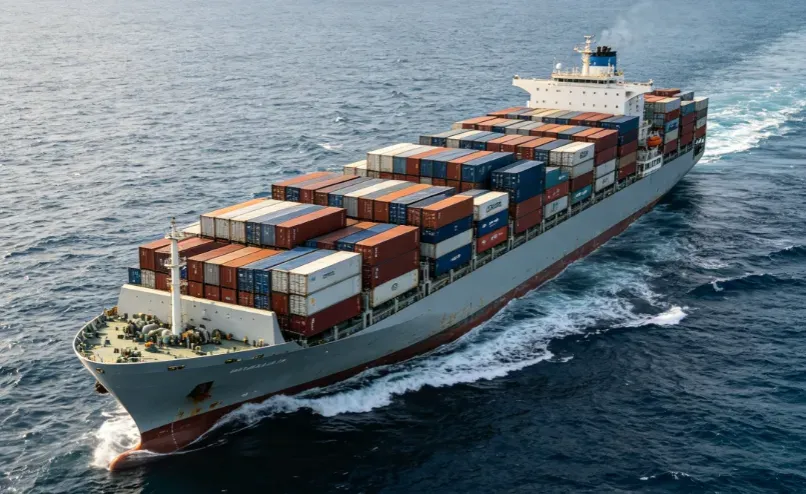
Brazil imported over $64 billion worth of goods from China in 2025, and a significant share of that cargo moved through LCL shipping from China to Brazil — a cost-effective consolidation method that lets importers share container space rather than paying for an entire box. Yet most importers struggle to understand what LCL truly costs and how to navigate Brazil’s complex customs system without turning a 35-day shipment into a 90-day nightmare.
This guide covers everything you need: the complete LCL process from factory to warehouse, a transparent line-by-line cost breakdown, port-to-port transit times for every major route, Brazil-specific customs and tax guidance, and a practical framework for choosing the right freight forwarder. For the bigger picture of shipping from China to Brazil — including FCL, air freight, and door-to-door options — our dedicated route page complements what you’ll learn here.
When Should You Use LCL for Brazil?
LCL, or Less than Container Load, is a freight consolidation method where your cargo shares a shipping container with goods from other importers — rather than occupying an entire container by itself. Your shipment is consolidated at a Container Freight Station (CFS) near the origin port, loaded into a shared container, transported across the ocean, and then deconsolidated at a destination CFS in Brazil before final delivery. The industry also refers to this as groupage shipping or LCL consolidation.
The key pricing unit for LCL is the CBM (Cubic Meter). Your freight cost is calculated based on the space your cargo occupies, not on a fixed container rate. The standard rule of thumb: 1 CBM equals roughly 1,000 kg for chargeable weight calculation. If your cargo is denser than that — say, 5 CBM but weighing 8,000 kg — you’ll be charged on the weight (8 CBM equivalent) rather than the volume. This is called the chargeable weight rule and it catches many first-time shippers off guard.
When LCL Makes Sense for Brazil
LCL is the right choice for most shipments between 1 and 15 CBM. Here’s who benefits most:
- Market testers: You’re launching a new product line in Brazil and want to start with a small shipment before committing to full containers.
- Regular restockers: You need monthly or quarterly replenishment shipments of 3–8 CBM — enough to be too heavy for air freight, but not enough to fill a 20ft container.
- Multi-supplier buyers: You source from several factories (e.g., electronics from Shenzhen, packaging from Dongguan, textiles from Guangzhou) and want to consolidate everything into one Brazil-bound shipment.
- Seasonal importers: You’re building inventory ahead of Brazil’s peak retail seasons (Black Friday, Natal, Carnaval) without overcommitting to container volumes.
When to Avoid LCL
LCL is not ideal for fragile, high-value goods that benefit from a dedicated, sealed container. If your shipment is time-critical and the 5–10 extra days of consolidation/dwell time matter, FCL or air freight is the better choice. And if your volume exceeds 15 CBM, the per-unit economics tilt decisively toward FCL (Full Container Load) — we cover this decision in detail in Section 6.
The LCL Shipping Process from China to Brazil: Step-by-Step
Understanding the LCL journey end-to-end is the single most important thing you can do before booking your first shipment. Most delays and unexpected costs trace back to importers not knowing which step comes next — or who’s responsible for it. Here is the complete 10-step process:
| Step | What Happens | Typical Time | Who Handles It |
|---|---|---|---|
| 1 | Cargo pickup from your supplier(s) in China | 2–3 days | Freight forwarder’s trucking partner |
| 2 | Cargo arrival & check-in at origin CFS (Container Freight Station) | 1 day | CFS warehouse operator |
| 3 | Export customs declaration in China | 1–2 days | Forwarder’s licensed customs broker |
| 4 | Cargo consolidation — your goods are grouped with other shippers’ cargo into one container | 2–4 days | CFS operator |
| 5 | Container trucked to port and loaded onto the vessel | 1–2 days | CFS + port terminal |
| 6 | Ocean transit (typically with 1–2 transshipments at hubs like Singapore or Port Klang) | 30–45 days | Shipping line (Maersk, MSC, COSCO, CMA CGM, Hapag-Lloyd) |
| 7 | Container arrival & unloading at the Brazilian port | 1–2 days | Port terminal operator |
| 8 | Deconsolidation at the destination CFS — container is unpacked and your cargo is separated | 2–3 days | Destination CFS operator |
| 9 | Import customs clearance in Brazil | 2–15 days (channel-dependent) | Despachante Aduaneiro (licensed Brazilian customs broker) |
| 10 | Last-mile truck delivery to your warehouse | 2–5 days | Local trucking company |
Total door-to-door timeline: 40–60 days. This is the realistic window. The ocean transit itself may only be 30–45 days, but you should always budget an additional 10–15 days for consolidation, deconsolidation, customs clearance, and last-mile trucking at both ends.
Where the Extra Time Goes (vs. FCL)
LCL typically takes 5–10 days longer than FCL on the same route. Here’s exactly where those days go:
- Consolidation at origin CFS (Steps 4–5): 3–6 days — your cargo waits while enough shipments are gathered to fill a container.
- Deconsolidation at destination CFS (Step 8): 2–3 days — the container is unpacked and individual shipments are sorted.
- Document complexity: Co-loaded shipments mean more sets of paperwork. If any one shipper’s documents have issues, the entire container can be held — adding 1–3 extra days at customs.
Expert insight: In our 15 years of managing LCL consolidations out of Shenzhen’s Yantian CFS, we’ve observed that well-prepared documentation submitted before Step 3 is the single biggest predictor of smooth sailing at Step 9. Shipments whose NCM codes, commercial invoices, and packing lists are reviewed by a Brazilian broker before the vessel departs clear customs in an average of 3–5 days. Those that aren’t? They routinely spend 10–15 days in Yellow or Red channel — a lesson many first-time Brazil importers learn at the cost of storage fees and missed inventory deadlines.
LCL Shipping Costs from China to Brazil
Ask most freight forwarders what LCL costs and you’ll hear “$80 to $220 per CBM.” That number is not wrong — but it’s dangerously incomplete. It typically covers only the ocean freight (base rate). The remaining 12–15 charges, spread across China origin, ocean transit, and Brazil destination, can easily double your all-in cost.
Here is a transparent, line-by-line breakdown of what you should expect to pay:
| Fee Category | Fee Item | Typical Range (USD) | Charged By |
|---|---|---|---|
| China Origin | Factory pickup (trucking) | $150–$400 per load | Forwarder / trucking company |
| China Origin | CFS receiving & warehousing | $15–$25 / CBM | CFS operator |
| China Origin | Export customs declaration | $80–$150 per shipment | Licensed customs broker |
| China Origin | Bill of Lading issuance | $50–$80 | Shipping line |
| Ocean Freight | Ocean freight (base rate) | $50–$150 / CBM | Shipping line |
| Ocean Freight | BAF (Bunker Adjustment Factor) | $15–$30 / CBM | Shipping line |
| Ocean Freight | PSS (Peak Season Surcharge) | $0–$50 / CBM | Shipping line |
| Ocean Freight | ISPS (Security surcharge) | $10–$15 per B/L | Shipping line |
| Brazil Destination | THC (Terminal Handling Charge) | $80–$200 per B/L | Port terminal |
| Brazil Destination | CFS deconsolidation | $20–$35 / CBM | Destination CFS operator |
| Brazil Destination | Customs brokerage (Despachante) | $150–$350 per shipment | Licensed customs broker |
| Brazil Destination | SISCOMEX / DUIMP filing fee | $30–$60 per DI | Receita Federal |
| Brazil Destination | AFRMM (Merchant Marine Tax) | ~8% of ocean freight | Brazilian government |
| Brazil Destination | Port storage (after free days) | $10–$30 / CBM / day | Port terminal |
| Brazil Destination | Last-mile truck delivery | $200–$600 (varies by distance) | Local trucking company |
| Optional | Cargo insurance (all-risk) | 0.3%–0.5% of cargo value | Insurance provider |
Worked Example: 5 CBM from Shenzhen to São Paulo
Let’s put this into practice. Imagine you’re importing 5 CBM of consumer electronics from a Shenzhen supplier to your warehouse in São Paulo:
| Fee Category | Estimated Cost |
|---|---|
| Factory pickup (Shenzhen → Yantian CFS) | $200 |
| CFS receiving (5 CBM × $20) | $100 |
| Export customs declaration | $120 |
| Bill of Lading | $65 |
| Ocean freight (5 CBM × $100) | $500 |
| BAF (5 CBM × $20) | $100 |
| PSS (off-peak — $0) | $0 |
| ISPS | $12 |
| THC (Santos) | $140 |
| CFS deconsolidation (5 CBM × $28) | $140 |
| Customs brokerage (Despachante) | $250 |
| SISCOMEX fee | $45 |
| AFRMM (~8% × $500 ocean freight) | $40 |
| Last-mile trucking (Santos → São Paulo) | $350 |
| Subtotal (logistics only, before Brazil taxes) | ~$2,062 |
| Effective all-in cost per CBM (logistics only) | ~$412 / CBM |
That headline “$100/CBM ocean freight” becomes roughly $412/CBM all-in before import taxes. And as you’ll see in Section 9, Brazilian import taxes will add another 40–100%+ on top of the CIF value. This is why transparent quoting matters — and why you should be suspicious of any forwarder who only gives you the per-CBM ocean rate. For current market rates across all shipping modes — including FCL, LCL, and air freight — check our regularly updated shipping cost from China to Brazil page.
Seasonal Pricing Reality
LCL rates are not static. During Q3 and Q4 — driven by pre-Christmas retail inventory buildup and pre-Chinese New Year factory rush — rates can spike 15–30%. If you’re shipping between August and December, book 3–4 weeks ahead and build a price buffer into your logistics budget.
LCL Transit Times & Routes: China Ports to Brazil Ports
Choosing the right origin port in China is just as important as choosing the right destination port in Brazil. The table below shows realistic LCL transit times — including consolidation and deconsolidation buffer — for every major port pair:
| Origin Port (China) | → Santos (SP) | → Rio de Janeiro (RJ) | → Paranaguá (PR) | → Itajaí (SC) |
|---|---|---|---|---|
| Shenzhen (Yantian/Shekou) | 33–38 days | 32–40 days | 35–42 days | 37–45 days |
| Shanghai | 30–35 days | 30–38 days | 33–38 days | 35–42 days |
| Ningbo | 32–37 days | 32–38 days | 33–40 days | 35–42 days |
| Guangzhou (Nansha) | 35–40 days | 36–42 days | 38–45 days | 40–48 days |
| Qingdao | 36–42 days | 38–45 days | 39–46 days | 40–50 days |
Note: LCL transit times include 3–6 days of consolidation buffer at origin and 2–3 days of deconsolidation at destination. For FCL (no consolidation), subtract approximately 5–10 days from the ranges above.
Key Route and Carrier Details
- Santos (SP) is Brazil’s largest container port, handling roughly 30% of all Brazilian international trade. It’s the natural gateway for cargo destined to the São Paulo metropolitan region — Brazil’s economic engine.
- MSC CARIOCA Service: Qingdao → Busan → Ningbo → Shanghai → Shekou → Singapore → Colombo → Rio de Janeiro → Santos → Paranaguá → Itajaí. This is one of the most reliable weekly services on the trade lane.
- COSCO ESA/ESA2: Direct Shanghai/Ningbo → Santos/Rio in 28–34 days for FCL; 33–38 days for LCL.
- Express LCL option: Some forwarders offer a premium Express LCL service from Guangzhou (Nansha) to Santos in 18–22 days at $90–$130/CBM — roughly 40% faster than standard LCL. This uses priority carrier allocations and minimizes transshipment dwell time.
Which Origin Port Should You Use?
Match your departure port to your supplier’s location to minimize domestic trucking costs inside China:
- Pearl River Delta (Shenzhen, Dongguan, Guangzhou, Foshan) → Ship from Shenzhen (Yantian/Shekou) or Guangzhou (Nansha)
- Yangtze River Delta (Shanghai, Suzhou, Hangzhou, Ningbo) → Ship from Shanghai or Ningbo
- Northern China (Qingdao, Tianjin, Beijing) → Ship from Qingdao (note: fewer LCL sailings to Brazil from northern ports)
For a complete breakdown of all shipping routes from China to Brazil, including detailed carrier service rotations and transshipment port options across the Asia-ECSA trade lane, LCL is just one mode within the broader sea freight from China to Brazil ecosystem — understanding how consolidation fits alongside FCL and breakbulk services helps you optimize your total freight spend.
LCL vs FCL: How to Choose the Right Mode for Your Brazil Shipment
One of the most frequent questions we hear from Brazil-bound importers: “At what point should I switch from LCL to FCL?” The answer depends on three factors — volume, cargo characteristics, and urgency.
Side-by-Side Comparison
| Factor | LCL (Less than Container Load) | FCL (Full Container Load) |
|---|---|---|
| Best volume range | 1–15 CBM | 15+ CBM |
| Cost structure | Per CBM ($80–$220/CBM ocean) | Flat container rate ($2,500–$5,500) |
| Approx. cost per CBM at 10 CBM | ~$100–$200 / CBM | ~$90–$180 / CBM (20ft) |
| Transit time | 35–50 days door-to-door | 30–45 days door-to-door |
| Cargo security | Moderate — shared container, more handling touch points | High — dedicated sealed container |
| Damage risk | Higher — multiple consolidation/deconsolidation handling | Lower — container sealed at origin |
| Flexibility | Ship any volume, any time — no need to fill a container | Must have enough cargo to fill container |
| Customs risk | Higher — co-loaded cargo complications can delay your shipment | Lower — single consignee, simpler paperwork |
| Ideal for | Small batches, market testing, multiple suppliers, seasonal restocking | Bulk commercial orders, fragile goods, tight delivery timelines |
The Break-Even Point: 12–15 CBM
The economic crossover between LCL and FCL typically happens around 12–15 CBM. Here’s a simple way to think about it:
Practical example: At $100/CBM LCL, a 12 CBM shipment costs $1,200 in pure ocean freight. A 20ft FCL container on the same route (Shenzhen → Santos) might cost $2,500. But when you add LCL’s per-CBM destination fees (deconsolidation at $28/CBM, handling), the total LCL bill can approach $2,000–$2,300 — close enough that the extra security, speed, and simplicity of FCL become worth the modest premium.
Rule of thumb: Under 10 CBM, LCL almost always wins. Above 15 CBM, FCL is the clear champion. Between 10–15 CBM, get quotes for both and compare the all-in landed cost — not just the ocean freight rate. If your shipment is approaching or exceeding the 15 CBM threshold, it’s worth consulting our guide on how much to ship a container from China to Brazil for current FCL rates, container selection advice, and a deeper look at shipping containers from China to Brazil across 20ft and 40ft options.
Hybrid Strategy: Split Your Shipment
Savvy importers with mixed inventory sometimes split: urgent SKUs go via express LCL or air freight from China to Brazil, while bulk replenishment stock moves by FCL. This approach can save 20–30% compared to shipping everything by air while still getting your fast-moving products onto Brazilian shelves ahead of the competition.
Multi-Supplier LCL Consolidation: Save Up to 33% by Combining Shipments
This is one of LCL’s most powerful advantages — and, surprisingly, a topic that almost no shipping guide covers in depth. If you source from multiple suppliers in China, consolidating their goods into a single LCL shipment can dramatically reduce your total logistics spend.
The Scenario
You’re a Brazilian importer buying from three Chinese factories:
- Supplier A (Shenzhen): 3 CBM of electronic accessories
- Supplier B (Dongguan): 3 CBM of packaging materials
- Supplier C (Guangzhou): 3 CBM of promotional merchandise
You have two options:
| Approach | China Charges | Ocean Freight (9 CBM total) | Brazil Charges | Grand Total |
|---|---|---|---|---|
| 3 separate LCL shipments (3 CBM each) | 3 × $200 = $600 | 3 × $300 = $900 | 3 × $400 = $1,200 | ~$2,700 |
| 1 consolidated LCL shipment (9 CBM) | $350 (one pickup run) | $900 (one booking) | $550 (one clearance) | ~$1,800 |
| Your savings | ~$900 (33%) |
Why the difference? Three separate LCL shipments mean you pay the minimum charge on each — three export declarations, three sets of CFS receiving fees, three ocean freight minimums, three customs brokerage fees, and three last-mile deliveries. Consolidation eliminates that duplication.
How Consolidation Works in Practice
- All three suppliers deliver their goods to your forwarder’s CFS warehouse (ideally in Shenzhen, the Pearl River Delta’s consolidation hub).
- Your forwarder issues a single House Bill of Lading (H-B/L) covering the entire 9 CBM.
- One export customs declaration is filed for the consolidated shipment.
- One ocean freight booking loads all 9 CBM into a single container.
- At the Brazilian port, one customs clearance processes the entire consignment.
- One last-mile delivery truck takes everything to your warehouse.
EXW vs FOB: Which Works Better for Consolidation?
- EXW (Ex Works): Your suppliers don’t handle export customs — your forwarder manages everything centrally. This is cleaner for multi-supplier consolidation because all customs work flows through one broker. The downside: each supplier must coordinate pickup timing with your forwarder.
- FOB (Free on Board): Each supplier handles their own export declaration separately. This can create timing problems — if Supplier B’s customs clearance takes 3 days longer than Supplier A’s, the entire container waits at the CFS.
For multi-supplier consolidation, EXW typically offers smoother coordination. A capable freight forwarder with a Shenzhen-based consolidation warehouse can receive goods from multiple Pearl River Delta factories — Dongguan, Guangzhou, Foshan, Huizhou — within a single day of trucking, then consolidate everything into one seamless LCL booking. For a deeper comparison of how these trade terms affect your total landed cost, see our detailed breakdown: EXW vs FOB Explained: Cost, Risk, and Responsibility Comparison.
Brazil Customs Clearance for LCL Shipments
Brazil has one of the most complex customs environments in the world. Over 15% of Chinese LCL shipments faced clearance delays in 2023 due to documentation issues alone. Understanding the process — and the LCL-specific risks — before your cargo leaves China is not optional.
What You Need Before Importing
| Requirement | What It Is | Why It Matters |
|---|---|---|
| CNPJ (Cadastro Nacional da Pessoa Jurídica) | Brazilian company tax ID | Must appear on the Bill of Lading, commercial invoice, and all import documents. Brazil does not accept “To Order” B/Ls. |
| RADAR License | Import authorization from Receita Federal | Three tiers: Express ($50K/semester), Limited ($150K/semester), Unlimited. Without RADAR, no cargo — of any size — can clear customs. |
| SISCOMEX / DUIMP | Brazil’s electronic customs platform | All import declarations are filed here. Brazil transitioned to the new DUIMP (Single Import Declaration) for all transport modes by late 2025. |
| Despachante Aduaneiro | Licensed Brazilian customs broker | Mandatory. Self-clearance is practically impossible in Brazil — you must work with a licensed broker. |
The 4 Customs Inspection Channels
Once your Import Declaration (DI/DUIMP) is registered in SISCOMEX, the system assigns your LCL shipment to one of four risk-based inspection channels:
| Channel | What Happens | Clearance Time | Approx. Frequency |
|---|---|---|---|
| Green (Verde) | Automatic release — no document or physical check | 1–2 days | ~60% |
| Yellow (Amarelo) | Document review only — customs checks paperwork accuracy | 2–5 days | ~15% |
| Red (Vermelho) | Document review + physical cargo inspection | 5–15 days | ~20% |
| Grey (Cinza) | Full audit: valuation review, fraud investigation | 20–120+ days | ~5% |
The Hidden LCL Risk: Co-Loaded Cargo Complications
Here’s something no competitor guide mentions: in LCL, your customs clearance fate is partially tied to the other shipments in your shared container. If any co-loaded shipment is flagged for Red or Grey channel — due to undervaluation, missing certifications, or NCM code mismatches — the entire container can be held. Your perfectly compliant cargo sits at the port, accruing storage fees, because someone else’s paperwork wasn’t in order.
This is why choosing a freight forwarder who vets all consolidation partners and maintains strict documentation standards matters far more for LCL than for FCL.
Your Brazil LCL Document Checklist
| Document | Brazil-Specific Requirements |
|---|---|
| Commercial Invoice | Must include CNPJ, detailed product descriptions (Portuguese preferred), 8-digit NCM codes, Incoterm stated. Blue-ink signature and company stamp strongly recommended. |
| Packing List | Weights must match the B/L’s VGM (Verified Gross Mass) within 1%. Vague descriptions like “parts” or “accessories” trigger Red channel. |
| Original Bill of Lading | Telex release and electronic B/Ls are not accepted in Brazil. You need the physical original. Consignee’s CNPJ must appear on the B/L. |
| Import License (LI) | Required for regulated goods (electronics, medical devices, food, chemicals). Must be approved before the cargo departs China. Late LI = Grey channel + fines. |
| Certificate of Origin | Required for preferential tariff treatment under Mercosur trade agreements. |
| Product Certifications | INMETRO (electronics, toys, appliances), ANVISA (food, pharmaceuticals, cosmetics), ANATEL (telecom equipment). Lead times: 3–6 months — plan ahead. |
7 Practical Tips to Stay in the Green Channel
- Verify NCM codes with a Brazilian broker 10+ days before shipping. NCM misclassification alone causes roughly 70% of customs delays.
- Declare accurate values. Brazil’s customs AI (Receita Federal’s SISCOMEX risk engine) cross-references declared values against e-commerce platforms like Amazon and Mercado Livre. Undervaluation triggers fines of 100–500% of cargo value.
- Use precise product descriptions. Not “electronic parts” — write “Capacitive touchscreen display, Model T-2024, 7-inch, for industrial control panels, 12V DC input.”
- Ensure CNPJ appears on every shipping document. Missing CNPJ = automatic rejection.
- ISPM-15 certification for all wood packaging. Pallets and crates must be heat-treated and stamped on two opposite sides. Unstamped wood = cargo refused at the Brazilian port.
- Get your Import License (LI) approved before the vessel departs. Post-departure LI applications are one of the most common triggers for Grey channel.
- Identify a backup Despachante before your cargo arrives. If your primary broker has issues, having a backup prevents days of dead time.
Brazil Import Taxes on LCL Cargo: What You’ll Actually Pay
Brazil’s import tax system is uniquely complex because it uses compounded (cascading) taxation — each tax is calculated on top of the previous tax, not just on the CIF value. This “tax-on-tax” pyramid means your final landed cost can be 60–100%+ above the CIF value. Understanding this before you ship prevents the most common budget shock in Brazil importing.
Tax-by-Tax Breakdown
| Tax | Full Name | Calculation Base | Typical Rate |
|---|---|---|---|
| II | Imposto de Importação (Import Duty) | CIF Value | 0%–35% (NCM-dependent) |
| IPI | Imposto sobre Produtos Industrializados (Industrialized Products Tax) | CIF + II | 0%–15% |
| PIS | Programa de Integração Social | CIF Value | 1.65% (cumulative) or 2.1% (non-cumulative) |
| COFINS | Contribuição para o Financiamento da Seguridade Social | CIF Value | 7.6% (cumulative) or 9.65% (non-cumulative) |
| ICMS | Imposto sobre Circulação de Mercadorias e Serviços (State VAT) | All federal taxes + own base (grossed up “por dentro”) | 7%–25% (São Paulo: 18%) |
| AFRMM | Adicional ao Frete para Renovação da Marinha Mercante | Ocean freight cost | ~8% |
Worked Example: 5 CBM Electronics Shipment to São Paulo
Let’s walk through a real calculation. You’re importing 5 CBM of consumer electronics with a CIF value of $10,000 (FOB + freight + insurance), with a 20% II rate and 10% IPI rate, destined for São Paulo (18% ICMS):
| Step | Calculation | Running Total |
|---|---|---|
| CIF Value | — | $10,000 |
| II (Import Duty) | 20% × $10,000 = $2,000 | $12,000 |
| IPI (Industrialized Products Tax) | 10% × $12,000 = $1,200 | $13,200 |
| PIS/COFINS (non-cumulative) | 11.75% × $10,000 = $1,175 | $14,375 |
| ICMS (18% “por dentro”) | ($14,375 ÷ 0.82) × 0.18 = ~$3,155 | $17,530 |
| AFRMM (8% of ~$500 ocean freight) | ~$40 | $17,570 |
| Total Import Taxes | $7,570 | |
| Tax as % of CIF | 75.7% | |
| Total Landed Cost (incl. logistics from Section 4) | $17,570 + ~$2,062 | ~$19,632 |
That $10,000 shipment lands in São Paulo at roughly $19,600 — nearly double the CIF value. This is not an edge case; it’s the norm for Brazil.
The ICMS “Por Dentro” Trap
ICMS uses a unique calculation method called “por dentro” (inside the base) — the tax itself is included in its own tax base. This means an 18% nominal ICMS rate is effectively ~22% when applied. The formula is:
ICMS = [Taxable Base ÷ (1 − ICMS Rate)] × ICMS Rate
This single mechanic is responsible for more budget surprises than any other element of Brazilian taxation. Always calculate ICMS using the “por dentro” formula — never multiply the base by the nominal rate directly.
DAP vs DDP: A Critical Distinction for Brazil
You’ll hear “DDP shipping to Brazil” mentioned frequently, but here’s the reality: true DDP (Delivered Duty Paid) is legally problematic in Brazil. Brazilian law requires the importer of record to be a locally registered entity with a CNPJ and RADAR license. A foreign freight forwarder cannot be the importer of record. While DDP shipping from China to Brazil is widely marketed, our dedicated DDP guide explains the legal nuances and practical workarounds in detail.
The practical alternative is DAP (Delivered at Place) — your forwarder handles everything from Chinese factory pickup through international freight and customs clearance support, but the import duties and taxes are paid through your Brazilian entity (or a designated Importer of Record). The clearance timeline with a well-managed DAP arrangement: 5–8 business days, versus 15–20 days if you’re navigating Brazilian customs on your own. For importers who prefer a fully managed end-to-end solution without the legal complications of true DDP, door to door shipping from China to Brazil — structured as DAP with professional customs brokerage support — is often the most practical and cost-effective approach.
Tax Optimization Opportunities
- NCM code pre-classification: An experienced Brazilian customs broker can identify the lowest applicable duty rate for your product before you ship. A single-digit NCM difference can mean 14% II instead of 20%.
- Manaus Free Trade Zone (Zona Franca de Manaus) : Goods imported through Manaus in Amazonas state benefit from significant federal tax reductions (reduced II, IPI exemption).
- ICMS state rate comparison: São Paulo (18%), Minas Gerais (18-19%), Rio de Janeiro (19-20%). If you have warehouse flexibility, choosing a lower-ICMS state for your import entry point can save 1–3 percentage points on the largest single tax.
How to Choose the Best LCL Freight Forwarder for the China–Brazil Route
After 15 years in this business, we can tell you: your choice of freight forwarder is the single biggest variable in whether your LCL shipment arrives on time and on budget — or becomes an expensive education in Brazilian logistics.
7 Criteria for Evaluating an LCL Forwarder
| # | Criterion | What to Look For |
|---|---|---|
| 1 | Brazil-specific expertise | Do they have a local partner or office in Brazil? Can they explain RADAR, CNPJ, NCM, and SISCOMEX without hesitation? If their answer to “How does ICMS ‘por dentro’ work?” is vague, walk away. |
| 2 | LCL consolidation frequency | Weekly sailings to Brazil mean your cargo waits 3–4 days at the CFS. Monthly sailings mean it could sit for 2–3 weeks. Ask about their Brazil LCL sailing schedule before booking. |
| 3 | China port coverage | A Shenzhen-based forwarder is ideal if your suppliers are in the Pearl River Delta. Shanghai- or Ningbo-based forwarders serve Yangtze Delta suppliers better. Proximity to your factories reduces domestic trucking costs. |
| 4 | Transparent pricing | You should receive a line-item quote, not just a per-CBM headline number. If they won’t break out the destination charges before booking, those charges will almost certainly be higher than you expect. |
| 5 | Cargo insurance | All-risk LCL coverage should be available at 0.3%–0.5% of cargo value. If your forwarder doesn’t proactively discuss insurance, they’re not thinking about your risk. |
| 6 | Tracking & visibility | Can you see your shipment status at each milestone — CFS arrival, container loading, vessel departure, transshipment port calls, arrival at Santos, customs status, last-mile dispatch? In 2026, real-time tracking is not a luxury. |
| 7 | Credentials | Look for FIATA (International Federation of Freight Forwarders Associations) and IATA (International Air Transport Association) certifications. These are globally recognized indicators of professional standards and compliance. |
Red Flags: When to Walk Away
- “Too good to be true” per-CBM rates — almost certainly masking inflated destination fees
- No Brazilian CNPJ partner or IOR (Importer of Record) solution
- Cannot provide references from other Brazil importers on the same trade lane
- Vague or evasive about Brazil customs processes and tax estimates
- Quotes a single “all-in” number without a line-item breakdown
Before signing with any provider, read our Ultimate 2026 Guide to Avoiding Freight Forwarder Scams & Hidden Traps to learn the warning signs that separate legitimate Brazil trade specialists from opportunists. Ultimately, the right freight forwarder from China to Brazil does more than move cargo — they become your logistics partner, anticipating customs issues before they arise and optimizing your supply chain for the realities of the Brazilian import market.
Why Importers Choose Dantful.US for LCL Shipping to Brazil
Dantful.US International Logistics has spent over 15 years building the expertise, carrier relationships, and on-the-ground networks that make China–Brazil LCL shipping predictable and transparent:
- Shenzhen-headquartered, Americas-specialized. Our consolidation hub sits at the heart of the Pearl River Delta — China’s manufacturing epicenter — with regular LCL sailings to Santos, Rio de Janeiro, and Paranaguá. We speak the language of both your Chinese suppliers and your Brazilian customs broker. Dantful.US specializes in the Americas trade lane — whether you need shipping from China to USA, Brazil, Mexico, or Canada, our team brings route-specific expertise to every consolidation.
- FIATA & IATA dual certified. These aren’t just logos on a website. They represent audited professional standards, financial stability, and compliance with international freight forwarding regulations.
- Direct carrier contracts. Our shipping volumes give us competitive LCL rates with Maersk, MSC, COSCO, CMA CGM, and Hapag-Lloyd — rates we pass directly to you without intermediary markups.
- End-to-end transparency. From multi-supplier pickup and consolidation at our Shenzhen CFS to customs clearance coordination in Brazil and last-mile delivery to your warehouse, you get a single point of contact — and a full line-item cost breakdown before your cargo leaves China. No hidden destination fees. No surprises.
- Proven Brazil experience. Our team has handled thousands of LCL shipments on the China–Brazil trade lane. We know which NCM codes trigger ANVISA review, which Incoterms work best for multi-supplier consolidation, and how to keep your cargo in the Green Channel.
Ready to ship LCL from China to Brazil? Contact Dantful.US today for a free, transparent LCL freight quote — and see your complete landed cost before you book. Our team will review your cargo profile, NCM classification, and delivery requirements to give you a precise estimate, not a vague per-CBM range.
Get A Free Shipping Quote