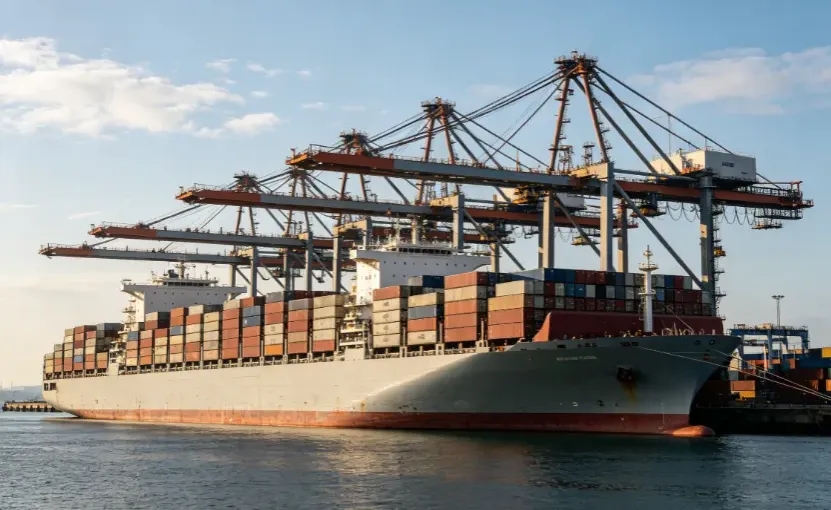
If you’re importing goods right now and want to know the real June 2026 average freight rates from China to USA, here’s a number that should concern you: last week, a furniture importer in Los Angeles forwarded me his freight quote — $7,200 for a 40ft container from Shenzhen to LA. That same afternoon, we booked the exact same route, same carrier, same sailing, for another client at $4,850. That’s a 48% price gap for an identical service. Most importers have no way of knowing whether the number on their screen is fair, inflated, or outright predatory — and with container rates surging over 50% since April, the stakes have never been higher. This guide gives you the benchmark data, explains exactly why costs are spiking, and — most importantly — shows you how to spot an overpriced quote and cut your shipping expenses without sacrificing reliability.
For importers managing regular shipping from China to USA, knowing the numbers on this page is the difference between paying market rate and overpaying by thousands per container.
How Much Does It Cost to Ship from China to USA in 2026?
Before diving into specific numbers, let’s establish the big picture. The ocean freight rates from China to USA have undergone a dramatic shift in 2026. After bottoming out at roughly $1,200–$1,500 per 40ft container in mid-2023, rates steadily climbed through 2024 and 2025. Then came June 2026 — and the market ignited.
Three forces have converged to create what we’re calling a “perfect storm” on the Transpacific shipping lane:
- Tariff front-loading: Importers are racing to ship goods before potential US tariff increases take effect in July 2026. Every container that can be moved early is being moved now.
- 2026 FIFA World Cup cargo surge: Merchandise, apparel, and event infrastructure are pouring out of Chinese factories toward North America, absorbing vessel capacity that would normally serve regular commercial shipments.
- An early peak season: The traditional August–October rush started in May this year. By June, most vessels are sailing full.
The net result? West Coast spot rates have jumped over 50% since late April, and carriers are adding surcharges on top of surcharges. Let’s look at the numbers.
June 2026 Container Shipping Rates from China to USA
The two most important indices to watch are the Shanghai Containerized Freight Index (SCFI) — published weekly by the Shanghai Shipping Exchange — and the Drewry World Container Index (WCI). Here’s where they stand as of the second week of June 2026, according to the latest published data:
| Index | Current Value | Weekly Change | What It Tracks |
|---|---|---|---|
| Drewry WCI | $3,549/FEU | +3% | Composite global container freight |
| SCFI | 2,985.22 pts | +9.5% | Shanghai export container spot rates |
| Shanghai → US West Coast | $4,683/FEU | +12% | Specific Transpacific lane |
| Shanghai → US East Coast | $5,870/FEU | +10% | Specific Transpacific lane |
For context, the West Coast lane is up approximately 87% year-to-date, and the East Coast lane has surged over 70%. These aren’t gradual increases — they’re sharp weekly jumps driven by capacity scarcity.
The timeline tells the story: rates held relatively steady through late April, began climbing in May as tariff anxiety spread, and then spiked in June when peak season demand collided with the World Cup cargo rush. Maersk announced a Peak Season Surcharge (PSS) of $1,000 per 20ft and $2,000 per 40ft effective June 17, 2026, with MSC, CMA CGM, and COSCO following with their own surcharges ranging from $500 to $2,000 per container.
Sea Freight Rates from China to USA: FCL, LCL & Container Costs by Port
Now for the numbers you came for — the actual June 2026 sea freight rates from China to USA, broken down by port pair and container size.
FCL (Full Container Load) — 20ft Container Spot Rates
| Origin Port → Destination Port | 20ft Spot Rate (June 2026) | Transit Time |
|---|---|---|
| Shanghai → Los Angeles / Long Beach | $2,200–$2,700 | 12–16 days |
| Shenzhen (Yantian) → Los Angeles | $2,200–$2,600 | 13–17 days |
| Ningbo → Long Beach | $2,300–$2,700 | 13–18 days |
| Shanghai → New York / Newark | $3,000–$3,500 | 26–32 days |
| Shenzhen → Savannah | $3,100–$3,600 | 28–35 days |
| Qingdao → Houston | $3,200–$3,800 | 28–38 days |
For a complete per-route breakdown of 20ft options, see our dedicated guide to 20 ft Container Shipping Cost from China to USA.
FCL (Full Container Load) — 40ft / FEU Container Spot Rates
| Origin Port → Destination Port | 40ft/FEU Spot Rate (June 2026) | Transit Time | vs. April 2026 |
|---|---|---|---|
| Shanghai → Los Angeles / Long Beach | $4,700–$5,100 | 12–16 days | ↑ ~50% |
| Shenzhen (Yantian) → Los Angeles | $4,800–$5,100 | 13–17 days | ↑ ~50% |
| Ningbo → Oakland | $4,700–$5,000 | 14–20 days | ↑ ~50% |
| Shanghai → New York / Newark | $5,900–$6,300 | 26–32 days | ↑ ~45% |
| Shenzhen → Norfolk | $6,100–$6,500 | 28–35 days | ↑ ~45% |
| Qingdao → Savannah | $6,000–$6,300 | 28–38 days | ↑ ~40% |
Important: These are spot rates — the price you pay for a one-time booking on the open market. Contract rates (negotiated in advance for a set volume and period) are typically 15–25% lower. All prices shown are base ocean freight and do not include surcharges (BAF, PSS, THC, etc.), which can add $2,000–$4,000 to your total. For a deeper look at 40ft pricing strategies across all major routes, see our Cost of Shipping 40ft Container from China to USA breakdown.
LCL (Less than Container Load) — Per Cubic Meter Rates
If you’re not shipping enough volume to fill an entire container, LCL (Less than Container Load) lets you pay only for the space you use:
| Destination Region | Cost per CBM (June 2026) | Best For |
|---|---|---|
| US West Coast (LA/LB/Oakland) | $80–$160 | 1–15 CBM, non-urgent cargo |
| US East Coast (NY/Savannah/Houston) | $120–$250 | 1–15 CBM, eastern destinations |
| Inland via West Coast (Chicago, Dallas) | $140–$280 | Includes rail/truck transfer |
The FCL vs. LCL tipping point: Once your shipment exceeds 12–15 CBM, a 20ft FCL (Full Container Load) typically becomes cheaper than LCL. Here’s the math: 15 CBM × $120/CBM (LCL to West Coast) = $1,800. A 20ft FCL at $2,400 holds up to 28 CBM — that drops your unit cost from $120/CBM to roughly $86/CBM. If you’re consistently shipping 10–14 CBM, it’s worth evaluating whether you can increase order quantities to cross that threshold.
West Coast vs. East Coast: How Much More Does the East Coast Cost?
Shipping to the US East Coast costs $800–$1,500 more per FEU than the West Coast, and adds 10–18 days of transit time. But the port-to-port rate isn’t the full story. If your final destination is Chicago, compare “LA/LB + rail intermodal” against “all-water to New York + truck.” The inland leg often swings the total landed cost more than the ocean leg does. For expected door-to-door timelines across all major routes, see our guide on how long does sea freight take from China to USA.
Air Freight Cost from China to USA: Per KG Rates & Express Shipping (2026)
When speed matters more than cost — or when you’re shipping high-value, low-weight goods — air freight from China to USA is your answer. Here’s what you’ll pay in June 2026:
| Shipment Weight | Cost per KG (June 2026) | Door-to-Door Transit | Typical Use Case |
|---|---|---|---|
| Under 50 kg (Express) | $8–$15/kg | 3–7 days | Samples, small urgent orders |
| 50–300 kg | $5–$9/kg | 5–8 days | Mid-volume, high-value goods |
| 300–1,000 kg | $4.50–$7.00/kg | 5–10 days | Emergency restock, electronics |
| Over 1,000 kg | $3.80–$6.00/kg | 5–10 days | Bulk air freight charters |
Key route examples (100–500 kg shipments):
- Shenzhen (SZX) → Los Angeles (LAX): $5–$8/kg
- Shanghai (PVG) → New York (JFK): $5.50–$8.50/kg
One of the most common reasons importers overpay for air freight is misunderstanding chargeable weight. Airlines bill based on the greater of actual weight and volumetric weight — calculated as (Length × Width × Height in cm) ÷ 6,000. A lightweight but bulky shipment can cost 2–3× more than you expect if you only look at the scale. The Airway Bill (AWB) will always show the chargeable weight — check it before you approve any air freight booking.
Fuel surcharges on air freight currently run 18–35% above the base rate, and these fluctuate weekly. If you’re shipping 500+ kg regularly, ask your forwarder about consolidated air freight options — combining your cargo with other shipments on the same flight can bring per-kg costs down by 15–25%.
Sea-Air combined transport offers a middle ground: ship from China to a transshipment hub (e.g., Dubai or Singapore), then fly to the US. Transit time is roughly 15–22 days at roughly 40–60% of the cost of pure air freight — a strategy worth exploring for seasonal goods with moderate urgency. For a detailed cost and speed breakdown between modes, see our Air Freight vs Sea Freight from China to USA: Cost, Time & Best Choice comparison.
Why Are Shipping Costs from China to USA So High Right Now?
If you’re wondering why are freight rates from China to USA so high in June 2026, the answer lies in three overlapping forces — none of which are likely to ease in the next 30–60 days.
1. Tariff Front-Loading: Ship Now or Pay Later
The single biggest driver of the current rate spike is the expectation of new or increased US tariffs on Chinese goods, potentially as early as July 2026. Importers are doing everything they can to get containers onto the water before any announcement. As one of our clients put it: “I’d rather pay an extra $2,000 in freight than an extra $20,000 in tariffs.” This is rational behavior — and it’s exactly what happened in 2018–2019, when Transpacific freight rates surged over 80% ahead of tariff implementations. Every forwarder and carrier we work with confirms that June bookings are primarily driven by tariff-avoidance timelines.
2. 2026 FIFA World Cup Cargo Absorption
The 2026 FIFA World Cup — hosted across the US, Canada, and Mexico — kicks off in June. The merchandise, promotional materials, broadcast equipment, and stadium infrastructure that support an event of this scale have been flowing from Chinese factories for months. This “event-driven demand” competes directly with regular commercial cargo for the same vessel space, pushing spot rates higher across all Transpacific lanes.
3. Early Peak Season — and It’s Not Slowing Down
The traditional peak shipping season runs August through October, as retailers stock up for the holiday shopping period. In 2026, that cycle started in May. By June, vessel utilization rates were near 100% on most Transpacific services. Blank sailings (canceled voyages) are minimal — but that’s not necessarily good news. It means carriers are running every available ship and still can’t meet demand. The result: cargo rollovers are increasing, and importers who haven’t booked space weeks in advance are being told “next sailing, maybe.” In the past month alone, we’ve seen shipments rolled at Yantian and Shanghai that would have sailed without issue in April — the difference is that carriers now have enough demand to be selective about which bookings they honor first, and spot-rate cargo is always the first to get bumped when space runs tight.
Surcharge Stacking: Death by a Thousand Fees
Even if the base ocean freight looks manageable, the surcharges are piling up fast:
| Surcharge | Current Status (June 2026) | Impact per 40ft |
|---|---|---|
| PSS (Peak Season Surcharge) | Maersk: $2,000/FEU from June 17 | $2,000 |
| GRI (General Rate Increase) | Filed for mid-to-late June | ~$1,500 |
| BAF (Bunker Adjustment Factor) | Tied to fuel prices, currently elevated | $400–$800 |
If all three hit simultaneously, a West Coast 40ft container that costs $4,700 in base freight could land at $8,000–$8,500 before a single origin or destination handling charge is added. This is why comparing “all-in” quotes — not just base freight — is essential.
Historical Context: Where Are We in the Cycle?
| Period | West Coast 40ft Rate | Market Condition |
|---|---|---|
| Sept 2021 (pandemic peak) | ~$20,000 | Demand explosion + port gridlock |
| June 2023 (trough) | $1,200–$1,500 | Overcapacity + weak demand |
| June 2024 | $2,500–$3,200 | Red Sea crisis disruption |
| June 2026 (current) | $4,700–$5,100 | Tariffs + World Cup + early peak |
| July 2026 (projected) | $5,500–$6,500 | Surcharge stacking effect |
We are nowhere near the chaotic highs of 2021, but we are far above the post-pandemic trough — and the direction is still upward.
How to Calculate True Shipping Costs from China to USA
One of the most important skills an importer can develop is the ability to read a freight quote line by line. Below is a complete breakdown of a typical door-to-door DDP (Delivered Duty Paid) shipment — Shenzhen to Los Angeles, 40ft FCL — with every charge itemized, explained, and flagged for risk.
Anatomy of a Freight Quote: Shenzhen → Los Angeles 40ft FCL (DDP)
| # | Line Item | Typical Range (June 2026) | Legit? | What to Watch For |
|---|---|---|---|---|
| 1 | Base Ocean Freight | $4,700–$5,100 | ✅ Normal | The core cost; benchmarks are in this article |
| 2 | BAF (Bunker Adjustment Factor) | $200–$600 | ✅ Normal | Floats with global fuel prices |
| 3 | PSS (Peak Season Surcharge) | $0–$2,000 | ⚠️ Elevated | Verify the carrier actually charges this amount |
| 4 | THC — Origin (Terminal Handling Charge) | $150–$300 | ✅ Normal | Standard at all Chinese ports |
| 5 | Documentation Fee | $50–$150 | ✅ Normal | Bill of Lading, export declarations |
| 6 | Export Customs Declaration | $50–$120 | ✅ Normal | China export clearance |
| 7 | Trucking — Factory to Port | $200–$600 | ✅ Normal | Varies by distance from factory |
| 8 | ISF Filing (Importer Security Filing / 10+2) | $30–$75 | ✅ Normal | Mandatory US import filing |
| 9 | Customs Bond | $250–$600/yr or $50–$100/shipment | ✅ Normal | Required by U.S. Customs and Border Protection (CBP) for imports valued over $2,500 |
| 10 | THC — Destination | $200–$500 | ✅ Normal | Standard at US ports |
| 11 | MPF (Merchandise Processing Fee) | 0.3464% of cargo value | ✅ Statutory | Minimum $29.66; charged by CBP |
| 12 | HMF (Harbor Maintenance Fee) | 0.125% of cargo value | ✅ Statutory | Sea freight only; charged by CBP |
| 13 | Customs Clearance Fee | $150–$350 | ✅ Normal | Brokerage service for US import entry |
| 14 | Trucking — Port to Final Destination | $400–$1,200 | ✅ Normal | Varies by distance and delivery type |
| 15 | Cargo Insurance | 0.3–0.5% of declared value | ✅ Recommended | Essential for high-value shipments |
| 16 | Import Duty & Tax | Per HS Code classification | ✅ Statutory | Varies significantly by product category |
| 17 | “Miscellaneous” / “Handling Fee” | Varies wildly | 🔴 Red Flag | Vague line items hide markups — demand an itemized breakdown |
Six Common Hidden Markup Tactics
- The “All-In” Mirage: The quote says “all-inclusive,” but the fine print excludes customs duties, warehousing, or destination inspection fees. Always ask: “Is everything included, or are there any potential additional charges?”
- Currency Conversion Padding (FX Markup): Some forwarders apply a 3–5% markup on the RMB-to-USD conversion. If your quote shows a single USD total without the underlying RMB components, ask to see the original currency breakdown.
- Double Billing: The same service — say, document processing — appears under two different names (“Documentation Fee” and “B/L Issuance Fee”). Scan your quote for overlapping descriptions.
- Phantom Surcharges: Fees like “Port Security Fee” or “Congestion Surcharge” should be verifiable. If a forwarder can’t point to a specific carrier or port authority notice for a surcharge, it may not exist. Another area to watch: demurrage (charged when containers sit at the terminal past the free days) and detention (charged when containers aren’t returned to the carrier on time). These are legitimate charges when they actually occur, but some forwarders pre-bill them at inflated estimates and never reconcile.
- Inflated Weight/Volume (Air & LCL): On air freight and LCL shipments, cargo is billed by chargeable weight or cubic meters. An extra 10% on the measured volume means an extra 10% in your forwarder’s margin. Spot-check your shipment dimensions.
- Bait Pricing: A quote $500 below market locks you in. Then the “revised” quote arrives once your cargo is at the warehouse, with “unexpected” surcharges added. If a quote seems too good to be true against the benchmarks in this article, it probably is.
Are You Paying Too Much for Shipping? 7 Signs Your Freight Quote Is Overpriced
This is the section no competitor article covers. Use these seven signals to instantly assess whether your freight quote is overpriced — each one comes from real-world experience managing thousands of Transpacific shipments.
Sign 1: Your Quote Is 20%+ Above the Market Benchmarks
Cross-reference your quote against the port-pair rates in Sections 3 and 4 of this guide. If your Shenzhen-to-LA 40ft quote is $6,200+ while the market is $4,700–$5,100, and you’re not getting premium services (priority loading, guaranteed equipment, expedited customs), you’re likely overpaying. A 10–15% premium can be justified for superior service; 20%+ without clear differentiation is a red flag.
Sign 2: The Quote Has One Line — “Freight Charge — All-In”
A legitimate freight quote should have at least 8–12 line items. A single-line “all-in” price makes it impossible to audit, impossible to compare, and gives the forwarder unlimited room to embed their margin. Any forwarder who won’t provide an itemized breakdown when asked should not be trusted with your cargo.
Sign 3: Surcharge Details Are Missing — But the Total Is High
When a forwarder says “PSS and BAF are included” without showing the actual amounts, they may be inflating those surcharges to pad their margin. For example, if Maersk charges a $2,000 PSS but the forwarder builds $3,000 into your quote under the same label, you’d never know without seeing the breakdown. Always ask: “Can you show me the carrier’s surcharge notice?”
Sign 4: Your Forwarder Never Suggests Alternatives
A good freight forwarder earns their fee by optimizing your supply chain. If you’re shipping 10 CBM and your forwarder hasn’t mentioned that 20ft FCL would be cheaper, or if they route everything through LA without checking whether Oakland or Seattle has better rates this week, they’re optimizing for their profit — not yours. The best forwarders proactively present options. If you only ever get one, you’re probably overpaying.
Sign 5: The Quote Validity Period Is Suspicious
In June 2026’s volatile market, 7–14 day validity windows are standard. High-pressure “this rate expires today — book now or lose it” tactics are designed to prevent you from comparison shopping. Conversely, a quote valid for 60 days in a market where rates change weekly is worthless — the forwarder will simply revise it upward when you actually book.
Sign 6: Your Forwarder Won’t Share Carrier Information
A professional forwarder should be willing to tell you the vessel name, voyage number, and carrier. “That’s commercially sensitive” is usually code for “there’s a markup layer between my rate and yours that I don’t want you to see.” Transparency about which carrier is moving your cargo is a basic trust signal.
Sign 7: You’ve Never Received a Post-Shipment Reconciliation
Many charges — particularly THC, inspection fees, and trucking wait time — are estimated upfront and settled after the shipment completes. A responsible forwarder reconciles these and refunds any overpayment. If you’ve done multiple shipments with a forwarder and never seen a reconciliation statement, odds are they’re pocketing the difference.
How to Reduce Shipping Costs from China to USA: 7 Proven Strategies (2026)
Knowing the market rates and spotting bad quotes is half the battle. Here are seven concrete, immediately actionable strategies to reduce shipping costs from China to USA — even in a surging market.
Strategy 1: Lock In Contract Rates, Not Spot Rates
Contract rates are 15–25% cheaper than spot rates and remain fixed for the contract period regardless of market spikes. Traditionally, annual contracts are negotiated in Q4 for the following year. But in the current environment, a 6-month contract signed now — even at elevated levels — protects you against the projected July–October surge. If you ship 2+ containers per month, contract rates should be your default.
One honest caveat: contract rates lock you in both directions. If the market drops sharply — as it did in mid-2023 — you’ll be paying above-market rates until your contract expires. The trade-off is budget certainty versus potential downside. In today’s upward-trending market, the certainty usually wins, but it’s a calculation worth making with your eyes open.
Strategy 2: Know Your FCL vs. LCL Break-Even Point
The math from Section 3 bears repeating: if you consistently ship 10–14 CBM, evaluate whether increasing order quantities to cross the 12–15 CBM threshold gets you into FCL territory. Not only is the per-unit cost lower, but FCL avoids consolidation and deconsolidation delays, reducing transit time by 5–10 days.
Strategy 3: Flex Your Destination Port
Los Angeles / Long Beach is the default — but it’s not always the cheapest. Oakland and Seattle / Tacoma can be $200–$500 cheaper per FEU depending on the week and carrier. If your cargo is destined for the Midwest, compare LA/LB + rail intermodal against all-water service to Houston or New York — the optimal route changes with every rate fluctuation.
Strategy 4: Optimize Your Packaging to Reduce Billable Volume
For air freight and LCL, volume equals cost. Redesigning packaging to reduce empty space can cut billable volume by 10–25%. A furniture importer we work with saved $1,200 per container simply by switching to flat-pack packaging — reducing the cubic volume enough to fit 15% more product in the same container. This is a one-time effort that pays dividends on every shipment.
Strategy 5: Time Your Shipments Around Peak Season
If your inventory buffer allows, shift shipments into lower-demand windows:
| Window | Cost Level | Notes |
|---|---|---|
| February–April | ✅ Lower | Post-CNY demand lull; best rates of the year |
| November–early December | ✅ Lower | Post-peak, pre-CNY rush |
| January | ⚠️ Moderate | Pre-CNY rush drives rates up |
| May–June | ⚠️ Moderate-to-High | Currently elevated in 2026 |
| July–October | 🔴 Highest | Traditional peak season; avoid if possible |
| Chinese New Year ± 2 weeks | 🔴 Highest | Factory closures + pre-holiday rush |
For 2026 specifically: if your shipment isn’t tariff-sensitive, consider pushing it to late August or September, when the tariff front-loading wave may have passed and some capacity frees up (assuming the tariff picture becomes clearer by then).
Strategy 6: Consolidate Multiple Suppliers Into One Shipment
If you source from 2–4 suppliers in the same region, consolidating their cargo at a CFS (Container Freight Station) before loading saves dramatically. Example: three suppliers each shipping 8 CBM independently via LCL at $120/CBM = $2,880 total. Consolidated into one 24 CBM, 20ft FCL shipment ≈ $2,400 total. That’s a $480 saving — plus faster transit since there’s no deconsolidation delay.
One operational detail worth knowing: consolidation only works smoothly if your suppliers are within reasonable trucking distance of the same CFS. We’ve seen importers try to consolidate suppliers in Ningbo and Guangzhou into one container — the extra domestic trucking costs ate most of the ocean freight savings. Consolidation works best when suppliers are in the same province or when the forwarder has warehouse hubs in multiple port cities.
Strategy 7: Build a Long-Term Forwarder Relationship
How you buy freight matters as much as when you buy it:
- High-volume importers (2+ containers/month): Negotiate an annual framework agreement with rate bands (floor and ceiling). This gives you budget certainty and the forwarder commits capacity.
- Mid-volume importers (quarterly shipments): Consolidate with one primary forwarder rather than spot-booking across 3–4. The loyalty earns you priority access when space is tight — which, right now, is priceless.
- Low-volume / first-time importers (under 5 shipments/year): A DDP (Delivered Duty Paid) door-to-door service from a FIATA-certified forwarder eliminates the learning curve of customs clearance, tariff classification, and last-mile coordination. You pay a modest premium over port-to-port rates, but you save hundreds in time, errors, and surprises.
A digital freight platform might give you an instant online quote, but when vessels are full and your cargo is at risk of being rolled, a human account manager with direct carrier relationships is the difference between “your container sails Friday” and “we’ll try again next month.”
China to USA Freight Rates Forecast 2026: When Will Shipping Costs Go Down?
The question every importer is asking: will rates keep climbing, or is relief coming?
Short-Term Outlook: July–August 2026
| Scenario | Probability | West Coast 40ft (Projected) | Conditions |
|---|---|---|---|
| Continued rise | 60% | $5,500–$6,500 | Tariffs confirmed; World Cup keeps demand high; peak season fully engaged |
| High plateau | 30% | $4,700–$5,500 | Tariff decision delayed; demand steady but not accelerating |
| Modest correction | 10% | $3,500–$4,500 | Tariff breakthrough; front-loading wave ends; capacity frees up |
The most likely path: rates continue climbing through July, driven by the tariff deadline and sustained peak season demand. The $1,500/FEU GRI filed for mid-to-late June — combined with existing PSS levels — could push West Coast 40ft rates past $6,000 and East Coast past $7,500.
Medium-Term Outlook: September–December 2026
If tariffs are resolved (one way or the other) by August, the front-loading pressure should ease. Combined with new vessel deliveries (global fleet capacity is projected to grow ~4% in 2026), rates could begin a gradual descent from September onward. However, the traditional Q4 holiday peak will keep a floor under pricing. Don’t expect a return to 2023’s $1,200–$1,500 levels — the market has structurally repriced since then.
What Should You Do Right Now?
| Your Situation | Recommended Action |
|---|---|
| Shipping now | Compare 2–3 forwarder quotes against this guide’s benchmarks. If you trust your current forwarder, ask about locking current rates before the next GRI hits. |
| Shipping next month | Book space now. June sailings are largely full; July slots are filling fast. Waiting even a week could mean paying the next round of increases. |
| Planning Q3 shipments | Negotiate a 3–6 month contract to shield against further spot rate increases. If your volume justifies it, an annual contract with rate bands offers the best protection. |
| Monitoring the market | Track the SCFI and Drewry WCI weekly — they’re leading indicators. When the SCFI shows two consecutive weekly declines, the cycle may be turning. |
The Bottom Line
Freight rates change weekly, but one thing doesn’t: you don’t have to pay for information asymmetry. The importers who get the best rates in any market are the ones who know the benchmarks, ask for itemized quotes, and work with forwarders who earn their business through transparency, not markups. For ongoing rate tracking and cost benchmarks, bookmark our Container Shipping Costs from China to USA reference page.
Dantful.US International Logistics has spent over 15 years on the Transpacific route, operating from our headquarters in Shenzhen. We hold FIATA and IATA certifications — which means we’re audited against international freight forwarding standards — and our carrier contracts are direct, not brokered through intermediaries. Every client works with a dedicated account manager who provides line-by-line quotes and proactive routing advice: which port is cheaper this week, whether your LCL volume has hit the tipping point for FCL, or when it’s worth splitting a shipment across two sailings to manage cost and risk.
If you’d like a transparent freight quote for your next shipment, reach out. We’ll give you an itemized breakdown against the benchmarks in this guide — no bait pricing, no hidden fees, no “miscellaneous” line items.
Get A Free Shipping Quote