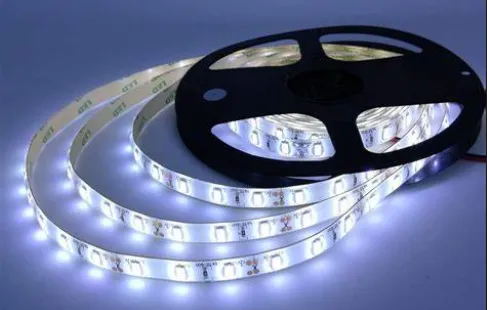
Shipping LED lights from China isn’t like shipping T-shirts. One wrong HS code and your container sits at the port racking up demurrage at $150 a day. A supplier’s fake UL certificate? Your goods get seized by CBP. Skimp on packaging and you open a container in Los Angeles to find shattered panels and corroded drivers — $20,000 in inventory turned into scrap metal.
We’ve been moving container shipping LED lights from China to the USA for over 15 years from our base in Shenzhen. We’ve seen every mistake an LED importer can make — and we’ve learned how to prevent every single one. This guide isn’t a textbook. It’s a practical, no-nonsense walkthrough of what it actually takes to get your LED products from a factory in Zhongshan to a warehouse in Los Angeles — costs, risks, paperwork, and how to choose a forwarder who won’t let you down. If you’re new to importing, start with our overview of Shipping from China to USA for a broad look at the logistics landscape, then dive into the LED-specific details below.
LED Shipping Is Different — Here’s What That Means for Your Bottom Line
LED products aren’t “just another cargo.” They sit at the intersection of fragile, moisture-sensitive, certification-heavy, and tariff-intensive — a combination that punishes inexperience at every step of the supply chain.
Here’s what makes them unique:
They’re fragile in ways most cargo isn’t. Glass diffusers shatter under vibration. Aluminum housings dent when stacked wrong. PCB boards crack from the constant low-frequency hum of a container ship’s engine — 15 to 38 days of it, nonstop.
They hate moisture. Containers breathe. Daytime heat expands the air inside, drawing in humid sea air. Nighttime cooling condenses that moisture onto your cargo. LED drivers corrode. Aluminum spots. Solder joints oxidize. I’ve opened containers in Long Beach where LED panels looked like they’d spent a month in a rainforest.
The paperwork load is heavier than almost any other consumer product. No other general cargo category requires FCC Part 15 plus UL or ETL certification plus potentially Energy Star and DLC just to clear customs and be sold legally in the US market.
The tariff burden is brutal. Chinese LED imports face roughly 35–37.6% in total duties in 2026 when you combine Section 301 (25%), Section 122 (10%), and the MFN base rate (0–5.7%). That’s on top of MPF (0.3464%) and HMF (0.125%). On a $20,000 shipment, you’re looking at $7,000–$7,500 in duties before your goods even leave the port.
And if your product has a battery — portable work lights, solar garden lights, emergency LED fixtures — you’re now in DG Class 9 territory, which means additional declarations, packaging specs, and carrier restrictions. If your LED products contain lithium batteries, make sure you understand the regulations covered in our article on Shipping lithium batteries from China to USA.
What all this means in practice: A $20,000 LED panel order that arrives damaged, under-insured, or held in customs over paperwork doesn’t just cost you the freight. It costs you the season. Delayed inventory equals missed sales equals angry customers. That’s why an LED-experienced forwarder does things differently — they pre-verify supplier certifications before booking, know which HTS codes actually apply to your specific product, design packaging specs for your exact product type, and don’t treat your fragile luminaires like they’re bags of rice. For more on handling sensitive electronics in transit, see our guide to Shipping Electronic Equipment from China to USA.
FCL or LCL? Container Sizes, Costs, and How to Decide
Skip the textbook definitions. Here’s when each option actually makes sense for LED products.
LCL — share a container — makes sense when you’ve got 2 to 8 CBM of relatively durable LED products. Think LED bulbs in partitioned cartons, small flush-mount fixtures, or LED strip lights on reels. You’re not in a crazy rush, and you accept slightly higher per-unit freight plus 5 to 10 extra days for consolidation and deconsolidation at both ends.
FCL — your own container — is the right call when you’re shipping 15+ CBM, or when your product is fragile (panels, chandeliers, glass-heavy decorative fixtures). Your goods get handled once, loaded once, and the container is sealed until it reaches your warehouse. Nobody else’s cargo is stacked on top of yours. Nobody else’s leaky chemical drums are sharing your container space.
The gray zone is 8 to 15 CBM. This is where most importers either overpay or under-protect. Here’s a real example: you’ve got 12 CBM of LED ceiling panels. LCL at $120/CBM runs $1,440 in ocean freight. Sounds cheaper than a 20GP FCL at $2,500, right? Now add LCL’s higher destination handling fees per CBM, the consolidation warehouse charges at origin, and the extra week of waiting at both ends — and suddenly that $1,060 “savings” doesn’t look so good. We run the numbers both ways for every shipment in this range. Often, FCL pulls ahead sooner than you’d expect.
Which container size fits your order?
| Container | Usable Space | Best For | Typical Ocean Freight (to LA) |
|---|---|---|---|
| 20GP | ~28 CBM | Small-to-medium orders — 800–1,200 LED panel lights or a focused product line | $2,200–$3,200 |
| 40GP | ~57 CBM | Mid-size importers — two palletized rows of commercial fixtures with room for accessories | $3,500–$5,500 |
| 40HQ | ~68 CBM | Bulky products — chandeliers, track lighting, large outdoor fixtures | $3,800–$5,800 |
The 40HQ deserves a special mention for LED importers. That extra foot of interior height costs marginally more than a standard 40GP but gives you roughly 11 CBM of bonus space. If you’re shipping bulky but relatively light LED products — chandeliers, decorative pendants, large architectural fixtures — you’ll “cube out” long before you hit the weight limit. The 40HQ is almost always your best value. For smaller shipments, our LCL Shipping from China to USA guide explains when sharing a container makes more sense. And if you’re weighing whether ocean freight is right for your timeline, Sea Freight from China to USA breaks down the trade-offs in detail.
Transit Times and Freight Costs from China to the US
Published “market rates” are useless. The number you see on a freight index doesn’t include BAF (bunker adjustment factor / fuel surcharge), Peak Season Surcharge, origin terminal handling, destination port charges, trucking, or customs brokerage. Quoting just the ocean freight is like quoting a car price without taxes, registration, or insurance.
Here’s what a real shipment actually cost — Shenzhen to Los Angeles, 40GP container of LED ceiling panels, 65 CBM:
| Cost Item | Amount | Notes |
|---|---|---|
| Ocean freight | $3,100 | Direct sailing, major carrier, booked 3 weeks ahead |
| Origin charges (THC, documentation, booking) | $350 | Standard Yantian terminal fees |
| Destination port charges | $450 | LA/LB terminal handling |
| Customs bond (single-entry) | $65 | Required for formal entry (>$2,500) |
| Customs broker fee | $150 | Licensed US broker |
| ISF filing | $35 | 10+2 Importer Security Filing |
| US import duties (~37% of CIF) | $1,200 | Section 301 + Section 122 + MFN |
| Inland trucking (port to warehouse, ~50 miles) | $650 | Fuel included |
| Total landed cost | $5,100 | Door-to-door: 24 days |
That’s $5,100 to move 65 CBM of LED panels from a factory in Guangdong to a warehouse in Southern California. Per panel, the freight cost was negligible. For more pricing scenarios across different container sizes and routes, see our breakdowns of Container Shipping Costs from China to USA and How much to ship a container from China to USA.
What drives your cost up or down:
- Destination coast is the single biggest variable. East Coast is 40–60% more expensive than West Coast. A 40GP to New York/Newark runs $5,000–$7,500 versus $3,500–$5,500 to Los Angeles. If your customers are on the East Coast, sometimes shipping to LA and using rail intermodal to Chicago or New Jersey is cheaper than an all-water route through the Panama Canal. Worth modeling both.
- Season matters — a lot. Q3 (August–October pre-holiday rush) and pre-Chinese New Year (January–February) add $400–$900 in peak season surcharges. Book 3–4 weeks ahead during these windows, or pay the premium.
- Product density changes the math. Heavy LED flood lights or industrial high-bay fixtures will hit a container’s weight limit before they fill its volume. Light but bulky chandeliers do the opposite. Both scenarios affect your per-unit freight cost.
Here’s how transit times compare by route:
| Route | Port-to-Port | Door-to-Door | Best For |
|---|---|---|---|
| Shenzhen → Los Angeles/Long Beach | 14–18 days | 22–28 days | West Coast distribution, Amazon FBA |
| Ningbo → Los Angeles | 15–18 days | 22–28 days | Zhejiang factories, West Coast |
| Shenzhen → New York/Newark | 30–38 days | 40–50 days | East Coast retail, wholesale |
| Shenzhen → Houston | 26–33 days | 35–42 days | Central/South US, industrial projects |
| Shenzhen → Savannah | 28–33 days | 38–45 days | Southeast distribution |
| Shenzhen → Seattle/Tacoma | 14–17 days | 20–26 days | Pacific Northwest, Amazon FBA |
For a full directory of port pairings and transit corridors beyond what’s shown above, explore our Shipping Routes from China to USA page. You might also find How long does sea freight take from China to USA useful for planning your inventory restocking schedule.
We quote all-in — ocean freight plus surcharges plus customs plus delivery — so your landed cost doesn’t surprise you. Our direct contracts with major carriers on the China–Americas lane keep base rates competitive even during peak season.
The Truth About LED Import Tariffs in 2026
If there’s one number you take away from this guide, make it this: roughly 35–37.6%. That’s the effective duty rate on Chinese LED imports into the US in 2026. Here’s how it breaks down:
| Tariff Layer | Rate | Notes |
|---|---|---|
| Section 301 (China-specific) | 25% | In effect since 2018, applies to most LED products (List 3) |
| Section 122 (global) | 10% | Replaced the IEEPA tariffs struck down by the Supreme Court in February 2026 |
| MFN Base Duty | 0%–5.7% | Varies by HTS classification — some LED codes are duty-free, others aren’t |
| MPF (Merchandise Processing Fee) | 0.3464% | Min $31.67, max $614.35 per formal entry |
| HMF (Harbor Maintenance Fee) | 0.125% | On ocean freight value only |
On a $20,000 CIF shipment, that’s roughly $7,000–$7,500 in duties. Budget for it. The time to discover your actual tariff rate is before you place the purchase order, not when CBP sends you a bill.
Which HS Code Applies to Your LED Products?
Getting this wrong is the fastest way to a CBP penalty notice. Here’s a practical reference — but always get a professional classification for your specific product before shipping:
| If You’re Shipping… | Likely HTS Code | Base MFN Rate |
|---|---|---|
| LED bulbs / retrofit lamps (A-type, MR16, etc.) | 8539.50.00 | 0% |
| LED fixtures — ceiling lights, wall sconces, recessed downlights | 9405.40.84 | 3.9% |
| LED strip / tape lights (flexible or rigid PCB) | 9405.40.84 | 3.9% |
| LED display panels / screens (indoor or outdoor) | 8531.20.00 | 0% |
| LED drivers / power supplies (constant current or voltage) | 8504.40.95 | 1.5% |
| Outdoor flood / area lights | 9405.40.84 | 3.9% |
Notice the trap: LED bulbs are duty-free at the MFN level (8539.50.00), but LED fixtures (9405.40.84) carry a 3.9% base rate. Classify your recessed downlight as a “bulb” and you’ve just underpaid. CBP catches these discrepancies.
Certifications Your Supplier Must Have Before the Container Leaves
FCC Part 15 is non-negotiable. Any LED product with electronic components — which is, effectively, all of them — requires FCC compliance. We ask for the FCC test report before we book your container. If your supplier can’t produce it, that’s a red flag you want to see now, not when CBP is holding your shipment.
UL or ETL certification isn’t federal law, but it’s enforced by retailers, electrical inspectors, and insurance companies. If you’re selling through any legitimate US channel — Home Depot, Amazon, an electrical distributor, a commercial contractor — you need it. We verify certification numbers against UL’s public database. Counterfeit UL marks on Chinese LED products are a real problem, and CBP has gotten aggressive about catching them.
Energy Star and DLC are optional for customs but often mandatory for your customer’s ROI. Commercial LED projects that qualify for utility rebates almost always require DLC listing. If your customer is counting on those rebates to justify the project cost, your product needs the cert.
UL, FCC, HS Codes — The Paperwork You Can’t Afford to Skip
Customs clearance for LED products isn’t complicated if the paperwork is right before the container leaves China. If it’s wrong, it gets expensive fast.
Before the vessel departs: We file your ISF (Importer Security Filing, aka “10+2”) at least 24 hours before sailing. Late or missing ISF = $5,000+ penalty from CBP. This isn’t a “we’ll get to it” task — it’s binary. It’s filed or it isn’t.
Before arrival: Your customs bond is active. Entry documents are prepared. HTS codes are confirmed — not guessed, confirmed. If anything looks off, we flag it while there’s still time to fix it.
At the port: CBP reviews the entry. If all paperwork is clean — correct HTS, valid certifications on file, commercial invoice matches the packing list, value declared accurately — release happens in 24 to 48 hours. If not, your container sits. And demurrage starts accruing at $75–$250 per day after the free time window closes (usually 4–5 days).
This is where an LED-experienced forwarder earns their fee. We’ve cleared thousands of LED shipments through LA/LB, New York, Houston, and Savannah. We know what CBP officers look for on LED entries — undervaluation, mismatched HTS codes, missing FCC documentation — and we front-load the paperwork so there’s nothing for them to question. Our customs clearance process includes pre-verifying every supplier certification, cross-checking HTS classifications against the product spec sheet, and filing ISF the moment the booking is confirmed. For a complete walkthrough of current import procedures, see our 2026 US customs clearance for imports from China guide.
How to Pack LED Lights So They Actually Survive the Ocean
LED products fail at sea for three preventable reasons. Here’s what causes each one and how to stop it.
1. Vibration damage. A container on a ship experiences 15 to 38 days of constant low-frequency vibration — not sharp shocks, but a steady hum that works screws loose, cracks solder joints, and grinds unprotected glass against metal. LED panels flat-stacked without foam separators will crack at the corners. Glass diffusers without individual corner protection will shatter where they touch each other. The fix is product-specific: foam corners for flat panels, partitioned inner cartons for bulbs and small fixtures, custom-cut foam inserts for chandeliers and decorative pieces. No generic “FRAGILE” sticker replaces proper internal packaging.
2. Moisture and condensation. This is the one that surprises first-time importers. The container isn’t leaking — it’s sweating. Daytime heat expands the air inside, which absorbs moisture from the humid Pacific atmosphere. When temperatures drop at night, that moisture condenses on your cargo. Over 30 days at sea, this condensation cycle corrodes LED drivers, spots aluminum housings, and degrades chip solder joints. The fix: silica gel desiccant bags inside every carton, plus container desiccant poles mounted on the walls to absorb ambient moisture. For high-value or ultra-sensitive LED equipment — medical lighting, studio-grade panels, large-format display modules — a reefer container set to 15–25°C eliminates the condensation cycle entirely. It costs 20–30% more than a dry container, but on a $50,000 shipment, it’s cheap insurance.
3. Crushing and stacking pressure. Container ships and port yards stack containers up to six high. Inside your container, improperly stacked pallets shift during transit. Heavy pallets placed on top of light cartons crush everything below. The fix is a loading plan that follows one rule: heaviest at the bottom, lightest on top, dunnage airbags filling every gap so nothing can move, period.
Cargo insurance — seriously, don’t skip it. Standard carrier liability under a Bill of Lading covers about $500 per container if your goods are lost at sea. If your $20,000 LED order goes overboard, the shipping line writes you a check for five hundred dollars. All-risk cargo insurance at 110% of your CIF value costs 0.2–0.5% of the insured amount. On a $25,000 shipment, that’s $50 to $125. We include it in every quote by default. You can opt out. Almost nobody does once they understand the math.
EXW, FOB, DDP, and Amazon FBA — Which Setup Works for You?
The Incoterm you choose determines who pays for what, who bears the risk at each step, and how many separate vendors you have to manage. Here’s the practical version for LED importers:
| Incoterm | What You Handle | Best For |
|---|---|---|
| EXW (Ex Works) | Everything from the factory gate forward | Only if you have a China-based logistics team. Most LED importers should avoid this. |
| FOB (Free On Board) | Ocean freight + US customs + delivery | Experienced importers with a US entity and a trusted forwarder. You control the freight. |
| DDP (Delivered Duty Paid) | Nothing — we handle it all | First-time importers, Amazon sellers without a US entity, anyone who wants one predictable price. |
Need more detail? Read our dedicated guides on ddp shipping from china to usa for complete cost and risk breakdowns.
How DDP works for LED shipments with us: You get one number — that’s your all-in price. Behind the scenes, we coordinate factory trucking, export declaration, container booking, ISF filing, ocean freight, US customs entry, duty payment, and last-mile delivery. You track one shipment with one contact person. If customs has a question, we answer it — you don’t get woken up at 3 AM by CBP.
Amazon FBA for LED sellers has its own rulebook. Every unit needs an FNSKU barcode. Cartons can’t exceed 50 lbs unless labeled “Team Lift.” Poly bags need suffocation warnings. Pallets must meet specific dimension and weight specs. Appointments must be scheduled for warehouse delivery. A standard forwarder who doesn’t do FBA will get your shipment rejected at the Amazon dock — rejected FBA shipments mean return freight plus restocking plus weeks of lost sales. Learn how our Shipping from China to Amazon FBA USA service handles labeling, bundling, and palletizing so your LED products arrive at the fulfillment center ready to sell — we prep everything to Amazon spec at our Shenzhen warehouse before the container is even loaded.
What to Look for in a China-to-US Freight Forwarder
Behind every Google search about container shipping is one unspoken question: “Who can I actually trust with my cargo?” Choosing the right Freight Forwarder is the single most important logistics decision you’ll make. Here are five things to look for when you’re evaluating a forwarder for your LED shipments.
1. Product-specific experience — not just “we ship everything.”
A forwarder who moves textiles, machinery, and furniture in equal measure probably doesn’t know that LED panels need desiccants to survive ocean condensation, or that a supplier’s UL certificate should be verified against the public UL database before the container leaves the factory. Look for someone who can tell you the HTS code for your specific LED product without looking it up — 8539.50 for bulbs, 9405.40 for fixtures, 8531.20 for display modules. That fluency only comes from handling LED cargo regularly.
2. Pricing that gives you the full picture upfront.
A quote that only covers ocean freight tells you nothing. By the time you add origin terminal charges, destination port fees, customs brokerage, ISF filing, a single-entry bond, and inland trucking, that “$2,500 to LA” becomes $5,000 or more. A transparent forwarder quotes all-in — every line item down to the $35 ISF fee — so your landed cost doesn’t change after the container is already at sea and you’ve lost your leverage.
3. Direct carrier relationships, not brokered space.
Some forwarders don’t actually book with the shipping line — they buy space through a larger forwarder, adding a layer of markup and removing a layer of accountability. When your forwarder has direct contracts with carriers like COSCO, CMA CGM, Maersk, or Evergreen, you get better rates, priority space allocation during peak season, and a direct line to someone who can fix things when a sailing gets canceled or a container gets rolled.
4. Presence on both sides of the Pacific. A forwarder that only operates in China hands your shipment to a third-party agent at the US port — and now you’re managing two vendors who may or may not talk to each other. Look for a forwarder with US-side operations (or a long-standing, proven US agent network) that handles customs clearance and delivery directly. One point of contact, one chain of accountability.
5. A track record of fixing problems, not just avoiding them.
Smooth shipments don’t prove competence — they prove luck. The forwarders worth trusting are the ones who’ve dealt with CBP holds, rolled bookings, supplier documentation failures, and port congestion — and came out the other side with the cargo delivered and the client kept in the loop. Look for someone who can walk you through a past problem and explain exactly how they solved it. If they don’t have a story like that, they haven’t been doing this long enough.
About Dantful.US International Logistics.
We’re based in Shenzhen, at the center of China’s LED manufacturing corridor — 30 minutes from the Zhongshan lighting hub, an hour from the Yantian container terminal. We’ve handled hundreds of container shipments of LED products from China to the US — everything from LCL batches of LED strip lights to 40HQ containers of commercial fixtures, from standard FOB port-to-port to full DDP door-to-door including Amazon FBA prep. Fifteen-plus years on the China–Americas trade lane. FIATA and IATA certified. Direct contracts with major ocean carriers — we don’t broker space, we own it. Our team pre-checks supplier certifications, classifies HTS codes, and manages ISF filings before your container leaves the factory. For LED importers, that means one partner, one price, and a shipment that arrives intact, on time, with zero paperwork surprises.
FAQ
What’s the cheapest way to ship LED lights from China to the USA?
Sea freight FCL gives you the lowest per-unit cost once you’re shipping 15+ CBM. For 2–15 CBM, LCL is your best option. For samples under 200 kg, use express courier (DHL, FedEx, or UPS).
How long does container shipping take from China to the US?
Port-to-port: 14–18 days to the West Coast (Los Angeles/Long Beach), 30–38 days to the East Coast (New York/Newark). Door-to-door adds 6–10 days for trucking and customs clearance at both ends.
How much import duty will I pay on LED lights from China?
Budget roughly 35–37.6% of your CIF value — Section 301 (25%) + Section 122 (10%) + MFN base (0–5.7%), plus MPF (0.3464%) and HMF (0.125%). Your exact rate depends on your HTS classification. Get a professional determination before you place your order, not after it ships.
What certifications do my LED lights need for the US market?
FCC Part 15 is mandatory for all electronic LED products. UL or ETL certification is required by most US retailers and inspectors — not federal law, but functionally required to sell through any legitimate channel. Energy Star and DLC are optional but unlock utility rebates on commercial projects.
Can I ship LED lights directly to Amazon FBA by container?
Yes — but FBA has strict requirements. Every unit needs an FNSKU label, cartons must stay under 50 lbs unless marked “Team Lift,” and pallets must meet Amazon’s dimension specs. Use a forwarder with FBA experience. Incorrect prep gets your shipment rejected at the dock.
How should LED lights be packed for sea freight?
Foam cushioning on all glass and acrylic components. Anti-static bags for PCBs and drivers. Silica gel desiccants in every carton. Export-grade corrugated cartons (five-layer minimum). Wooden crates for chandeliers or heavy fixtures. Never skimp on packaging — ocean transit is rough, and cargo insurance doesn’t cover damage from inadequate packing.
Which Chinese port should I ship from?
Shenzhen (Yantian) if your factory is in Guangdong or the Zhongshan LED manufacturing hub. Ningbo for Zhejiang and Hangzhou manufacturers. Shanghai for Yangtze Delta suppliers. The port closest to your factory usually minimizes domestic trucking costs — and those savings can be substantial on full container loads.
Get A Free Shipping Quote