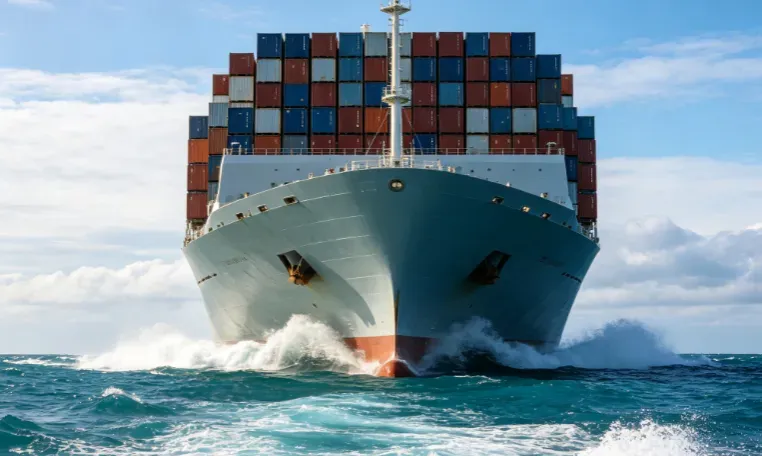
China is Argentina’s second-largest trading partner after Brazil, and the largest supplier of its manufactured goods. In 2024 Argentina imported US$9.31 billion from China — electrical and electronic equipment ($2.04B), machinery ($1.79B), organic chemicals, vehicles, plastics and textiles. For importers, Argentina is South America’s biggest single market for Chinese goods after Brazil, and since 2024 the import side has gotten dramatically simpler: the old SIRA license system and the 30% PAIS tax surcharge are gone, replaced by a streamlined SEDI declaration process.
The question every buyer asks first is simple: how much is shipping from China to Argentina? In Q3 2026, a 20ft container costs $2,300–$4,600, a 40ft container $2,900–$5,900, LCL runs $100–$280 per CBM, and air freight $4.5–$8.5 per kg — before Argentina’s import taxes, which this guide breaks down with real numbers. Based on 15 years of forwarding experience at Dantful.US International Logistics, here is the complete 2026 cost picture. For a full overview of your options, start with our shipping from China to Argentina guide.
2026 Shipping Costs from China to Argentina at a Glance
| Shipping Mode | Cost | Transit Time | Best For |
|---|---|---|---|
| LCL sea freight | $100–$280 per CBM | 35–50 days | Under ~15 CBM, first orders |
| FCL 20ft container | $2,300–$4,600 | 30–42 days | 15–28 CBM or heavy cargo |
| FCL 40ft container | $2,900–$5,900 | 30–42 days | 28–58 CBM, regular imports |
| Air freight (100–300 kg) | $5.0–$8.5 per kg | 5–10 days | Urgent, high-value goods |
| Air freight (300+ kg) | $4.5–$7.5 per kg | 5–10 days | Consolidated air cargo |
| Express courier | $9–$15 per kg | 3–6 days | Documents, samples, e-commerce |
Q3 2026 reality check: South Atlantic rates have eased from the 2024–2025 highs, but peak-season surcharges (August–October) and Red Sea rerouting of Asia–Europe services can add 10–20% to base rates. Booking 3–4 weeks ahead locks in standard pricing.
Sea Freight Costs from China to Argentina: FCL & LCL
FCL Container Rates to Buenos Aires, Rosario & La Plata
Buenos Aires handles roughly 80% of Argentina’s containerized imports, with La Plata, Rosario and Bahía Blanca absorbing the rest. Rates below are realistic Q3 2026 all-in ocean freight ranges (excluding Argentine import taxes):
| Origin Port → Destination | 20ft FCL | 40ft FCL | 40ft HQ |
|---|---|---|---|
| Shanghai → Buenos Aires | $2,300–$4,200 | $2,800–$5,600 | $3,000–$5,900 |
| Shenzhen / Yantian → Buenos Aires | $2,300–$4,400 | $2,900–$5,800 | $3,100–$6,100 |
| Ningbo → Buenos Aires | $2,400–$4,300 | $2,900–$5,700 | $3,100–$6,000 |
| Shanghai → Rosario | $2,200–$4,000 | $2,700–$5,400 | $2,900–$5,700 |
| Shenzhen → La Plata | $2,300–$4,200 | $2,800–$5,500 | $3,000–$5,800 |
| Qingdao → Buenos Aires | $2,600–$4,600 | $3,200–$6,000 | $3,400–$6,300 |
What is inside an FCL quote? Ocean freight, BAF/CAF fuel surcharges, origin THC and documentation, and destination charges at the Argentine terminal (THC, delivery order, customs systems fee). Duties and IVA are collected separately by customs. For the full cost structure of container imports, our how much to ship a container from China to Brazil guide explains every line item — the same components apply on the Argentina lane.
LCL Rates
Below ~15 CBM, LCL is the economical choice:
| Cargo Volume | Typical LCL Rate | Notes |
|---|---|---|
| 1 CBM | $100–$180 | Minimum charge applies |
| 5 CBM | $500–$900 | Good for trial orders |
| 10 CBM | $1,000–$1,800 | Consider FCL above ~15 CBM |
Add a $30–$60 consolidation fee at origin and deconsolidation charges at Buenos Aires.
Air Freight & Express Costs from China to Argentina
Air cargo to Argentina lands at Ministro Pistarini International Airport (EZE) in Buenos Aires — the country’s main cargo gateway — usually on direct freighter or passenger-belly services from Shanghai (PVG), Shenzhen (SZX) or Hong Kong (HKG):
| Weight Tier | Rate (USD/kg) | Transit |
|---|---|---|
| 45–100 kg | $6.0–$8.5 | 5–10 days |
| 100–300 kg | $5.0–$8.0 | 5–10 days |
| 300–500 kg | $4.5–$7.5 | 5–9 days |
| 500+ kg | $4.2–$7.0 | 5–9 days |
| Express (DHL/FedEx/UPS) | $9–$15 | 3–6 days |
Air freight is charged on chargeable weight (actual vs volumetric, divisor 6000), so bulky light goods cost more per kilo than their physical weight suggests. Volumetric weight = length × width × height (cm) ÷ 6000.
Air vs Sea: Which One for Argentina?
| Factor | Sea Freight (FCL/LCL) | Air Freight |
|---|---|---|
| Transit time | 30–50 days | 5–10 days |
| Cost per kg (typical) | $0.3–$0.6 | $4.5–$8.5 |
| Cost per CBM (typical) | $100–$280 (LCL) | $2,200–$4,200 |
| Minimum charge | Container/CBM basis | ~$150–$250 per shipment |
| Best for | Bulk, heavy, non-urgent | High-value, urgent, perishable, spare parts |
Use air for electronics, medical devices, auto spare parts and samples; use sea for everything else — sea wins by 5–10 times on cost per unit. For a full methodology comparison, see our air freight vs sea freight from China to USA guide.
Door-to-Door & DDP Costs
If you want one price with everything included — ocean or air freight, Argentine customs, IVA, duties and delivery to your warehouse in Buenos Aires, Córdoba or anywhere else in the country:
| Service | Typical Q3 2026 Range |
|---|---|
| DDP by sea | $200–$500 per CBM (LCL) or per-container quote (FCL) |
| DDP by air | $5–$13 per kg |
| DDP includes | Freight, customs clearance, IVA, duties, inland delivery |
DDP is especially popular with e-commerce sellers and first-time importers without a registered importer status in Argentina. Weigh it against port-to-port shipping in our door-to-door vs port-to-port shipping pros and cons comparison.
Argentina Import Taxes: The Real Landed Cost
The freight quote is only half the picture — Argentine import taxes are levied on the CIF value (cost + insurance + freight) and can add 25–50% on top. Here is exactly what applies in 2026:
- Import duties (arancel): per the Mercosur Common External Tariff (CET), 0–35% of CIF — most consumer goods run 14–20%, electronics 14–16%, capital goods and machinery often 0–14%, and some textiles reach the 35% peak
- IVA (value-added tax): 21% standard rate (10.5% reduced rate on some goods), charged on CIF + duty
- Statistics fee: 3% of customs value (capped at a fixed maximum) to fund trade statistics
- VAT advance payment: 10–20% withheld at import, creditable against your VAT return
- Income tax advance: 6–11% of the dutiable base, also creditable for registered importers
- Regulatory simplification since 2024: the SIRA import-license regime was replaced by the streamlined SEDI declaration system, and the 30% PAIS tax surcharge expired in late 2024 — import processing is faster and cheaper than it was in 2023
Worked Example: Landed Cost for Three Typical Imports
| Product | CIF Value | Duty (CET) | IVA 21% (on CIF + duty) | Stats Fee + Advances | Total Taxes |
|---|---|---|---|---|---|
| Electronics | $10,000 | 14% = $1,400 | 21% × $11,400 = $2,394 | ~$300 + advances | ≈ $4,100 |
| Machinery | $15,000 | 12% = $1,800 | 21% × $16,800 = $3,528 | ~$450 + advances | ≈ $5,800 |
| Textiles / apparel | $5,000 | 20% = $1,000 | 21% × $6,000 = $1,260 | ~$150 + advances | ≈ $2,400 |
One thing most guides get wrong about Argentina: there is no China–Argentina FTA. The two countries have discussed one for years, but as of 2026 standard Mercosur CET duties apply — any guide promising “FTA savings” on this lane is outdated.
Transit Times from China to Argentina
| Route | Typical Transit | Notes |
|---|---|---|
| Shanghai → Buenos Aires | 32–42 days | Direct sailings on major services |
| Shenzhen / Yantian → Buenos Aires | 30–40 days | Direct or via Santos feeder |
| Ningbo → Buenos Aires | 33–43 days | Strong carrier coverage |
| Via Santos (Brazil) transshipment | 35–48 days | Feeder leg after main voyage |
| Qingdao → Buenos Aires | 37–47 days | Longer for northern China origins |
| Air freight (any origin) | 5–10 days | Via EZE, often direct |
| Express courier | 3–6 days | Door-to-door |
Remember that transit time ≠ delivery time: add 2–4 days for arrival, customs clearance and trucking to your warehouse.
What Actually Drives the Price
- Origin port — Shanghai and Shenzhen are the cheapest load ports; Qingdao and northern ports add $200–$500 per container
- Destination port — Buenos Aires has the deepest carrier competition; Rosario and La Plata quotes run 5–15% higher on thinner schedules
- Season — August–October peak surcharges; Q1 is typically 10–20% cheaper
- Cargo density — heavy cargo favors 20ft; voluminous light cargo favors 40ft HQ; LCL is billed on CBM
- USD exchange — freight is quoted in USD; peso volatility affects local fees (brokerage, trucking), not the ocean rate
- Service level — direct sailings, priority discharge and guaranteed transit cost 5–15% more than standard
How to Get the Lowest 2026 Rates
- Consolidate to FCL above ~15 CBM — per-CBM cost drops sharply once you fill a container
- Book off-peak — avoid August–October and the pre-Lunar New Year rush
- Use Shanghai or Shenzhen as origin — the two cheapest ports on this lane
- Classify your HS code correctly — a correct classification can cut duty by several points; a wrong one triggers penalties
- Register as an importer to recover advances — the VAT and income-tax advances are creditable, but only if you file properly; a local customs broker makes this routine
- Work with a forwarder who itemizes every fee — compare line-by-line quotes, not headline prices. Our shipping containers from China to Brazil guide shows the same cost structure on the region’s biggest lane, and how much is shipping from China to Uruguay covers the neighbor with the simplest import math
Frequently Asked Questions
Q: How much is shipping from China to Argentina in 2026?
A: Expect $2,300–$4,600 for a 20ft container and $2,900–$5,900 for a 40ft to Buenos Aires (excluding Argentine taxes), $100–$280 per CBM for LCL, $4.5–$8.5 per kg for air freight, and $9–$15 per kg for express courier.
Q: How much does it cost to ship a container from China to Argentina?
A: A 20ft FCL container runs $2,300–$4,600 and a 40ft $2,900–$5,900, depending on origin port, season and carrier. Add Argentine import duties (0–35% of CIF) and 21% IVA on top for the full landed cost.
Q: How long does shipping from China to Argentina take?
A: Sea freight reaches Buenos Aires in 30–43 days (direct sailings 30–40 days; transshipment via Santos 35–48 days). Air freight takes 5–10 days and express courier 3–6 days. Add 2–4 days for clearance and delivery.
Q: What taxes do I pay importing from China to Argentina?
A: Import duties per the Mercosur CET (0–35%, most goods 14–20%) plus 21% IVA on CIF + duty, a 3% statistics fee, and creditable VAT/income-tax advances. There is no China–Argentina FTA in force, so no preferential rate applies.
Q: Is air freight or sea freight better from China to Argentina?
A: For cargo above ~0.5 CBM or 300 kg that is not urgent, sea freight (FCL or LCL) is 5–10 times cheaper per unit. Use air only for high-value, time-sensitive or perishable goods — electronics, spare parts, samples.
Q: Can I ship door-to-door from China to Argentina?
A: Yes — DDP service ($200–$500/CBM by sea, $5–$13/kg by air) covers freight, Argentine customs, IVA, duties and final delivery to your door, with one forwarder managing the whole chain.
Ship from China to Argentina with Full Cost Visibility
Argentina is a large, price-sensitive market where import costs have become more predictable since the 2024 reforms: realistic Q3 2026 freight rates, Mercosur duties, 21% IVA and the creditable advances. Add them up correctly and Argentina remains one of South America’s most attractive destinations for Chinese goods.
Ready to ship? Contact Dantful.US for a free, itemized quote — we handle everything from Chinese port pickup to delivery anywhere in Argentina.