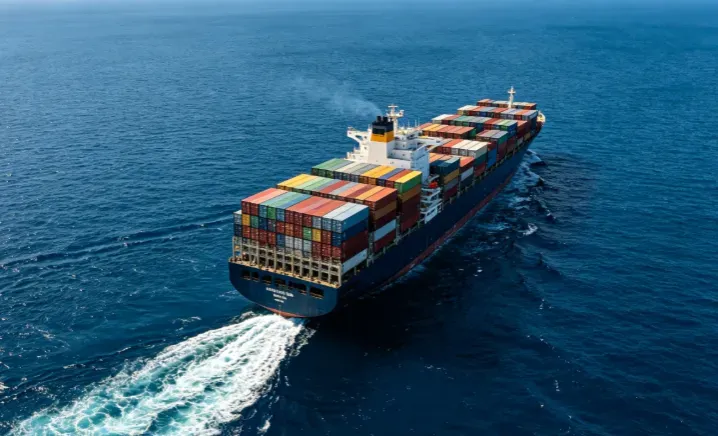
Ningbo is the port the world actually works through. The Ningbo–Zhoushan complex moves more cargo by tonnage than any port on earth — over 1.3 billion tonnes a year, around 39 million TEU of containers — and it sits at the mouth of one of China’s densest export manufacturing regions: Zhejiang province. Yiwu’s small-commodity markets, Ningbo’s auto-parts and appliance factories, Wenzhou’s footwear, Taizhou’s pumps and Shaoxing’s textile mills all feed its terminals.
That matters for Argentina more than most people realize. Argentina buys industrial inputs — auto parts, bearings, tools, machinery, plastics, textiles — in exactly the categories Zhejiang produces, and its import system has gone from Latin America’s most bureaucratic to one of its most open: SIRA licenses abolished, the PAIS tax gone, automatic registration through VUCEA. This guide covers the lane in that new reality: September 2026 FCL and LCL rates, the Ningbo-vs-Shanghai decision, the air option via Pudong, transit times, and what ARCA actually charges in 2026. For the country-level picture, start with our shipping from China to Argentina overview.
The Ningbo System: Four Terminal Zones and the Bonded Advantage
Ningbo is not one dock — it is a system of terminal zones, each with a different role for Argentina-bound cargo:
| Zone | What it handles | Relevance to the Argentina lane |
|---|---|---|
| Beilun | Main deep-water container terminals | Most FCL sailings to East Coast South America load here |
| Chuanshan | Newer deep-water container berths | Overflow mainline capacity; increasingly used for ECSA strings |
| Meishan | Bonded port area (customs-supervised) | LCL consolidation, bonded warehousing and inspections |
| Daxie | Energy, chemicals and some containers | Rarely used for routine Argentina cargo |
What you need to know in practice: export containers normally gate in 3–7 days before the vessel, with the terminal CY cut-off typically 24–48 hours before the estimated departure. Meishan’s bonded status is the quiet workhorse of the lane: consolidators group LCL cargo there under customs supervision, which is how a Yiwu trader shipping 6 CBM of assorted goods to Buenos Aires gets a single bill of lading and one clearance file. For a full look at what a strong forwarding partner does with these terminals, see our sea freight forwarder from China guide.
What Zhejiang Makes That Argentina Buys
The lane’s cargo DNA is industrial, and it maps cleanly onto Argentina’s import demand:
| Zhejiang industry | District | Typical Argentina-bound products |
|---|---|---|
| Auto parts & components | Ningbo city, Cixi | Brake parts, filters, suspension components — feeding Argentina’s Córdoba and Buenos Aires auto clusters |
| Bearings, motors & industrial consumables | Ningbo, Wenzhou | The quietly enormous B2B trade that keeps Argentine factories running |
| Home appliances | Ningbo, Cixi, Yuyao | Small appliances, fans, kettles, parts for local assembly |
| Pumps, valves & hardware | Taizhou, Wenzhou | Irrigation and well pumps for Mendoza and the pampas; industrial hardware |
| Hand & power tools | Yongkang (Jinhua), Ningbo | Tools for construction and the vast repair economy |
| Small commodities | Yiwu | Consumer goods, seasonal retail, promotional products |
| Textiles & fabrics | Shaoxing (Keqiao), Ningbo | Fabrics, yarns and made-up textiles |
Argentina’s post-deregulation import recovery has been led by intermediate goods, capital equipment and auto parts rather than finished consumer goods — precisely Ningbo’s export profile. Importers in Córdoba (autos, agri-machinery), Rosario (agro-industry) and the Buenos Aires industrial belt are the typical buyers. For the full country cost picture, our how much does shipping from China to Argentina cost guide breaks down every charge.
Ningbo or Shanghai? Choosing the Right Load Port for Argentina
Because Shanghai and Ningbo sit 230 km apart and both have strong East Coast South America coverage, the question comes down to your supplier map:
| Factor | Ningbo | Shanghai |
|---|---|---|
| Hinterland | Zhejiang: Yiwu, Wenzhou, Taizhou, Shaoxing, Ningbo | Jiangsu, Anhui and the Yangtze corridor |
| Weekly ECSA sailings | Strong | Marginally stronger |
| Trucking from Zhejiang factories | 0–2 hours | 2–4 hours (adds ~$150–$300 per container) |
| LCL consolidation | Meishan bonded zone, Yiwu groupage | Waigaoqiao consolidation networks |
| Typical base rate to Buenos Aires | $2,400–$4,500 (20ft, Sept 2026) | $2,450–$4,600 (20ft, Sept 2026) |
| Congestion risk | Generally lower | Higher during weather and holiday rushes |
The honest rule: ship from the port closest to the factory. If your supplier is in Zhejiang, trucking to Shanghai only adds cost and a day of lead time — Ningbo’s East Coast South America sailings are frequent enough that you rarely lose an option. If your supplier is in Jiangsu or Anhui, Shanghai wins. For a detailed look at the Shanghai option, including the full ARCA tax stack with a worked example, see our shipping from Shanghai to Argentina guide.
Sea Freight Rates from Ningbo to Argentina (September 2026)
The ranges below are realistic all-in ocean freight quotes for September 2026 — ocean freight, BAF/CAF, origin THC and documentation at Ningbo, and destination charges at the Argentine port — excluding Argentine import taxes:
| Ningbo → | 20ft FCL | 40ft FCL | 40ft HQ |
|---|---|---|---|
| Buenos Aires | $2,400–$4,500 | $2,900–$6,000 | $3,100–$6,200 |
| Dock Sud | $2,500–$4,600 | $3,000–$6,100 | $3,200–$6,300 |
| Rosario (Paraná River) | $2,800–$5,000 | $3,300–$6,500 | $3,500–$6,700 |
September 2026 reality check: August–October is peak season on the South America lane, carrying a 10–20% premium over spring levels. Space tightens again from mid-September as importers rush cargo before China’s National Day holiday (October 1–7) — book 3–4 weeks ahead for a guaranteed sailing.
LCL from Ningbo to Buenos Aires suits shipments below ~15 CBM, and it is the standard answer for Yiwu consolidations:
| Volume | Typical rate | Notes |
|---|---|---|
| 1 CBM | $110–$260 | Minimum charge applies |
| 5 CBM | $550–$1,300 | Typical Yiwu mixed-cargo order |
| 10 CBM | $1,100–$2,600 | Compare FCL above ~15 CBM |
Add a $30–$60 consolidation fee at Ningbo/Meishan and deconsolidation charges in Buenos Aires. The mechanics are the same as on the region’s benchmark lane — our LCL shipping from China to Brazil guide walks through consolidation step by step.
Air Freight from Ningbo: The Three-Hour Pudong Connection
Ningbo Lishe Airport (NGB) has no widebody freighters to South America. The standard play is a 3-hour truck to Shanghai Pudong (PVG) — or to Hangzhou (HGH) for suppliers in the Yiwu corridor — where the widebody and freighter capacity to Ezeiza actually exists. Budget roughly $150–$350 for the truck leg — already inside the rates below.
| Service (PVG → EZE) | Rate (September 2026) | Door-to-door transit |
|---|---|---|
| Consolidated air (100–300 kg) | $5.5–$9.5 per kg | 6–10 days |
| Priority / blocked space (300+ kg) | $5.2–$9.0 per kg | 5–9 days |
| Express courier (parcels, samples) | $10–$15 per kg | 4–7 days |
A $50–$150 minimum charge applies to most air shipments.
Volumetric weight is where air quotes go wrong: airlines bill on the greater of actual and volumetric weight — length × width × height ÷ 6000 (cm). A machinery-spare-parts pallet of 1.2 × 1.0 × 1.2 m that weighs 400 kg bills at 400 kg (volumetric: 240 kg), so dense industrial cargo is charged on actual weight. The same pallet filled with light textile bales at 150 kg actual would bill at 240 kg volumetric. Pack dense, measure honestly, and ask your forwarder for the chargeable weight before you book.
When air makes sense from Ningbo: a broken machine part that stops a Córdoba production line, an urgent automotive prototype, a first trial order too small for LCL, or high-value electronics. Argentine importers increasingly fly the first Ningbo order to validate quality, then shift to LCL/FCL once the reorder volume justifies it.
Air vs Sea from Ningbo to Argentina: A Direct Comparison
| Factor | Air (via PVG → EZE) | Sea (Ningbo → Buenos Aires) |
|---|---|---|
| Door-to-door transit | 6–10 days | 38–60 days |
| Typical cost | $5.2–$9.5 per kg | $0.40–$0.80 per kg-equivalent (FCL) |
| LCL-equivalent cost | — | $110–$260 per CBM |
| Minimum practical charge | $50–$150 | ~$200–$400 (LCL handling) |
| Best for | Downtime parts, samples, high-value, urgent | Volume restocks, heavy or bulky cargo, routine supply |
| Payment/cash-flow profile | Pay premium, restock fast | Tie up inventory capital for 6–9 weeks |
The arithmetic is simple: air earns its premium only when time is the constraint; for routine restocks, sea freight from Ningbo stays dramatically cheaper. For the DDP alternative on this lane, our door-to-door vs port-to-port shipping pros and cons guide helps you compare.
Transit Times: Ningbo → Buenos Aires and What Can Slip
| Routing | Typical transit | Notes |
|---|---|---|
| Ningbo → Buenos Aires (direct string) | 33–43 days | Asia–East Coast South America services calling the River Plate |
| Via Santos transshipment | 40–52 days | When the mainline vessel relays at Santos |
| LCL add-on (consolidation) | +3–7 days | Groupage waiting time at Meishan |
| Air via PVG → EZE | 6–10 days | Door-to-door, including trucking and clearance |
Where the schedule actually slips:
- River Plate draft: the ~10-meter channel limits Buenos Aires to mid-size vessels, so the largest Asia–ECSA ships relay at Santos and feed the River Plate.
- Berth windows: Buenos Aires and Dock Sud run tight berthing schedules in peak season; a missed window costs 2–4 days.
- Clearance: ARCA release typically takes 2–5 working days for clean cargo; the despachante de aduana files through VUCEA before the vessel arrives so clearance starts at berth.
- Inland leg: add 1–3 days of trucking to Córdoba, Rosario or Mendoza after customs release.
- Season: winter fog on the River Plate (May–August) and Argentine long weekends both ripple into schedules.
Importing in the Post-SIRA Era: ARCA, VUCEA and What Your Ningbo Shipment Pays
Argentina’s import regime changed more in 2024–2025 than in the previous decade: the SIRA licensing system was abolished in December 2024, the SEDI statistical declaration was scrapped in February 2025, and the PAIS tax on imports disappeared with it. Customs is run by ARCA through the VUCEA single window, where registered importers file automatically. For the overwhelming majority of goods there is no prior license — a genuinely different Argentina from 2022–2023. A short list of sensitive categories (some textiles, footwear and steel lines) still requires non-automatic licenses; your broker confirms this from the NCM code.
The 2026 tax stack on a Ningbo shipment:
| Tax | Rate | Base | Notes |
|---|---|---|---|
| Import duty (arancel) | 0–35% | CIF value | MERCOSUR CET; most consumer goods 12–20%, capital goods often 0–14% |
| IVA | 21% | CIF + duty | 10.5% for some capital goods |
| IVA advance withholding | ~20% | CIF + duty | Refundable/creditable against the importer’s IVA position |
| Income tax advance | ~6% | CIF value | Refundable/creditable for registered importers |
| PAIS tax | 0% since Dec 2024 | — | Eliminated |
| China FTA | None | — | No preferential agreement — full MFN duties apply |
Cash-flow note for machinery importers: capital goods often sit in the 0–14% duty band, and the 21% IVA can drop to 10.5% for eligible capital equipment — but the advance withholdings (~20% IVA + ~6% income on the CIF base) still hit your cash flow at clearance and are recovered later against your tax position. A complete worked example is in our shipping from Shanghai to Argentina guide — the identical ARCA math applies to Ningbo cargo.
A Realistic Timeline: From Ningbo Factory Gate to Córdoba Warehouse
| When | What happens |
|---|---|
| Week −3 | Send cargo data (product, NCM, weight, dimensions) and book the sailing — critical in September peak |
| Week −2 | Supplier delivers to the Ningbo terminal (or consolidator at Meishan); export customs clearance |
| Week −1 to 0 | Container loads; vessel departs Beilun or Chuanshan |
| Week +5 to +6 | Arrival Buenos Aires or Dock Sud; despachante clears through VUCEA/ARCA (2–5 days) |
| Week +6 to +7 | Customs release; trucking to Córdoba, Rosario, Mendoza or your warehouse |
| Air alternative | 6–10 days door-to-door door, all legs included |
The whole door-to-door process typically runs 42–60 days from Ningbo factory pickup to an Argentine warehouse. If you are new to the lane, a DDP quote removes the ARCA registration, withholding and broker coordination from your plate entirely.
Frequently Asked Questions
Q: How much does it cost to ship from Ningbo to Argentina in 2026?
A: A 20ft container runs $2,400–$4,500 and a 40ft container $2,900–$6,000 from Ningbo to Buenos Aires in September 2026, excluding Argentine import taxes. LCL is $110–$260 per CBM and air freight (via PVG) $5.5–$9.5 per kg.
Q: How long does shipping from Ningbo to Argentina take?
A: Direct services reach Buenos Aires in 33–43 days; transshipment via Santos runs 40–52 days. Add 2–5 days for ARCA clearance and inland delivery. Air freight takes 6–10 days door-to-door.
Q: Should I ship from Ningbo or Shanghai to Argentina?
A: Choose by supplier location. Ningbo wins for Zhejiang suppliers — less trucking, same ocean rates, strong ECSA sailing coverage. Shanghai wins for Jiangsu/Anhui suppliers and offers marginally more weekly departures.
Q: Do I need an import license in 2026?
A: No, for most goods. SIRA was abolished in December 2024 and SEDI in February 2025; importers register automatically through VUCEA. Only a short list of sensitive products still needs a non-automatic license — confirm your NCM with a broker.
Q: What taxes do I pay importing from Ningbo?
A: Duty of 0–35% under the MERCOSUR CET (consumer goods typically 12–20%, capital goods often 0–14%) plus IVA of 21% on CIF + duty, plus refundable advance withholdings of ~20% (IVA) and ~6% (income). The PAIS tax is gone and there is no China–Argentina FTA.
Q: Can I consolidate small Yiwu orders at Ningbo for Argentina?
A: Yes — Yiwu is about 90 km from Ningbo and consolidators run weekly LCL groupage to Buenos Aires at $110–$260 per CBM, with one bill of lading for mixed supplier orders. It is the cheapest way to start importing before you reach container volume.
Make Ningbo Work for Your Argentina Imports
Ningbo gives Argentine importers what they need in 2026: an industrial cargo base matched to Argentine demand, a bonded LCL system that makes Yiwu-scale orders viable, and ocean rates that undercut any alternative origin in China. Combined with an import regime that finally stopped rationing licenses, the lane has become one of the most dependable ways to supply the Argentine market.
Ready to book? Contact Dantful.US for a free, itemized Ningbo–Argentina quote — FCL, LCL, air via Pudong, or door-to-door DDP.