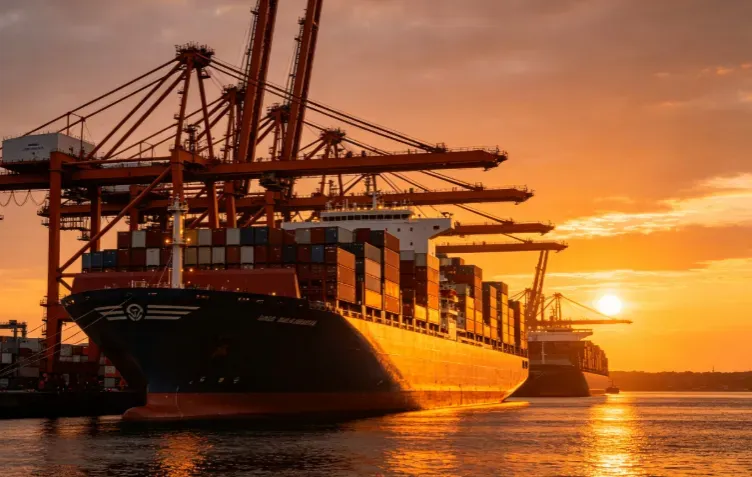
If you are sourcing products from Southern China — whether furniture from Foshan, electronics from Shenzhen, or textiles from Guangzhou’s wholesale markets — you have likely asked yourself the same question: what is the most reliable and cost-effective way to handle shipping from Guangzhou to Canada? With Canada importing over $60 billion worth of goods from China annually and Guangzhou’s Nansha port ranking among the world’s top five container ports, this trade corridor is one of the busiest segments of the broader Shipping from China to Canada trade lane. Yet navigating it efficiently demands understanding your shipping options, customs obligations, and how to avoid the costly mistakes that catch first-time importers off guard.
In this guide, we break down everything you need to know: sea freight versus air freight, FCL versus LCL, DDP door-to-door services, Canada customs clearance requirements, Incoterms selection, Amazon FBA logistics, and a step-by-step shipping process drawn from over 15 years of hands-on freight forwarding experience.
Why Ship from Guangzhou? The Pearl River Delta Advantage
Guangzhou is the logistical heart of the Pearl River Delta (PRD), the world’s largest manufacturing megaregion. Understanding what makes it unique will help you make better shipping decisions before your cargo even leaves the factory.
The Port of Guangzhou (Nansha) handles over 24 million TEUs annually and offers direct Trans-Pacific shipping routes to major Canadian gateways. All major carriers — COSCO, Maersk, MSC, CMA CGM, ONE, and Evergreen — operate regular services on this corridor. Within a two-hour drive of Nansha, you will find Foshan (furniture, ceramics), Zhongshan (lighting, appliances), Dongguan (electronics, machinery), and Shenzhen (consumer electronics) — meaning shorter inland trucking, lower drayage costs, and faster cargo consolidation than shipping from northern Chinese ports.
For air freight, Guangzhou Baiyun International Airport (CAN) is the largest aviation hub in Southern China, handling over 2 million tons of cargo annually with direct services to Vancouver (YVR), Toronto (YYZ), and Montreal (YUL).
| Departure Port | Best For | Trade-Off |
|---|---|---|
| Guangzhou (Nansha) | Comprehensive services, extensive Trans-Pacific sailings | Slightly longer transit vs. Shenzhen for some routes |
| Shenzhen (Yantian/Shekou) | Faster to West Coast, more weekly sailings | Higher port charges, busier terminals |
| Hong Kong | Largest carrier selection | Highest cost, requires cross-border trucking |
For most importers sourcing from Southern China, Guangzhou’s combination of port capacity, carrier availability, and proximity to manufacturing clusters makes it the most practical departure point.
Sea Freight from Guangzhou to Canada: FCL, LCL & Routes
Sea Freight from China to Canada is the backbone of China–Canada trade. For shipments over 2 cubic meters, it is almost always the most economical option. The key decision: full container or shared space?
FCL (Full Container Load)
FCL (Full Container Load) means renting an entire container exclusively for your cargo — the preferred choice when your volume exceeds roughly 15 cubic meters.
| Container Type | Internal Capacity | Typical Payload | Best For |
|---|---|---|---|
| 20GP | ~28 m³ | 18–22 tons | Heavy, dense goods; machinery |
| 40HQ (High Cube) | ~68 m³ | 22–26 tons | Bulky goods; furniture; best value per m³ |
Key routes from Guangzhou Nansha — part of the broader Shipping Routes from China to Canada network:
- → Vancouver: Direct Trans-Pacific, 15–22 days port-to-port. The primary West Coast gateway.
- → Prince Rupert: Alternative West Coast entry, 14–20 days. CN Rail connection offers efficient inland distribution.
- → Montreal: Atlantic/Panama routing, 27–37 days. Shorter inland leg for Quebec and Eastern Ontario importers.
LCL (Less than Container Load)
LCL Shipping from China to Canada lets you share container space, paying only for the cubic meters (CBM) your cargo occupies. Ideal for 2–15 CBM shipments. Rates range from $80 to $150 per CBM. Transit is longer — typically 30–45 days door-to-door — because consolidation and deconsolidation at Container Freight Stations (CFS) add processing time at both ends.
| Your Shipment | Recommendation | Why |
|---|---|---|
| Less than 2 CBM | Air freight or courier | Sea freight minimum charges make tiny LCL uneconomical |
| 2–7 CBM | LCL is ideal | Pay only for space used |
| 7–15 CBM | Compare LCL vs. 20GP | FCL may be cheaper at the upper end |
| 15+ CBM | FCL recommended | Lower cost per CBM, faster transit, less handling |
Pro tip: When shipping LCL from Guangzhou during peak season (July–October), book at least 3 weeks ahead. LCL warehouses fill quickly, and last-minute bookings face space shortages or premium surcharges.
Air Freight from Guangzhou to Canada
When speed matters more than cost, Air freight from China to Canada from Guangzhou Baiyun International Airport (CAN) is the answer.
| Service Type | Door-to-Door | Cost (USD/kg) | Ideal For |
|---|---|---|---|
| Express Air | 3–5 days | $9–13/kg | Critical inventory, time-sensitive contracts |
| Standard Air | 5–7 days | $5–8/kg | Regular high-value shipments |
| Economy Air | 6–10 days | $4–6/kg | Budget-conscious but time-sensitive cargo |
Rates are for 100–500 kg shipments. Per-kg rates decrease as weight increases — shipments over 500 kg qualify for volume discounts.
Chargeable Weight: A Critical Concept
Airlines charge based on chargeable weight — the greater of actual gross weight and volumetric weight:
Example: A pallet measuring 120 × 100 × 80 cm that weighs 90 kg has a volumetric weight of 160 kg. You pay for 160 kg — not 90 kg. Always calculate chargeable weight before requesting air freight quotes.
Major carriers on this route include FedEx (dedicated freighter, CAN→YMX/YVR), China Southern Airlines, Air Canada, and Cathay Pacific (via Hong Kong). The Airway Bill (AWB) serves as your contract of carriage — unlike a sea freight Bill of Lading, an AWB is non-negotiable and does not confer title to goods.
Guangzhou to Canada Shipping Costs & Transit Times Compared
This section brings together costs and times across all modes so you can make an informed decision. For a deeper analysis of rates from all major Chinese ports, see our dedicated Shipping Cost from China to Canada guide.
All-Mode Comparison
| Shipping Method | Shipment Size | Reference Cost (USD) | Door-to-Door | Best For |
|---|---|---|---|---|
| Sea FCL 20GP | ~28 m³ | $3,000–4,500 | 25–35 days | Heavy/bulky goods, machinery |
| Sea FCL 40HQ | ~68 m³ | $4,500–6,500 | 25–35 days | Large-volume, furniture |
| Sea LCL | 1–15 m³ | $80–150/m³ | 30–45 days | Small-to-medium volumes |
| Air Standard | 100–500 kg | $5–8/kg | 7–10 days | High-value, electronics |
| Air Express | <100 kg | $9–13/kg | 3–5 days | Urgent samples, spare parts |
| Courier (DHL/FedEx) | <50 kg | $10–30/kg | 3–6 days | Small parcels, documents |
Actual rates fluctuate weekly based on fuel surcharges, seasonal demand, and carrier capacity. Always get real-time quotes for your specific shipment.
Transit Time Breakdown by Destination
| Stage | Vancouver | Toronto | Montreal |
|---|---|---|---|
| Guangzhou pickup & warehouse | 1–2 days | 1–2 days | 1–2 days |
| China export clearance | 1–2 days | 1–2 days | 1–2 days |
| Ocean transit | 15–22 days | 18–25 days* | 27–37 days |
| Canada customs clearance | 5–7 days | 5–7 days | 5–7 days |
| Final delivery | 1–2 days | 1–3 days | 1–3 days |
| Total (sea, door-to-door) | 24–35 days | 28–40 days | 36–51 days |
*Toronto shipments arrive at Vancouver by sea, then transit inland by CN Rail or CP Rail — adding 5–10 days.
Key factors affecting transit time: peak season congestion (July–October adds 5–10 days), CBSA physical examination (3–7 days), winter rail delays across the Rockies for Eastern Canada shipments, and carrier schedule reliability. For complete transit time data from all Chinese departure ports, read our guide on How Long does it Take to Ship from China to Canada.
Cost-Saving Strategies
- Book early and lock rates. During peak season, locking a rate 4–6 weeks ahead saves 15–30% versus spot-market bookings.
- Optimize container utilization. A 40HQ costs roughly 50% more than a 20GP but offers 140% more volume — upgrade and consolidate if you are filling just over half a 20-footer.
- Flex your departure window. Shifting non-urgent cargo by 2–3 weeks can mean the difference between peak surcharges and standard rates.
- Consider Prince Rupert. For Central/Eastern Canada destinations, routing through Prince Rupert can reduce total transit by 24–48 hours and occasionally offers lower terminal charges.
DDP & Door-to-Door Shipping from Guangzhou to Canada
For many Canadian importers — especially small businesses and first-time buyers — Door to Door Shipping from China to Canada with DDP (Delivered Duty Paid) is the most practical option.
Under DDP terms (Incoterms 2020), the freight forwarder assumes full responsibility: Guangzhou factory pickup, China export clearance, international freight, Canada import clearance through CBSA, payment of all import duties and GST/HST, and final delivery to your door.
| Responsibility | DDP (Delivered Duty Paid) | DDU (Delivered Duty Unpaid) |
|---|---|---|
| International freight | Forwarder | Forwarder |
| Export clearance (China) | Forwarder | Forwarder |
| Import clearance (Canada) | Forwarder | Forwarder arranges, you pay |
| Duties & GST/HST | Included in your quote | You pay directly |
| Receiver needs BN? | No (forwarder is Importer of Record) | Yes |
| Risk of surprise costs | Minimal | You bear customs risk |
The single biggest DDP advantage: you do not need a Business Number (BN) from the Canada Revenue Agency (CRA) or registration on the CARM (CBSA Assessment and Revenue Management) portal — the forwarder acts as Importer of Record, handling all customs formalities. DDP also provides complete cost certainty with a single all-inclusive quote.
Real-world insight: One Vancouver-based furniture retailer sourcing from Foshan spent weeks navigating CARM registration and HS code classification independently before switching to DDP — and ended up saving on brokerage fees while receiving goods two weeks faster. For importers moving less than a container per month, the convenience math of DDP is hard to beat.
Canada Customs Clearance: Documentation, Duties & CBSA Requirements
Canadian customs clearance is where many shipments encounter delays and unexpected costs. Getting documentation right before cargo leaves Guangzhou saves time, money, and stress.
The CARM System
Since 2024–2025, the CARM (CBSA Assessment and Revenue Management) portal has been the mandatory digital platform for all commercial importers. If you act as your own Importer of Record, CARM registration is non-negotiable. Under DDP, your forwarder handles this.
Required Documentation Checklist
| # | Document | Purpose |
|---|---|---|
| 1 | Commercial Invoice | Transaction record: seller, buyer, goods description, value, Incoterms |
| 2 | Packing List | Itemized contents, weights, dimensions per package |
| 3 | Bill of Lading / Airway Bill | Contract of carriage issued by the carrier |
| 4 | Canada Customs Invoice (CCI) | CBSA-specific form for value, origin, and importer details |
| 5 | Certificate of Origin | Verifies manufacturing origin (may qualify for preferential duty rates) |
| 6 | Cargo Control Document | Electronically filed by carrier upon Canadian arrival |
| 7 | Form B3-3 | Formal accounting document for duty and tax assessment |
| 8 | ISF (Importer Security Filing) | Must be filed 24+ hours before loading at the Chinese port |
Duties and Taxes
| Charge | Rate | Notes |
|---|---|---|
| Customs Duty | 0%–18% | Based on HS Code classification |
| GST (Federal) | 5% | On the duty-paid value, all imports |
| Provincial Tax | Varies | BC PST 7%, Ontario HST 13%, Quebec QST 9.975%, Alberta 0% |
Canada’s duty-free threshold is only CAD $20 — dramatically lower than the US $800 — so virtually all commercial shipments are taxable.
HS Codes and ISPM 15
Every product has a six-to-ten-digit HS Code that determines its duty rate. Misclassification — whether accidental or deliberate — triggers CBSA audits, back-dated duty assessments, and penalties. Always verify HS codes through the public Canada Tariff Finder tool.
All solid wood packaging materials must comply with ISPM 15: heat-treated or fumigated and stamped with the official IPPC mark. Non-compliant wood packaging results in shipment rejection at the Canadian port — re-export or destruction at your expense.
Incoterms 2020: Choosing the Right Trade Terms for Guangzhou to Canada Shipments
Incoterms 2020 define who pays for what and where risk transfers from seller to buyer. Choosing the wrong term is one of the costliest mistakes new importers make.
| Incoterm | Who Arranges Freight? | Who Pays Duty/Tax? | Risk Transfers At | Best For |
|---|---|---|---|---|
| EXW | Buyer | Buyer | Guangzhou factory gate | Experienced importers with own logistics |
| FOB | Buyer | Buyer | When goods cross ship’s rail at Guangzhou port | Importers with a Canadian customs broker |
| CIF | Seller (freight + insurance) | Buyer | When goods cross ship’s rail at Guangzhou port | Importers wanting freight arranged but customs flexibility |
| DDU | Seller | Buyer | At the Canadian delivery address | Importers with BN and CARM registration |
| DDP | Seller | Seller | At the Canadian delivery address | First-time importers; SMEs without customs capabilities |
Three common scenarios:
- You have a Canadian customs broker → FOB or CIF. You control destination-side clearance and can leverage any preferential tariff programs you qualify for.
- You are importing for the first time → DDP. No BN, no CARM, no direct CBSA interaction. One price covers everything.
- You only need Guangzhou pickup → EXW. The cheapest Incoterm on your supplier’s invoice — but often the most expensive overall once downstream costs accumulate.
Lesson from the field: We have repeatedly seen importers gravitate toward EXW thinking it minimizes supplier cost, only to discover that consolidating everything under a single DDP arrangement reduces total landed cost by 10–15%. A forwarder with direct carrier contracts secures better rates across the entire chain than an importer negotiating each link separately.
Specialized Shipping: Amazon FBA Canada, E-Commerce & Personal Effects
For sellers shipping inventory to Canadian fulfillment centers, our Shipping from China to Amazon FBA Canada guide covers the complete process. Below is a focused overview for Guangzhou-based sellers.
Amazon FBA Canada from Guangzhou
Shipping inventory to Amazon’s Canadian fulfillment centers — YYZ (Toronto), YVR (Vancouver), YOW (Ottawa), YEG (Edmonton) — requires FBA-specific preparation:
- Labeling: Every unit needs an FNSKU label; every carton needs a Carton Label from Seller Central.
- Palletization: For sea freight, pallets must meet Amazon specifications and ISPM 15 compliance.
- Carrier appointment: Amazon requires pre-booked delivery appointments via Carrier Central.
- Customs: Amazon Canada requires the importer to have a BN and GST/HST registration — or you use a DDP forwarder as Importer of Record.
Sea freight FCL/LCL is standard for planned inventory restocking (30–45 days to FC). Air freight serves as emergency replenishment when stock levels drop unexpectedly (7–10 days).
E-Commerce & Dropshipping
For Shopify, eBay, and independent brand owners, shipping options include direct courier from Guangzhou (DHL/FedEx/UPS, 3–7 days, $10–30/kg), bulk shipping to a Canadian 3PL warehouse for domestic fulfillment, or DDP dropshipping directly from Guangzhou forwarders to Canadian consumers.
Personal Effects & Furniture
Individuals relocating to Canada can import personal effects duty-free under the Settler’s Effects provision — goods must have been owned and used for 6+ months and arrive within 12 months of your arrival. Complete Form BSF186 (Personal Effects Accounting Document). For furniture shipping from Guangzhou (especially from nearby Foshan manufacturers), professional packing, ISPM 15 crating, and DDP door-to-door service are strongly recommended.
How to Ship from Guangzhou to Canada: Step-by-Step & Common Mistakes
The 7-Step Process
- Get Multiple Quotes. Contact 3+ forwarders specializing in the Guangzhou–Canada route. Request all-inclusive DDP quotes with full line-item breakdowns. Ask about peak season surcharges and destination fees.
- Prepare Your Cargo. Export-quality packaging. ISPM 15 compliance for wood materials with IPPC stamp. Clear carton labeling.
- Arrange Pickup. Forwarder trucks goods from your supplier to their Guangzhou consolidation warehouse or directly to Nansha port.
- China Export Clearance. Forwarder submits declarations to Chinese Customs. Typically completes in 1–2 business days.
- International Transport. Cargo loaded onto vessel/aircraft. You receive the Bill of Lading or Airway Bill with tracking information.
- Canada Import Clearance. Forwarder’s customs broker files entry with CBSA via CARM, pays duties and taxes, handles examinations. This is where DDP delivers its greatest value.
- Final Delivery. After customs release, truck delivery to your address — commercial warehouse, Amazon FC, or residential home. Inspect upon delivery and note any damage on the receipt.
For a comprehensive walkthrough covering every shipping mode and Chinese port of origin, see our full How to Ship from China to Canada: Step-by-Step guide.
10 Common Mistakes to Avoid
- Under-declaring cargo value — CBSA audits trigger back-dated duties, interest, and penalties.
- Ignoring ISPM 15 — non-compliant wood packaging gets your shipment rejected at the Canadian border.
- Booking too late in peak season — book 4–6 weeks ahead (July–October) to secure space and reasonable rates.
- Misclassifying HS codes — wrong codes mean wrong duty rates and potential compliance audits.
- Choosing the wrong Incoterm — compare total landed cost under different terms before deciding.
- Skipping cargo insurance — at 0.3%–0.5% of cargo value, insurance is cheap compared to losing an entire shipment.
- Not registering for CARM — if self-importing, CARM is mandatory; start registration months ahead.
- Underestimating clearance time — budget 5–7 business days for CBSA in your timeline.
- Ignoring provincial tax differences — Vancouver (12% total tax) vs. Calgary (5% GST only) significantly changes your landed cost.
- Shopping on freight cost alone — the lowest quote often excludes destination fees. Always compare all-inclusive door-to-door pricing.
Choosing a Guangzhou Freight Forwarder for Canada
When evaluating a Freight Forwarder from China to Canada, assess them on these key dimensions:
| Criteria | What to Look For |
|---|---|
| Experience | 10+ years on the China–Canada corridor |
| Certifications | FIATA, IATA, NVOCC credentials |
| Pricing | All-inclusive quotes with line-item transparency |
| DDP capability | Proven Importer of Record track record |
| Carrier relationships | Direct contracts for competitive rates and space guarantees |
| Account management | Dedicated manager who knows your business |
| Tracking | Online platform with milestone updates |
Dantful.US International Logistics — headquartered in Shenzhen with operations across the entire Pearl River Delta — brings 15+ years of specialized Americas trade lane experience — including dedicated Shipping from China to USA services — to every Guangzhou–Canada shipment. As a FIATA and IATA certified forwarder with direct Trans-Pacific carrier contracts and dedicated account managers, Dantful provides end-to-end DDP door-to-door service from Guangzhou factories to doorsteps across Canada — with complete pricing transparency and no hidden fees.
FAQs
Q1: How long does shipping from Guangzhou to Canada take?
Sea freight door-to-door: Vancouver 24–35 days, Toronto 28–40 days, Montreal 36–51 days. Air freight: 3–10 days. Express courier: 3–6 days.
Q2: How much does it cost to ship a container from Guangzhou to Canada?
A 20GP container to Vancouver costs approximately $3,000–$4,500 USD; a 40HQ costs $4,500–$6,500 USD. Toronto and Montreal are typically 10–20% higher due to inland transportation. These are port-to-port estimates excluding customs and duties.
Q3: What is the cheapest way to ship from Guangzhou to Canada?
For shipments over 2 m³, sea freight LCL at $80–$150/m³. Over 15 m³, sea freight FCL is most economical per unit. For parcels under 30 kg, economy courier is the lowest absolute cost.
Q4: What documents are required for shipping from Guangzhou to Canada?
Commercial Invoice, Packing List, Bill of Lading/Airway Bill, Canada Customs Invoice, Certificate of Origin, Cargo Control Document, and Form B3-3. For ocean freight, ISF must be filed 24 hours before loading.
Q5: Can I ship from Guangzhou to Canada with DDP?
Yes. DDP shipping is widely available to all major Canadian cities. The forwarder handles pickup, China export clearance, international freight, Canada customs clearance, duty and GST/HST payment, and final delivery — for one all-inclusive price.
Q6: How does Amazon FBA shipping from Guangzhou to Canada work?
Requires FNSKU labeling, Carton Labeling, Amazon-spec palletization, ISPM 15 wood compliance, and carrier appointment booking. Experienced FBA forwarders handle labeling in Guangzhou before shipping to YYZ, YVR, YOW, or YEG fulfillment centers.
Get A Free Shipping Quote