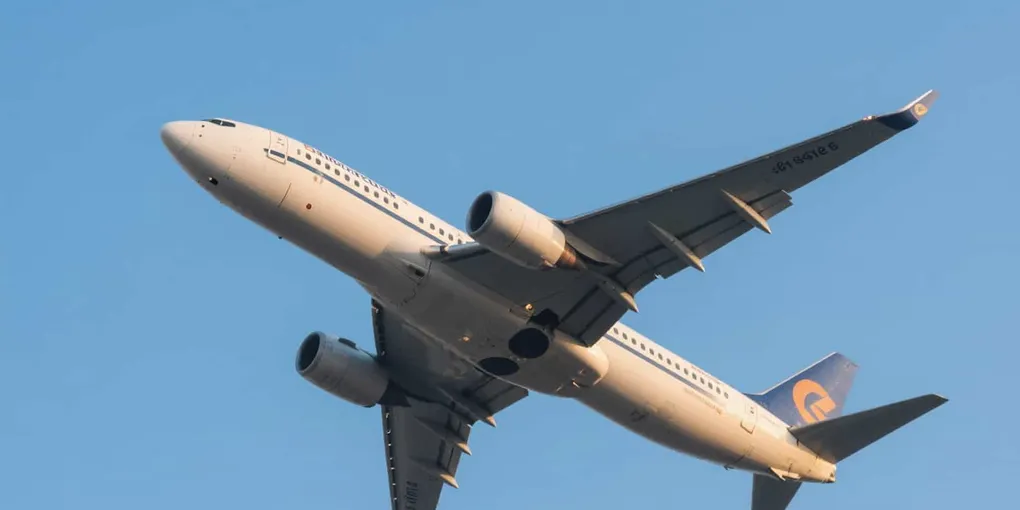
Are you considering using air freight from China to Canada for your supply chain? In this comprehensive, data-driven guide, we bypass the fluff to explore the operational realities of air freight. You’ll learn exactly how air freight costs are calculated (including hidden terminal fees), how transit times are broken down between actual flight and ground handling, and how to navigate Canadian customs clearance without unexpected holds.
Whether you are an Amazon FBA seller, an electronics distributor, or importing high-value equipment, understanding these logistics intricacies will help you minimize risks and avoid costly delays.
Understanding Air Freight from China to Canada
Air freight shipping is the transportation of goods by aircraft. Unlike sea freight or rail freight, air freight is designed for high-value, time-sensitive, or perishable goods. With air freight, shipments travel from airport to airport (Port to Port), supported by a network of ground handlers, customs brokers, and freight forwarders to achieve a complete Door to Door solution.
Common Goods Transported by Air
Certain products are uniquely suited for air cargo due to their high value-to-weight ratio, fragility, or urgency. The most commonly air-shipped goods between China and Canada include:
| Category | Example Goods | Why Air Freight? |
|---|---|---|
| Electronics | Mobile phones, laptops, PCBs | High value, rapid market depreciation |
| Pharmaceuticals | Medicines, vaccines, medical devices | Requires strict temperature control & speed |
| Fashion & Apparel | Seasonal collections, fast-fashion samples | Short product life cycles |
| Automotive Parts | High-value spare parts, EV components | Prevents expensive assembly line downtime |
| E-commerce | Fast-moving consumer goods, Amazon FBA | Meets strict customer delivery expectations |
| Perishables | Seafood, flowers, fruits | Short shelf life |
Decision Framework: When to Choose Air Freight
Choosing between Air Freight and Sea Freight isn’t just about speed; it’s a strategic cost-benefit analysis. Choose air freight if your shipment meets these criteria:
- Urgency: Your deadline is within 7-10 days.
- High-Value Cargo: The cost of the freight is less than 15-20% of the total cargo value.
- Low Weight/Volume: Your shipment is typically under 500 kg or 2 CBM. For very light shipments, air freight can sometimes be more economical than LCL (Less than Container Load) sea freight once destination terminal fees are factored in.
- Inventory Costs: The cost of holding inventory (or stockouts) exceeds the premium paid for air transport.
If your cargo is heavier or not time-critical, review our comprehensive Shipping from China to Canada guide to compare Sea Freight and Door to Door alternatives.
Advantages of Air Freight
Speed vs. Sea Freight Comparison
While sea freight from China to Canada (e.g., Shanghai Port to Vancouver Port) may take 20–40 days depending on port congestion, air shipments arrive within 3–7 days.
| Shipping Method | Scenario | Typical Transit Time (China–Canada) |
|---|---|---|
| Air Freight | Urgent, high-value, < 500kg | 3–7 days |
| Sea Freight (FCL) | High volume, cost-sensitive | 20–35 days |
| Sea Freight (LCL) | Medium volume, flexible time | 25–40 days |
| Express Courier | Small parcels < 50kg | 1–3 days |
Security and Predictability
Air freight involves minimal physical handling compared to sea freight transshipments. Airports adhere to strict security protocols, significantly reducing the risk of cargo theft, damage, or loss. Furthermore, airlines operate on highly predictable schedules, meaning fewer unexpected delays due to blank sailings (a common issue in ocean freight).
Major Airports for Air Freight between China and Canada
Key Chinese Airports (Origin)
Choosing the correct departure airport in China impacts both cost and speed.
| Airport Name | Location | IATA Code | Key Features & Best For |
|---|---|---|---|
| Shanghai Pudong | Shanghai | PVG | Largest cargo hub; ideal for electronics and general cargo |
| Guangzhou Baiyun | Guangzhou | CAN | Major hub for South China; garments, textiles, and e-commerce |
| Shenzhen Bao’an | Shenzhen | SZX | Strategic for high-tech goods, cross-border e-commerce, battery cargo |
| Beijing Capital | Beijing | PEK | Extensive global network, strong for Northern China manufacturing |
| Hong Kong Intl. | Hong Kong | HKG | Excellent for sensitive items (like batteries) with easier export procedures |
Major Canadian Airports (Destination)
In Canada, air cargo is distributed through key hubs equipped with advanced CBSA clearance facilities:
| Airport Name | Location | IATA Code | Key Features |
|---|---|---|---|
| Toronto Pearson | Toronto | YYZ | Busiest cargo airport; main hub for Eastern Canada and Amazon FBA |
| Vancouver Intl. | Vancouver | YVR | Primary gateway for Pacific trade; fastest route from Asia |
| Montreal-Trudeau | Montreal | YUL | Strategic for Quebec and Eastern distributions |
| Calgary Intl. | Calgary | YYC | Key distribution center for Western provinces |
Air Freight Cost from China to Canada
Fee Composition: Beyond the Base Rate
Many shippers are surprised by final invoices because they only consider the “Base Rate.” A genuine air freight quote should itemize the following:
- Air Freight Base Rate: Charged per kg.
- Fuel Surcharge (FSC) & Security Surcharge (SSC): Fluctuates weekly based on global oil prices and airline policies.
- Terminal Handling Charges (THC): Fees charged by the origin and destination airports for X-ray, building ULDs (Unit Load Devices), and breakdown.
- Customs Clearance Fees: Brokerage fees for filing export (China) and import (Canada) entries.
- Local Transport / Cartage: Trucking from the supplier to the Chinese airport, and from the Canadian airport to the final door.
The Dimensional Weight Trap (How to Calculate)
Airlines charge based on Chargeable Weight, which is the greater of the Actual Gross Weight or the Volumetric Weight. Standard Air Freight Volumetric Divisor: 1 CBM = 167 kg (or Length × Width × Height in cm ÷ 6000).
Real-World Scenario: You are shipping large, lightweight winter jackets from Shenzhen (SZX) to Toronto (YYZ).
- Actual Weight: 200 kg
- Dimensions: 2.0m x 1.5m x 1.5m = 4.5 CBM
- Volumetric Weight: 4.5 x 167 = 751.5 kg
- Chargeable Weight: 751.5 kg (You pay for 751.5 kg, not 200 kg).
Estimated Cost Ranges (2026 Standards)
Note: The following are estimated Port-to-Port rates (excluding destination THC, customs, and delivery). Rates surge significantly during peak seasons (Q4).
| Route | Est. Rate/kg (General Cargo) | Est. Rate/kg (Battery/Sensitive) | Transit Time |
|---|---|---|---|
| Shanghai (PVG) → Toronto (YYZ) | $4.50 – $6.50 | $5.50 – $7.50 | 3–5 days |
| Shenzhen (SZX) → Vancouver (YVR) | $4.20 – $6.00 | $5.00 – $7.00 | 3–4 days |
| Hong Kong (HKG) → Montreal (YUL) | $4.80 – $6.80 | $5.20 – $7.20 | 4–6 days |
Trench Experience: How to Avoid Peak Season Rate Hikes
During peak seasons (September to December), shipping spaces tighten. To mitigate costs:
- Book 7-10 days in advance.
- Consider Deferred Service: If you have a slight buffer, choosing a connecting flight (e.g., transiting via South Korea or Taiwan) can save $1-$2 per kg compared to direct flights.
- Optimize Packaging: Work with your supplier to compress packaging and eliminate empty space, drastically reducing your volumetric weight.
Air Freight Shipping Time: The Reality Check
When a forwarder says “3 to 7 days,” understand that the actual flight time from China to Canada is only about 12-15 hours. The rest is ground operations.
Time Breakdown
- Origin Handling & Export Clearance (1-2 Days): Cargo delivery to the terminal, X-ray screening, and Chinese customs release.
- Flight Time (1-2 Days): Including direct flights or transshipment layovers.
- Destination Recovery & Import Clearance (1-3 Days): Unloading, breaking down the ULDs at YYZ/YVR, and CBSA clearance.
Risk Prompt: “Cargo Rolled”
What is it? Sometimes, airlines overbook flights or prioritize higher-paying cargo. If your cargo is “rolled,” it is bumped to the next available flight, causing a 1-3 day delay. How to avoid it? Work with forwarders like Dantful.US who hold blocked space agreements (BSA) with major airlines, ensuring your cargo boards as planned even during peak congestion.
Customs & Compliance: Canadian Local Experience
Navigating Canada Border Services Agency (CBSA) requires precision. Even minor documentation errors can result in expensive terminal storage fees.
Required Document Checklist
- Air Waybill (AWB): The primary transport contract.
- Commercial Invoice: Must clearly state the transaction value, currency, and terms of sale (e.g., FOB, EXW).
- Packing List: Detailed breakdown of weights, dimensions, and materials.
- Manifest Data: Forwarders must submit electronic pre-arrival data to CBSA (eManifest) prior to the flight’s arrival.
Trench Knowledge: Common CBSA Holds and Risks
- CFIA (Canadian Food Inspection Agency) Holds: If your cargo includes solid wood packaging materials (pallets, crates), they must be treated and stamped with the ISPM-15 mark. Unmarked wood will be refused entry and sent back at the shipper’s expense.
- Valuation Scrutiny: Under-declaring the value of goods (especially e-commerce parcels) is heavily penalized by CBSA. Always declare the true commercial value.
- Oversized/Special Cargo: Items requiring special handling (like lithium batteries or chemicals) require MSDS (Material Safety Data Sheets) and UN testing reports prior to booking.
Disclaimer: Customs regulations change frequently. Please consult with a licensed Canadian customs broker or your Dantful representative for compliance on specific HS codes.
Why Choose Dantful.US International Logistics
Selecting a reliable freight forwarder is the most critical decision in your supply chain. Dantful International Logistics specializes in the Americas dedicated line, offering:
- Transparent Pricing: No hidden fees. Our quotes clearly separate freight, THC, customs, and delivery.
- Authentic Local Operations: Strong relationships with terminal handlers at YYZ and YVR ensure fast cargo recovery.
- Amazon FBA Expertise: We handle the entire process from Chinese factories to Canadian FBA centers (YVR2, YYZ4, etc.), including labeling, palletizing, and delivery appointments.
- One-Stop Solutions: We provide sea freight, air freight, customs clearance, insurance, and door-to-door delivery.
Contact Dantful.US today with your packing list, and our team will provide a tailored routing plan and competitive pricing within 24 hours.
FAQs
Q1: What happens if my cargo arrives at YYZ on a weekend?
A1: Most airlines fly on weekends, but standard CBSA commercial clearance and forwarder ground handling usually resume on Monday. For hyper-urgent shipments, specialized weekend clearance can be arranged in advance at a premium.
Q2: Are there additional fees for shipping batteries by air?
A2: Yes. Lithium batteries (e.g., in electronics) are classified as Dangerous Goods (DG). They require specialized DG packaging, UN38.3 testing reports, and incur a DG handling surcharge by the airline. They also must depart from airports equipped to handle them (like HKG or SZX).
Q3: Can air freight deliver directly to an Amazon FBA warehouse in Canada?
A3: Yes. Through our Door to Door service, we handle the air transit, Canadian customs clearance (acting as the importer of record if needed via DDP), and the final truck delivery by appointment to the FBA center.
Q4: How do I track my air freight shipment?
A4: You can track your shipment using the Master Air Waybill (MAWB) number directly on the airline’s cargo tracking site, or via the Dantful.US tracking portal for end-to-end visibility.
Q5: What is the exact transit time for air freight from China to Canada?
A5: The total transit time is typically 3 to 7 days. While the actual flight from cities like Shanghai (PVG) or Shenzhen (SZX) to Toronto (YYZ) or Vancouver (YVR) only takes 12-15 hours, you must factor in 1-2 days for origin export clearance and loading, plus another 1-3 days for destination unloading and CBSA import clearance.
Q6: How much does air freight from China to Canada cost?
A6: Air freight costs vary widely based on market conditions, typically ranging from $4.20 to $6.80 per kg for general cargo. However, your final cost is based on the Chargeable Weight (the greater of actual weight or volumetric weight). Remember that a complete quote should also include fuel surcharges, security fees, terminal handling charges (THC), and customs brokerage fees.
Get A Free Shipping Quote