Port of New York and New Jersey
Port Overview
Overview of the Port of New York and New Jersey
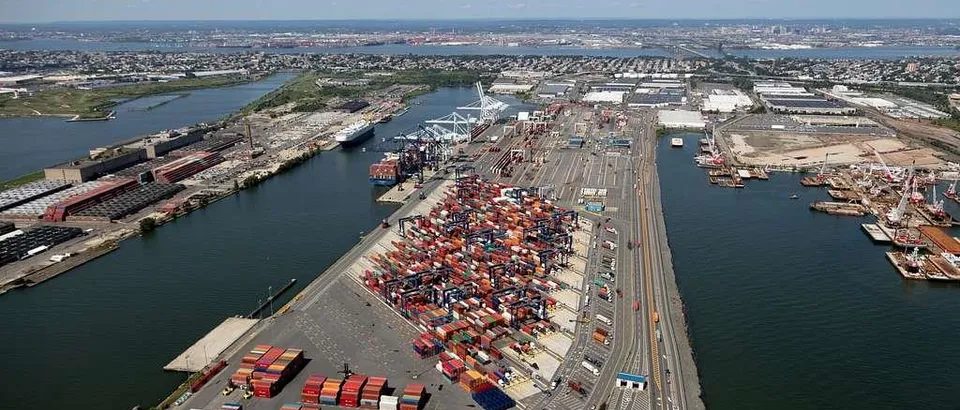
The Port of New York and New Jersey is the busiest container port on the US East Coast and the third-largest in the United States by container volume. Handling over 8.7 million TEUs annually, it serves as the premier maritime gateway to the largest and most affluent consumer market in North America. For importers shipping from China to USA, NY/NJ provides unmatched access to the Northeast corridor — a region of over 46 million consumers with the highest per-capita income in the country.
Strategically positioned to receive cargo via both the Panama Canal and Suez Canal routes, the port offers routing flexibility that no West Coast gateway can match. Its deep-water berths, modern terminal infrastructure, and extensive on-dock intermodal rail connections make it the definitive East Coast hub for containerized imports from Asia. For real-time terminal updates, tariff schedules, and official notices, visit the Port Authority of New York and New Jersey website.
Port Basics at a Glance
| Detail | Information |
|---|---|
| Port Code (UN/LOCODE) | USNYC |
| Operator | Port Authority of New York and New Jersey (PANYNJ) |
| Annual Container Volume | 8.7+ million TEUs |
| Channel Depth | 50 feet (15.2 meters) |
| Bayonne Bridge Clearance | 215 feet (65.5 meters) — accommodates vessels up to 18,000 TEUs |
| On-Dock Rail | ExpressRail Network (CSX & Norfolk Southern) |
| Foreign Trade Zone | FTZ No. 49 |
Port Location & Service Area
The port occupies a strategic position at the mouth of the Hudson River, straddling the New York-New Jersey state line at approximately 40.67° N, 74.05° W — making it the northernmost major container port on the US East Coast. Marine terminals are distributed across Port Newark, Elizabeth, Bayonne, Jersey City, and Staten Island. The harbor benefits from a naturally deep, sheltered estuary with direct access to North Atlantic shipping lanes. The main navigation channels are maintained at 50 feet, allowing ultra-large container vessels (ULCVs) to call without tidal restrictions.
Markets Served
Within a single day’s truck drive, cargo discharged at NY/NJ reaches:
- New York Metro Area — the largest metropolitan economy in the US, representing over $2 trillion in GDP
- New Jersey — a dense corridor of pharmaceutical companies, distribution centers, and retail headquarters
- Pennsylvania — Philadelphia metro and the Lehigh Valley logistics hub
- Connecticut & Massachusetts — New England consumer markets and advanced manufacturing
- Midwest — via ExpressRail, containers reach Chicago, Detroit, and Cleveland within 3–5 days
Port Terminals & Facilities
The Port of New York and New Jersey encompasses six major container terminals with specialized capabilities.
Port Newark-Elizabeth Marine Terminal
The largest container terminal complex on the US East Coast, spanning over 2,100 acres across Newark and Elizabeth, New Jersey. Key facilities include:
- 8 container berths with 20+ super post-Panamax ship-to-shore cranes
- ExpressRail Port Elizabeth — on-dock intermodal rail with direct CSX and Norfolk Southern connections
- Advanced gate systems using RFID and optical character recognition (OCR) to minimize truck turn times
- Dedicated reefer infrastructure for temperature-controlled cargo
The complex is operated primarily by Maersk (APM Terminals) and Port Newark Container Terminal (PNCT).
GCT Bayonne
A semi-automated terminal in Bayonne, New Jersey, capable of handling vessels up to 18,000 TEUs thanks to the raised Bayonne Bridge (completed 2019). Features 3 deep-water berths, 8 ship-to-shore cranes, and on-dock ExpressRail. Serves as a key terminal for CMA CGM, COSCO, and Evergreen alliance services.
APM Terminals Elizabeth
A highly automated facility within the Port Elizabeth complex, this Maersk-operated terminal offers the port’s densest crane deployment per berth and advanced truck appointment systems. Its proximity to ExpressRail infrastructure makes it a preferred choice for high-volume importers requiring fast inland distribution.
Additional Terminals
- Howland Hook Marine Terminal (Staten Island) — operated by CMA CGM, featuring 3 container berths and ExpressRail Staten Island intermodal access
- Red Hook Container Terminal (Brooklyn) — a niche facility for short-sea and Caribbean services
- Auto Marine Terminal (Bayonne & Newark) — dedicated RoRo facility for vehicle imports
Shipping Routes from China to This Port
Container shipping lines operate weekly services from all major Chinese ports to NY/NJ, primarily via two routing corridors: the Panama Canal and the Suez Canal.
From Shenzhen (Yantian / Shekou)
As China’s largest export gateway, Shenzhen offers the highest sailing frequency to NY/NJ. Major carriers — including Maersk, MSC, CMA CGM, COSCO, and Hapag-Lloyd — operate Asia-US East Coast strings calling Yantian with NY/NJ as the final discharge port. Both Panama and Suez Canal options are available.
From Shanghai
Shanghai-NY/NJ is one of the most heavily served Trans-Pacific East Coast lanes. Carriers including ONE, Yang Ming, and ZIM maintain weekly sailings with both canal routing choices, giving shippers flexibility between speed and cost.
From Ningbo-Zhoushan
Frequently paired with Shanghai on pendulum services to the US East Coast. Importers consolidating Yangtze River Delta cargo often route through Ningbo for NY/NJ-bound vessels.
From Other Chinese Ports
| Origin Port | Service Pattern | Notes |
|---|---|---|
| Qingdao | Direct & transshipment | Direct strings available; some via Busan or Shanghai |
| Xiamen | Primarily transshipment | Hubbed through Shenzhen or Shanghai |
| Tianjin (Xingang) | Transshipment | Typically via Busan or Shanghai; longest overall transit |
Transit Time from China to the Port of New York and New Jersey
Transit times to NY/NJ vary by origin port, routing choice, and seasonal conditions. For a broader comparison of transit times across all major US gateways, see our guide on how long sea shipping takes from China to USA. The table below shows typical port-to-port sailing times:
| Origin Port (China) | Via Panama Canal | Via Suez Canal | Notes |
|---|---|---|---|
| Shenzhen (Yantian) | 30–34 days | 32–36 days | Highest sailing frequency |
| Shanghai | 32–36 days | 34–38 days | Longer North Pacific transit to Panama |
| Ningbo | 33–37 days | 35–39 days | Often combined with Shanghai on shared strings |
| Qingdao | 34–38 days | 36–40 days | Longer northern routing |
| Xiamen | 31–37 days | 34–38 days | Typically via transshipment |
| Tianjin (Xingang) | 36–42 days | 38–44 days | Longest transit; transshipment required |
Factors Affecting Transit Time
- Canal booking availability — Panama Canal transit slots require advance reservation; seasonal demand can shift schedules
- Weather — North Atlantic winter storms (December–March) and Pacific typhoon season (May–November) may cause delays
- Port congestion — NY/NJ terminal gate and berth availability fluctuates during import surges
- Carrier schedule reliability — on-time performance varies by alliance, typically ranging from 65% to 80% on this trade lane
Shipping Cost from China to the Port of New York and New Jersey
Key Factors Influencing Rates
Shipping costs from China to NY/NJ fluctuate based on multiple market dynamics. For a comprehensive overview of ocean freight options, rates, and carrier choices across all US gateways, see our guide to sea freight from China to USA.
- Carrier capacity management — blank (canceled) sailings by major alliances tighten capacity and push spot rates higher
- Canal transit fees — both Panama and Suez tolls are embedded in the ocean freight rate
- Bunker Adjustment Factor (BAF) — fuel surcharges adjust monthly or quarterly based on global fuel price indexes
- Peak season demand — July through October sees elevated rates for holiday inventory; a secondary peak surrounds Chinese New Year (January–February)
- Equipment imbalances — container shortages at Chinese origin ports during strong import cycles drive up pricing
NY/NJ Port Cost Overview
All-in ocean freight for a 40-foot container (FEU) from major Chinese ports to NY/NJ typically ranges from $3,500 to $8,000, depending on market conditions. NY/NJ terminal handling charges tend to be higher than Gulf Coast or Southeast ports, reflecting the region’s operating costs. However, this premium is often offset by significantly lower inland transportation costs for Northeast-destined cargo.
How to Reduce Shipping Costs
- Negotiate annual service contracts to lock in base rates and avoid spot market volatility
- Use FCL (full container load) over LCL to reduce per-unit freight cost
- Transload at NY/NJ — import 40-foot ocean containers and transfer cargo into 53-foot domestic trailers for better cubic efficiency on inland moves
- Leverage ExpressRail to avoid expensive Northeast trucking for Midwest-bound cargo
- Schedule off-peak shipments — November through early January (excluding pre-CNY rush) historically sees softer rates
- Partner with an experienced freight forwarder who holds established carrier relationships and volume-based rate commitments on the NY/NJ trade lane
Warehousing & Distribution Services
The NY/NJ metro area hosts one of the largest concentrations of industrial real estate in the United States — over 700 million square feet of warehouse and distribution space within a 50-mile radius of the port. Importers should also evaluate whether door-to-door vs port-to-port shipping better fits their supply chain, as NY/NJ’s extensive warehouse and transload infrastructure supports both models effectively.
Bonded Warehousing
Multiple bonded warehouse facilities operate within the port district, allowing importers to store cargo under customs supervision before duty payment. This is valuable for businesses that pre-position seasonal inventory for peak demand, inspect and sort goods before formal customs entry, or defer duties while final US consignees are determined.
Foreign Trade Zone No. 49
The Port of New York and New Jersey operates FTZ No. 49 — one of the largest Foreign Trade Zones in the country. Goods entering the FTZ are exempt from customs duties until they leave the zone for US consumption. Companies can store, repackage, label, assemble, or manufacture within the zone. Duties are paid only on the final product entering US commerce, and no duties apply to re-exported goods.
3PL & Fulfillment Centers
The NY/NJ logistics corridor is home to major third-party logistics (3PL) providers offering:
- E-commerce fulfillment integrated with Shopify, Amazon, and other platforms
- Pick-and-pack services with same-day or next-day SLAs
- Value-added services — kitting, labeling, quality inspection, and returns processing
- Cross-docking for immediate distribution without warehousing
Cold Chain Storage
Substantial cold storage infrastructure supports temperature-controlled imports from China, including food-grade products, pharmaceuticals, and specialty chemicals requiring strict environmental controls.
Frequently Asked Questions
How long does sea shipping from China to the Port of New York and New Jersey take? Transit time typically ranges from 30 to 40 days depending on the origin port and routing. Shenzhen to NY/NJ averages 30–34 days via the Panama Canal, while northern ports like Tianjin take 36–42 days.
What is the largest vessel that can call at NY/NJ? Vessels up to 18,000 TEUs can access key terminals thanks to the Bayonne Bridge raising project (completed 2019), which lifted air-draft clearance to 215 feet. The 50-foot main channel depth accommodates all current ULCV classes without tidal restrictions.
Which ocean carriers serve NY/NJ from China? All major global carriers — Maersk, MSC, CMA CGM, COSCO, Hapag-Lloyd, ONE, Evergreen, Yang Ming, ZIM, and HMM — operate weekly China-to-NY/NJ services through alliance agreements.
Is there direct rail service from NY/NJ to inland US destinations? Yes. The ExpressRail network provides on-dock and near-dock intermodal connections to both CSX and Norfolk Southern Class I railroads, reaching Chicago, Detroit, Cleveland, and other Midwest hubs within 3–5 days from vessel discharge.
How does NY/NJ compare to the Port of Los Angeles for China imports? Los Angeles offers faster ocean transit (12–15 days vs. 30–35 days), but NY/NJ delivers lower inland transportation costs for Northeast and Midwest destinations, immediate access to the largest US consumer market, and routing flexibility via both Panama and Suez canals. Many importers maintain distribution capabilities on both coasts to optimize for speed, cost, and supply chain resilience.