Port of Charleston
Port Overview
The Port of Charleston — operated by the South Carolina Ports Authority (SCPA) — is one of the deepest and most efficient container gateways on the US East Coast. With a recently deepened 52-foot harbor, modern terminal infrastructure, and an innovative inland port network, Charleston has become a strategic entry point for importers managing freight shipping from China to USA. For businesses shipping from China to USA and serving the booming manufacturing and consumer markets of the Carolinas, Georgia, and Tennessee, Charleston offers a compelling combination of speed, reliability, and cost efficiency.
Unlike larger Northeast gateways, Charleston consistently ranks among the most productive US ports in terms of crane moves per hour and truck turn times. Its deep-water advantage — the deepest harbor on the East Coast — means fully loaded post-Panamax vessels can call without tidal restrictions, a critical edge as container ships continue to grow in size.
Port Basics at a Glance
| Detail | Information |
|---|---|
| Port Code (UN/LOCODE) | USCHS |
| Operator | South Carolina Ports Authority (SCPA) |
| Annual Container Volume | 2.8+ million TEUs |
| Channel Depth | 52 feet (15.8 meters) — deepest on the US East Coast |
| Main Container Terminals | Wando Welch, North Charleston, Hugh K. Leatherman |
| Inland Ports | Inland Port Greer, Inland Port Dillon |
| On-Dock Rail | CSX and Norfolk Southern via SC Ports’ intermodal yards |
| Foreign Trade Zone | FTZ No. 21 (Charleston) & FTZ No. 38 (Spartanburg/Greer) |
Port Location
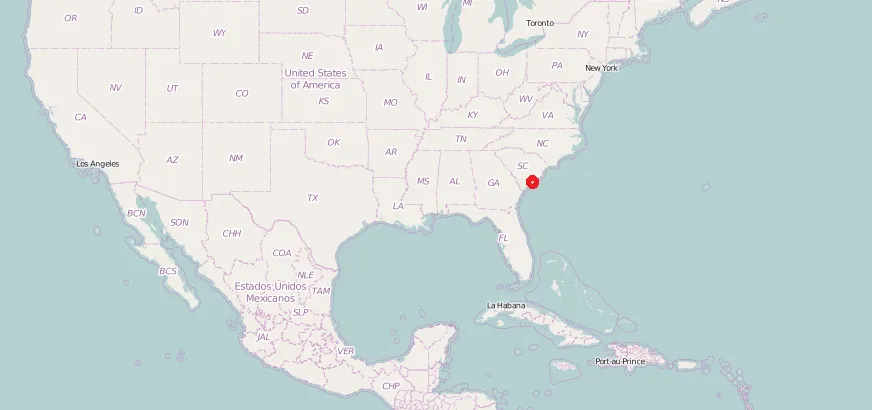
The Port of Charleston is situated at approximately 32.78° N, 79.92° W along the Cooper and Wando rivers in Charleston, South Carolina. Its mid-Atlantic position on the US East Coast places it ideally between the Northeast and Florida, with direct access to Atlantic shipping lanes via a short, deep channel to open ocean.
Service Region
Charleston’s location makes it the natural import gateway for one of the fastest-growing industrial corridors in the United States. Within a single day’s truck drive, cargo reaches:
- South Carolina — the Greenville-Spartanburg manufacturing hub (BMW, Michelin, Volvo), Columbia distribution centers, and the Port of Charleston’s own logistics cluster
- North Carolina — Charlotte metro, the Research Triangle, and the Triad area’s growing fulfillment infrastructure
- Georgia — Atlanta, Savannah’s inland markets, and the I-85 logistics corridor
- Tennessee — Nashville and Chattanooga, with rail connections reaching Memphis
- Alabama — Birmingham and the expanding automotive manufacturing belt along I-20
The port’s Inland Port Greer, located 212 miles from Charleston in the heart of the Upstate manufacturing region, extends the port’s reach even further — effectively bringing the dockside to factory doors through dedicated overnight rail service.
Port Terminals
The Port of Charleston operates three container terminals, each serving distinct carrier alliances and cargo profiles.
Wando Welch Terminal
Located in Mount Pleasant on the Wando River, Wando Welch is Charleston’s largest container terminal. It features 16 super post-Panamax ship-to-shore cranes, 4 deep-water berths, and on-terminal intermodal rail. Its modern gate complex uses optical character recognition (OCR) and RFID technology to consistently deliver industry-leading truck turn times — typically under 25 minutes for dual transactions.
North Charleston Terminal
Situated along the Cooper River, North Charleston Terminal handles a mix of container and breakbulk cargo. With 5 cranes and 2,500 feet of berth space, it offers direct access to I-26 and is heavily used by THE Alliance and Ocean Alliance services. The terminal’s proximity to the former Navy base redevelopment zone provides substantial room for future expansion.
Hugh K. Leatherman Terminal
Opened in 2021, the Hugh K. Leatherman Terminal is the first new container terminal built in the United States in over a decade. Phase 1 provides a 1,400-foot berth with 5 ship-to-shore cranes and capacity for 700,000 TEUs annually. At full build-out across three phases, the terminal will add 2.4 million TEUs of capacity — nearly doubling the port’s current throughput and securing Charleston’s growth trajectory for decades.
Shipping Routes to This Port
Container shipping lines operate weekly services from China’s principal ports to Charleston, almost exclusively via the Panama Canal.
From Shenzhen (Yantian / Shekou)
As China’s largest export gateway, Shenzhen offers the highest frequency of sailings to Charleston. Carriers including Maersk, MSC, CMA CGM, COSCO, and Hapag-Lloyd operate Asia-US East Coast services with Yantian as the last South China port of call before the Panama Canal transit. Charleston is typically the first or second US East Coast discharge port on these rotations.
From Shanghai
Shanghai-Charleston services run weekly through all three major carrier alliances. Vessels sail via the North Pacific before entering the Panama Canal, making Charleston a key discharge point for cargo originating in the Yangtze River Delta manufacturing belt — including electronics, automotive components, and industrial machinery.
From Ningbo-Zhoushan
Ningbo is regularly paired with Shanghai on pendulum services to the US East Coast. Shippers consolidating cargo from Zhejiang, Jiangsu, and surrounding provinces have consistent, reliable weekly departures to Charleston.
From Other Chinese Ports
| Origin Port | Service Pattern | Notes |
|---|---|---|
| Qingdao | Direct and transshipment | Direct strings available; some via Busan |
| Xiamen | Primarily transshipment | Hubbed through Shenzhen or Shanghai |
| Tianjin (Xingang) | Transshipment | Routed via Busan or major Chinese hub; longest overall transit |
Transit Time from China to the Port of Charleston
Transit times to Charleston depend on origin port, carrier routing, and Panama Canal scheduling. The figures below reflect typical port-to-port sailing times:
| Origin Port (China) | Typical Transit Time | Notes |
|---|---|---|
| Shenzhen (Yantian) | 30–36 days | Fastest lane; highest sailing frequency |
| Shanghai | 32–38 days | Longer North Pacific approach to canal transit |
| Ningbo | 33–39 days | Frequently paired with Shanghai on same vessel strings |
| Qingdao | 34–40 days | Fewer direct sailings; northern routing adds transit time |
| Xiamen | 31–37 days | Typically via transshipment through Shenzhen or Shanghai |
| Tianjin (Xingang) | 36–42 days | Transshipment required; longest total transit to Charleston |

For a broader comparison of transit times across all major US gateways, see our guide on how long sea shipping takes from China to USA.
Factors Affecting Transit Time
Several variables can shift actual delivery schedules. Panama Canal booking slots are reserved in advance, but seasonal demand can push sailings to less favorable windows. Hurricane season (June–November) in the Atlantic and typhoon season in the Pacific introduce weather-related routing variability. Transshipment port congestion at intermediate hubs — such as Cartagena, Kingston, or Manzanillo — may cause additional delays during peak import cycles.
Shipping Cost from China to the Charleston
Ocean freight rates from China to Charleston fluctuate with market conditions, though Charleston typically maintains a cost advantage over Northeast ports for Southeast-destined cargo. For a comprehensive overview of ocean freight options, rates, and carrier choices across all US gateways, see our guide to sea freight from China to USA.
Key Cost Drivers
- Carrier capacity management — blank (canceled) sailings by major alliances tighten available space and push spot rates higher during peak demand.
- Panama Canal transit fees — embedded in the ocean freight rate; vary by vessel size and reservation class.
- Bunker Adjustment Factor (BAF) — fuel surcharges adjust monthly or quarterly, reflecting global fuel price movement.
- Seasonality — peak season (July–October) sees elevated rates for holiday inventory; a secondary spike surrounds Chinese New Year.
- Equipment availability — container shortages at Chinese origin ports during strong import cycles can drive up rates as carriers prioritize higher-value booking classes.
Charleston-Specific Cost Considerations
All-in ocean freight for a 40-foot container (FEU) from major Chinese ports to Charleston generally ranges from $3,500 to $7,500, depending on prevailing market conditions. Charleston offers competitive port-side handling charges compared to Northeast gateways, and its efficient terminal operations keep demurrage and detention risks low. Inland drayage costs are typically lower than NY/NJ for Southeast-destined cargo, and the port’s overnight rail service to Inland Port Greer eliminates trucking costs for Upstate South Carolina manufacturers.
How to Reduce Shipping Costs
- Ship FCL (full container load) rather than LCL to reduce per-unit freight costs by 30–50%.
- Negotiate annual service contracts to lock in base rates and insulate against spot market volatility.
- Transload in Charleston — transfer cargo from 40-foot ocean containers into 53-foot domestic trailers for improved cubic efficiency on inland moves.
- Use Inland Port Greer for Upstate deliveries — overnight rail avoids driver shortages and reduces the landed cost for automotive and manufacturing supply chains.
- Schedule off-peak shipments (November–January, excluding pre-CNY rush) when rates historically soften.
Warehousing Services
Charleston’s logistics ecosystem has expanded rapidly to support the growing volume of imports from China, with modern warehouse and distribution facilities located within minutes of all three container terminals.
Warehousing & Distribution Near the Port
The greater Charleston area offers a range of warehousing services for importers managing China-to-US supply chains: container deconsolidation and transloading, pick-and-pack e-commerce fulfillment with integration to major platforms, cross-docking for rapid multi-destination distribution, and value-added services including labeling, kitting, and quality inspection.
Foreign Trade Zone
Charleston operates FTZ No. 21 at the port, providing importers with cash-flow advantages — goods stored within the zone are exempt from customs duties until they leave for US consumption. No duties apply to re-exported goods. The Upstate region also benefits from FTZ No. 38 in Spartanburg, which supports the automotive and advanced manufacturing supply chains anchored by BMW, Volvo, and their tier-one suppliers.
Bonded Warehousing
Multiple bonded warehouse facilities operate within Charleston’s port district, allowing importers to store cargo under customs supervision before duty payment. This is particularly valuable for pre-positioning seasonal inventory, conducting quality-control inspections, or deferring duties while final distribution routing is determined.
Inland Port Network Advantage
Charleston’s inland port strategy is a unique cost and time advantage. Inland Port Greer, connected via dedicated overnight rail, effectively extends the Port of Charleston 212 miles inland — placing containers at the doorstep of the Southeast’s most concentrated manufacturing cluster in less than 24 hours from vessel discharge. Inland Port Dillon serves the I-95 corridor and provides additional capacity for north-south distribution.
Frequently Asked Questions
How long does ocean shipping from China to Charleston take?
Transit time typically ranges from 30 to 42 days, depending on the origin port. Shenzhen (Yantian) to Charleston is the fastest at 30–36 days, while northern Chinese ports like Tianjin take 36–42 days due to longer distances and transshipment requirements.
What is the largest vessel that can dock at Charleston?
Thanks to the 52-foot harbor depth — the deepest on the US East Coast — Charleston can accommodate fully loaded post-Panamax vessels up to approximately 14,000–16,000 TEUs without tidal restrictions. The Hugh K. Leatherman Terminal was specifically designed for the largest vessels currently operating on Asia-US East Coast trade lanes.
Which ocean carriers serve Charleston from China?
All three major carrier alliances — 2M (Maersk/MSC), Ocean Alliance (CMA CGM, COSCO, Evergreen), and THE Alliance (Hapag-Lloyd, ONE, Yang Ming, HMM) — operate weekly services from China to Charleston. Additionally, ZIM and niche Asia-specialist carriers provide supplementary sailing options.
Does Charleston have direct rail connections to inland US destinations?
Yes. The port’s on-terminal intermodal yards provide direct connections to both CSX and Norfolk Southern Class I rail networks. Overnight rail service to Inland Port Greer reaches the Upstate manufacturing hub in under 24 hours, while Midwest destinations including Chicago and Memphis are reachable within 3–5 rail days.
How does Charleston compare to Savannah for China imports?
Both ports serve the Southeast and have deepened their harbors. Charleston offers a 52-foot channel versus Savannah’s 47 feet, allowing larger vessels with heavier loads. Charleston’s inland port network provides a distinct advantage for automotive and manufacturing supply chains, while Savannah handles a higher overall container volume. The choice often depends on final destination within the Southeast and specific carrier preferences. Many importers use both gateways to diversify their supply chain risk.