Port Houston
Port Overview
Overview of Port Houston
Port Houston is the undisputed commercial powerhouse of the US Gulf Coast, ranking #1 in the nation by total tonnage and handling more foreign waterborne tonnage than any other American port — a critical gateway for shipping from China to USA. Closely tied to Houston’s identity as the “Energy Capital of the World,” it provides specialized infrastructure for energy, petrochemical, and industrial cargo — making it a critical entry point for importers managing freight shipping from China to USA and targeting the Texas and American heartland markets. For official schedules, tariffs, and operational updates, visit the Port Houston official website.
Why Port Houston Matters
- #1 US Port by Tonnage: Handles over 275 million tons of cargo annually, driven by energy and petrochemical trade.
- Energy Sector Expertise: Unmatched specialized terminals for project cargo, oilfield equipment, steel pipe, wind energy components, and petrochemical imports.
- Texas Market Gateway: Direct access to the world’s eighth-largest economy (Texas GDP exceeds $2.5 trillion) and a population of over 30 million consumers.
- Ship Channel Expansion: The ongoing $1 billion Houston Ship Channel widening and deepening project (Project 11) ensures capacity for the largest deep-draft vessels.
Key Facts at a Glance
| Metric | Value |
|---|---|
| Annual Total Tonnage | 275+ million tons |
| Annual Container Volume | 3.5+ million TEUs |
| Container Terminals | 2 major (Barbours Cut, Bayport) |
| Berth Depth | Up to 45 feet (14 meters) |
| Ship Channel Length | 52 miles from Gulf to Turning Basin |
| Rail Connectivity | BNSF & Union Pacific on-dock |
| Foreign Trade Zone | FTZ No. 84 |
| Key China Trade Lanes | Shanghai, Ningbo, Shenzhen, Qingdao |
Port Location
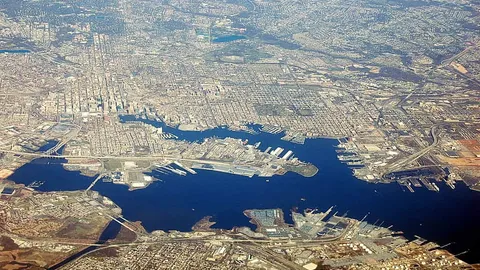
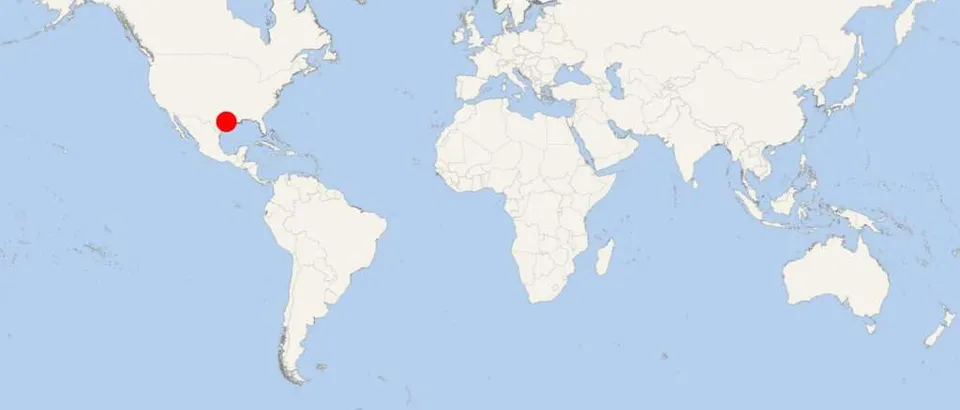
Port Houston occupies a strategic position along the 52-mile Houston Ship Channel, stretching from the Gulf of Mexico to the Turning Basin just east of downtown Houston. The port complex spans more than 200 berths across public and private terminals, making it one of the most extensive port facilities in the Western Hemisphere.
Service Region
Port Houston’s location provides unmatched access to the central United States:
- Immediate market: The Houston metro area — 7.3 million people and headquarters of 24 Fortune 500 companies.
- Texas Triangle: Within a single day’s truck drive of Austin, San Antonio, and Dallas-Fort Worth — a megaregion of over 20 million consumers.
- Midwest reach: Direct BNSF and Union Pacific rail serves Kansas City, Chicago, St. Louis, and the Great Lakes corridor at lower inland costs than West Coast gateways.
- US-Mexico trade: Proximity to Laredo — the busiest US-Mexico border crossing — makes Houston a preferred gateway for goods destined for Mexico and Latin America.
Port Terminals
Port Houston operates two primary container terminals — Barbours Cut and Bayport — along with extensive general cargo, bulk, and liquid cargo facilities. Its terminal infrastructure is purpose-built for the energy and industrial sectors that define Gulf Coast trade.
Barbours Cut Terminal
Barbours Cut is Houston’s original container terminal, located 27 miles from the Gulf of Mexico. Features include:
- 6 container berths with 13 ship-to-shore cranes, including 5 super post-Panamax
- On-dock rail served by BNSF and Union Pacific
- Over 200 acres of container yard with automated gate systems
- Specialized breakbulk and project cargo handling for oilfield and energy equipment
Bayport Container Terminal
Opened in 2007, Bayport is Houston’s newest container facility:
- 3 container berths with plans for expansion to 7 total
- 9 super post-Panamax cranes, 45-foot draft alongside
- Automated gate systems processing trucks in under 20 minutes
- 1,300 reefer plugs for temperature-controlled cargo
- 376-acre footprint with room for future expansion
General Cargo & Bulk Terminals
Beyond containers, the Turning Basin terminals handle steel, aluminum, lumber, rubber, and project cargo, while numerous private liquid bulk terminals along the Ship Channel support Houston’s role as a global energy and petrochemical hub.
Shipping Routes to This Port
Port Houston is served by multiple weekly sailings from China’s top container ports through all three major ocean carrier alliances. The Panama Canal routing provides reliable access for Gulf Coast-destined cargo.
From Shenzhen (Yantian / Shekou)
Yantian is the primary South China gateway for Houston-bound freight. Carriers including Maersk, MSC, COSCO, CMA CGM, and Evergreen operate regular all-water Panama Canal services, with Houston as the first or second Gulf Coast stop.
From Shanghai
Shanghai offers the most frequent sailings to Houston, often paired with Ningbo on the same vessel strings. Near-daily departures through all three major alliances ensure maximum schedule flexibility.
From Ningbo
Ningbo-Zhoushan is frequently combined with Shanghai on Gulf Coast services, with weekly departures through Panama and strong capacity from COSCO and CMA CGM.
From Qingdao and Northern Ports
Qingdao is served through direct Gulf Express services and transshipment via Busan or Shanghai. Tianjin (Xingang) and Dalian connect through feeder services to major hub ports, with competitive rates for northern Chinese manufacturing centers.
Transit Time from China to Port Houston
Transit times to Houston vary by origin port, Panama Canal scheduling, and carrier route design. The figures below represent typical port-to-port sailing times:
| Origin Port (China) | Transit Time to Houston | Sailing Frequency |
|---|---|---|
| Shenzhen (Yantian) | 28–33 days | 3–4 per week |
| Shanghai | 30–35 days | Daily (combined services) |
| Ningbo | 31–36 days | 4–5 per week |
| Qingdao | 33–38 days | 2–3 per week |
| Xiamen | 31–36 days | 1–2 per week (via transshipment) |
| Tianjin (Xingang) | 35–40 days | Weekly (via transshipment) |
Factors Affecting Transit Time
- Panama Canal booking windows: Carriers book transit slots in advance, but seasonal demand and drought-related draft restrictions can affect timing.
- Hurricane season: Gulf weather (June–November) may impact port operations and vessel scheduling.
- Ship Channel traffic: As the busiest US waterway by tonnage, occasional queuing can add 1–2 days.
- Port call rotation: Whether Houston is the first or last Gulf call on a rotation affects arrival timing.
For importers on tight schedules, premium carrier services offer priority vessel loading and guaranteed space during peak season. For a broader comparison across all major US entry points, see our guide on how long sea shipping takes from China to USA.
Shipping Cost from China to Port Houston
Ocean freight rates from China to Houston are shaped by market dynamics, Panama Canal fees, and Gulf Coast port charges. Understanding these cost drivers helps importers budget accurately and identify savings.
Factors Affecting Freight Rates
- Market seasonality: Peak season (August–October) sees rates rise 30–50% as retailers build holiday inventory. Chinese New Year (January/February) typically brings a pre-holiday rush followed by a rate correction — a strategic window for budget-conscious shippers.
- Container type: 40’ standard containers offer the best per-unit economics. 40’ high-cube, 20’ containers, and specialized equipment (reefer, open-top, flat-rack) command premiums. For loading specifications and cost comparisons, see our detailed guide on containers shipping from China to USA.
- Panama Canal transit fees: Included in ocean freight quotes, fees vary by vessel TEU capacity and reservation type.
- Bunker Adjustment Factor (BAF): Fuel surcharges adjust quarterly based on global bunker fuel indexes and IMO 2020 low-sulfur compliance costs.
Port Fees at Houston
Port Houston charges wharfage (based on cargo weight/value), dockage, and terminal handling fees. Budget approximately $250–$400 per container. Compared to West Coast ports, Houston’s total landed cost often proves competitive for Texas and central US destinations, as lower inland freight offsets the longer ocean transit.
How to Lower Your Shipping Costs
| Strategy | Potential Impact |
|---|---|
| Ship FCL instead of LCL | 25–40% lower per-unit freight cost |
| Book during off-peak (March–July, November) | 15–30% rate reduction |
| Use direct all-water service (avoid USEC-Gulf transshipment) | Eliminates intermediate port fees and delays |
| Pre-clear customs documentation via ACE | Avoids demurrage at $250–$400 per day |
| Partner with a China-based freight forwarder | Access to volume-negotiated rates and carrier relationships |
| Transload ocean containers into 53’ domestic trailers | Reduces inland delivery cost by 10–20% |
DANTFUL leverages long-standing carrier contracts and Gulf Coast expertise to help importers secure competitive rates and avoid common cost pitfalls when shipping from China to Houston.
Warehousing Services
Houston has grown into one of the nation’s largest logistics and distribution hubs, supported by over 500 million square feet of industrial real estate, direct port proximity, and an unmatched rail and highway network radiating across North America. Importers shipping via container shipping from China to Houston benefit from access to bonded, FTZ, and third-party logistics facilities built with the scale to support the energy, industrial, and consumer goods sectors.
Foreign Trade Zone (FTZ No. 84)
Port Houston operates Foreign Trade Zone No. 84, one of the largest FTZs in the United States. FTZ status allows importers to defer customs duties until goods leave the zone for US consumption, eliminate duties entirely on re-exports, and reduce duties when finished-good rates are lower than component-part rates. FTZ No. 84 is particularly valuable for energy equipment importers and companies performing kitting, assembly, and quality inspection before final US distribution.
Bonded Warehousing
Multiple bonded warehouse facilities operate minutes from Barbours Cut and Bayport terminals, allowing storage under CBP supervision without immediate customs entry. Bonded storage supports seasonal inventory pre-positioning, quality-control inspection, and duty deferral while final inland routing is determined.
3PL & Fulfillment Services
The Houston warehouse market supports a full range of third-party logistics:
- Container deconsolidation and transloading into 53-foot domestic trailers for efficient inland delivery
- Amazon FBA preparation and direct truck-in to fulfillment centers across Texas
- Pick-and-pack e-commerce fulfillment for Shopify, Walmart Marketplace, and Amazon
- Cross-docking for rapid multi-stop distribution across Texas and neighboring states
- E-commerce returns processing and inventory management with real-time visibility
Cold Chain & Temperature-Controlled Storage
Houston’s warehouse infrastructure includes extensive cold storage capacity for food-grade imports, pharmaceutical ingredients, and specialty chemicals. Bayport Terminal’s 1,300 reefer plugs ensure ship-to-shore cold chain continuity.
Frequently Asked Questions
Q: How long does sea shipping from China to Houston take?
A: Transit time ranges from 28 to 40 days depending on origin. Shenzhen to Houston is fastest at 28–33 days via Panama Canal, while Tianjin takes 35–40 days. Door-to-door delivery adds 3–7 days for customs clearance and inland transportation.
Q: What is the largest ship that can dock at Port Houston?
A: Port Houston currently accommodates vessels up to approximately 8,500–10,000 TEUs at Bayport Terminal. The Houston Ship Channel expansion (Project 11) will enable fully laden 14,000+ TEU Neopanamax vessels once completed.
Q: Which ocean carriers serve Houston from China?
A: All three major alliances — 2M (Maersk/MSC), Ocean Alliance (CMA CGM/COSCO/Evergreen), and THE Alliance (ONE/Hapag-Lloyd/Yang Ming) — operate Panama Canal services to Houston. Independent carriers including ZIM and Wan Hai also serve the Gulf Coast.
Q: Is Port Houston better than West Coast ports for China imports?
A: West Coast ports offer shorter ocean transit (12–18 days) but higher inland freight to Texas and the central US. Houston offers longer ocean transit (28–35 days) but significantly lower inland costs for Texas and Midwest destinations. Many importers prefer Houston for total landed cost savings on central US shipments.
Q: Does Port Houston have on-dock rail?
A: Yes. Both Barbours Cut and Bayport terminals feature on-dock rail served by BNSF and Union Pacific, enabling direct vessel-to-railcar transfers that accelerate inland distribution by 1–2 days.
Q: What cargo types does Port Houston specialize in?
A: Houston’s true specialty is energy-sector and industrial cargo — oilfield equipment, steel pipe, petrochemical products, wind turbine components, heavy machinery, and project cargo. Its heavy-lift capabilities and specialized terminals make it the preferred Gulf Coast gateway for industrial importers.