Port of New Orleans
Port Overview
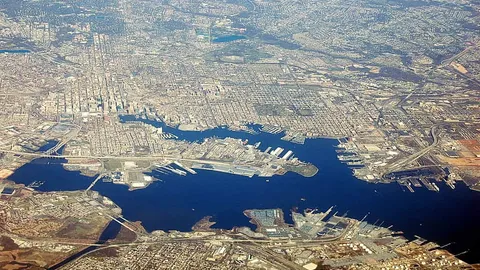
Overview of the Port of New Orleans
The Port of New Orleans (Port NOLA) stands as a cornerstone of America’s Gulf Coast logistics infrastructure. As the only deepwater container port in Louisiana, it occupies a strategic position at the mouth of the Mississippi River — the busiest inland waterway system in the United States. For importers shipping from China to the US, New Orleans represents a compelling alternative to congested West Coast ports, with direct access to the American heartland that no other Gulf port can match.
Port NOLA handles over 1.2 million TEUs annually and has demonstrated consistent growth, with container volumes rising 19% year-over-year — a clear signal of increasing shipper confidence in the Gulf Coast corridor. For real-time vessel schedules, terminal tariffs, and operational updates, visit the official Port NOLA website. Its multimodal connectivity is unmatched: six Class I railroads converge at the port, more than at any other US gateway, enabling seamless distribution across 30+ inland markets.
Why the Port of New Orleans Matters
Three factors make New Orleans uniquely important for China-to-Americas trade:
- Mississippi River Inland Access: Barges move cargo economically from New Orleans to major Midwest hubs including Memphis, St. Louis, Chicago, and Minneapolis — covering a population base of over 100 million consumers.
- Rail Density Advantage: With BNSF, CN, CSX, KCS, Norfolk Southern, and Union Pacific all operating at the port, importers have unparalleled flexibility in routing cargo to its final destination.
- Future Capacity Growth: The $1.8 billion Louisiana International Terminal (LIT) project will add 2 million TEUs of annual capacity starting in 2028, future-proofing the port for decades of trade expansion.
Key Port Facts
| Attribute | Detail |
|---|---|
| Port Code | USMSY |
| Location | New Orleans, Louisiana, USA |
| Waterway | Mississippi River (Mile 103) |
| Channel Depth | 45 feet (14 m) |
| Annual Container Volume | 1.2+ million TEUs |
| Class I Rail Connections | 6 (BNSF, CN, CSX, KCS, NS, UP) |
| Foreign Trade Zone | FTZ #2 |
Port Location
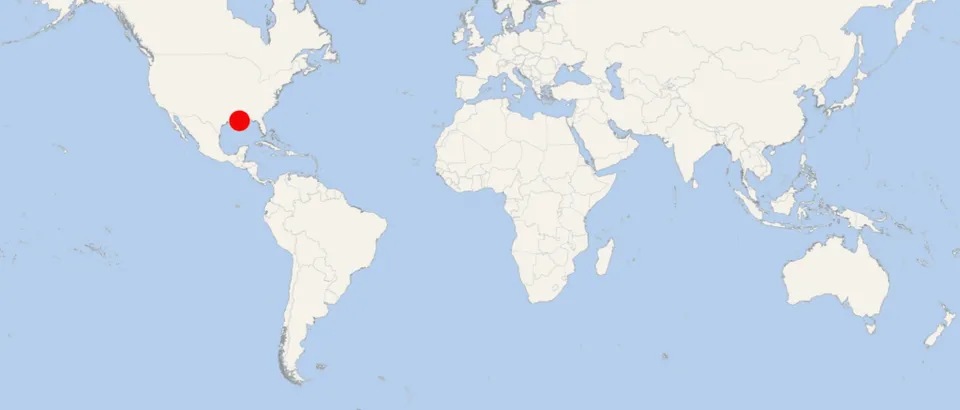
The Port of New Orleans is situated along a 32-mile stretch of the Mississippi River in southeastern Louisiana, approximately 103 river miles upstream from the Gulf of Mexico. The port’s jurisdiction spans three parishes — Orleans, Jefferson, and St. Bernard — positioning it directly at the intersection of the Mississippi River and the Gulf Intracoastal Waterway.
This location offers a distinct logistical advantage: cargo discharged at New Orleans can reach 30+ major inland markets via the Mississippi River barge system, the nation’s most cost-effective freight transportation network. A single barge can carry the equivalent of 60 trucks or 15 railcars, translating to significant savings on inland distribution costs.
Service Area
New Orleans primarily serves the US Midwest and Southeast markets, including:
- Tennessee (Memphis, Nashville)
- Missouri (St. Louis, Kansas City)
- Illinois (Chicago, Peoria)
- Ohio (Cincinnati, Columbus)
- Arkansas, Mississippi, and Alabama
- Kentucky and Indiana
Port Terminals
Port NOLA operates a diverse network of terminals designed to handle containers, breakbulk, project cargo, and bulk commodities. The port’s container operations are concentrated at two primary facilities.
Napoleon Avenue Container Terminal
The Napoleon Avenue Container Terminal is the port’s flagship container-handling facility, operated by Ports America and Terminal Investment Limited (TiL) under a joint venture. The terminal features:
- 1,800-foot berth capable of handling vessels up to 10,000 TEUs
- Four post-Panamax ship-to-shore gantry cranes
- On-dock rail access with direct connections to all six Class I railroads
- 60-acre container yard with reefer plug capacity for temperature-controlled cargo
- Modern gate complex with RFID and optical character recognition (OCR) for rapid truck processing
New Orleans Terminal LLC
Located adjacent to Napoleon Avenue, New Orleans Terminal LLC (formerly Ceres Gulf) provides additional container and breakbulk handling capacity. This terminal specializes in mixed-use operations, supporting both containerized and non-containerized cargo throughput.
Louisiana International Terminal (LIT)
The upcoming Louisiana International Terminal in St. Bernard Parish represents the most significant port infrastructure investment in Louisiana history. When operational in 2028, the LIT will:
- Add 2 million TEUs of annual container capacity
- Feature a 3,500-foot berth capable of simultaneously handling two 14,000-TEU vessels
- Operate with up to 8 ship-to-shore gantry cranes
- Include an on-dock rail yard with unit-train capability
Other Terminals
Beyond containers, Port NOLA’s terminal portfolio includes dedicated facilities for steel, rubber, coffee, forest products, and chemicals — making it one of the most versatile cargo-handling complexes on the Gulf Coast.
Shipping Routes to This Port
New Orleans is served by all three global shipping alliances — 2M (MSC & Maersk), Ocean Alliance (CMA CGM, COSCO, Evergreen), and THE Alliance (Hapag-Lloyd, ONE, HMM) — providing importers with competitive options and consistent weekly sailings.
Major Origin Ports in China
| Origin Port | Service Frequency | Typical Routing |
|---|---|---|
| Shanghai | Weekly (multiple carriers) | Direct via Panama Canal |
| Shenzhen (Yantian) | Weekly | Direct via Panama Canal |
| Ningbo-Zhoushan | Weekly | Direct via Panama Canal |
| Qingdao | Bi-weekly / Weekly (seasonal) | Transshipment via Busan or direct |
| Xiamen | Bi-weekly | Transshipment via Shanghai or direct |
Most services from China transit the Panama Canal, with occasional routing via the Suez Canal depending on carrier scheduling, canal transit fees, and seasonal conditions. Some services also utilize transshipment hubs such as Kingston (Jamaica), Cartagena (Colombia), or Manzanillo (Panama) for cargo consolidation.
Transit Time from China to the New Orleans
Transit time — the total ocean voyage duration from departure at the origin port to arrival at New Orleans — varies based on routing, carrier schedule, and whether the shipment is direct or transshipped.
Standard Transit Times
| Origin Port (China) | Direct Service | With Transshipment |
|---|---|---|
| Shanghai | 30–35 days | 35–42 days |
| Shenzhen (Yantian) | 32–38 days | 38–45 days |
| Ningbo-Zhoushan | 30–35 days | 35–42 days |
| Qingdao | 33–38 days | 38–45 days |
| Xiamen | 34–40 days | 40–47 days |
Actual transit times can vary by 3–5 days depending on Panama Canal transit queues, weather conditions in the Caribbean and Gulf of Mexico, and carrier schedule adjustments. Peak shipping season (August through October) often sees longer transit windows due to canal congestion.
Shipping Cost from China to the New Orleans
Ocean freight costs from China to New Orleans fluctuate based on global container availability, fuel prices, seasonal demand, and the specific shipping terms negotiated with your forwarder.
Factors Affecting Ocean Freight Rates
- Container Type: Standard 40-foot containers (FEU) are the most common; 20-foot containers (TEU) and 40-foot high-cube containers carry different rate structures.
- Seasonality: Rates typically rise 15–30% during the August–October peak season ahead of US holiday retail demand. Chinese New Year (January/February) also creates pre-holiday rate spikes.
- Shipping Terms: FOB (Free on Board) places ocean freight responsibility on the buyer, while CIF (Cost, Insurance, Freight) bundles transport costs into the supplier’s price. FOB generally offers greater cost transparency for importers.
- Cargo Weight and Volume: Heavy or oversized cargo may incur additional handling surcharges.
- Bunker Fuel Adjustment (BAF): A variable surcharge tied to global fuel prices, recalculated quarterly by most carriers.
Port Fees at New Orleans
Port NOLA charges competitive terminal handling charges (THC) compared to other US Gulf and East Coast ports, including the nearby Port of Houston. The port’s Foreign Trade Zone (FTZ #2) designation allows importers to defer, reduce, or eliminate customs duties on goods stored or processed within the zone — a significant cost advantage for high-tariff commodities.
How to Reduce Shipping Costs
- Book FCL over LCL when shipping more than 15 cubic meters of cargo — the per-unit cost drops significantly.
- Plan shipments outside peak season (ideally March–June or November–December) to capture lower rates.
- Consolidate shipments through a freight forwarder with established New Orleans routing networks.
- Leverage FTZ #2 status to defer duties on inventory stored at the port.
- Use Mississippi River barge transport for inland delivery — barge shipping costs roughly 1/3 to 1/2 of equivalent truck or rail rates.
Warehousing Services
The greater New Orleans area offers comprehensive warehousing and distribution infrastructure to support importers managing supply chains from China.
Bonded Warehousing
Multiple bonded warehouse facilities operate within and adjacent to Port NOLA, allowing imported goods to be stored without immediate customs clearance or duty payment. This is particularly valuable for importers who:
- Want to defer duty payments until goods are sold or shipped to the final customer
- Need to re-export goods without ever paying US import duties
- Require time for product labeling, kitting, or quality inspection before customs entry
As part of Foreign Trade Zone #2, goods stored in FTZ-designated warehouses can also undergo manufacturing, assembly, or processing with reduced or eliminated duties on the finished product.
Overseas Warehousing & Distribution
Third-party logistics (3PL) providers in the New Orleans region offer end-to-end warehousing and fulfillment services:
- Inventory Management: Real-time tracking and stock-level reporting through integrated WMS platforms
- Order Fulfillment: Pick, pack, and ship services for e-commerce and retail distribution
- Cross-Docking: Direct transfer from ocean containers to outbound trucks or railcars, minimizing storage time
- Value-Added Services: Labeling, re-packaging, quality inspection, and kitting
With access to six Class I railroads and the Mississippi River barge system, New Orleans-based warehouses can distribute to 75% of the US population within 2–3 transit days.
FAQs
How long does shipping take from China to the Port of New Orleans?
Transit time from major Chinese ports to New Orleans ranges from 30 to 38 days for direct services. Shanghai and Ningbo typically offer the fastest routes at 30–35 days, while Shenzhen and southern China ports take 32–38 days. Transshipment services add approximately 5–7 additional days.
What is the port code for New Orleans?
The UN/LOCODE for the Port of New Orleans is USMSY.
Which railroads serve the Port of New Orleans?
Six Class I railroads connect to Port NOLA: BNSF Railway, Canadian National (CN), CSX Transportation, Kansas City Southern (KCS), Norfolk Southern (NS), and Union Pacific (UP). This is more direct rail connections than any other US port.
Does New Orleans have a Foreign Trade Zone?
Yes. The Port of New Orleans operates under Foreign Trade Zone #2, one of the oldest and largest FTZs in the United States. FTZ #2 allows importers to defer, reduce, or eliminate customs duties on goods stored, processed, or manufactured within the zone.
What types of cargo does New Orleans handle?
Port NOLA handles a diverse cargo mix including containerized consumer goods, steel and metals, rubber, coffee, chemicals, forest products, project cargo, and agricultural commodities. The port’s breakbulk and project cargo capabilities are among the strongest on the Gulf Coast.
Is New Orleans a good alternative to West Coast ports?
For importers targeting the Midwest, Southeast, or Gulf Coast markets, New Orleans is an excellent alternative. Its Mississippi River barge system and six-railroad connectivity provide more cost-effective inland distribution than West Coast gateways for many destinations east of the Rockies, particularly when factoring in the lower congestion and competitive port fees. To compare New Orleans against other major gateways, browse the complete US ports directory.