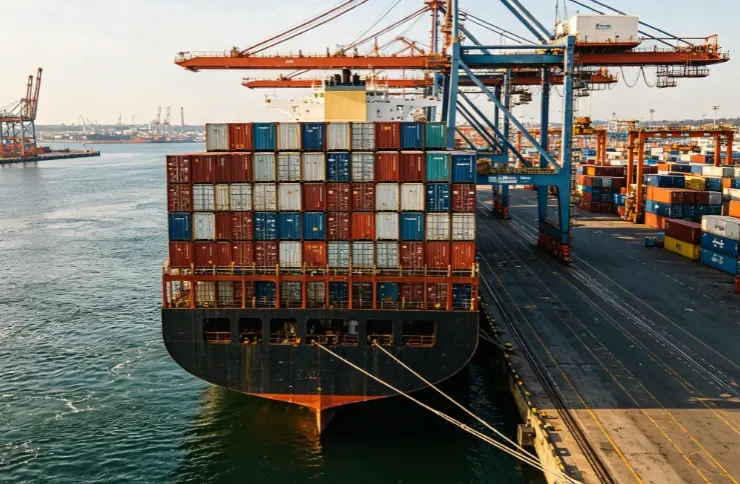
Full Container Load Shipping from China to USA is the most cost-effective way to move large volumes of cargo across the Pacific — accounting for the vast majority of the $500+ billion in annual bilateral trade. Whether you’re a B2B importer, an Amazon FBA seller, or an SME sourcing from Chinese manufacturers, understanding how FCL works directly affects your landed costs, inventory planning, and delivery reliability.
This guide draws on 15+ years of freight forwarding experience from our Shenzhen headquarters. We cover container selection, 2026 freight rates, port strategy (China & USA), transit times, customs compliance, loading optimization, and how to choose the right freight forwarder — everything you need to ship full containers with confidence. For a complete overview of your logistics options beyond FCL, explore our dedicated Shipping from China to USA service page, which covers air freight, LCL, door-to-door, and Amazon FBA solutions alongside container shipping.
What Is FCL Shipping? — Definition, Container Types & When to Use It
FCL, or Full Container Load, means your cargo occupies an entire shipping container exclusively — one Bill of Lading (B/L) tied to one shipper and one consignee, one container sealed from origin to destination, with zero consolidation or deconsolidation. This contrasts with LCL (Less than Container Load), where your goods share container space with other shippers in a Container Freight Station (CFS). Choosing wrong is expensive: a 20 CBM LCL shipment can cost 30-40% more than a dedicated 20ft FCL — and take 3-7 days longer.
When FCL Is the Right Choice
| Criteria | FCL Threshold |
|---|---|
| Cargo volume | >15 cubic meters (CBM) |
| Cargo weight | >10,000 kg |
| High-value or fragile goods | Any volume — sealed, single-shipper container minimizes handling and damage risk |
| Bulk replenishment | Regular, predictable flows where per-unit economics dominate |
| Amazon FBA restocking | Palletized, high-volume inventory benefiting from faster, dedicated transit |
Standard Container Types
| Container Type | Internal Dimensions (L × W × H) | Capacity | Typical Payload | Best For |
|---|---|---|---|---|
| 20ft Standard | 5.89 × 2.35 × 2.39 m | ~33 CBM | 22,000–28,000 kg | Dense cargo: machinery, tiles, metals |
| 40ft Standard | 12.03 × 2.35 × 2.39 m | ~67 CBM | 26,000–28,000 kg | General merchandise, electronics, textiles |
| 40ft High Cube (HC) | 12.03 × 2.35 × 2.69 m | ~76 CBM | 26,000–28,000 kg | Bulky/lightweight: furniture, bedding, insulation |
Key insight: a 40ft costs only 30-50% more than a 20ft — not double. Beyond ~20 CBM, the 40ft delivers far better per-unit economics. For a complete rate comparison across container sizes, refer to our dedicated guides on 20 ft Container Shipping Cost from China to USA and Cost of Shipping 40ft Container from China to USA. The High Cube’s extra 30 cm of height adds ~13% more volume at marginal cost — often the best value. For dense goods (tiles, machinery), a 20ft may hit weight limits before you fill the cube.
The industry standard TEU (Twenty-foot Equivalent Unit) — 1 TEU = 1×20ft, 2 TEU = 1×40ft — is how carriers report capacity. Specialty containers (Reefer, Open Top, Flat Rack) handle temperature-controlled, over-height, and over-width cargo when needed, but standard dry containers cover the vast majority of China-USA FCL moves.
FCL Shipping Cost from China to USA: 2026 Rates & Full Breakdown
FCL pricing is more than a single “container rate.” Understanding the layered cost structure is what separates importers who budget accurately from those who get blindsided by invoices. (For a broader look at pricing including LCL and air freight, see our full Container Shipping Costs from China to USA breakdown.)
2026 Market Rate Reference: Port-to-Port Ocean Freight
The figures below reflect spot market ranges for Q2 2026, based on Drewry WCI and Freightos Baltic Index data combined with our actual carrier contract reference rates. Actual quotes vary by specific port pair, carrier, booking window, and negotiated volume.
| Container Type | US West Coast (LA/Long Beach) | US East Coast (NY/NJ) | US Gulf Coast (Houston) |
|---|---|---|---|
| 20ft FCL | $2,500 – $4,500 | $4,800 – $6,000 | $5,500 – $7,200 |
| 40ft FCL | $3,500 – $6,500 | $6,200 – $7,600 | $7,200 – $8,500 |
| 40ft High Cube | $5,100 – $6,200 | $6,800 – $7,800 | $8,100 – $9,000 |
Why West Coast is cheaper: shorter sailing distance (~6,500 NM from Shanghai to LA vs ~11,000+ via Panama Canal to NY), higher vessel frequency, and more carrier competition. East Coast routes carry a $1,500-$3,000 premium — but that may be offset by lower inland trucking costs if your DC is east of the Mississippi.
Mandatory Surcharges
| Charge | Typical Cost (per 40ft) | What It Covers |
|---|---|---|
| BAF (Bunker Adjustment Factor) | $300 – $450 | Fuel price volatility for the shipping line |
| THC — Origin (China) | $200 – $350 | Terminal handling at the Chinese port |
| THC — Destination (USA) | $150 – $250 | Terminal handling at the US port |
| Documentation Fee | $50 – $100 | Bill of Lading issuance and processing |
| ISF Filing Fee | $35 – $75 | Importer Security Filing (10+2) submission to CBP |
| Customs Broker Fee (USA) | $150 – $300 | Import entry preparation and CBP filing |
| US Customs Bond | $50 – $150 (single entry) / $300 – $600 (annual continuous) | Financial guarantee to CBP for duties and fees |
Variable Surcharges
| Charge | When It Applies | Typical Range |
|---|---|---|
| PSS (Peak Season Surcharge) | June–August, November–December | $200 – $1,000 per container |
| GRI (General Rate Increase) | Carrier-initiated, typically monthly | $150 – $600 per container |
| Port Congestion Surcharge | When port wait times exceed thresholds | $200 – $500 per container |
| War Risk / Security Surcharge | Geopolitical events affecting shipping lanes | Variable |
The Hidden Cost Trap: Demurrage vs. Detention
Two of the most painful — and preventable — surprise charges in FCL shipping:
- Demurrage: Charged when a container sits at the terminal beyond the free time (typically 3-5 calendar days). Rate: $75-$200 per day after free time expires. This is charged by the marine terminal.
- Detention: Charged when you hold the container outside the terminal beyond the allotted free days (typically 4-7 calendar days). Rate: $100-$250 per day. This is charged by the shipping line.
How to avoid both: have your customs broker file entry documents before the vessel arrives, arrange trucking in advance, and never let a container sit idle. A container that accumulates both demurrage and detention for two weeks can easily add $2,500-$4,000 in unplanned costs.
Landed Cost Calculation: The Number That Actually Matters
The container rate isn’t your real cost. Here’s how to calculate what each unit actually costs you, door-to-door:
Landed Cost Per Unit = (Ocean Freight + All Surcharges + Origin Charges + US Customs Duties + Destination Handling + Inland Trucking) ÷ Total Units in Container
Real-world example — 40ft container, Shenzhen → Los Angeles (FOB terms):
| Cost Component | Amount (USD) |
|---|---|
| Ocean Freight (40ft, SZX→LA) | $4,200 |
| BAF | $380 |
| THC (Origin: Yantian) | $280 |
| THC (Destination: LA/LB) | $210 |
| Documentation + ISF Filing | $120 |
| US Customs Broker Fee | $200 |
| US Import Duty (20% ad valorem on $40,000 declared value) | $8,000 |
| Customs Bond (Single Entry) | $80 |
| Inland Trucking (LA → Inland Empire warehouse, 60 miles) | $550 |
| Total Landed Cost | $14,020 |
If this container holds 1,200 units of your product, your landed cost per unit = $14,020 ÷ 1,200 = $11.68 per unit.
FCL Shipping from Shenzhen, Shanghai & Ningbo to USA: China Port Guide
Your choice of origin port in China directly impacts freight rates, sailing frequency, transit time, and inland trucking costs. Here’s how the major gateways compare for FCL shipments to the USA. (For a port-by-port breakdown of all departure gateways, see our complete Shipping ports from China to USA directory.)
Major China Ports for USA-Bound FCL
| Port | Region Served | Key USA Routes | Sailing Frequency | Best For |
|---|---|---|---|---|
| Shenzhen (Yantian / Shekou) | Pearl River Delta: Shenzhen, Guangzhou, Dongguan, Foshan, Huizhou | Direct to LA/LB (12-16 days), NY (28-32 days) | Very High — 40+ weekly sailings to USA | Southern China manufacturing hub; the default for Guangdong-based suppliers |
| Shanghai | Yangtze River Delta: Shanghai, Suzhou, Hangzhou, Nanjing, Ningbo overflow | Direct to LA/LB (14-18 days), NY (28-35 days), Savannah (30-35 days) | Highest — 60+ weekly sailings across all carriers | Most route options and carrier choices; ideal for complex routing requirements |
| Ningbo-Zhoushan | Zhejiang Province: Ningbo, Yiwu, Wenzhou, Shaoxing | Direct to LA/LB (14-17 days), Oakland (22-28 days) | High — 30+ weekly sailings | Less congested alternative to Shanghai; strong for consumer goods and small commodities from Yiwu |
| Qingdao | Northern China: Shandong, Hebei, Henan, Tianjin area | Direct to LA/LB (13-16 days), Seattle (11-15 days) | Moderate — 20+ weekly sailings | Fastest to US Pacific Northwest; strong for heavy industry, machinery, and agricultural products |
| Xiamen | Southeast China: Fujian, Jiangxi, eastern Guangdong | Direct to LA/LB (15-19 days), NY (32-38 days) | Moderate — 15+ weekly sailings | Fujian province exports: stone products, ceramics, footwear, electronics assembly |
Decision logic: if your supplier is in Guangdong, Shenzhen (Yantian) is almost always the right answer — the port density means more carrier options, competitive pricing, and more sailing dates. For Zhejiang/Jiangsu, compare Shanghai vs. Ningbo: Ningbo often offers similar transit times with less terminal congestion. For Shandong/Hebei, Qingdao’s shorter distance to the Pacific Northwest can save 2-3 days vs. Shanghai. Factor inland transport into your lead time — a factory in Chongqing may add 5-7 days just to get the container to Shanghai port.
Container Shipping to US West Coast, East Coast & Gulf Ports
Your US port of entry shapes inland transportation costs as much as ocean freight. The right choice depends on where your goods ultimately need to go. (Explore our Shipping Routes from China to USA guide for detailed transit maps and carrier-alliance service breakdowns.)
| Coast | Port | Primary Coverage | Key Consideration |
|---|---|---|---|
| West | Los Angeles / Long Beach (LA/LB) | California, Southwest, IPI rail to Midwest & East Coast | Largest US port complex; highest sailing frequency from China; historically prone to congestion (Aug-Oct) |
| West | Oakland | Northern California, Bay Area, Silicon Valley | Preferred for Bay Area / Sacramento / Reno destinations; avoids LA basin drayage |
| West | Seattle / Tacoma | Pacific Northwest, upper Midwest via BNSF rail | Fastest ocean transit from China (Shanghai→Seattle: 13-16 days) |
| East | New York / New Jersey (NY/NJ) | Northeast Corridor: NY, NJ, PA, New England | Largest East Coast port; highest all-water frequency; premium rates |
| East | Savannah | Southeast: GA, SC, NC, TN, AL | Fastest-growing East Coast port; often less congested than NY/NJ |
| East | Norfolk | Mid-Atlantic: VA, MD, DC | Deepest channels on East Coast |
| Gulf | Houston | Texas, Oklahoma, Louisiana, central Midwest | Energy sector hub; strong for industrial machinery and petrochemicals |
| Gulf | Miami / Port Everglades | Florida, Caribbean & Latin America transshipment | Strong reefer cargo capability; Latin America gateway |
The decision framework: if your warehouse is in Memphis, you can route through LA/LB (fastest ocean + 4-5 days rail IPI) or Savannah (longer ocean + shorter drayage). The all-in door-to-door cost varies — work with a forwarder who can model both options.
How Long Does FCL Shipping Take from China to USA?
Transit time quoted by a carrier is port-to-port. Your actual supply chain timeline is door-to-door. Understanding the full picture prevents missed restock dates and disappointed customers. For a more focused discussion on ocean transit durations, read How long does sea shipping take from China to USA.
Port-to-Port Ocean Transit
| Origin (China) → Destination (USA) | Direct Sailing | With Transshipment |
|---|---|---|
| Shanghai / Shenzhen → Los Angeles / Long Beach | 12–16 days | 18–22 days |
| Shanghai / Ningbo → Oakland | 14–18 days | 22–28 days |
| Shenzhen / Shanghai → Seattle / Tacoma | 13–16 days | — |
| Shanghai / Shenzhen → New York / New Jersey | 28–35 days (Panama Canal) | 38–45 days |
| Ningbo → Savannah | 30–35 days | — |
| Shenzhen → Houston | 28–33 days | 35–42 days |
| Qingdao → Miami | 27–31 days | 33–40 days |
Door-to-Door Timeline — The Full Picture
A realistic end-to-end FCL shipment from a Shenzhen factory to a Los Angeles warehouse typically unfolds across these checkpoints:
| Stage | Activity | Typical Duration |
|---|---|---|
| 1. Booking | Confirm container type, carrier, vessel, and sailing date with your freight forwarder | 1–3 days before planned loading |
| 2. Empty Container Pickup | Trucker collects empty container from carrier depot and delivers to factory | 1 day |
| 3. Container Loading | Factory stuffs container, seals it, records the seal number | 1 day |
| 4. Export Customs Clearance (China) | Customs broker files export declaration; customs releases container | 1–2 days (if docs are correct) |
| 5. Drayage to Port & Terminal Entry | Container trucked to port and gated into terminal | 1 day |
| 6. Vessel Loading & Departure | Container loaded onto vessel; vessel sails | 1–3 days |
| 7. Ocean Transit | At-sea voyage | 13–33 days (depending on route) |
| 8. Vessel Arrival & Discharge | Container unloaded at US terminal | 1–2 days |
| 9. Import Customs Clearance (USA) | Customs broker files entry; CBP reviews; duties paid; container released | 2–5 days (longer if flagged for examination) |
| 10. Drayage to Final Destination | Container trucked to your warehouse or Amazon fulfillment center | 1–3 days |
| 11. Empty Container Return | Container returned to designated depot within free time | 1 day (must be within free days) |
| Total Door-to-Door (West Coast) | ~22–35 days | |
| Total Door-to-Door (East Coast) | ~35–55 days |
Common delays and how to prevent them:
- Port congestion (adds 3–14 days): monitor terminal wait times via your forwarder; consider alternative ports during peak season
- Customs examination (adds 2–10 days): ensure HS codes are correct, provide complete and accurate commercial invoices
- Incomplete documentation: the single most common — and most preventable — cause of delay. Use a documentation checklist for every shipment
FCL Shipping from China to USA Step by Step: Full Process Guide
Understanding the FCL process in detail helps you coordinate with your suppliers, forwarders, and customers with precision. Here’s how a typical FCL shipment moves, stage by stage.
Step 1: Get a Quote & Book Space. Share cargo details (CBM, weight, commodity type, origin/destination addresses, preferred sailing window) with your freight forwarder. Once confirmed, you receive a Booking Confirmation with vessel name, voyage number, cut-off dates, and container pickup reference.
Step 2: Empty Container Pickup. The trucker collects the empty container from the carrier’s depot. Inspect before accepting: check for holes, odors, rust, and door seal integrity. A damaged container = a damaged cargo claim waiting to happen.
Step 3: Factory Loading & Container Stuffing. Load at your supplier’s facility. Best practice: photograph the loading, record the seal number, and ensure even weight distribution front-to-back — uneven loading can cause port rejection or highway safety issues.
Step 4: Export Customs Clearance (China). Your Chinese customs broker files the export declaration. Required: packing list, commercial invoice, export contract, and any special certificates. Most FCL shipments clear within 1-2 days with accurate documents.
Step 5: Drayage to Port & Terminal Handover. The sealed container is trucked to the origin port terminal, gated in, and positioned for vessel loading.
Step 6: Vessel Loading, Departure & Ocean Transit. The container is loaded per the stowage plan. During the 13–33 day Pacific crossing, your forwarder provides tracking updates. Submit the ISF 10+2 filing during this window — see the compliance section below.
Step 7: Vessel Arrival, Discharge & Import Customs Clearance. At the US port, containers are unloaded and CBP begins risk assessment. Your US customs broker files CBP Form 3461 (Entry) and Form 7501 (Entry Summary). Duties must be paid or bonded. If CBP flags the container for examination, it moves to a CES — adding 3-10 days and $500-$2,000 in exam fees.
Step 8: Drayage to Final Destination & Empty Return. Once CBP releases the container, it’s trucked to your warehouse, DC, or Amazon fulfillment center. The trucker then returns the empty container to the designated depot within free days to avoid detention charges.
FCL vs LCL vs Air Freight from China to USA
The right shipping mode depends on three variables: volume, urgency, and budget. Here’s how to think about the trade-offs. (If your shipment is under ~15 CBM, our LCL Shipping from China to USA guide covers consolidation, CFS operations, and cost optimization for smaller volumes. For time-critical cargo, compare sea freight economics against Air freight from China to USA rates and transit times.)
| Factor | FCL (Full Container Load) | LCL (Less than Container Load) | Air Freight |
|---|---|---|---|
| Best Volume Range | >15 CBM | 1–14 CBM | Any |
| Per-Unit Cost | Lowest for volume shipments | Moderate | Highest (~5-10× FCL) |
| Transit Time (China→USA) | 14–35 days (sea) | 18–42 days (sea + consolidation delays) | 3–7 days |
| Cargo Damage Risk | Lowest (sealed, minimal handling) | Moderate (multiple touchpoints at CFS) | Low |
| Customs Complexity | Simple (one entry per container) | Moderate (consolidated cargo) | Simple per shipment |
| Booking Flexibility | Requires planning (book 3-4 weeks ahead) | Flexible | Very flexible (book days ahead) |
The FCL breakeven rule: at approximately 12-15 CBM, FCL starts becoming cheaper than LCL on a per-unit basis. Below 12 CBM, LCL is typically the right call. But this rule has exceptions — for fragile, high-value goods, FCL may be worth it at even lower volumes because the sealed, single-shipper container dramatically reduces damage and theft risk.
The smartest importers use a mix: FCL for predictable, high-volume base demand; LCL for small-batch testing and long-tail SKUs; air freight for time-critical restocks when a stockout costs more than the freight premium. Your freight forwarder should help you model the trade-offs, not just hand you a rate sheet.
FCL Incoterms Explained: FOB vs CIF vs EXW vs DDP for Container Shipping
Incoterms (International Commercial Terms) define who pays for what and where risk transfers from seller to buyer. Selecting the wrong Incoterm for an FCL shipment can shift thousands of dollars in unexpected costs onto your side of the transaction. For a detailed comparison of the two most common FCL Incoterms, see CIF vs FOB: Which is better for US importers.
| Incoterm | Who Pays Ocean Freight? | Who Pays US Customs & Duties? | Risk Transfer Point | Best For |
|---|---|---|---|---|
| EXW (Ex Works) | Buyer | Buyer | At seller’s factory gate | Experienced importers with a China-based logistics partner who can manage pickup, export clearance, and everything downstream |
| FOB (Free on Board) | Buyer | Buyer | When goods pass the ship’s rail at origin port | Most common for FCL. Balanced: seller handles origin formalities; buyer controls ocean freight and destination |
| CIF (Cost, Insurance & Freight) | Seller | Buyer | When goods pass the ship’s rail at origin (but seller arranges freight) | Simpler for first-time importers — seller handles freight booking, but buyer still bears destination risk |
| DDP (Delivered Duty Paid) | Seller | Seller | At buyer’s named place of destination | Hassle-free for the importer — seller covers everything including US customs duties. Premium-priced but removes complexity |
| DDU / DAP (Delivered at Place) | Seller | Buyer | At buyer’s named place of destination | Like DDP minus duties: seller delivers to your door, but you pay US customs duties separately |
The FOB advantage for FCL importers: under FOB, you control the ocean freight booking. This means you choose the carrier, negotiate the rate, and have visibility into the shipment. Under CIF, the supplier books the freight — often at a marked-up rate and on a carrier you didn’t choose. For regular FCL importers, FOB is almost always the better commercial arrangement, provided you have a trusted freight forwarder managing the destination side.
FCL Shipping with Customs Clearance: 2026 US Tariffs, ISF & Documents
Customs compliance is where many FCL shipments hit friction. Getting it right on the documentation side ensures your container flows through CBP without costly delays. For the most current CBP procedures and filing requirements, consult our 2026 US customs clearance for imports from China guide.
The 2026 US Tariff Landscape
As of early 2026, US importers face a layered tariff environment on Chinese-origin goods:
- Section 301 tariffs remain in effect on most Chinese-origin products, with rates varying by product category (typically 7.5% to 25% depending on the HTS classification and List)
- An additional 20% ad valorem duty was implemented in March 2025, effectively compounding the tariff burden on many goods
- Anti-dumping (AD) and countervailing (CVD) duties apply to specific categories: mattresses, aluminum extrusions, steel wheels, wooden bedroom furniture, and dozens of other product groups
Action item for importers: before booking your FCL, verify the current HTS duty rate for every product in the container. The USITC HTS online tool (hts.usitc.gov) is the authoritative source. A single misclassified HS code can trigger a CBP audit, back duties, and penalties.
ISF 10+2 — The Filing You Can’t Afford to Miss
The Importer Security Filing (ISF), commonly called “10+2,” must be filed with CBP at least 24 hours before the vessel departs from the foreign port. It requires 10 data elements from the importer (including manufacturer name, seller name, buyer name, ship-to party, container stuffing location, consolidator name, HTS code, and country of origin) plus 2 from the carrier.
Penalty for late, incomplete, or non-filing: $5,000 per violation. For a single container, that can wipe out your freight savings. Your freight forwarder or customs broker should handle ISF filing as a standard part of FCL service — confirm this before booking.
Essential FCL Documentation Checklist
| Document | Purpose | Who Provides It |
|---|---|---|
| Commercial Invoice | Declares transaction value; basis for duty assessment | Supplier / Seller |
| Packing List | Details contents, weights, dimensions per carton/pallet | Supplier / Seller |
| Bill of Lading (B/L) | Contract of carriage between shipper and carrier | Shipping Line / Forwarder |
| Certificate of Origin | Verifies country of manufacture — can reduce or eliminate duties under free trade agreements | Supplier / Chamber of Commerce |
| ISF Filing Confirmation | Proof of timely 10+2 submission to CBP | Customs Broker / Forwarder |
| Customs Bond | Financial guarantee to CBP for duties, taxes, and fees | Customs Broker / Surety Company |
| FCC Form 740 | Required for radio frequency devices (electronics) | Importer / Supplier |
| FDA Prior Notice | Required for food, medical devices, cosmetics, dietary supplements | Importer / Customs Broker |
Pro tip: send your complete document package to your US customs broker at least 5 days before vessel arrival. This gives them time to review, flag issues, and file the entry before the container hits the terminal — reducing the risk of demurrage from late filing.
Cheapest FCL Shipping from China to USA
A well-loaded container isn’t just about squeezing in more units — it’s about cargo safety, road compliance, and cost per unit. Here’s how to optimize every cubic meter.
Pallet Configuration
Standard US pallets (48×40 in / 1200×1000 mm) and Euro pallets (1200×800 mm) fit differently: 20 standard pallets vs. 24 Euro pallets in a 40ft container. Carton dimensions optimized to match your pallet footprint can increase container utilization by 15-20% versus random carton sizes. Ask your supplier for carton dimensions before production, and calculate how many fit per pallet layer and per container.
Floor-Loaded vs. Palletized
| Method | Advantages | Disadvantages |
|---|---|---|
| Palletized | Faster loading/unloading (forklift), less handling damage, easier to count, Amazon FBA requirement | Reduces net cargo space (~5-8% lost to pallet footprint and air gaps between pallets) |
| Floor-Loaded | Maximizes cubic utilization; best for dense, uniform cartons | Slower loading/unloading (manual or clamp truck); higher labor cost; higher damage risk; not accepted by all receivers |
Load Safety: Protect the Cargo
- Weight distribution: keep the center of gravity centered and low. A 40ft container should be within 60/40 front-rear weight distribution. Imbalanced loads can be rejected at the port or cause a dangerous highway incident.
- Blocking & bracing: use corner boards, dunnage air bags (inflatable bags placed in voids), and lashing straps to prevent load shift during ocean transit. A container at sea experiences pitch, roll, and heave — unsecured cargo will move.
- Moisture protection: place desiccant packs throughout the container (4-8 per 40ft container) to absorb humidity from condensation. Temperature swings during 30+ days at sea create “container rain” — moisture that drips from the ceiling onto your cargo.
Pre-Loading 10-Point Checklist
Before the container doors close at your supplier’s facility, verify:
- Container interior is clean, dry, odor-free, and undamaged
- Cartons are properly labeled with product ID, quantity, and handling marks
- Pallets (if used) are in good condition and ISPM 15 compliant (heat-treated for international shipping)
- Load plan is followed: heavy items at bottom, light on top
- Void spaces are filled with dunnage bags or blocking
- Weight is evenly distributed front-to-back and side-to-side
- Desiccant packs are placed throughout
- Container seal number is recorded and photographed
- Loading process is photographed at multiple stages
- Commercial invoice and packing list accurately reflect what’s in the container
FCL Door to Door Shipping from China to USA
For importers who want a single point of contact and a single invoice, door-to-door FCL shipping covers the entire journey: factory pickup in China → export customs → ocean freight → import customs → duty payment → final delivery. Learn how our end-to-end service works in the complete Door to Door Shipping from China to USA guide.
Port-to-Port vs. Door-to-Door — what’s the real difference?
| Scope | Port-to-Port FCL | Door-to-Door FCL |
|---|---|---|
| Freight Forwarder Responsibility | Ocean transport only; you handle pickup at origin and delivery at destination separately | End-to-end: arranges pickup, customs at both ends, ocean, and final delivery |
| Customs Brokerage | You engage your own broker at destination (or forwarder arranges separately) | Included as part of the package |
| Inland Trucking (USA) | You arrange separately | Included; forwarder manages dispatch and tracking |
| Complexity for Importer | Higher — you coordinate 3-4 vendors | Lower — one forwarder, one invoice, one point of accountability |
| Cost Transparency | You see individual line items from each vendor | Bundled pricing; request a cost breakdown to verify competitiveness |
DDP (Delivered Duty Paid) FCL takes door-to-door one step further — the forwarder/seller pays US customs duties on your behalf. This is the most hassle-free option, particularly attractive for Amazon FBA sellers and first-time importers who don’t have a US customs bond in place. (See our dedicated DDP shipping from China to USA page for a full breakdown of DDP rates, documentation requirements, and when it makes financial sense versus FOB or CIF.) The trade-off: DDP pricing typically includes a 2-5% markup on the duty component as a service fee.
FCL Shipping for Amazon FBA, Furniture, Electronics & Heavy Machinery from China
Amazon FBA FCL Shipping
For Amazon sellers, FCL is often the most cost-effective way to restock FBA inventory — provided you meet Amazon’s inbound requirements. Dive deeper into FBA-specific logistics in our complete Shipping from China to Amazon FBA USA guide:
- Labeling: every carton must have an FBA shipment label (FBA Box ID). Every unit must have an FNSKU label (or be commingled with manufacturer barcode, if opted in)
- Carton specifications: Amazon enforces maximum carton weights (typically 50 lbs / 23 kg unless marked “Team Lift”) and dimensions (25 inches on any side unless oversized)
- Delivery appointment: FCL deliveries to Amazon fulfillment centers require a scheduled delivery appointment — your trucker must book this in advance through Amazon Carrier Central. Missed appointments = rejected delivery = detention charges
- Pallet requirements: Amazon strongly prefers palletized FCL deliveries (40×48 inch GMA-standard pallets, 4-way access, stretch-wrapped). Floor-loaded containers to Amazon FC are often rejected
Why FCL beats LCL for FBA: FCL provides dedicated, sealed-container transit that reduces damage risk and offers faster, more predictable delivery windows. For sellers managing their Inventory Performance Index (IPI), consistent restock timing matters — FCL is easier to plan and execute on a repeatable schedule versus LCL, where your cargo shares transit with shipments from other importers.
Special Cargo: What to Know by Product Category
| Cargo Type | Container Recommendation | Key Considerations |
|---|---|---|
| Heavy Machinery | 20ft Standard or Flat Rack / Open Top for oversized items | Ensure port has adequate crane capacity; provide lifting diagrams; anti-rust coating for ocean transit. For specialized equipment logistics, see Shipping Machinery from China to USA. |
| Furniture | 40ft High Cube (preferred for volume) | Check for anti-dumping duties (bedroom furniture in particular); use corner protectors and moisture barriers; consider blanket-wrap for premium pieces. Learn more in our Shipping Furniture from China to USA guide. |
| Electronics | 40ft Standard or HC | FCC compliance documentation required; anti-static packaging mandatory; high-value cargo — insurance strongly recommended; lithium battery regulations (UN 3480/3481) may restrict shipping modes. See our detailed Shipping Electronic Equipment from China to USA resource. |
| Textiles & Apparel | 40ft Standard or HC | Moisture protection critical — mildew risk over 30+ days at sea; vacuum-sealing saves volume but may crease; check quota/visa requirements on specific categories |
FCL Shipping Peak Season Guide: Avoid Delays & Price Spikes
FCL rates and capacity follow predictable seasonal patterns. Planning around them is one of the highest-ROI decisions an importer can make.
The Three Peak Season Cycles
| Season | Timing | Impact on FCL | Recommended Action |
|---|---|---|---|
| Pre-Chinese New Year (CNY) | January – Early February | Factories shut down for 2-4 weeks; massive pre-holiday rush to ship before closure creates capacity squeeze and 20-40% rate spikes | Book containers 4-6 weeks before CNY; confirm factory production completion dates early |
| China Golden Week | Late September – Early October | 1-week national holiday; concentrated pre-holiday shipping push; 10-20% rate increase | Book early September or accept slightly higher rates for October shipments |
| US Holiday Peak Season | August – October | The biggest annual demand surge: Christmas/holiday inventory rush. Rates rise 30-50%; vessel space tight on all transpacific lanes; port congestion worsens | Book 4-8 weeks ahead; consider East Coast routing to avoid LA/LB congestion; use long-term carrier contracts instead of spot market |
Peak Season Mitigation Tactics
- Secure long-term contracts (NAC/BCO): negotiated annual contracts with carriers lock in base rates and space allocation, insulating you from the worst spot market swings
- Diversify ports: during LA/LB congestion spikes, routing through Oakland, Seattle, or even an East Coast port with rail IPI can actually be faster end-to-end — work with your forwarder to model the alternatives
- Build US-based safety stock: carrying 4-6 weeks of extra inventory in a US warehouse absorbs transit delays without stockouts. The carrying cost is almost always cheaper than emergency air freight
- Book early, confirm late: place bookings 4-6 weeks out, then confirm actual container count 2 weeks before loading based on finished production volume — this balances space security with flexibility
Best FCL Freight Forwarder from China to USA
Your freight forwarder is arguably the most important logistics decision you’ll make. Here’s what to look for beyond the lowest quote.
| # | Criterion | What to Look For | Red Flag |
|---|---|---|---|
| 1 | Lane Specialization | Deep experience specifically on China→USA routes, not a generalist covering all trade lanes equally | “We ship everywhere” with no demonstrated USA import expertise |
| 2 | Industry Certifications | FIATA (International Federation of Freight Forwarders Associations), IATA, NVOCC license, FMC license (for USA-bound freight) | Unwilling or unable to provide license/registration numbers |
| 3 | Direct Carrier Contracts | Direct pricing agreements with major container lines (MSC, Maersk, CMA CGM, COSCO, Evergreen, ONE, Hapag-Lloyd, HMM, Yang Ming, ZIM) | Only offers “market rates” with no contracted carriers |
| 4 | China Local Presence | Physical office(s) in China with local trucking, warehousing, and customs brokerage capabilities | No China office — all coordination done remotely via email |
| 5 | US Customs Brokerage | In-house licensed customs broker or established partner network for CBP filings | Tells you to “find your own broker” without offering coordination |
| 6 | Pricing Transparency | Clear, itemized quotes with all charges spelled out (ocean freight + origin THC + destination THC + BAF + documentation + ISF + customs brokerage + trucking) | Vague “all-in” pricing without breakdowns |
| 7 | Digital Tracking | Real-time container tracking — at minimum EDI/API-based milestone updates (gate-in, vessel departure, vessel arrival, discharge, customs release, delivery) | Can only update you “when we hear from the carrier” |
| 8 | Client References | Case studies, testimonials, or references from importers in your industry/volume range | No verifiable track record |
| 9 | Problem Resolution | Documented process for handling customs exams, delays, damage claims, and exceptions — with a named contact person | No escalation path when things go wrong |
| 10 | Value-Added Services | Cargo insurance, warehousing, consolidation, quality inspection, loading supervision — integrated under one roof | Only does ocean freight with no complementary services |
A Freight Forwarder that checks all 10 boxes — like Dantful.US, with FIATA & IATA certifications, direct carrier contracts, offices in Shenzhen and Shanghai, and dedicated account managers — dramatically reduces the operational burden of FCL importing. Ready to book your next FCL shipment? Contact Dantful International Logistics today for a customized quote with transparent, itemized pricing.
FAQs
How much does FCL shipping from China to USA cost in 2026?
For a 40ft container, expect $3,500–$6,500 to the West Coast, $6,200–$7,600 to the East Coast, and $7,200–$8,500 to the Gulf Coast. These are port-to-port ocean freight rates. Your total landed cost will include surcharges (BAF, THC at both ends), customs brokerage, import duties, and inland trucking — typically adding $2,000–$15,000+ depending on cargo value and destination distance.
How long does FCL shipping take from China to the USA?
Port-to-port: 12-16 days to the West Coast, 28-35 days to the East Coast, 27-33 days to the Gulf Coast. Door-to-door including factory pickup, export/import customs, and final delivery: plan for 22-35 days to the West Coast and 35-55 days to the East Coast.
What’s the difference between FCL and LCL shipping?
FCL means your cargo occupies an entire container exclusively — one shipper, one Bill of Lading, no shared space. LCL means your cargo shares a container with goods from other shippers and is consolidated/deconsolidated at container freight stations. FCL offers faster transit, lower damage risk, and better per-unit economics for shipments over ~15 CBM.
Is FCL cheaper than air freight from China to the USA?
Yes — and by a wide margin. A 40ft FCL from China to the West Coast costs roughly $3,500-$6,500 for up to 28,000 kg of cargo. The same weight by air freight at $3.50-$5.00/kg would cost $98,000-$140,000. FCL is 15-40× cheaper per kilogram than air freight. The trade-off is time: 2-5 weeks by sea vs. 3-7 days by air.
What documents do I need for FCL shipping from China to the USA?
The essential document package includes: Commercial Invoice, Packing List, Bill of Lading (B/L), ISF 10+2 Filing Confirmation, Customs Bond, and Certificate of Origin (if applicable for duty reduction). Regulated goods may also require FDA Prior Notice, FCC Form 740, EPA forms, or other agency-specific documentation.
How do I calculate the landed cost for an FCL shipment?
Landed Cost Per Unit = (Ocean Freight + BAF + THC Origin + THC Destination + Documentation Fees + Customs Brokerage + Import Duties + Inland Trucking) ÷ Total Units. Always request itemized quotes from your forwarder so you can build an accurate landed cost model before booking.
Get A Free Shipping Quote