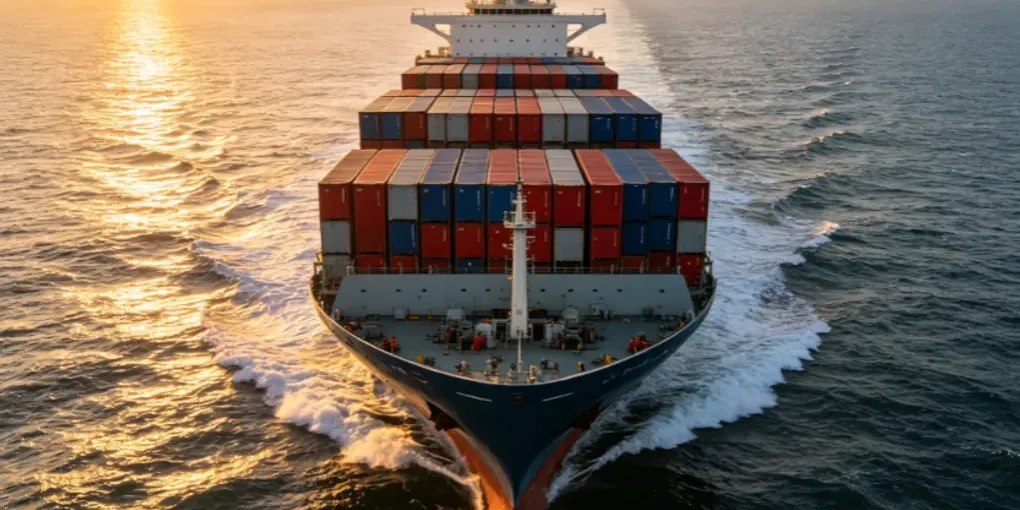
Every container that has ever moved between China and Bolivia ends its ocean voyage in a different country. Bolivia is landlocked — no Chinese box ship has ever tied up at a Bolivian dock — so a container from Shanghai, Shenzhen or Ningbo first lands in Chile (Arica or Iquique), Peru (Callao, Ilo or Matarani) or Brazil (Santos), clears a transit regime, and then climbs the Andes by truck to La Paz, El Alto, Cochabamba or Santa Cruz.
That second, overland freight bill — usually $1,000–$3,000 per container — is the single biggest surprise for importers who plan a Bolivia shipment with rates from a Chile or Peru guide. China is Bolivia’s largest supplier of imported goods, from smartphones and solar panels to machinery, vehicles and textiles, and almost all of it arrives in exactly this two-leg way. This guide covers container shipping from China to Bolivia the way a forwarder plans it: gateway choice first, then the box, then the two freight bills, then the Aduana Nacional paperwork — with real September 2026 numbers throughout. For the full menu of options, start with our shipping from China to Bolivia overview.
Bolivia Has No Port: The Gateway System That Feeds It
Containerized imports reach Bolivia through four practical corridors:
| Corridor | Ocean Leg | Border / Entry | Typical Use |
|---|---|---|---|
| Arica (Chile) | Direct Asia–West Coast South America services | Tambo Quemado (4,660 m pass) | La Paz, El Alto, Oruro — the default for most China cargo |
| Iquique (Chile) | Same services, plus ZOFRI free zone | Colchane / Pisiga | Altiplano cargo when Arica is congested |
| Ilo / Matarani / Callao (Peru) | Frequent Asia services, Callao is the hub | Desaguadero (Lake Titicaca) | La Paz, Cochabamba, and long-haul to Santa Cruz |
| Santos / Paranaguá (Brazil) | Asia–Atlantic services | Puerto Suárez (rail/road) | Heavy, low-value east-bound cargo; niche |
Two facts shape every routing decision. First, Arica is only about 450 km from La Paz, and the Tambo Quemado crossing is the most used border post in the system — but Chile and Peru only allow transit cargo under a customs transit regime, so the paperwork has to be filed before the ship arrives. Second, the ocean leg is priced the same way as a Chile or Peru shipment: the difference in your final cost is almost entirely the land leg, which is why no two Bolivian cities share the same landed cost.
Which Gateway Should Your Container Use?
The correct gateway depends on the destination city, not on which port quotes the lowest ocean rate:
| Destination Region | Best Gateway | Why |
|---|---|---|
| La Paz, El Alto, Oruro (Altiplano) | Arica, Chile | Shortest land leg (~450 km), frequent services, fastest border |
| Cochabamba (central valleys) | Arica or Ilo (Peru) | Balanced ocean + land cost; Ilo is competitive when Arica peaks |
| Santa Cruz and the east | Callao or Matarani (Peru), or Arica long-haul | Compare all three; Santa Cruz is ~1,500 km of trucking from Arica |
| Heavy machinery / bulk east-bound | Santos → Puerto Suárez | Rail option; quote case by case, usually slower |
A common mistake is choosing the gateway with the cheapest ocean quote and discovering that its trucking leg to your city is $600–$1,200 more expensive. A forwarder who works all three corridors prices the complete two-leg move before you book.
20ft, 40ft or 40HQ: Choosing the Box for the Andes
| Container | Usable Volume | Max Payload | Best For on the Bolivia Lane |
|---|---|---|---|
| 20ft GP | ~28 CBM | ~21–22 t | Dense heavy cargo: tiles, ceramics, machinery parts, steel — easier over the passes |
| 40ft GP | ~58 CBM | ~26 t | Standard consumer goods for Santa Cruz and Cochabamba |
| 40ft HQ | ~68 CBM | ~26 t | Voluminous light cargo: textiles, furniture, plastics, e-commerce goods |
Two Bolivia-specific rules change the usual container math. First, weight is the enemy on the Altiplano routes: a 40ft container loaded near its 26 t rail-weight limit is expensive and slow to truck over 4,000 m passes, and some carriers and truckers apply overweight surcharges. If your cargo is dense, a 20ft usually wins. Second, the 40ft HQ is the workhorse of the Santa Cruz lowlands, where furniture, textiles and appliances fill the extra 10 CBM without any altitude penalty. Equipment availability is generally good at Arica and Callao, but 40HQ boxes can run tight in peak season — confirm availability with your forwarder before the booking, not after.
Container Shipping Costs from China to Bolivia: September 2026 Rates
Bolivia quotes have two parts, and you should ask your forwarder to show both. Rates below are realistic all-in September 2026 ranges, consistent with our how much is shipping from China to Bolivia cost guide.
The Ocean Leg: China Ports to Arica, Ilo and Callao
| Route (ocean only) | 20ft FCL | 40ft FCL | 40ft HQ |
|---|---|---|---|
| Shanghai → Arica | $1,400–$2,500 | $2,000–$3,300 | $2,100–$3,500 |
| Shenzhen/Yantian → Arica | $1,300–$2,400 | $1,900–$3,200 | $2,000–$3,400 |
| Ningbo → Ilo | $1,500–$2,700 | $2,100–$3,500 | $2,200–$3,700 |
| Shanghai → Callao | $1,400–$2,400 | $2,000–$3,300 | $2,100–$3,500 |
| Qingdao → Arica | $1,700–$2,900 | $2,400–$3,900 | $2,600–$4,100 |
Ocean rates include the sea freight, BAF/CAF fuel charges, origin THC and export documentation. Southern China origins (Shenzhen, Guangzhou) usually price a little below Shanghai and Ningbo; Qingdao and northern ports add roughly $200–$400. Peak-season surcharges (September–November) can add 15–30% on top — booking 3–4 weeks ahead with a rate-validity window is the cheapest insurance on this lane.
The Land Leg: Gateway to La Paz, Cochabamba or Santa Cruz
| Inland Route (truck, per container) | 20ft FCL | 40ft / 40HQ | Transit |
|---|---|---|---|
| Arica → La Paz / El Alto (via Tambo Quemado) | $1,000–$1,800 | $1,300–$2,300 | 1–2 days |
| Arica → Oruro | $1,100–$2,000 | $1,400–$2,500 | 1–2 days |
| Arica → Cochabamba | $1,500–$2,500 | $2,000–$3,200 | 2–3 days |
| Arica → Santa Cruz | $2,000–$3,200 | $2,600–$4,200 | 3–5 days |
| Ilo / Matarani → La Paz (via Desaguadero) | $1,100–$2,000 | $1,400–$2,500 | 2–3 days |
| Callao → Santa Cruz | $1,600–$2,800 | $2,000–$3,600 | 4–6 days |
Add the two legs and you get the all-in numbers Bolivia importers actually pay: about $2,500–$4,800 for a 20ft and $3,100–$6,000 for a 40ft to a Bolivian terminal, depending on origin port, gateway, destination city and season. Border-crossing fees and trucking fuel surcharges are inside these ranges; duties and IVA are not. During the Altiplano rainy season (December–March), Tambo Quemado and Desaguadero can back up with truck queues — a week of detention at the gateway port while you wait for documents costs $100–$200 per day, so pre-file the transit declaration before the vessel arrives.
LCL: Sharing a Container to Bolivia
Below roughly 15 CBM, LCL (less than container load) at $150–$300 per CBM beats paying for an entire 20ft. Bolivia LCL consolidates in China, breaks bulk at the gateway port or its free zone (Arica has dedicated storage for Bolivian cargo), and completes the land leg as groupage. Add 3–7 days of consolidation time versus FCL. The mechanics are identical to the region’s biggest lane — see our LCL shipping from China to Brazil guide for a step-by-step walkthrough — and the breakpoint is the same: above ~15 CBM, FCL economics take over.
Air Freight: When a Container Is Too Slow
Container volumes belong on the water, but every Bolivia importer keeps the air option in the toolbox: samples, urgent restocks, spare parts and high-value electronics. Air cargo lands at Viru Viru International (VVI) in Santa Cruz or El Alto International (LPB) in La Paz, usually via São Paulo (GRU), Miami (MIA) or Panama City (PTY). LPB sits at 4,061 m, so widebody payloads are restricted there — heavy air cargo routes through VVI and trucks the last leg. September 2026 airport-to-airport rates:
| Weight Tier | Rate (USD/kg) | Transit |
|---|---|---|
| 45–100 kg | $6.0–$9.5 | 5–9 days |
| 100–300 kg | $5.0–$8.5 | 5–9 days |
| 300+ kg | $4.5–$7.5 | 5–8 days |
| Express courier | $9–$16 | 3–6 days |
Chargeable weight rule: air freight bills on the greater of actual weight and volumetric weight — length × width × height (cm) ÷ 6000. A bulky 150 kg pallet of 1.2 × 1.0 × 1.5 m bills as 300 kg, so keep packaging dense. Air costs 10–15× more per kg than a container but cuts the supply chain from 40–50 days to under 9. Once your product is proven, the container takes over — and the air shipments you already made become the demand forecast for your first FCL.
Customs, Duties & Taxes: The ANB Paper Trail
Bolivian customs is run by the Aduana Nacional de Bolivia (ANB) through the SIDUNEA++ electronic system. The consignee needs a Bolivian NIT tax number, and cargo arriving from Chile or Peru moves under a transit regime until it is declared at a Bolivian interior customs office (Tambo Quemado, Desaguadero, or the destination city office). Clearance of a clean, well-documented container takes 2–5 working days; a document mismatch triggers inspection and weeks of delay.
What you pay on the CIF value (cost + insurance + freight):
- Import duties (GAC schedule): typically 5–20% — electronics and machinery often 5–15%, textiles and consumer goods 10–20%
- IVA: 13% on CIF + duty
- Customs service fee: roughly 0.5% of declared value, plus storage and handling
- ICE (consumption tax): extra on alcohol, tobacco, vehicles, fuels and luxury goods
No FTA, no shortcut: Bolivia has no free-trade agreement with China (unlike Chile, Peru and Ecuador), so Chinese goods pay the standard GAC rates. Bolivia’s full Mercosur membership is gradually aligning its tariff schedule with the bloc’s common external tariff, but that does not change the rate Chinese imports pay today.
Worked example — 40ft consumer goods, Shanghai → Callao → Santa Cruz:
| Item | Value (USD) |
|---|---|
| Cargo FOB value (mixed textiles/plastics) | $28,000 |
| Freight, ocean + trucking to Santa Cruz (40ft) | $5,200 |
| Marine insurance (~0.5%) | $140 |
| CIF value | $33,340 |
| Import duty (15% of CIF) | $5,001 |
| IVA (13% of CIF + duty = $38,341) | $4,984 |
| Customs service fee (~0.5%) | $167 |
| Total taxes payable | ≈ $10,152 |
| Landed cost | ≈ $43,492 |
A $33,000 CIF container can therefore carry more than $10,000 in ANB taxes — budget for them on top of the freight quote, and classify your HS codes correctly, because a wrong code triggers re-inspection, fines and storage at both the gateway and the border.
Step by Step: From Chinese Factory Gate to La Paz or Santa Cruz
- Choose the gateway and the box — decide Arica vs Ilo vs Callao from your destination city, and 20ft vs 40ft/HQ from your cargo density
- Get an itemized quote — ocean leg, land leg, border fees and destination charges shown separately
- Book 3–4 weeks ahead — lock the ocean rate and confirm 40HQ equipment if you need it
- Export from China — the forwarder handles FOB/EXW pickup, export clearance and loading
- Ocean transit — 25–38 days to Arica, Ilo or Callao; pre-file the Chile/Peru transit declaration in parallel
- Cross the border — trucking over Tambo Quemado or Desaguadero under the transit regime
- ANB clearance — your broker files the import declaration at the interior customs office, pays duty and IVA (2–5 working days)
- Final delivery — truck to your warehouse in La Paz, El Alto, Cochabamba or Santa Cruz
The complete door-to-terminal cycle runs 35–50 days. If you would rather compare this two-leg process with handing the whole move — including customs — to one partner, our door-to-door vs port-to-port shipping guide explains the trade-offs.
Five Container Mistakes to Avoid on the Bolivia Lane
- Booking to a “Bolivian port” — no such thing exists; the ocean leg ends in Chile, Peru or Brazil, and the real planning starts at the gateway
- Overloading a 40ft for the Altiplano — dense cargo belongs in a 20ft; overweight surcharges and slow pass crossings eat the per-CBM saving
- Ignoring gateway detention — a container sitting at Arica while the ANB paperwork catches up costs $100–$200 per day
- Choosing the cheapest ocean port only — the land leg often differs by $600–$1,200 between gateways for the same Bolivian city
- Skipping the HS-code check — misclassification triggers inspection and fines; a correct code can also legitimately lower the duty rate. Our shipping containers from China to Brazil guide covers the container documentation basics that apply across the region
Frequently Asked Questions
Q: How much does it cost to ship a container from China to Bolivia in 2026?
A: In September 2026, $2,500–$4,800 for a 20ft and $3,100–$6,000 for a 40ft all-in to a Bolivian terminal, plus ANB duties (5–20% of CIF) and 13% IVA. LCL runs $150–$300 per CBM.
Q: Why is container shipping to Bolivia more expensive than to Chile or Peru?
A: Bolivia is landlocked. Every container pays a second freight bill — $1,000–$3,000 of trucking from a Chilean or Peruvian port across the Andes — plus border-crossing formalities.
Q: Which gateway is best for a container to Bolivia?
A: Arica (Chile) for La Paz and the Altiplano; compare Arica, Ilo and Callao/Matarani for Cochabamba; for Santa Cruz price Callao, Matarani and the Arica long-haul. Always compare corridors — the cheapest ocean port is not always the cheapest landed cost.
Q: Can I ship a 40ft container to La Paz?
A: Yes. 40ft and 40HQ containers move to La Paz and Santa Cruz every week. For dense heavy cargo a 20ft trucks more cheaply over the passes; for light voluminous goods the 40HQ delivers the lowest cost per CBM.
Q: What taxes do I pay on a container from China to Bolivia?
A: ANB import duties of 5–20% of CIF under the GAC schedule, 13% IVA on CIF plus duty, a ~0.5% customs service fee, and ICE on restricted goods. No China–Bolivia FTA exists, so standard rates apply.
Q: How long does container shipping from China to Bolivia take?
A: 35–50 days door to terminal: 25–38 days ocean to the gateway, 2–4 days trucking to La Paz or 4–6 to Santa Cruz, plus 2–5 working days of ANB clearance.
Ship Your Container to Bolivia with a Forwarder Who Prices Both Legs
Container shipping from China to Bolivia is not harder than shipping to a coastal country — it is just different: the gateway decision, the two freight bills, the transit regimes and the ANB clearance all have to line up before your box reaches La Paz or Santa Cruz. With the September 2026 numbers above and a forwarder who works the Arica, Ilo and Callao corridors side by side, your first container can be budgeted to the dollar.
Ready to ship? Contact Dantful.US for a free, itemized two-leg quote — ocean and overland shown separately, no surprises at the border.