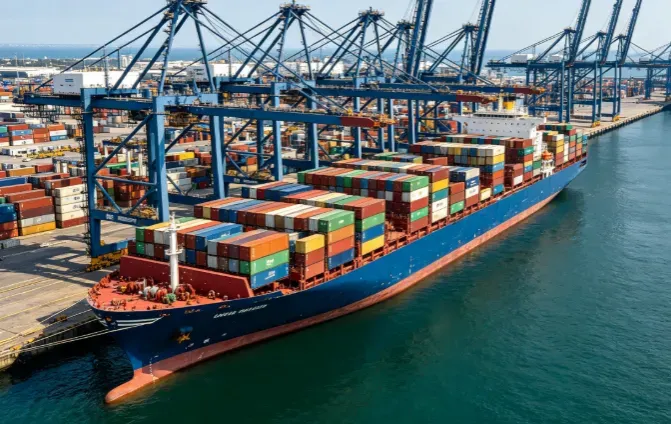
Bolivia is the most expensive country in South America to reach by sea — not because the ocean leg is expensive, but because Bolivia has no coast at all. Every container from China lands first in Chile (Arica or Iquique), Peru (Callao, Ilo or Matarani) or Brazil (Santos), and then climbs the Andes by truck to La Paz, or crosses the lowlands to Santa Cruz. That overland leg adds 15–30% to the freight bill and a week or more to the transit, which is why generic shipping guides so often get Bolivian costs wrong.
China is Bolivia’s largest supplier of imports — electronics, smartphones, machinery, vehicles, textiles and solar panels worth well over US$1.5 billion a year, paid for with lithium, zinc, silver, tin and other minerals flowing the other way. If you are importing any of this, the question is simple: how much is shipping from China to Bolivia? In September 2026, expect $2,500–$4,800 for a 20ft container, $3,100–$6,000 for a 40ft container, $150–$300 per CBM for LCL, and $5.0–$9.5 per kg for air freight — before Bolivian import taxes, which this guide breaks down with real numbers. Based on 15 years of forwarding experience at Dantful.US International Logistics, here is the complete 2026 cost picture, corridor by corridor. For the full range of options, start with our shipping from China to Bolivia guide.
Shipping Costs from China to Bolivia at a Glance
| Shipping Mode | Cost | Transit Time | Best For |
|---|---|---|---|
| LCL sea freight | $150–$300 per CBM | 40–55 days | Under ~15 CBM, first orders |
| FCL 20ft container | $2,500–$4,800 | 35–50 days | 15–28 CBM or heavy cargo |
| FCL 40ft container | $3,100–$6,000 | 35–50 days | 28–58 CBM, regular imports |
| Air freight (100–300 kg) | $5.0–$8.5 per kg | 5–9 days | Urgent, high-value goods |
| Air freight (300+ kg) | $4.5–$7.5 per kg | 5–9 days | Consolidated air cargo |
| Express courier | $9–$16 per kg | 3–6 days | Documents, samples, e-commerce |
September 2026 reality check: Pacific rates have eased from the 2024–2025 highs, but the overland leg, border-crossing fees and peak-season surcharges (September–November) can push totals to the top of these ranges. Booking 3–4 weeks ahead locks in standard pricing.
The Three Corridors: Chile, Peru and Brazil
The single most important cost factor for Bolivia is which neighbor’s port your cargo uses. Each corridor has its own ocean services, overland distances, border posts and quirks:
| Corridor | How It Works | Typical Transit | Best For |
|---|---|---|---|
| Via Arica, Chile (most common) | Ocean to Arica, truck ~440 km over the Andes to La Paz via the Tambo Quemado border crossing | 35–45 days | La Paz, Oruro and Altiplano cargo; shortest land leg |
| Via Iquique, Chile | Ocean to Iquique, truck via Colchane/Pisiga to Oruro or La Paz | 37–48 days | Southern Altiplano; competitive when Arica is congested |
| Via Callao or Ilo, Peru | Ocean to Callao (or Ilo), truck via Desaguadero to La Paz, or via the Interoceanic Highway toward Santa Cruz | 40–50 days | Santa Cruz and eastern Bolivia; good frequency from Asia |
| Via Santos, Brazil | Ocean to Santos, truck or river barge to Puerto Suárez, then to Santa Cruz | 40–55 days | Eastern Bolivia; growing with the Bioceanic Corridor projects |
Chile’s ports are the default for good reason: Arica is only about 440 km from La Paz, and Chile’s duty-free storage regime for transit cargo keeps the border process predictable. Peruvian ports often quote lower ocean rates but add trucking distance to the Altiplano. Your forwarder should price all three corridors before you book — the cheapest ocean rate does not always produce the cheapest landed cost. That routing logic, and everything a forwarder handles on a multi-country leg, is covered in our sea freight forwarder from China guide.
Sea Freight Costs from China to Bolivia by Corridor
Rates below are realistic all-in September 2026 ranges — ocean freight to the transit port plus the overland trucking leg into Bolivia (excluding Bolivian import taxes):
| Corridor | 20ft FCL | 40ft FCL | LCL (per CBM) |
|---|---|---|---|
| Shanghai → Arica → La Paz | $2,500–$4,300 | $3,100–$5,400 | $150–$260 |
| Shenzhen → Arica → La Paz | $2,500–$4,400 | $3,100–$5,500 | $150–$270 |
| Ningbo → Arica → La Paz | $2,550–$4,400 | $3,150–$5,500 | $155–$270 |
| Shanghai → Callao → Santa Cruz | $2,600–$4,600 | $3,200–$5,800 | $160–$280 |
| Shenzhen → Callao → Santa Cruz | $2,600–$4,700 | $3,200–$5,900 | $160–$290 |
| Ningbo → Ilo → Cochabamba | $2,700–$4,800 | $3,300–$6,000 | $165–$300 |
| Qingdao → Arica → La Paz | $2,800–$4,800 | $3,500–$6,000 | $170–$300 |
What is inside these quotes? Ocean freight, BAF/CAF fuel surcharges, origin THC and documentation, the transit-country terminal handling, and the trucking leg to your Bolivian destination. Duties, IVA and the customs broker fee are collected separately. Under ~15 CBM, LCL is the economical choice — the consolidation mechanics are the same as on the region’s biggest lane, explained in our LCL shipping from China to Brazil guide.
Air Freight Costs & the Altitude Factor
Air cargo to Bolivia lands at Viru Viru International (VVI) in Santa Cruz or El Alto International (LPB) in La Paz, usually via a hub in São Paulo (GRU), Miami (MIA) or Panama City (PTY). Here is the altitude quirk most guides miss: LPB sits at 4,061 meters, one of the highest commercial airports on earth, so widebody aircraft carry reduced payloads there and many forwarders route heavy cargo through VVI (373 m) and truck it to La Paz. Rates below are realistic September 2026 airport-to-airport figures:
| Weight Tier | Rate (USD/kg) | Transit | Typical Routing |
|---|---|---|---|
| 45–100 kg | $6.0–$9.5 | 5–9 days | PVG/SZX/CAN → GRU/MIA → VVI |
| 100–300 kg | $5.0–$8.5 | 5–9 days | PVG/SZX/CAN → GRU/MIA → VVI |
| 300–500 kg | $4.8–$8.0 | 5–8 days | PVG/SZX/CAN → GRU/MIA → VVI |
| 500+ kg | $4.5–$7.5 | 5–8 days | PVG/SZX/CAN → GRU/MIA → VVI |
| Express courier (DHL/FedEx/UPS) | $9–$16 | 3–6 days | Door-to-door, LPB or VVI |
Volumetric weight rule: air freight is billed on chargeable weight — actual weight vs length × width × height ÷ 6000 (in cm), whichever is higher. A 150 kg pallet of 1.2 × 1.0 × 1.5 m is charged as 300 kg, so bulky light cargo is dramatically cheaper by sea. Air makes sense when the goods are worth more than the freight — electronics, medical devices, spare parts, samples.
Air vs Sea: The Real Trade-Off
| Factor | Sea Freight (FCL) | Air Freight |
|---|---|---|
| Transit time | 35–50 days | 5–9 days |
| Cost per kg (typical) | $0.4–$0.8 (containerized, incl. land leg) | $4.5–$9.5 |
| Cost per CBM (typical) | $100–$190 (20ft) | $2,300–$4,600 |
| Minimum charge | Container basis | ~$100–$200 per shipment |
| Best for | Bulk, heavy, non-urgent | High-value, urgent, perishable, spare parts |
For time-critical restocks, air freight cuts nearly six weeks out of the supply chain — which is why importers of fashion, electronics and medical supplies use it even at 10–15× the per-kg cost of sea.
Bolivian Customs & Taxes
Bolivia’s customs authority is the Aduana Nacional de Bolivia (ANB), which clears imports electronically through the SIDUNEA++ system and levies taxes on the CIF value (cost + insurance + freight):
- Import duties (Gravamen Arancelario Consolidado, GAC): typically 5–20% of CIF depending on the product’s HS code — electronics and machinery often 5–15%, textiles and consumer goods 10–20%, and some agricultural products higher
- IVA (value-added tax): 13% — charged on CIF + duty
- Customs service fee: roughly 0.5% of the declared value, plus small storage and handling charges
- ICE (Impuesto al Consumo Específico): an extra consumption tax on luxury goods, alcohol, tobacco, vehicles and fuels
- No preferential FTA: Bolivia has no free trade agreement with China, so standard GAC rates apply. Bolivia’s full Mercosur membership (ratified in 2024–2025) means its tariff schedule is gradually aligning with the bloc’s Common External Tariff, but Chinese goods still pay the standard rate
- Importer registration: the consignee needs a Bolivian NIT (tax identification number) and, for many goods, prior import registration with the ANB
Worked Example: Landed Cost of a 20ft Container via Arica
| Item | Value (USD) |
|---|---|
| Freight (Shanghai → Arica → La Paz, 20ft) | $3,600 |
| Cargo value (electronics) | $20,000 |
| Duty (10% of CIF $23,600) | $2,360 |
| IVA (13% of CIF + duty = $25,960) | $3,375 |
| Customs service fee (~0.5%) | $118 |
| Total taxes payable | ≈ $5,853 |
| Full landed cost | ≈ $29,453 |
Clearance typically takes 2–5 working days for a clean shipment with correct HS codes and the commercial invoice, packing list, bill of lading and certificate of origin. For a step-by-step view of the whole timeline, see our how long does it take to ship from China to Bolivia guide.
What Actually Drives Your Final Price
Beyond the mode of transport, five Bolivia-specific factors move the total:
- Corridor choice — Arica vs Callao vs Santos can swing a container quote by $300–$800
- Border crossing — Tambo Quemado and Desaguadero have peak seasons (December–March, Altiplano rains) when truck queues add days and detention charges
- Seasonality — Pacific peak season (September–November) and the pre-Lunar New Year rush push rates up 10–20%
- Origin port — South China (Shenzhen, Guangzhou) and Hong Kong price 5–10% below Shanghai and Ningbo on most Bolivia routings; Qingdao and northern ports add $200–$400
- Documentation quality — a wrong HS code or a mismatch between invoice and packing list triggers ANB inspections that cost weeks, not days
How to Cut Your Shipping Cost to Bolivia
- Quote all three corridors — the cheapest ocean port is not always the cheapest landed cost; let your forwarder price Arica, Callao and Santos side by side
- Move up to 40ft once you pass ~28 CBM — per-CBM cost drops roughly in half
- Consolidate under 15 CBM — LCL at $150–$300/CBM beats paying for a whole 20ft
- Book 3–4 weeks ahead and avoid September–November and the Lunar New Year rush
- Classify your HS code correctly — a correct classification can cut duty by several points; a wrong one triggers ANB penalties
- Use a forwarder with agents at the border — someone who pre-files the transit declarations at Tambo Quemado or Desaguadero saves both time and storage fees. The same border-leg logic applies on the region’s other landlocked lanes — compare costs in our how much is shipping from China to Argentina guide
Frequently Asked Questions
Q: How much does shipping from China to Bolivia cost in 2026?
A: In September 2026: $2,500–$4,800 for a 20ft container, $3,100–$6,000 for a 40ft, $150–$300/CBM for LCL, $5.0–$9.5/kg for air and $9–$16/kg for express — before Bolivian import duties (5–20%) and 13% IVA.
Q: Why is shipping to Bolivia so expensive?
A: Bolivia is landlocked, so every shipment pays for an overland leg from Chile, Peru or Brazil — typically 15–30% on top of the ocean rate — plus border-crossing and transit-country documentation.
Q: Which is the cheapest route from China to Bolivia?
A: For La Paz and the Altiplano, Arica (Chile) is usually cheapest and fastest. For Santa Cruz and the east, Callao (Peru) or Santos (Brazil) can win depending on season. Always compare all three corridors.
Q: How long does shipping from China to Bolivia take?
A: Sea freight takes 35–50 days door-to-terminal via Arica or Callao including trucking; air freight 5–9 days to VVI or LPB; express couriers 3–6 days.
Q: What taxes do I pay on imports from China to Bolivia?
A: The Aduana Nacional de Bolivia charges import duties of 5–20% of CIF under the GAC schedule, 13% IVA on CIF + duty, a ~0.5% customs service fee, and ICE consumption tax on luxury goods. No FTA with China means no preferential rate.
Q: Should I ship by sea or air to Bolivia?
A: For cargo under ~15 CBM, urgent goods or high-value electronics, air (5–9 days) pays despite costing 10–15× more per kg. For everything else, sea freight via Arica or Callao delivers the lowest cost per unit — just budget for the extra 35–50 days.
Ship to Bolivia with a Forwarder Who Knows the Corridors
Bolivia’s shipping math is corridor math: the ocean leg, the Andes trucking, the border post and the ANB paperwork all have to line up before your cargo reaches La Paz or Santa Cruz. With realistic September 2026 rates and a forwarder who works all three corridors, your first shipment can be budgeted to the dollar — not to the nearest guess.
Ready to ship? Contact Dantful.US for a free, itemized quote — we handle everything from Chinese port pickup to delivery in La Paz, Santa Cruz, Cochabamba or El Alto.