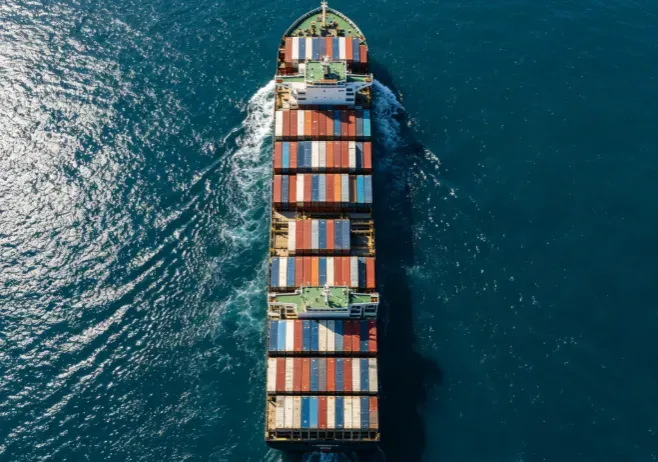
If you’re sourcing goods from Vietnam’s booming manufacturing sector and need them delivered to Brazil, the single most important logistics variable you need to nail down is shipping time from Vietnam to Brazil. Miscalculate it, and you’re looking at stockouts that halt your sales, production delays that frustrate your buyers, or missed seasonal windows that cost you an entire quarter’s revenue. Get it right, and you’ll have a predictable, reliable supply chain that gives you a genuine competitive edge in the Brazilian market.
In this guide, we break down exactly how long shipping from Vietnam to Brazil takes across every mode — sea freight, air freight, and express courier — with realistic door-to-door timelines, stage-by-stage breakdowns, and the Brazil-specific factors (customs, Incoterms, seasonal bottlenecks) that no other resource covers in one place. Whether you’re importing textiles from Ho Chi Minh City to São Paulo or shipping footwear samples from Hanoi to Rio de Janeiro, you’ll walk away with a clear, actionable timeline for your supply chain.
How Long Does It Take to Ship from Vietnam to Brazil?
The table below gives you an at-a-glance reference for Vietnam to Brazil transit time across all major shipping modes. These are realistic door-to-door ranges — not just port-to-port estimates that leave out critical steps like customs clearance and last-mile delivery.
| Shipping Mode | Typical Door-to-Door Time | Best For |
|---|---|---|
| Sea Freight FCL | 35–50 days | Full container loads, bulk cargo, budget-priority shipments |
| Sea Freight LCL | 40–55 days | Smaller-volume cargo sharing container space |
| Air Freight (Standard) | 5–10 business days | High-value goods, seasonal inventory, trade show materials |
| Air Freight (Express/Priority) | 3–5 business days | Critical stock replenishment, product launches, urgent samples |
| Express Courier (DHL/FedEx/UPS) | 2–7 business days | Documents, small parcels, e-commerce orders |
These ranges aren’t arbitrary — they reflect real-world variables including origin port selection (Cat Lai vs. Hai Phong vs. Da Nang), the Brazilian customs channel your shipment is assigned to, seasonal congestion, and your chosen Incoterms. We’ll walk through each of these in detail below.
How Long Does Sea Freight Take from Vietnam to Brazil?
Sea Freight from Vietnam to Brazil is the backbone of the Vietnam–Brazil trade lane, handling the vast majority of cargo volume between the two countries. All ocean freight from Vietnam to Brazil requires at least one transshipment — typically at Singapore or Colombo (Sri Lanka) — as there are no direct liner services connecting Vietnamese and Brazilian ports.
FCL Transit Times by Port Pair
FCL (Full Container Load) gives you dedicated use of an entire container — typically 20-foot, 40-foot, or 40-foot high-cube. Here are the realistic port-to-port transit times based on actual carrier schedules:
From Ho Chi Minh City (Cat Lai Port — VNSGN):
| Destination Port | Transit Time | Frequency |
|---|---|---|
| Santos (BRSSZ) | 29–33 days | Weekly |
| Paranaguá (BRPNG) | 33–40 days | Weekly |
| Rio de Janeiro (BRRIO) | 28–35 days | Every 1–2 weeks |
| Navegantes (BRNVT) | 30–35 days | Every 1–2 weeks |
| Suape (BRSUA) | 40–54 days | Bi-weekly |
From Hai Phong (VNHPH):
| Destination Port | Transit Time | Frequency |
|---|---|---|
| Santos (BRSSZ) | 39–42 days | Weekly |
| Paranaguá (BRPNG) | 35–40 days | Weekly |
| Rio de Janeiro (BRRIO) | 47–49 days | Every 1–2 weeks |
| Suape (BRSUA) | 43–47 days | Bi-weekly |
From Da Nang (VNDAD):
| Destination Port | Transit Time | Frequency |
|---|---|---|
| Santos (BRSSZ) | 36–39 days | Every 1–2 weeks |
| Paranaguá (BRPNG) | 33–37 days | Every 1–2 weeks |
| Rio de Janeiro (BRRIO) | 43–47 days | Every 1–2 weeks |
| Suape (BRSUA) | 45–47 days | Bi-weekly |
LCL Transit Times
LCL (Less than Container Load) shipments typically add 3–7 days to the FCL times above. Why? Your cargo must first be consolidated with other shippers’ goods at a Container Freight Station (CFS) in Vietnam, then deconsolidated at the destination CFS in Brazil. Each consolidation/deconsolidation step adds handling time, and LCL shipments often route through additional intermediate stops.
| Origin Port | Santos LCL | Paranaguá LCL | Rio de Janeiro LCL |
|---|---|---|---|
| Ho Chi Minh (Cat Lai) | 36–39 days | 38–45 days | 44–45 days |
| Hai Phong | 39–42 days | 35–40 days | 47–49 days |
| Da Nang | 36–39 days | 33–37 days | 43–47 days |
LCL vs. FCL Shipping Time: Why the Difference Matters
Beyond the 3–7 day gap, there’s a practical consideration: LCL shipments have more touch points — consolidation warehouse → origin CFS → transshipment port → destination CFS → deconsolidation warehouse. Each touch point introduces a risk of delay. For shipments over 15 CBM, FCL is almost always the faster and more cost-effective choice.
Real-World Example: A recent 40-foot FCL shipment we managed from Cat Lai (Ho Chi Minh City) to Santos for a footwear importer took 32 days port-to-port, plus 6 days for Brazil customs clearance and inland trucking to São Paulo — a total of 38 days door-to-door. The same volume shipped as LCL would have added approximately 5 days due to consolidation at both ends.
Major Carriers on the Vietnam–Brazil Route
The primary ocean carriers operating on this lane include MSC, Maersk, ONE (Ocean Network Express), CMA-CGM, and Hapag-Lloyd. Most services route through Singapore (adding 2–4 days from Cat Lai or 5–7 days from Hai Phong before the trans-Pacific leg to South America’s east coast). Booking 3–4 weeks in advance is strongly recommended, especially during peak season.
Air Freight Transit Time from Vietnam to Brazil
When shipping time from Vietnam to Brazil can’t stretch to 35+ days, air freight delivers your cargo in a fraction of the time. The trade-off is cost — air freight typically runs 5–10× the price of sea freight — but for high-value goods, seasonal stock, or emergency shipments, it’s the clear winner.
Air Freight Door-to-Door Breakdown
A typical air freight transit time from Vietnam to Brazil breaks down like this:
| Stage | What Happens | Typical Time |
|---|---|---|
| Factory Pickup & Inland Transport | Trucking from factory to departure airport | 1–2 days |
| Vietnam Export Customs | Documentation filing, security screening | 0.5–1 day |
| Flight (Airport-to-Airport) | Flight time including transit hub stop | 1–2 days |
| Brazil Import Customs Clearance | Receita Federal processing (channel-dependent) | 0.5–15 days |
| Last-Mile Delivery | Trucking from airport to final destination | 1–2 days |
| Total Door-to-Door (Air Freight) | 5–10 business days |
Vietnam to Brazil Air Freight Routes & Airlines
There are no direct cargo flights from Vietnam to Brazil. All routes require at least one stop at a Middle Eastern, European, or African hub:
| Route | Airline | Transit Hub | Flight Time | Frequency |
|---|---|---|---|---|
| Ho Chi Minh (SGN) → São Paulo (GRU) | Emirates SkyCargo | Dubai (DXB) | ~28 hours | Daily |
| Hanoi (HAN) → São Paulo (GRU) | Qatar Airways Cargo | Doha (DOH) | ~29 hours | 2–4× per week |
| Hanoi (HAN) → São Paulo (GRU) | Turkish Cargo | Istanbul (IST) | ~33 hours | 2–4× per week |
| Hanoi (HAN) → São Paulo (GRU) | Ethiopian Airlines | Addis Ababa (ADD) | ~33 hours | 1–2× per week |
Vietnam Departure Airports
- SGN (Tan Son Nhat — Ho Chi Minh City): Vietnam’s busiest cargo gateway, serving the southern manufacturing hub (Binh Duong, Dong Nai, Long An).
- HAN (Noi Bai — Hanoi): Serves northern industrial zones (Bac Ninh, Hai Phong, Hung Yen).
- DAD (Da Nang): Limited cargo capacity; most shipments trucked to SGN or HAN.
Brazil Arrival Airports
- GRU (Guarulhos — São Paulo): Brazil’s primary air cargo gateway, handling roughly 40% of all air imports. Best choice for São Paulo state destinations.
- VCP (Viracopos — Campinas): Excellent alternative during GRU congestion periods, strong cargo infrastructure.
- GIG (Galeão — Rio de Janeiro): Secondary gateway for Rio de Janeiro state and Espírito Santo.
Express Courier from Vietnam to Brazil
For small parcels, documents, and e-commerce shipments, express couriers offer the fastest shipping from Vietnam to Brazil:
| Courier | Transit Time | Best For |
|---|---|---|
| DHL Express | 2–4 business days | Documents, samples, urgent small parcels |
| FedEx International Priority | 2–5 business days | E-commerce, commercial samples |
| UPS Worldwide Express | 3–5 business days | Medium parcels, time-sensitive shipments |
When Air Freight Makes the Most Sense
Air freight is the right call when: your goods have a value above $15–20 per kg (the freight premium is small relative to cargo value), you’re shipping seasonal inventory with a hard market window, you need trade show samples or product launch materials urgently, or you’re an Amazon FBA seller needing to restock Brazilian fulfillment centers before running out of inventory. While air freight from China to Brazil is the more established trade lane, Vietnam’s air cargo infrastructure has matured rapidly, offering comparable transit times.
Vietnam to Brazil Door-to-Door Shipping Time
This is the section no other resource on the internet provides — and it’s the one that actually matters for supply chain planning. When evaluating door to door shipping from Vietnam to Brazil, port-to-port times are useful reference points, but they account for only one segment of the total journey. Here’s exactly what happens at each stage when you ship from a Vietnamese factory to a Brazilian warehouse or distribution center.
Complete Door-to-Door Timeline (Sea Freight)
| Stage | What Happens | Typical Time | Variables |
|---|---|---|---|
| ① Factory Pickup & Inland Transport | Trucking from factory to Vietnam seaport | 1–3 days | Distance to port; northern factories add time |
| ② Vietnam Export Customs Clearance | Documentation filing with Vietnam Customs | 1–3 days | Documentation completeness; cargo type |
| ③ Port Waiting & Container Loading | Waiting for vessel, container loading at terminal | 1–3 days | Port congestion; cut-off timing |
| ④ Ocean Transit (Port-to-Port) | Sea freight from Vietnam to Brazil port | 28–45 days | Port pair, carrier, transshipment routing |
| ⑤ Brazil Import Customs Clearance | Receita Federal processing & release | 0.5–15+ days | Customs channel assignment (see Section 6) |
| ⑥ Port Discharge & Last-Mile Delivery | Trucking from Brazil port to final destination | 2–7 days | Distance inland; São Paulo vs. Manaus |
| Total Door-to-Door (Sea Freight) | 35–73 days |
Air Freight Door-to-Door (Same Framework, Compressed)
Using the same six stages, air freight compresses the timeline dramatically — but the Brazil customs stage remains the wildcard:
| Stage | Typical Time (Air Freight) |
|---|---|
| Factory Pickup & Inland Transport | 1–2 days |
| Vietnam Export Customs | 0.5–1 day |
| Flight (including hub transit) | 1–2 days |
| Brazil Import Customs Clearance | 0.5–15+ days |
| Last-Mile Delivery | 1–2 days |
| Total Door-to-Door (Air Freight) | 5–25 business days |
Vietnam Origin Nuance: North vs. South
Where your factory is located in Vietnam has a measurable impact on total time. Northern Vietnam (Hanoi, Hai Phong, Bac Ninh) adds approximately 5–10 days to sea freight door-to-door time compared to southern Vietnam (Ho Chi Minh City, Binh Duong, Dong Nai). This is due to longer inland transit to the port, fewer direct feeder services to major transshipment hubs, and less frequent sailings from Hai Phong compared to Cat Lai.
How Long Does Customs Clearance Take for Shipments from Vietnam to Brazil?
If there’s one variable that makes or breaks your shipping time from Vietnam to Brazil, it’s Brazilian customs clearance. Brazil operates one of the most complex and rigorous customs regimes in the Americas — and no other article on this topic covers it in detail.
Why Brazil Customs Is Different
Brazil’s customs authority, Receita Federal, processes all imports through Siscomex (Integrated Foreign Trade System), an electronic platform that assigns every shipment to one of four inspection channels. Importers must also be registered in the RADAR system, which has different authorization tiers limiting import volume and value.
The Customs Channel System (Critical — No Competitor Covers This)
When your shipment arrives in Brazil, Siscomex assigns it to one of these channels based on risk algorithms, shipment history, declared value, HS code, and random selection:
| Channel | What Happens | Clearance Time | Approximate Probability |
|---|---|---|---|
| 🟢 Green | Automatic clearance — no inspection | Hours to 1 day | ~60–70% |
| 🟡 Yellow | Document review by customs officer | 2–5 business days | ~15–20% |
| 🔴 Red | Physical cargo inspection required | 5–15+ business days | ~10–15% |
| ⚪ Gray | Tax valuation audit (additional scrutiny) | 10–30+ business days | ~3–5% |
What Triggers Red or Gray Channel Inspections?
The most common triggers we see in practice include: cargo undervaluation (declared value too low relative to market), HS Code (NCM) misclassification or mismatch with invoice description, incomplete or inconsistent documentation across the commercial invoice and packing list, first-time importers without established compliance history, and goods subject to import licensing (LI) or regulatory controls (ANVISA for health products, MAPA for agricultural goods, INMETRO for electronics).
ICMS — The Second Clearance
Even after federal customs releases your goods, you face ICMS (Imposto sobre Circulação de Mercadorias e Serviços) — Brazil’s state-level VAT. ICMS clearance adds an additional 1–3 business days and the rate varies significantly by state (São Paulo: ~18%, Rio de Janeiro: ~18%, Minas Gerais: ~18%, with interstate variations). You cannot take delivery until ICMS is calculated and paid.
Documentation Checklist for Faster Clearance
Having every document ready before the vessel departs Vietnam is the single most effective way to minimize customs delays:
- Commercial Invoice — Detailed, accurate, with correct HS/NCM codes for every item
- Packing List — Must match the invoice exactly (weight, quantity, dimensions)
- Bill of Lading (B/L) or Airway Bill (AWB) — Consignee information must match RADAR registration
- Certificate of Origin (C/O) — Required for preferential tariff treatment where applicable
- Import License (LI) — Required for specific regulated categories
From our experience: Advance document review by a Brazil-licensed customs broker before the vessel even departs Vietnam reduces Red Channel risk by an estimated 60%. For door-to-door shipments managed by Dantful.US International Logistics, we pre-clear all documentation at the origin stage, giving Brazilian customs a complete, verified paperwork package before the cargo arrives.
Shipping Time from Vietnam to Brazil by Incoterms
Your choice of Incoterms 2020 directly affects your total door-to-door shipping time — because different terms shift responsibility (and the time burden) for customs clearance, inland transport, and documentation between buyer and seller.
How Each Incoterm Affects Your Timeline
Important Brazil-Specific Note: Unlike many destinations, true DDP (Delivered Duty Paid) is not straightforward in Brazil. Brazilian customs law requires the importer of record to be a legal entity registered in Brazil with an active RADAR license — a foreign exporter or forwarder cannot directly act as the importer. What most freight forwarders offer is a DAP (Delivered at Place) arrangement with coordinated customs brokerage through a local Brazilian partner, which achieves the same hassle-free experience without violating Brazilian import regulations.
| Incoterm | What’s Included in Transit Time | Typical Door-to-Door (Sea) | Who Handles Brazil Customs? |
|---|---|---|---|
| EXW (Ex Works) | Full chain from factory gate | 38–76 days | Buyer entirely |
| FOB (Free On Board) | Vietnam port departure to Brazil door | 32–65 days | Buyer (via their customs broker) |
| CIF (Cost, Insurance, Freight) | Vietnam port to Brazil port arrival | 28–45 days | Buyer (after port arrival) |
| DAP (Delivered at Place) | Door-to-door, duties & taxes excluded | 35–70 days | Buyer (taxes & clearance) |
| DDP-like (via local partner) | Full door-to-door, duties & taxes managed | 35–70 days | Forwarder’s Brazilian partner entity |
Why Door-to-Door with Coordinated Customs Is the Smart Choice for Vietnam→Brazil
While pure DDP is difficult in Brazil, a door-to-door service with in-house customs brokerage — where your freight forwarder coordinates everything through their licensed Brazilian entity or partner — achieves the same end result. Under this arrangement, your forwarder handles: Vietnam export clearance, ocean or air freight, Brazil import customs clearance (via their Brazilian-licensed broker), ICMS calculation and payment coordination, and final delivery to your door.
For Brazilian importers — especially SMEs and first-time buyers — this arrangement eliminates the steep learning curve of navigating Receita Federal, Siscomex, and state tax authorities on your own. It also provides a single point of contact, predictable transit time, and transparent all-in pricing. For a deeper look at how trade terms affect your bottom line, see our guide on Which Shipping Term Is Best for Your Business. While DDP shipping from China to Brazil is frequently discussed in the industry, the practical reality in Brazil always involves a local entity acting as importer of record.
What we see in practice: For door-to-door shipments managed through Dantful.US International Logistics, our Brazilian partner entity handles the import of record while we pre-clear all documentation before the vessel departs Vietnam — with dedicated Brazil-licensed customs brokers stationed at Santos, Paranaguá, and Rio de Janeiro. This coordinated approach typically saves 3–5 days compared to FOB or CIF shipments where the buyer manages Brazil-side clearance independently with a separate broker.
What Factors Affect Shipping Time from Vietnam to Brazil?
Even with a well-planned logistics strategy, external factors can add days or weeks to your average shipping time from Asia to Brazil. Understanding these in advance lets you build realistic buffers into your supply chain.
Seasonal Delay Calendar
| Period | Factor | Expected Impact |
|---|---|---|
| January–February | Vietnamese Tet (Lunar New Year) | Factory shutdowns 1–2 weeks; port labor shortages; container scarcity |
| February–March | Brazilian Carnival | Reduced customs staffing; slower document processing (~2–3 day delays) |
| August–October | Peak Season Buildup | Pre-Christmas/Natal inventory rush; port congestion escalates |
| October | China Golden Week | Impacts Singapore/Colombo transshipment hubs; ripple delays even for VN cargo |
| November–December | Holiday Peak | Brazilian port congestion peaks (Santos, Paranaguá); last-mile delivery backlog |
Port Congestion
Santos (BRSSZ) — Brazil’s busiest port — experiences berth waiting times of 2–5 additional days during Q4 peak season. Hai Phong in northern Vietnam has fewer direct feeder connections to major transshipment hubs compared to Cat Lai, adding 5–10 days to northern-origin shipments. Transshipment congestion at Singapore and Colombo can also introduce 1–3 days of unexpected delay.
Carrier & Routing Factors
- Blank sailings: Carriers cancel scheduled voyages during low-demand periods to manage capacity, forcing cargo onto later vessels.
- Multi-stop services: Some budget carriers add 2–3 intermediate port calls, extending transit time by 5–10 days.
- Carrier alliance rotations: Schedule changes occur quarterly — your freight forwarder should alert you to upcoming changes that affect your route.
How to Minimize Delays
- Book 3–4 weeks ahead during peak season (August–December)
- Prepare complete documentation before cargo pickup — never leave paperwork to the last day
- Prioritize Cat Lai (Ho Chi Minh) departures if your factory location allows it — consistently faster than Hai Phong
- Work with a freight forwarder that has direct carrier contracts and in-house Brazil customs brokerage
What Is the Fastest Shipping Method from Vietnam to Brazil?
The fastest shipping method from Vietnam to Brazil depends entirely on your priorities — speed vs. budget, volume vs. urgency, cargo value vs. freight cost. Here’s a practical framework to help you decide.
Shipping Speed vs. Cost Spectrum
| Tier | Shipping Method | Door-to-Door Time | Relative Cost | Ideal Use Case |
|---|---|---|---|---|
| 💰 Budget | Sea Freight FCL | 35–50 days | $ | Bulk cargo, 15+ CBM, flexible deadlines |
| ⚖️ Balanced | Sea Freight LCL | 40–55 days | $$ | 2–15 CBM, moderate urgency |
| ⚡ Fast | Air Freight Standard | 5–10 business days | $$$ | High-value goods ($15+/kg), seasonal stock |
| 🚀 Fastest | Air Freight Express/Priority | 3–5 business days | $$$$ | Critical stockouts, product launches |
| 📦 Small Parcel | Express Courier (DHL/FedEx/UPS) | 2–7 business days | $$–$$$ | Samples, documents, e-commerce orders |
5 Questions to Choose Your Shipping Mode
- What’s your cargo value per kg? Above $15–20/kg → air freight starts making financial sense. Below that → sea freight.
- How time-sensitive is your delivery? Calculate the cost of a stockout (lost sales + customer churn) vs. the air freight premium.
- What’s your shipment volume? Above 15 CBM → FCL is usually fastest and cheapest. 2–15 CBM → LCL. Under 2 CBM → air or courier.
- Does your product have shelf-life constraints? Perishables, fast fashion, and trending consumer goods almost always justify air freight.
- What’s your cash flow situation? Sea freight ties up capital 30–50 days longer but costs 5–10× less. Factor inventory carrying cost into your calculation.
Hybrid Option: Sea-Air Combined
A lesser-known but viable option for the Vietnam–Brazil lane is sea-air combined transport. Your cargo travels by sea from Vietnam to a Middle Eastern hub (Dubai or Doha), then transfers to air freight for the final leg to Brazil. Total transit: 15–25 days, at roughly 40–60% of the cost of pure air freight. This works well for shipments in the 1–5 CBM range where pure sea is too slow and pure air is too expensive.
FAQs
How long does sea freight take from Vietnam to Brazil?
Sea freight from Vietnam to Brazil takes 28–45 days port-to-port for FCL shipments, depending on the specific port pair. Door-to-door, including inland transport and both countries’ customs clearance, expect 35–73 days total. The fastest route is Ho Chi Minh (Cat Lai) to Rio de Janeiro at 28–35 days port-to-port.
What is the fastest way to ship from Vietnam to Brazil?
Express air freight (priority service) is the fastest method at 3–5 business days door-to-door. For the absolute fastest transit for small items, DHL Express delivers from Vietnam to Brazil in 2–4 business days. Standard air freight takes 5–10 business days, and express courier services occupy the 2–7 business day range.
How much does it cost to ship a container from Vietnam to Brazil?
A 40-foot container (FCL) from Ho Chi Minh City to Santos typically costs between $9,000 and $12,000 USD, depending on the season, carrier, and fuel surcharges. LCL rates run approximately $120–$180 USD per CBM. Air freight costs range from $4.50 to $8.00 USD per kg. All figures are indicative — rates fluctuate weekly based on market conditions. For a detailed comparison with China-origin pricing, see our guide on Shipping Cost from China to Brazil.
Which port in Vietnam is best for shipping to Brazil?
Cat Lai Port (Ho Chi Minh City) is the best origin port for shipping to Brazil. It offers the fastest transit times (29–33 days to Santos), the most frequent sailings, and the widest carrier selection. Hai Phong (northern Vietnam) adds 5–10 days and has fewer direct feeder connections. Da Nang (central Vietnam) is viable but has the most limited schedule frequency of the three.
How long does Brazil customs clearance take for imports from Vietnam?
Brazil customs clearance for Vietnam-origin goods typically takes between a few hours (Green Channel) and 15+ business days (Red Channel), with an additional 1–3 days for ICMS state tax processing. Most shipments (~60–70%) clear within 1 day via Green Channel. Complete documentation and accurate HS/NCM codes are the most effective ways to minimize clearance time.
Can I ship from Vietnam to Brazil door-to-door with duties and taxes included?
Yes — but with an important clarification. Because Brazilian customs law requires the importer of record to be a locally registered entity with an active RADAR license, pure DDP (Delivered Duty Paid) where the foreign seller handles everything is technically not feasible. What reputable freight forwarders offer instead is a door-to-door service with coordinated customs brokerage: the forwarder’s Brazilian partner entity acts as importer of record, handling Brazil import clearance, ICMS calculation, and final delivery, while you receive a single all-in quote and a predictable transit time of 35–70 days by sea. The end result is the same hassle-free experience — just structured to comply with Brazilian law.
What documents do I need to ship goods from Vietnam to Brazil?
Essential documents include: Commercial Invoice (with correct HS/NCM codes), Packing List, Bill of Lading (B/L) or Airway Bill (AWB), Certificate of Origin (C/O), and an Import License (LI) if your goods fall under regulated categories. Importers must also have active RADAR registration with Receita Federal.
Is there direct sea freight from Vietnam to Brazil, or does it require transshipment?
There are no direct ocean services from Vietnam to Brazil. All shipments require at least one transshipment, typically at Singapore or Colombo (Sri Lanka). From the transshipment hub, cargo connects to mainline South America east coast services. The transshipment adds approximately 2–5 days depending on the hub and connection timing.
How does shipping time from Vietnam to Brazil compare to shipping from China to Brazil?
Shipping from Vietnam to Brazil takes roughly 5–10 days longer on average than Shipping from China to Brazil for equivalent port pairs. This is because China has more direct liner services to South America and higher sailing frequency. However, with Vietnam’s manufacturing costs often lower than China’s for certain categories (textiles, footwear, furniture), the additional transit time is frequently offset by lower production costs.
Get A Free Shipping Quote