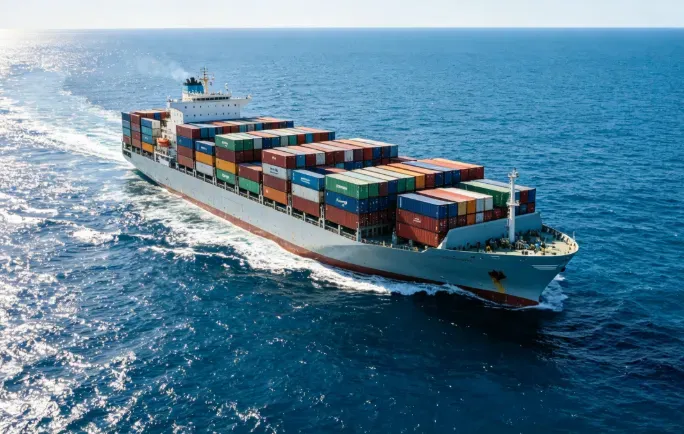
Every year, tens of thousands of containers cross the Pacific from Shanghai to Seattle — one of the fastest and most direct Trans-Pacific trade lanes. Yet most importers leave money on the table because they don’t fully understand their options for shipping from Shanghai to Seattle. This guide cuts through the noise. You’ll get real 2026 rates, transit times for every shipping mode, a plain-English breakdown of DDP vs. FOB, U.S. customs compliance essentials, and a dedicated section for Amazon FBA sellers routing through Seattle. For a broader overview of all major U.S. entry ports and trade lanes, see our complete guide to Shipping from China to USA.
Best Shipping Method from Shanghai to Seattle: Sea Freight vs. Air Freight vs. Express
Your shipping method determines your cost, timeline, and operational complexity. For a deeper comparison across all modes, read our full breakdown of Air Freight vs Sea Freight from China to USA: Cost, Time & Best Choice. Here’s how the three options stack up for the Shanghai → Seattle route.
Ocean Freight
Sea freight handles roughly 90% of cargo on this lane. For a complete overview of ocean shipping services and transit options, see our Sea Freight from China to USA guide. It’s the most cost-effective option for shipments over 1 CBM.
FCL (Full Container Load) gives you a dedicated 20ft, 40ft, or 40ft High Cube container. Direct sailings from Shanghai’s Yangshan and Waigaoqiao terminals to the Northwest Seaport Alliance (Seattle/Tacoma) take 14–22 days port-to-port. Major carriers — COSCO, OOCL, Evergreen, MSC, ONE, Yang Ming, SM Line — offer multiple weekly departures. FCL is ideal for 10+ CBM shipments where you want the lowest per-unit cost and minimal handling.
LCL (Less than Container Load) consolidates your cargo with other shipments in a shared container — the practical choice for 1–10 CBM. Expect 22–35 days port-to-port; the extra 5–10 days comes from consolidation at a Shanghai CFS (Container Freight Station) and deconsolidation at Seattle. Per-CBM rates are higher than FCL, but you only pay for the space you use.
Ocean freight wins when: cargo is heavy or bulky, your timeline allows 4–5 weeks door-to-door, and cost per unit matters more than speed.
Air Freight
Air freight from Shanghai Pudong (PVG) to Seattle-Tacoma (SEA) takes 3–5 days airport-to-airport — roughly 10–14 hours flight time plus ground handling at both ends. Door-to-door typically runs 5–7 days.
Airlines charge by chargeable weight — the greater of your actual weight or volumetric weight (L × W × H in cm ÷ 6,000). This means bulky-but-light shipments can cost more than you’d expect based on scale weight alone.
Air freight wins when: cargo value is high relative to weight, inventory is time-sensitive, or you’re facing a stockout that costs more in lost sales than the freight premium.
Express Courier
DHL, FedEx, and UPS offer 3–6 day door-to-door service from Shanghai. For a full breakdown of courier options and pricing, see our Express shipping from China to USA guide. Best for shipments under 100 kg — samples, prototypes, documents, or small e-commerce orders. Express is 2–4× more expensive per kg than consolidated air freight, but the convenience (one provider, simple paperwork, no customs broker needed) often justifies the premium for small parcels.
Quick Decision Matrix
| Your Situation | Cargo Size | Budget Priority | Recommended Mode |
|---|---|---|---|
| Regular restocking, heavy goods | 10+ CBM | Lowest cost | FCL Sea Freight |
| Smaller batches, flexible timeline | 1–10 CBM | Moderate cost | LCL Sea Freight |
| High-value electronics, seasonal rush | 100–1,000 kg | Speed | Air Freight |
| Samples, documents, small orders | Under 100 kg | Simplicity | Express Courier |
| Urgent stockout, perishable goods | Any weight | Fastest possible | Air Freight or Express |
Sea Freight Shanghai to Seattle
Ocean freight is where most Shanghai → Seattle cargo moves. Here are the real numbers for 2026. For market-wide rate context, see our Container Shipping Costs from China to USA overview.
FCL & LCL Rate Table (2026 Estimates)
| Mode | Spec | Cost Range (USD) | Port-to-Port Transit |
|---|---|---|---|
| FCL 20GP | 20ft, ~28 CBM | $1,800 – $2,800 | 14–22 days |
| FCL 40GP | 40ft, ~58 CBM | $2,800 – $4,500 | 14–22 days |
| FCL 40HQ | 40ft HC, ~68 CBM | $3,000 – $4,800 | 14–22 days |
| LCL | Per CBM | $85 – $150 | 22–35 days |
| LCL | 5 CBM example | $425 – $750 | 22–35 days |
Important: These are base ocean freight rates only. Your total landed cost adds: BAF (Bunker Adjustment Factor), PSS (Peak Season Surcharge, if applicable), THC (Terminal Handling Charges), documentation fees, ISF filing ($35–50), customs clearance, duties and taxes, and final trucking. The cheapest freight quote rarely delivers the cheapest total cost — a point we’ll return to.
DDP Door-to-Door: The All-In Option
DDP (Delivered Duty Paid) is the most popular choice among importers who want one price and zero surprises. For a complete walkthrough of how this Incoterm works, see our DDP shipping from China to USA guide. Your freight forwarder handles everything: Shanghai pickup → export clearance → ocean freight → U.S. import clearance → duty payment → Seattle-area delivery.
| Container | DDP All-In (USD) | Door-to-Door Transit |
|---|---|---|
| 20GP | $4,200 – $5,200 | 25–32 days |
| 40GP / 40HQ | $5,800 – $7,200 | 25–32 days |
What DDP includes: ocean freight, China and U.S. customs clearance, all import duties and taxes, port handling, and Seattle-area trucking.
What DDP excludes: cargo insurance, storage/demurrage beyond free time, CBP exam fees, and specialized clearance for FDA/FCC-regulated goods. If a DDP quote seems too cheap, ask what’s excluded — bait pricing is common.
The DDP Journey: Step by Step
For a full end-to-end breakdown of this service model, read our Door to Door Shipping from China to USA guide.
DDP Shipping Journey: Shanghai Factory → Seattle Doorstep Total door-to-door: 25–32 days | One provider, one price, end-to-end accountability Step 1 Pickup Factory/Warehouse Shanghai Area Day 1 Step 2 Export Clearance China Customs Document Processing Days 1–2 Step 3 Ocean Freight Yangshan/Waigaoqiao → Seattle/Tacoma Days 2–22 Step 4 Import Clearance U.S. CBP Entry Duty & Tax Paid Days 22–26 Step 5 Drayage Port Discharge → Warehouse/Door Days 24–28 ✓ Complete Delivered! Seattle-Area Final Address Days 26–32 What DDP Covers ✅ China Pickup ✅ Export Clearance ✅ Ocean Freight ✅ US Customs + Duties ✅ Seattle Delivery
- Supplier pickup (Day 1): Truck collects cargo from your Shanghai-area factory.
- China export clearance (Days 1–2): Customs documentation filed; cargo cleared for export.
- Container loading & departure (Days 2–4): Container loaded at Yangshan or Waigaoqiao terminal; vessel departs.
- Trans-Pacific crossing (Days 4–22): 14–18 days on the water — one of the shortest ocean legs from China to the U.S. mainland.
- U.S. import clearance (Days 22–26): CBP processes entry; duties and taxes paid; cargo released.
- Port discharge & drayage (Days 24–28): Container discharged, trucked to warehouse or final destination.
- Final delivery (Days 26–32): Cargo arrives at your Seattle-area address.
Incoterms 2020: EXW vs. FOB vs. CIF vs. DDP
Not every shipment needs DDP. Here’s how the four main Incoterms compare for Shanghai to Seattle:
| Responsibility | EXW | FOB | CIF | DDP |
|---|---|---|---|---|
| China export clearance | You | Supplier | Supplier | Forwarder |
| Ocean freight | You | You | Supplier | Forwarder |
| Insurance | You | You | Supplier (minimal) | Forwarder (if requested) |
| U.S. import clearance | You | You | You | Forwarder |
| Import duties & taxes | You | You | You | Forwarder |
| Seattle delivery | You | You | You | Forwarder |
When to use each: EXW if you have a sourcing agent in China handling logistics locally. FOB if you’re an experienced importer with a trusted U.S. customs broker and prefer to control freight costs directly — for a detailed comparison of buyer-side options, see CIF vs FOB: Which is better for US importers. CIF if your supplier has access to better ocean freight rates than you can negotiate. DDP if you want one provider, one price, and one point of contact from factory to doorstep.
Seasonal Pricing: When to Ship for the Best Rates
Timing your shipment can save 15–35% on ocean freight.
| Period | Rate Level | Why |
|---|---|---|
| March – April | ✅ Cheapest | Post-CNY demand trough; carriers compete for volume |
| May – July | ⚠️ Moderate | Steady demand, stable rates |
| August – October | ❌ Peak (PSS +15–35%) | Q4 holiday restocking rush |
| November – December | ⚠️ Moderating | Post-peak easing; space still tight |
| January | ❌ Pre-CNY spike | Factories rush to ship before holiday shutdown |
| February | ⚠️ Recovery | CNY slowdown; reduced sailings |
Strategy tip: Book 3–4 weeks ahead during peak season. If your forwarder holds direct carrier contracts, they can lock rates and guarantee space even when the market tightens — ask about this before committing.
Air Freight Shanghai to Seattle
When sea freight’s 4–5 week timeline is too slow, Air freight from China to USA offers a dramatically faster alternative. Here’s what air costs look like for this route.
Air Freight Rates (PVG → SEA, 2026)
| Weight | Cost Range (USD) | Airport-to-Airport |
|---|---|---|
| 100 kg | $800 – $1,200 | 3–5 days |
| 300 kg | $1,800 – $2,700 | 3–5 days |
| 500 kg | $2,500 – $3,800 | 3–5 days |
| 1,000 kg | $4,000 – $6,500 | 3–5 days |
Per-kg rates drop with volume: 100 kg at $8–12/kg drops to $4–6.50/kg at 1,000 kg. Consolidating smaller air shipments into one booking saves real money.
Express Courier Rates
| Weight | Cost Range (USD) | Door-to-Door |
|---|---|---|
| 10 kg | $180 – $300 | 3–6 days |
| 50 kg | $500 – $900 | 3–6 days |
| 100 kg | $800 – $1,500 | 3–6 days |
Air Freight vs. Express: The Crossover
At roughly 100–150 kg, consolidated air freight becomes cheaper than express. Below that: express wins on simplicity (no separate customs broker needed). Above 150 kg: air freight’s economies of scale take over, but you’ll need a forwarder for Seattle-end logistics.
Customs Clearance Shanghai to Seattle
U.S. customs is where shipments stall if you’re unprepared. For a complete walkthrough of entry procedures and compliance requirements, read our 2026 US customs clearance for imports from China guide. Here’s what you need to know before your container leaves Shanghai.
ISF 10+2: File It or Face $5,000+ Fines
The Importer Security Filing (ISF) — “10+2” — is mandatory for all U.S.-bound ocean freight. You (or your forwarder) must submit 10 data elements at least 48 hours before vessel departure from Shanghai; the carrier adds 2 more. Penalties for late, missing, or inaccurate ISF start at $5,000 per shipment. Confirm your forwarder handles ISF before booking.
HTS Codes: Classify Correctly or Overpay
Your Harmonized Tariff Schedule (HTS) code determines your duty rate. Common chapters for Shanghai → Seattle cargo:
- Ch. 94: Furniture (0–10% + Section 301 additions)
- Ch. 85: Electronics (0–5% + 301 additions)
- Ch. 84: Machinery, computers (0–3.7%)
- Ch. 61–63: Apparel (0–32%, highly variable)
- Ch. 39: Plastics (0–6.5%)
Section 301 tariffs on Chinese goods add 7.5%–25% for affected categories. A forwarder with in-house customs brokerage can pre-classify your HTS codes and provide exact duty estimates before shipping — no surprises.
Customs Bonds: Single-Entry vs. Continuous
U.S. Customs requires a bond for formal entries (shipments valued over $2,500).
- Single-entry bond: One-time use, costs ~0.5% of cargo value (minimum $50–100). Best if you import once or twice a year.
- Continuous bond: Annual coverage for unlimited entries. Costs ~$300–600/year for bonds up to $100,000. Pays for itself by your third import.
Your forwarder or customs broker arranges the bond on your behalf — confirm this is included in their service.
Required Documentation Checklist
| Document | Purpose | Source |
|---|---|---|
| Commercial Invoice | Declares value, HTS codes, parties | Your supplier |
| Packing List | Carton count, weights, dimensions | Your supplier |
| Bill of Lading (B/L) | Contract of carriage, title document | Carrier via forwarder |
| Certificate of Origin | Duty preference eligibility (if applicable) | Supplier / Chamber of Commerce |
| ISF Filing Confirmation | 10+2 compliance proof | Forwarder |
| Customs Entry (CBP 7501) | Formal goods entry declaration | Customs broker |
| Delivery Order | Authorizes cargo release at Seattle | Carrier / forwarder |
Missing paperwork is the #1 cause of customs delays. Get your supplier’s Commercial Invoice and Packing List right before the container loads — corrections after departure are expensive and slow.
Washington State Import Notes
Washington State imposes a Business & Occupation (B&O) tax on gross receipts — factor this into your cost model if reselling in-state. Seattle-area bonded warehouses let you defer duty payments until goods leave, improving cash flow. Regulated goods (FDA, USDA, FCC, EPA) require extra clearance lead time.
Cargo Insurance: The Cheapest Risk Management You’ll Buy
Under the Hague-Visby Rules, ocean carriers are liable for roughly $500 per package — not per container. If the vessel triggers General Average (where all cargo owners share a loss proportionally), you pay out of pocket even if your container was untouched.
Comprehensive all-risk cargo insurance costs 0.3%–0.5% of declared cargo value. Insure at CIF value + 10% to cover freight costs and lost profit margin. For a $50,000 shipment, that’s $150–250 — less than the cost of one damaged pallet.
Shipping from Shanghai to Seattle Amazon FBA
Seattle isn’t just a port — it’s Amazon’s global headquarters and the gateway to the densest cluster of West Coast fulfillment centers. For a complete walkthrough of FBA logistics from factory to fulfillment center, see our dedicated Shipping from China to Amazon FBA USA guide.
Why Seattle Works for Amazon FBA
Routing FBA shipments through Seattle puts inventory within 1–2 days’ trucking of major fulfillment centers: BFI1, SEA6, SEA8 (WA), GEG1 (Spokane), PDX9 (Portland), and BOI2 (Boise). Compared to LA/Long Beach + 1,000-mile trucking north, Seattle saves transit time and drayage cost. Less peak-season port congestion means fewer variables for your Amazon delivery appointment.
Amazon FBA Requirements at a Glance
- FNSKU barcodes on every unit — scannable, not taped over
- “Made in China” on every unit and outer carton
- Suffocation warning on poly bags with openings over 5 inches
- Carton weight: max 50 lbs unless marked “Team Lift”
- Pallet specs: 40″ × 48″ GMA, 4-way access, max 72″ height
- Carrier Central access: Your forwarder must schedule Amazon delivery appointments — not all can
Shanghai to FBA Process
- Supplier manufacturing + quality inspection
- FBA-compliant labeling and packaging (at factory or forwarder’s warehouse)
- Export from Shanghai — sea (FCL/LCL) for regular restocking or air for urgent replenishment
- U.S. customs clearance with Amazon-appropriate HTS codes
- Drayage from Seattle/Tacoma port → prep center (if needed) → Amazon FC
- Carrier Central delivery appointment + final delivery
Sea freight timeline: 25–35 days factory → Amazon check-in. Air freight timeline: 5–10 days factory → Amazon check-in.
FBA Replenishment Strategy
Use sea freight for baseline inventory (80% of volume) — lowest cost per unit, predictable lead times. Reserve air freight for stockout emergencies, Q4 demand spikes, and new product launches. The hybrid model keeps your storage fees manageable while protecting your IPI score and Buy Box from stockouts.
Freight Forwarder China to Seattle: How to Choose the Right Partner
Your forwarder makes or breaks your shipping experience. Here’s how to separate the pros from the pretenders.
What to Look For
Route specialization: A forwarder whose core business is China → Americas outperforms a generalist every time. Ask how many Shanghai → Seattle shipments they handle monthly.
FIATA and IATA certifications: FIATA is the global standard for freight forwarding. IATA means they’re authorized to handle air cargo directly. These signal regulatory compliance, financial stability, and professional standards — not just marketing.
Direct carrier contracts: Forwarders with direct Trans-Pacific carrier relationships get priority space and better rates. During peak season, this is the difference between your container sailing on schedule and rolling to the next vessel.
In-house customs brokerage: Clearance and forwarding under one roof = clear accountability. Outsourced brokerage = blame game when delays hit, while your cargo accrues storage fees at the port.
U.S. warehouse presence: Facilities near Seattle/Tacoma let your forwarder consolidate LCL, transload, store, and handle FBA prep without third-party handoffs.
Red Flags
Quotes far below market rate. No verifiable physical office in China. Vague answers about how customs clearance works. No cargo insurance capability. Pushy sales pitches that never ask about your actual cargo. Each of these should make you pause before signing.
Why Dantful.US for Shanghai to Seattle Shipping?
As a leading Freight Forwarder specializing in Americas routes, Dantful.US International Logistics brings 15+ years of hands-on expertise from our Shenzhen headquarters. We’re FIATA and IATA dual-certified, hold direct contracts with major Trans-Pacific carriers (COSCO, OOCL, Evergreen, MSC, ONE), and operate U.S. warehouse facilities for Seattle-area distribution and Amazon FBA prep. Every client gets a dedicated account manager and transparent all-in pricing: the quote you receive is the price you pay.
FAQs
How long does it take to ship from Shanghai to Seattle by sea?
Direct FCL: 14–22 days port-to-port. LCL: 22–35 days. Door-to-door DDP: 25–35 days including customs and delivery. For transit times across all major U.S. routes, see How Long does it Take to Ship from China to USA.
What’s the cheapest way to ship from Shanghai to Seattle?
10+ CBM: FCL sea freight (lowest per-unit cost). 1–10 CBM: LCL sea freight. Under 50 kg: express courier. Always compare total landed cost, not just the freight quote. For rate comparisons across all carriers, bookmark our Cheapest Shipping Rates from China to USA page.
How much does a 40ft container cost from Shanghai to Seattle?
Ocean freight only: $2,800–$4,800 (2026). DDP all-in: $5,800–$7,200. Actual cost varies by HTS code, season, and fuel surcharges.
What documents are required to ship from Shanghai to Seattle?
Commercial Invoice, Packing List, Bill of Lading, ISF Filing Confirmation, and Customs Entry (CBP 7501). Depending on product: Certificate of Origin, FDA prior notice, FCC declaration, or ISPM-15 certificate.
What’s the difference between FOB and DDP shipping from Shanghai?
FOB: You manage ocean freight + insurance + U.S. import clearance — more visibility, more work. DDP: Your forwarder handles everything Shanghai factory → Seattle doorstep, duties included — one price, one provider.
How much import duty will I pay on goods from China at Seattle?
Duty rates range from 0% to 25%+ depending on HTS code and Section 301 tariff status. Budget 5–15% of cargo value. Ask your forwarder for a pre-shipment duty estimate.
Get A Free Shipping Quote