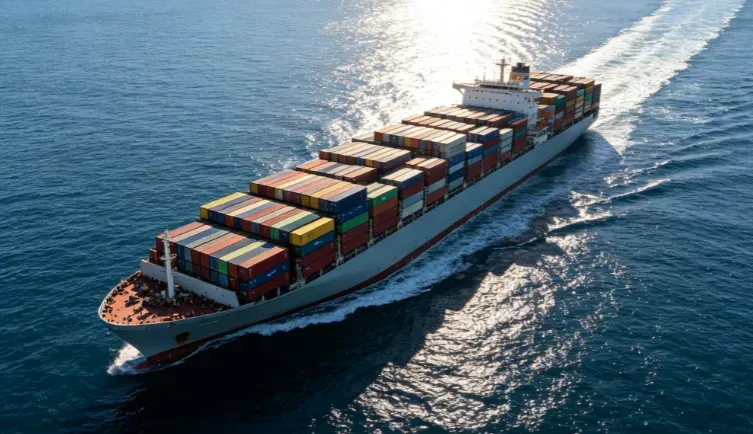
Peru is one of the few Latin American markets where China is the clear number-one trading partner — ahead of the United States for over a decade — and Chinese imports keep arriving in volume: electronics, machinery, vehicles, textiles, plastics and chemicals. A large share of that cargo originates in Guangzhou, the commercial heart of the Pearl River Delta and home of the Canton Fair, whose port system moves more than 25 million TEU a year through the deep-water terminals of Nansha.
This guide covers everything you need to know about shipping from Guangzhou to Peru in 2026: FCL and LCL rates from Nansha and Huangpu, real transit times to Callao and the new Chancay port, air freight costs from Guangzhou Baiyun (CAN), and the Peruvian customs process (SUNAT, 18% IGV, China–Peru FTA) — based on 15 years of hands-on freight forwarding experience at Dantful.US International Logistics. For a full overview of your options, start with our shipping from China to Peru guide.
When to Ship from Guangzhou to Peru?
When should you choose Guangzhou as your origin for Peru? It comes down to a few practical checks:
- Where is your supplier? If your factory or trading partner is in the Pearl River Delta — Guangzhou, Foshan, Dongguan, Zhongshan or Shunde — Guangzhou is the natural gateway: no cross-China inland trucking leg and lower origin costs. If your supplier sits in Shanghai, Ningbo or Qingdao, those ports usually win on price instead, so compare all-in quotes before you book
- Did you source at the Canton Fair? Importers who buy at the fair can ship the same week; a Guangzhou-based forwarder turns fair purchases into containers with minimal lead time
- Is your product a Guangdong specialty? Electronics, home appliances, lighting, textiles, auto parts, furniture and machinery are all manufactured in the Pearl River Delta — if your goods come from this cluster, Guangzhou is the shortest, most cost-effective route to Callao or Chancay
- What volume are you shipping? FCL loads direct at Nansha’s deep-water berths with no feeder leg to South America; smaller LCL volumes consolidate efficiently through Huangpu’s networks
Guangzhou Ports & Terminals: Where Your Cargo Loads
Guangzhou’s port system has two main container areas, plus satellite ports nearby. Choosing the right one affects cut-off times and trucking costs from your supplier:
| Port Area | Terminals | What It Is Best For |
|---|---|---|
| Nansha | Nansha Phase I–IV (Guangzhou Port Group) | Deep-water port at the mouth of the Pearl River; the main gateway for FCL exports to the Americas; deep berths and frequent mainline calls |
| Huangpu / Xinsha | Huangpu old port, Xinsha container terminal | River-side terminals closer to downtown Guangzhou; strong LCL consolidation networks and feeder services |
| Pazhou & inner terminals | Pazhou, Dongsha | Smaller volumes, breakbulk and special cargo |
| Nearby alternatives | Shekou, Yantian, Hong Kong | Used for specific carrier alliances or when Nansha is congested; rates and cut-offs differ |
Most container shipping from Guangzhou to Peru loads at Nansha, with Huangpu handling a meaningful share of LCL cargo. Nansha’s deep-water berths take the large vessels on Asia–West Coast South America strings directly — cargo bound for Callao or Chancay usually sails without a feeder leg. For a deeper look at what a strong forwarding partner does, see our sea freight forwarder from China guide.
2026 Shipping Costs from Guangzhou to Peru
FCL rates from Guangzhou in Q3 2026 are driven by the destination port, the season and the carrier. The ranges below are realistic all-in ocean freight quotes (excluding Peruvian import taxes) for the main Guangzhou–Peru routes:
| Guangzhou/Nansha → | 20ft FCL | 40ft FCL | 40ft HQ |
|---|---|---|---|
| Callao | $2,400–$4,300 | $3,300–$5,900 | $3,500–$6,200 |
| Chancay | $2,300–$4,100 | $3,200–$5,700 | $3,400–$6,000 |
| Paita | $2,500–$4,500 | $3,500–$6,200 | $3,700–$6,500 |
Q3 2026 reality check: West Coast South America rates have been stable-to-soft through 2026 after the 2024–2025 spike, but peak-season surcharges (August–October) can still add 10–20% to base rates. Booking 3–4 weeks ahead locks in standard pricing.
What is inside an FCL quote? Ocean freight, BAF/CAF fuel surcharges, origin THC and documentation at Nansha or Huangpu, and destination charges at the Peruvian terminal (THC, delivery order, customs systems fee). Peruvian duties and IGV are collected separately by SUNAT — see the customs section below.
LCL (Less than Container Load) from Guangzhou
If your shipment is under ~15 CBM, LCL from Guangzhou is usually more economical:
| Cargo Volume | Typical LCL Rate | Notes |
|---|---|---|
| 1 CBM | $100–$180 | Minimum charge applies |
| 5 CBM | $500–$900 | Ideal for first-time importers |
| 10 CBM | $950–$1,700 | Consider FCL above ~15 CBM |
Add a $30–$60 consolidation fee at origin and deconsolidation charges at Callao or Chancay. For a detailed LCL walkthrough, see our LCL shipping from China to Brazil guide — the consolidation mechanics are identical on the Peru lane.
Air Freight from Guangzhou to Peru
For urgent or high-value cargo, Guangzhou Baiyun International Airport (CAN) — one of China’s top three air cargo hubs — offers regular capacity to Lima’s Jorge Chávez International Airport (LIM), usually via a connection in Los Angeles, Miami or Madrid:
| Service | Rate | Transit |
|---|---|---|
| Consolidated air (100–300 kg) | $4.5–$7.5 per kg | 4–7 days |
| Direct/priority air (300+ kg) | $4.2–$6.8 per kg | 3–6 days |
| Express courier (small parcels) | $9–$14 per kg | 3–5 days |
A $50–$150 minimum charge applies to most air shipments.
Air vs. sea: which should you choose? Air freight wins on speed and working-capital speed, while sea freight wins on cost per kilo for anything heavy or bulky:
| Factor | Air Freight | Sea Freight |
|---|---|---|
| Door-to-door transit | 3–8 days | 30–42 days |
| Typical cost per kg | $4.2–$7.5 | $0.30–$0.70 |
| Best for | High-value, urgent, light, seasonal cargo | Heavy, bulky, cost-sensitive cargo |
| Minimum charge | $50–$150 | ~$200–$400 (LCL) |
| Inventory capital tied up | Minimal | 4–6 weeks |
How air freight is priced (volumetric weight): airlines charge on the greater of actual weight and volumetric weight (length × width × height ÷ 6000, in cm). A 100 kg carton of bulky, lightly-packed goods can easily be billed at 200+ kg. Keep packaging dense and compact to control your billable weight.
When air makes sense from Guangzhou: first-time trial orders (before committing to container volumes), urgent restocks, spare parts, high-value electronics, and e-commerce replenishment. Many importers use air for the first 1–2 shipments, then switch to sea once they have volume and trust in the product.
Transit Times & Main Routes from Guangzhou to Peru
| Route | Typical Transit | Notes |
|---|---|---|
| Guangzhou/Nansha → Callao | 25–35 days | Direct WCSA services on major carriers |
| Guangzhou/Nansha → Chancay | 24–33 days | Direct Asia–Chancay strings; often the fastest option |
| Guangzhou → Paita | 30–40 days | Via Callao feeder or transshipment |
| LCL (add consolidation) | +3–7 days | Waiting time for a full groupage |
| Air CAN → Lima (LIM) | 4–8 days | Door-to-door including clearance |
Remember that transit time ≠ door-to-door time: add 2–4 days for arrival, Peruvian customs clearance and inland trucking. Lima consumes roughly a third of Peru’s imports and sits right next to Callao and within a short drive of Chancay; inland destinations like Arequipa add 1–2 days by road. For a comparison of port-to-port and door-to-door services, see our door-to-door vs. port-to-port shipping guide.
The Chancay Port Factor: Why It Changes the Peru Lane
Opened in November 2024 and built by Cosco Shipping Ports, the new deep-water port of Chancay (80 km north of Lima) is the first Chinese-invested port in South America and the region’s newest Pacific gateway. For shippers from Guangzhou it matters for three reasons:
- Faster transit — vessels call Chancay directly from Asia, cutting out Balboa transshipment; first-phase services run 24–33 days from Nansha
- Big-ship access — 18-meter berths receive vessels up to 18,000 TEU, meaning more direct capacity on the Asia–Peru lane
- Growing capacity — Phase 1 handles about 1 million TEU a year, with expansion underway; expect more carrier strings as volumes build
Chancay is not yet the volume leader — Callao still handles roughly 90% of Peru’s containerized trade — but it is already the fastest-growing port in the country and a serious option for Guangzhou exporters. Rates to Chancay are typically $100–$200 per container below Callao as carriers compete for the new gateway.
Peruvian Customs, Duties & Taxes (SUNAT)
Peruvian customs is managed by SUNAT (Superintendencia Nacional de Aduanas y de Administración Tributaria). A licensed customs broker (agente de aduanas) files the import declaration electronically with the commercial invoice, packing list, bill of lading and, where relevant, the FTA certificate of origin. Clearance typically takes 2–4 working days for a clean, correctly documented container, and Lima’s proximity to Callao keeps inland costs low.
What will you pay?
- Ad valorem import duty: 0–11% on the CIF value depending on the HS code, with most industrial goods at 0–6%
- IGV (value-added tax): 18% (16% IGV + 2% IPM) — charged on CIF + duty
- ISC (excise tax): applies only to fuels, vehicles and a few luxury goods
- China–Peru FTA in force since March 2010 — around 90% of tariff lines are duty-free or reduced for Chinese goods with a Certificate of Origin (Form F); an upgraded FTA protocol was signed in November 2024 and is progressively deepening coverage
- Drawback: exporters can recover 3% of export value — relevant if you re-export from Peru
- Permits for regulated goods — DIGESA for food and health products, SENASA for agricultural goods
Example calculation: A Guangzhou shipment with FOB value $10,000, ocean freight $1,400 and insurance $100 gives a CIF value of $11,500. If your goods qualify under the China–Peru FTA (0% duty), IGV at 18% adds $2,070 and your total import tax is just that. Without FTA coverage at a 6% duty, duty is $690 and IGV at 18% on $12,190 adds $2,194 — total $2,884. Filing the Form F certificate correctly is one of the cheapest savings an importer can make.
Step-by-Step: Shipping from Guangzhou to Peru
- Get a quote — send your cargo details (dimensions, weight, product type, Incoterm preference) to your forwarder
- Book space — secure the sailing 3–4 weeks ahead; direct Chancay and Callao services fill fast in peak season
- Deliver to the terminal — your supplier ships EXW/FOB to Nansha or Huangpu; watch the cut-off, usually 24–48 hours before departure
- Export clearance in China — the forwarder handles customs, documentation and loading
- Ocean transit — 24–40 days depending on port and service
- Peruvian import clearance — your customs broker files the declaration with SUNAT (2–4 days)
- Final delivery — trucking to Lima, Arequipa, Trujillo or your warehouse
The whole door-to-door process typically runs 32–48 days from factory pickup to final delivery.
How to Save on Shipping from Guangzhou to Peru
- Compare Nansha vs. Huangpu vs. Shekou — rates differ by terminal and carrier alliance; a forwarder can shop all of them for you
- Book off-peak — avoid August–October; Q1 rates are typically 10–20% lower
- Consolidate to FCL — above ~15 CBM, a full container beats LCL economics
- File the FTA Form F certificate — the China–Peru FTA eliminates most duties; missing paperwork means paying full ad valorem rates for nothing
- Test Chancay vs. Callao — the new port often prices $100–$200 lower per container and can be faster for Lima-region distribution
- Use air for first orders only — samples and trial orders via CAN air let you test demand while you set up your FCL pipeline. Guangzhou is a proven origin across our network — see our shipping from Guangzhou to Canada guide for the same origin on a different lane
Frequently Asked Questions
Q: How much does it cost to ship from Guangzhou to Peru in 2026?
A: A 20ft container runs $2,300–$4,500 and a 40ft container $3,200–$6,200 from Guangzhou/Nansha depending on the Peruvian port, season and carrier, excluding Peruvian import taxes. LCL is $100–$180 per CBM and air freight $4.2–$7.5 per kg.
Q: How long does shipping from Guangzhou to Peru take?
A: Sea freight reaches Callao in 25–35 days and Chancay in 24–33 days on direct services. Add 2–4 days for SUNAT clearance and trucking to Lima or inland cities. Air freight is 4–8 days door-to-door.
Q: Which Peruvian port should I ship to from Guangzhou?
A: Callao remains the main gateway, handling roughly 90% of containerized imports. Chancay, 80 km north of Lima, is the fastest-growing option with direct Asia calls. Paita serves the north and Matarani the south.
Q: Do I pay import taxes on goods shipped from Guangzhou to Peru?
A: Yes, through SUNAT — ad valorem duty of 0–11% (most goods 0–6%) plus 18% IGV on CIF plus duty. Thanks to the China–Peru FTA in force since 2010, most Chinese manufactured goods enter at 0% duty if they meet the rules of origin.
Q: Is air or sea freight better from Guangzhou to Peru?
A: Sea freight wins for containers and anything over ~15 CBM. Air freight from Guangzhou Baiyun (CAN) to Lima suits urgent, high-value or lightweight cargo — many importers use air for samples and first orders, then switch to sea.
Q: What documents do I need to import from Guangzhou to Peru?
A: The bill of lading, commercial invoice, packing list and, to claim FTA benefits, a Certificate of Origin (Form F), plus the import declaration filed through SUNAT by a licensed customs broker. Regulated goods need DIGESA or SENASA permits before clearance.
Ship from Guangzhou to Peru with Confidence
Shipping from Guangzhou to Peru pairs the world’s densest manufacturing cluster with one of South America’s most importer-friendly customs regimes: a China–Peru FTA that zeroes out most duties, a new deep-water port at Chancay that keeps transit times falling, and Callao’s mature gateway infrastructure. With a realistic Q3 2026 budget that includes IGV, the right port choice, and a forwarder who handles the FTA paperwork properly, your first container can arrive on schedule.
Ready to ship? Contact Dantful.US for a free, itemized quote — we handle everything from Nansha terminal pickup to Peruvian doorstep delivery.