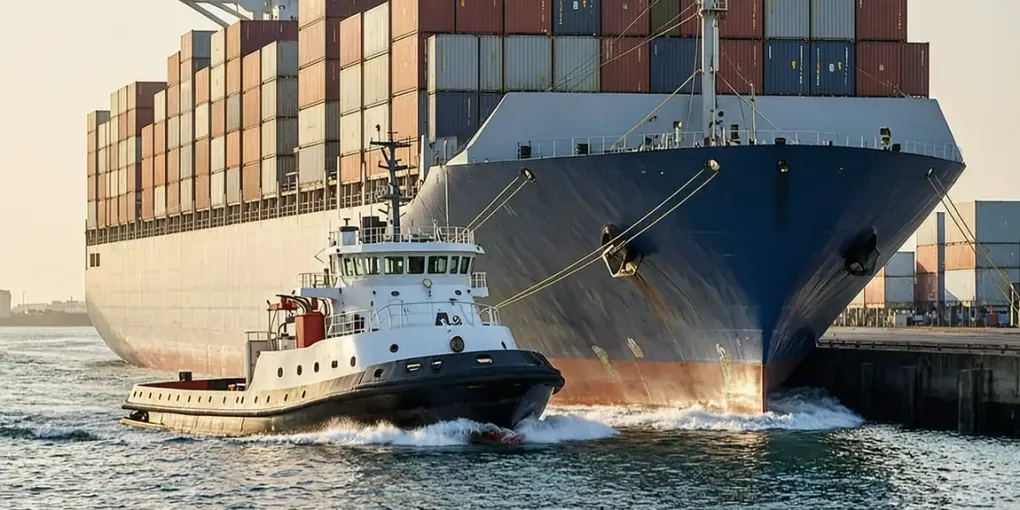
Montevideo is the only South American Atlantic gateway that combines a 14-metre channel, two competing container terminals and a free-port regime that lets you land cargo without paying a cent of duty. That combination is why sea freight carries the overwhelming share of Uruguay’s containerised imports from China, and why the sailing you book — direct call or relay — matters more than the few hundred dollars you might negotiate off the rate.
This guide is about the ocean leg itself: what a November 2026 sailing costs, which routing actually arrives when the carrier says it will, how groupage works at Montevideo’s CFS, and how the free port changes your landed cost. For the equipment and customs mechanics, our China to Uruguay shipping hub covers the full corridor.
Sea Freight Rates from China to Uruguay: November 2026 Ocean and All-In
Two numbers get quoted on this lane, and importers routinely compare one against the other. Ocean freight is the carrier’s port-to-port charge for moving the box. All-in adds origin handling, the bunker adjustment, documentation and destination terminal handling. Ask which one you are being shown before you compare quotes.
| Equipment | Ocean freight, Shanghai–Montevideo | All-in to Montevideo terminal | Best for |
|---|---|---|---|
| 20GP | $1,650–$3,100 | $2,500–$4,800 | Dense cargo, 25–28 CBM usable |
| 40GP | $2,300–$3,900 | $3,100–$5,900 | 30–55 CBM general cargo |
| 40HC | $2,450–$4,100 | $3,300–$6,200 | Light, bulky freight |
| 20RF / 40RF reefer | +$1,200–$2,500 over dry | quote only | Chilled and frozen |
| LCL groupage | $110–$260 per CBM | — | 1–14 CBM |
The origin port shifts the number by $100–$400. Northern ports pay a structural premium because the vessel has further to sail before it reaches the Malacca Strait:
| Origin | Ocean 20GP | Ocean 40GP/40HC |
|---|---|---|
| Shanghai | $1,650–$3,100 | $2,300–$4,100 |
| Shenzhen / Yantian / Nansha | $1,700–$3,200 | $2,350–$4,150 |
| Ningbo | $1,700–$3,250 | $2,380–$4,200 |
| Qingdao / Tianjin | $1,850–$3,500 | $2,550–$4,300 |
November sits inside the Q4 peak window, so the top of each range is what a booking made two weeks out will actually cost. Bookings placed 3–4 weeks ahead routinely land in the lower half. Run the numbers through our freight cost calculator before you shortlist forwarders — a quote 30% below the range is not a bargain, it is a charge that has been moved somewhere you have not looked yet. Our 20ft and 40ft cost breakdown shows what the missing items usually are.
Sea Freight Transit Time from China to Uruguay: Direct Call vs Cape, Santos and Buenos Aires Relays
Every Asia–East Coast South America string serving Montevideo can be described by three things: which way it rounds Africa, whether Montevideo is a direct call or a relay, and how many ports it touches before yours. In 2026 most strings still round the Cape of Good Hope rather than transit Suez, which adds roughly 7–10 days to the rotation compared with the pre-2024 Suez routing and keeps bunker surcharges higher.
| Routing | Port to port | What it means in practice |
|---|---|---|
| Direct call, Shanghai → Montevideo | 30–38 days | One vessel, TCP or Montecon, one customs entry |
| Direct call, Shenzhen / Ningbo → Montevideo | 31–40 days | More weekly capacity, more carrier choice |
| Via Buenos Aires + feeder or truck | 35–48 days | Cheaper headline rate, second handling, Plata crossing |
| Via Santos / Rio Grande + feeder | 36–50 days | Brazilian congestion risk, re-stow at relay port |
| Via Balboa, Panama | 40–52 days | Two ocean legs, longest roll-over exposure |
| LCL, any routing | +5–10 days | Consolidation before, de-stuffing after |
A relay is not automatically slower, but every transshipment adds a discharge, a yard stay and a reload — three chances for damage, mis-routing or a missed connection. On this lane a direct call is worth a $200–$400 premium when the cargo has a date attached to it. The month-by-month picture, including air and door-to-door, is in our how long it takes to ship from China to Uruguay guide.
One scheduling detail most rate tables ignore: carrier omissions. When a vessel is over-booked, the relay port is where boxes get left behind, and a “35-day” Buenos Aires routing can quietly become 50 days. If your buyer has a contractual delivery date, book the direct call and confirm the vessel name and voyage number in writing before you pay the deposit.
LCL Shipping Cost from China to Uruguay per CBM: When Groupage Beats a 20ft Container
LCL is priced per revenue ton, where one cubic metre equals 1,000 kilograms — whichever is higher. That single rule decides most small-import economics: a pallet of furniture foam and a pallet of hand tools occupy the same space and pay the same freight.
| Origin CFS | LCL rate per CBM | Typical sailing |
|---|---|---|
| Shenzhen / Guangzhou | $110–$230 | Weekly consolidation |
| Shanghai | $120–$250 | Weekly |
| Ningbo | $115–$240 | Weekly |
| Qingdao | $130–$260 | Fortnightly |
Budget another $120–$200 per shipment for documentation and destination CFS handling, and note that most consolidators set a 1–2 CBM minimum — shipping 0.6 CBM still bills as one or two.
Do the break-even before you commit. At 6 CBM and $175 per CBM, LCL costs about $1,050 plus $300 of fees, roughly $1,350. A 20GP all-in to Montevideo is around $2,900 in the same month. LCL wins clearly. At 15 CBM, the per-CBM rate drops to roughly $155 but the total reaches $2,325 plus fees — the container is now the better buy, and above 15 CBM it is not close. Because chargeable weight is what actually gets billed, check bulky consignments against our volumetric weight calculator before you assume the CBM figure on the packing list is the number the consolidator will use.
What an Ocean Freight Quote from China to Uruguay Includes: Origin Charges, BAF and Montevideo Fees
The line items below are where quotes diverge, not the ocean freight:
| Stage | Charge | Typical amount |
|---|---|---|
| Origin | Terminal handling (THC), export declaration, docs, seal, VGM | $180–$350 per container |
| Ocean | Freight + BAF/LSS bunker adjustment + ISPS | inside or on top of the FAK rate |
| Destination | THC at TCP or Montecon, wharfage, port dues | $250–$450 per container |
| Destination | DUA filing, despachante fee, consular fee | per entry, percentage-based |
| Inland | Drayage Montevideo → interior (Salto, Rivera, Paysandú) | $180–$600 |
| Excluded | Storage beyond free time, detention, inspections | daily, per event |
Two habits protect you. First, ask for the quote with BAF separated from the base rate — when bunker costs move, a bundled rate hides the increase until the invoice. Second, confirm whether destination THC is prepaid or collect; on this lane it is collect by default, which means the receiver gets a second bill of $250–$450 that was never in the door-to-door number they budgeted. For the container-level version of this breakdown, see our container shipping from China to Uruguay guide.
Montevideo Free Port for Sea Freight from China to Uruguay: Duty-Free Storage and Regional Re-Export
Uruguay’s port authority describes Montevideo as the first terminal on South America’s Atlantic coast operating under a free-port regime, and it is the single biggest structural advantage this lane has over Santos or Buenos Aires. Cargo can be landed, stored, repacked, labelled and re-exported without paying the Mercosur common external tariff, the consular fee or the 22% IVA. Taxes are triggered only when goods leave the free-port perimeter into Uruguayan customs territory.
| Use case | How the free port helps |
|---|---|
| Distributing to Uruguay over 6–12 months | Pay duty per release, not on the whole container |
| Re-exporting to Paraguay or Bolivia | No Uruguayan import taxes at any point |
| Regional distribution hub | Store, re-label and split shipments without a local entity |
| Samples and seasonal stock | Land early, release when the season starts |
Storage is normally authorised for up to a year and extendable with the port authority, which is enough runway for most distribution plans. Two closures make the hub genuinely regional: Nueva Palmira, upriver on the Uruguay River, is the barge gateway into the Paraguay–Paraná waterway for Asunción and, further north, landlocked Bolivia; and the free zones at Zonamerica, the WTC and Colonia offer the same tax deferral for value-added work outside the port perimeter. Low-water periods on the Paraná can cut barge drafts, so a Nueva Palmira routing needs a schedule check in the dry months rather than an assumption.
How Long Does Sea Freight from China to Uruguay Take Compared with Air in 2026
Sea wins on cost at every volume; air wins on time and on the capital tied up in transit. The decision is arithmetic, not preference:
| Service | Rate | Transit | When it pays |
|---|---|---|---|
| Sea FCL | $1,650–$3,900 per container | 30–40 days port to port | 15+ CBM, planned stock |
| Sea LCL | $110–$260 per CBM | 35–50 days | 1–14 CBM |
| Air, 45–100 kg | $6.00–$9.50 per kg | 5–9 days | Launch stock, samples |
| Air, 100–300 kg | $5.50–$9.00 per kg | 5–8 days | Urgent replenishment |
| Air, 300–500 kg | $5.00–$8.50 per kg | 4–8 days | Spare parts, electronics |
| Express courier | $10–$18 per kg | 3–6 days | Under 100 kg, door to door |
Air cargo into Uruguay usually connects through São Paulo (GRU), Buenos Aires (EZE) or Miami before landing at Carrasco (MVD), and the rate is charged on volumetric weight — length × width × height ÷ 6000 in centimetres — so a light, bulky carton can bill at double its scale weight. The full air picture, including carrier options and hub routings, is in our air freight from China to Uruguay guide.
The break-even most importers converge on is $8–$12 of product value per kilogram. Below that, sea every time; above it, air starts to pay for itself through faster cash conversion. Between the two, a split shipment — 80% by sea, launch quantity by air — usually beats either mode alone.
Equipment, Cut-Offs and Seasonality on the China–Uruguay Sea Lane
Uruguay is an export-heavy market: soybeans from April to June, cellulose and beef year-round, citrus and blueberries from December to March. That flow dictates which empty boxes are available for your import. 40HC units tighten during the soy and cellulose peaks because carriers reposition them inland for export loading, and reefer plugs at Montevideo compete with fruit exports in the southern summer. If you need a 40HC or a reefer between December and March, book four weeks out rather than two.
Cut-offs run in a fixed order and each one can stop the booking:
- Shipping instruction — 3–5 days before the vessel’s CY cut-off
- VGM declaration (SOLAS) — 24–48 hours before CY cut-off, per packed container
- CY cut-off / gate-in — 1–2 days before ETD
- Documentation — original bill of lading issued 2–3 days after sailing, telex release on payment
Work backwards from your delivery date rather than forwards from your purchase order: 38 days sailing, 4 days clearance, 2 days trucking and 7 days of pre-sailing administration puts a booking made today in your Montevideo warehouse in roughly seven weeks. Planning that way also tells you which cut-off you actually cannot miss — usually the shipping instruction, because a wrong HS code or consignee detail there becomes an amendment fee and a customs query later. For a full DDP door-to-door quote on this schedule, see our door to door shipping from China to Uruguay service guide.
Frequently Asked Questions
How much does sea freight from China to Uruguay cost in November 2026?
Ocean freight alone runs $1,650–$3,100 for a 20GP and $2,300–$3,900 for a 40GP/40HC from Shanghai to Montevideo. All-in, including origin charges and destination terminal handling, expect $2,500–$4,800 per 20GP and $3,100–$6,200 per 40ft. LCL groupage is billed at $110–$260 per CBM with a 1–2 CBM minimum.
How long does sea freight from China to Uruguay take?
A direct Asia–East Coast South America call needs 30–38 days port to port from Shanghai and 31–40 days from Shenzhen or Ningbo. Relays through Buenos Aires, Santos or Balboa add 5–12 days, and LCL adds another 5–10 days for consolidation and de-stuffing. Door to door to Montevideo is realistically 40–48 days.
Is sea freight or air freight cheaper from China to Uruguay?
Sea freight is cheaper per kilogram at almost every volume: roughly $0.10–$0.40/kg on a full container against $4.80–$9.50/kg by air. Air only wins when the cargo is light, urgent and high value — the break-even sits around $8–$12 of product value per kilogram once you weigh inventory carrying cost against the freight difference.
What documents do I need to clear sea freight in Montevideo?
A commercial invoice with Incoterm and HS code, a packing list with weights and pallet counts, the original or telex-released bill of lading, a certificate of origin, an insurance certificate and product-specific permits. A licensed despachante de aduana files the DUA through the VUCE single window for the Dirección Nacional de Aduanas.
Can I store sea freight duty free in Montevideo before selling it?
Yes. Montevideo operates a free-port regime, the first terminal on the South American Atlantic coast under this system, so goods can be landed, stored, repacked and re-exported without paying the Mercosur tariff, the consular fee or the 22% IVA. Storage is normally granted for up to a year and can be extended with the port authority.
Get a Sea Freight Quote from China to Uruguay in 24 Hours
Tell us the product, the volume and the date your buyer needs it in Montevideo. We will come back with a direct-call quote and a relay quote side by side, the BAF separated from the base rate, and the destination charges written out so nothing arrives as a surprise invoice. Door-to-door DDP options are available if you would rather have one number from the factory gate to your warehouse.
Our team has run this corridor for over fifteen years, and the quotes are built on space we hold rather than rates scraped from a marketplace. Send the details through our contact page and you will have a booking-ready proposal the next working day.