Port of Virginia
Port Overview
1. Overview of the Port of Virginia
The Port of Virginia is the deepest and one of the most technologically advanced container ports on the US East Coast. Operated by the Virginia Port Authority (VPA), it serves as a critical entry point for goods shipping from China to the USA and the American heartland. With a $1.4 billion infrastructure investment program — including a landmark channel widening and deepening to 55 feet — the port is uniquely positioned to handle ultra-large container vessels (ULCVs) that competing East Coast ports cannot accommodate without tidal restrictions.
Why the Port of Virginia Matters
- Deepest Channels on the East Coast: 55-foot depth with 1,400-foot width enables two-way ULCV traffic, giving Virginia a decisive advantage over shallower rival ports.
- No Air-Draft Restrictions: Unlike ports constrained by bridges, Virginia offers unobstructed vessel access directly from the Atlantic Ocean.
- Mid-Atlantic Location: Centrally positioned to serve the Northeast corridor, Midwest, and the fast-growing Southeast — covering over 40% of US consumer demand within a two-day truck reach.
- Rail Headquarters Hub: Norfolk Southern is headquartered in Norfolk, providing unmatched intermodal efficiency from terminal to inland markets.
| Key Metrics | Value |
|---|---|
| Annual Container Volume | ~3.5 million TEUs |
| Channel Depth | 55 feet |
| Number of Terminals | 6 |
| On-Dock Rail | 30+ miles |
| China Trade Share | ~19% of loaded TEUs |
2. Port Location
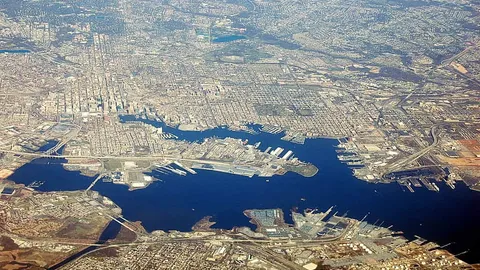
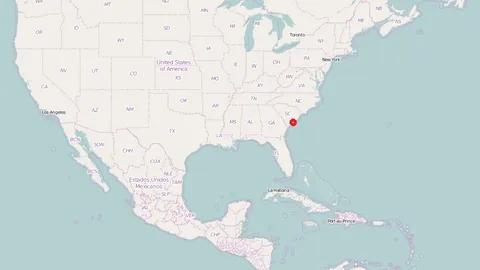
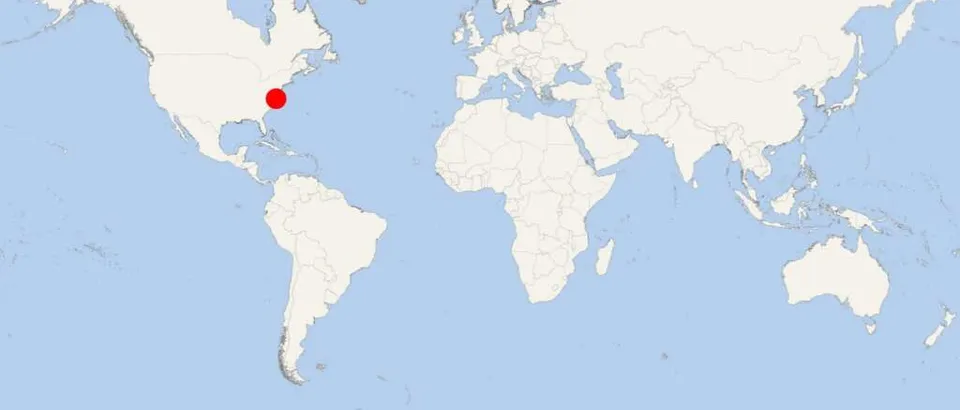
The Port of Virginia sits within the natural deep-water harbor of Hampton Roads in Norfolk, Virginia, where the James, Nansemond, and Elizabeth Rivers converge before reaching the Chesapeake Bay and the Atlantic Ocean. Located just 18 nautical miles from the open sea, the port offers exceptionally quick pilot-to-berth transit — a logistical advantage that saves both time and fuel.
Service Area
Virginia’s central location on the Eastern Seaboard delivers outstanding distribution reach — making it one of the most strategically positioned US ports for importers targeting multiple regions:
- Same-day trucking: Washington D.C., Richmond, and Baltimore metro areas.
- Next-day trucking: Philadelphia, Charlotte, and Pittsburgh.
- Two-day trucking: New York, Atlanta, Nashville, and Columbus.
- Rail corridors: Norfolk Southern and CSX provide direct intermodal service to Chicago, Memphis, Kansas City, and the Ohio Valley — markets that collectively represent over 40% of US consumer spending.
3. Port Terminals
The VPA operates six specialized terminals across the Hampton Roads region and beyond, each serving distinct cargo segments.
Norfolk International Terminals (NIT)
NIT is the port’s flagship facility, handling approximately 55% of total container volume. Equipped with 14 Super Post-Panamax cranes and on-dock rail served by both Norfolk Southern and CSX, NIT is undergoing a $650 million modernization to become a semi-automated, high-throughput terminal. It is the primary gateway for Asian container imports.
Virginia International Gateway (VIG)
VIG ranks among the most advanced container terminals in the Western Hemisphere. Fully owned by the VPA, it features 30 rubber-tired gantry (RTG) cranes, 8 Super Post-Panamax ship-to-shore cranes, and automated gate systems that produce industry-leading truck turn times averaging under 35 minutes.
Portsmouth Marine Terminal (PMT)
PMT handles breakbulk, project cargo, and container overflow. Its heavy-lift capabilities make it the preferred terminal for oversized industrial equipment and machinery imports from China.
Newport News Marine Terminal (NNMT)
NNMT specializes in breakbulk, rolling stock, and heavy-lift cargo, serving the automotive, steel, and energy sectors.
Inland Facilities
- Richmond Marine Terminal (RMT): An inland port connected via dedicated barge service, reducing truck miles for central Virginia distribution.
- Virginia Inland Port (VIP): Located 220 miles inland in Front Royal, this intermodal facility extends the port’s reach directly to Norfolk Southern’s main line for rapid Midwest access.
4. Shipping Routes to Virginia Port
Major ocean carriers operate weekly sailings from China’s primary export hubs to the Port of Virginia, typically transiting the Suez Canal or Panama Canal depending on alliance networks and seasonal scheduling.
From Shenzhen (Yantian / Shekou)
Shenzhen is the single largest origin for containerized cargo moving to Virginia. All three major alliances — Ocean Alliance, THE Alliance, and 2M Alliance — offer weekly services, with Yantian International Container Terminal as the primary loading point.
From Shanghai
As the world’s busiest container port, Shanghai provides the highest scheduling frequency to Virginia. Multiple weekly departures across alliances give shippers maximum flexibility when moving goods from the Yangtze River Delta manufacturing region.
From Ningbo
Ningbo-Zhoushan — the world’s third-busiest port — provides strong East Coast connectivity. Many Suez-routed services call Ningbo immediately after Shanghai, optimizing transit time for exporters in Zhejiang and Jiangsu provinces.
| Other Origin Ports | Service Frequency | Typical Routing |
|---|---|---|
| Qingdao | Weekly | Suez / Panama |
| Xiamen | Weekly | Suez |
| Tianjin (Xingang) | Fortnightly | Suez |
| Nansha (Guangzhou) | Weekly | Suez |
5. Transit Time from China to Virginia Port
Sea freight transit from major Chinese ports to the Port of Virginia typically ranges from 30 to 38 days, depending on origin, carrier routing, and canal passage.
| Origin Port (China) | Estimated Transit Time |
|---|---|
| Shanghai | 30–34 days |
| Ningbo | 31–35 days |
| Shenzhen (Yantian) | 32–36 days |
| Xiamen | 32–36 days |
| Qingdao | 34–38 days |
| Nansha (Guangzhou) | 33–37 days |
Factors That Affect Transit Time
- Canal Conditions: Suez or Panama Canal delays and toll scheduling can add 2–5 days.
- Port Congestion: Peak-season bottlenecks at Chinese origin ports may delay vessel departures.
- Weather Disruptions: Atlantic hurricane season (June–November) can force rerouting or temporary port closures.
- Vessel Speed: Slow steaming for fuel efficiency adds approximately 2–3 days compared to full-speed transit.
For time-sensitive cargo, air freight from China to the Norfolk region via Washington Dulles (IAD) or Richmond (RIC) achieves door-to-door delivery in 5–8 days.
6. Shipping Cost from China to Virginia Port
Container freight rates from China to Virginia fluctuate with global demand, capacity availability, fuel prices, and seasonal patterns.
Key Cost Drivers
- Container Type: 20GP, 40GP, and 40HC containers each carry different base ocean freight rates.
- Seasonality: Rates typically surge 20–40% during the August–November peak season ahead of holiday retail demand.
- Bunker Adjustment Factor (BAF): Fuel surcharges adjust quarterly and can meaningfully shift total landed cost.
- Incoterms: The chosen term (FOB, CIF, EXW, DDP) determines which party bears freight, insurance, and destination charges. For door-to-door convenience, DDP shipping consolidates all costs into a single quote.
Port Fees
The VPA’s unified terminal structure means consistent terminal handling charges (THC), wharfage, and dockage fees across all Hampton Roads terminals — simplifying cost forecasting for importers.
How to Reduce Shipping Costs
- Book ahead during peak season to lock in rates before the surge.
- Use LCL consolidation for shipments under 10 cubic meters.
- Maximize container utilization — poorly packed containers waste space and money.
- Negotiate annual contracts if your volume exceeds 500 TEUs per year.
- Leverage on-dock rail for inland destinations instead of long-haul trucking.
7. Warehousing Services
The Hampton Roads region features one of the most developed warehouse ecosystems on the East Coast, offering flexible storage and distribution options for importers of all sizes.
Bonded Warehouses (CFS)
Bonded warehouses allow importers to defer duty payments until goods are withdrawn for domestic consumption. The Norfolk area hosts multiple CBP-bonded Container Freight Stations (CFS) offering value-added services including labeling, kitting, re-packing, and quality inspection — ideal for importers managing cash flow on high-tariff products.
Foreign Trade Zone (FTZ #20)
The Port of Virginia operates FTZ #20, covering multiple sites across Hampton Roads and the Virginia Inland Port. Key benefits include:
- Duty deferral until goods leave the zone
- Duty reduction on inverted tariff situations
- Duty exemption on goods re-exported from the zone
3PL and Fulfillment Centers
The region has experienced rapid third-party logistics (3PL) warehouse growth driven by e-commerce demand. Services include Amazon FBA prep (inspection, labeling, palletizing), pick-and-pack fulfillment, cross-docking, and real-time inventory management. These facilities help both Chinese exporters and US importers position inventory closer to East Coast consumers for faster last-mile delivery.
Warehousing and Distribution
Beyond storage, Virginia’s warehouse ecosystem supports complete distribution: last-mile delivery to Mid-Atlantic and Southeast markets, seasonal inventory buffering, and cross-dock transloading from ocean containers to domestic trailers for cost-efficient inland movement.
8. Frequently Asked Questions
How long does sea freight take from China to the Port of Virginia?
Typical transit time from Shanghai, Ningbo, or Shenzhen is 30–36 days, depending on the carrier, routing, and canal conditions.
Is the Port of Virginia congested?
No. Virginia consistently maintains lower congestion than both West Coast ports and most East Coast competitors, thanks to sustained investment in terminal capacity, automation, and channel expansion.
What is the deepest port on the US East Coast?
The Port of Virginia, with 55-foot channels capable of accommodating the world’s largest container vessels without tidal or air-draft restrictions.
Which railroads serve the Port of Virginia?
Both Norfolk Southern (headquartered in Norfolk) and CSX provide on-dock rail service at NIT and VIG terminals, connecting to the Midwest, Southeast, and Mid-Atlantic.
Can I ship Amazon FBA inventory through the Port of Virginia?
Yes. The Hampton Roads area has extensive 3PL infrastructure supporting FBA prep, palletization, and forwarding to Amazon fulfillment centers throughout the Eastern United States.
What is the best East Coast port for shipping from China to the Midwest?
For Midwest destinations like Chicago, Detroit, and Columbus, the Port of Virginia offers competitive transit time, superior rail connectivity via Norfolk Southern, and lower congestion risk than other East Coast gateways such as the Port of New York and New Jersey.
How can I reduce my shipping costs from China to Virginia?
Book during off-peak periods, consolidate smaller loads into FCL where possible, utilize on-dock rail for inland destinations, and leverage FTZ #20 to manage duty costs on high-tariff products.