Port of Oakland
Port Overview
1. Overview of the Port of Oakland
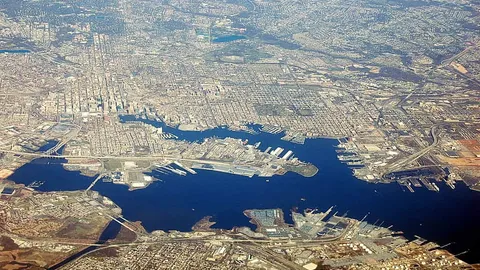
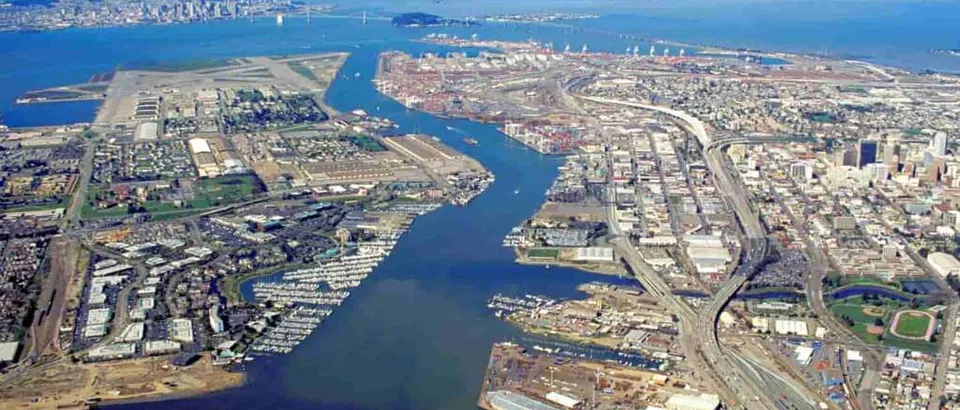
The Port of Oakland, operated by the Port of Oakland (Oakland Board of Port Commissioners), is Northern California’s primary container seaport, the fourth-largest container gateway on the US West Coast, and a key hub for shipping from China to USA. Located on the eastern shore of San Francisco Bay, Oakland handled approximately 2.25 million TEUs in 2025, maintaining a balanced import-export ratio — roughly 50/50 — that distinguishes it from most major US ports.
Why the Port of Oakland Matters for Importers
Oakland occupies a unique strategic position in trans-Pacific trade. It serves as the maritime gateway to Silicon Valley’s technology-driven economy, the agricultural abundance of California’s Central Valley, and the rapidly growing consumer markets of Northern California. For businesses importing from China, Oakland offers a less congested, more efficient alternative to the Los Angeles/Long Beach port complex — potentially saving $500–800 per container in inland transportation costs for cargo destined anywhere north of the Grapevine.
Port Basics at a Glance
| Detail | Information |
|---|---|
| Port Code (UN/LOCODE) | USOAK |
| Operator | Port of Oakland (Oakland Board of Port Commissioners) |
| Annual Container Volume | 2.25+ million TEUs (2025) |
| Main Container Terminal | Oakland International Container Terminal (OICT) |
| Marine Terminals | 4 major terminals, 25 ship-to-shore cranes |
| Berth Depth | Up to 50 feet (15.2 meters) |
| On-Dock Rail | Union Pacific & BNSF via Oakland Global Rail Intermodal Facility |
| Total Area | 1,300+ acres |
2. Port Location & Service Area
Geographic Position
The Port of Oakland sits at 37.80° N, 122.32° W on the eastern shore of San Francisco Bay, directly across from the Golden Gate Bridge. The port’s Inner and Outer Harbor channels provide deepwater access for vessels up to 14,000 TEUs, with the Oakland Estuary offering natural protection from open-ocean conditions.
The Northern California Advantage
Oakland’s location is its defining competitive asset. Situated at the heart of the San Francisco Bay Area, the port serves one of the most economically dynamic regions in the world. Within a single day’s truck drive, shippers can reach approximately 15% of the US population and an even larger share of national GDP. The port functions as the primary import and export gateway for:
- San Francisco Bay Area: Silicon Valley’s technology sector, San Francisco’s consumer markets, and the East Bay’s industrial corridor along I-880
- Central Valley: California’s agricultural heartland — the world’s most productive farming region — which depends on Oakland’s refrigerated container capacity for Asia-bound exports
- Sacramento Metro: California’s state capital, growing distribution hub, and inland port complex
- Northern Nevada: Reno and the Tahoe-Reno Industrial Center, reachable via I-80 and Union Pacific rail
3. Port Terminals & Facilities
The Port of Oakland spans 1,300 acres with four marine terminals, 25 ship-to-shore cranes, and 14 shipping line services to Asia, Europe, and beyond.
Oakland International Container Terminal (OICT)
OICT is the port’s largest terminal, operated by SSA Marine under a long-term concession. It handles the majority of Oakland’s container volume and features advanced terminal operating systems, real-time cargo tracking, shore power (cold ironing) capability for vessels at berth, and a modern gate complex with RFID-enabled truck processing. OICT regularly accommodates vessels in the 8,000–14,000 TEU range across its deepwater berths.
TraPac Oakland Terminal
Operated by Mitsui O.S.K. Lines (MOL), TraPac Oakland is one of the most automated marine terminals on the US West Coast. Its semi-automated yard utilizes remote-controlled rail-mounted gantry cranes (RMGs), delivering consistently fast turn times and reduced container dwell compared to conventional terminals.
Everport Terminal Services
Everport operates a dedicated terminal primarily serving Evergreen Line vessels. Key features include on-dock rail capability, extensive reefer plug infrastructure for temperature-controlled cargo, and specialized handling for project and breakbulk shipments.
Matson Terminal
Matson’s dedicated Oakland facility handles the carrier’s US West Coast–Hawaii and expedited China–US West Coast services, with specialized container handling and rapid vessel turnaround capabilities.
Oakland Global Rail Intermodal Facility
The recently developed Oakland Global Rail Intermodal Facility provides direct on-dock and near-dock connections to both Union Pacific and BNSF Class I rail networks. Containers transfer seamlessly from vessel to rail, reaching inland markets including the Central Valley, Reno, Salt Lake City, and Chicago — often within 3–7 days of vessel discharge.
4. Shipping Routes from China to Oakland
Container shipping lines operate regular weekly services from China’s principal ports directly to Oakland. Unlike East Coast gateways that require Panama Canal transit, most China-to-Oakland services follow direct transpacific routings across the North Pacific. For a broader overview of ocean freight options, rates, and carrier choices across all US gateways, see our comprehensive guide to sea freight from China to USA.
From Shenzhen (Yantian / Shekou)
As China’s largest export hub, Shenzhen offers the highest sailing frequency to Oakland. Major carriers including Maersk, MSC, CMA CGM, and COSCO operate PSW (Pacific Southwest) strings with Yantian typically among the last Asian port calls before the Pacific crossing.
From Shanghai
Shanghai provides extensive direct coverage to Oakland, with carriers such as ONE, Hapag-Lloyd, and Yang Ming operating dedicated PSW services that include Oakland as a scheduled call. Shanghai–Oakland is one of the highest-capacity corridors in the trans-Pacific trade.
From Ningbo-Zhoushan
Ningbo is frequently paired with Shanghai on linked services to the US West Coast. The Ningbo–Shanghai–Oakland routing is among the most established corridors for Yangtze River Delta cargo destined for Northern California.
Additional Chinese Ports with Oakland Service
- Qingdao: Direct and transshipment options available via major alliances
- Xiamen: Typically via transshipment through Shenzhen or direct on select strings
- Tianjin (Xingang) — primarily via transshipment through Busan or Shanghai
5. Transit Time from China to Oakland
Transit times to Oakland are among the shortest of any US gateway for China-origin cargo, thanks to the direct Great Circle route across the North Pacific — a key advantage over East Coast ports. For a comparison of transit times across all major US destinations, see our guide on how long sea shipping takes from China to USA.
| Origin Port (China) | Typical Transit Time | Notes |
|---|---|---|
| Shanghai | 14–18 days | Fastest lane; highest-frequency PSW services |
| Ningbo | 14–18 days | Often paired with Shanghai on same vessel strings |
| Shenzhen (Yantian) | 15–19 days | Most frequent sailings; competitive rotations |
| Qingdao | 16–20 days | Slightly longer via North China routing |
| Xiamen | 16–21 days | Via direct or hub transshipment |
| Tianjin (Xingang) | 18–24 days | Typically via transshipment; longest transit |
Door-to-Door Timeline
A realistic door-to-door timeline from factory to Northern California warehouse spans 25–35 days: factory pickup and loading (1–3 days), export customs (1–2 days), ocean transit (14–19 days), US customs and terminal handling (2–5 days), and final drayage (1–2 days).
Factors Affecting Transit Time
- Vessel scheduling: Carrier alliances may adjust port rotation sequences, adding or removing transit days
- North Pacific weather: Winter storms (November–March) can add 1–3 days to crossings
- Tidal restrictions: Extreme low tides in San Francisco Bay may briefly delay berthing for the deepest-draft vessels
- Terminal fluidity: Though Oakland has avoided the chronic congestion of LA/LB, peak season surges can add 1–2 days to container availability
6. Shipping Cost from China to Oakland
Key Factors Influencing Ocean Freight Rates
Shipping costs from China to Oakland fluctuate based on several market forces:
- Carrier capacity management: Blank sailings and capacity adjustments by the major alliances directly affect spot rates
- Bunker Adjustment Factor (BAF): Fuel surcharges adjust monthly or quarterly based on global bunker fuel indexes
- Peak Season Surcharges (PSS): July through October sees elevated rates for holiday inventory; a secondary surge occurs ahead of Chinese New Year
- Equipment availability: Container imbalances during strong import demand can drive up rates
- Tariff policy volatility: US–China trade policy shifts can trigger rapid rate swings — in 2025, Shanghai–LA spot rates exceeded $5,800/FEU mid-year before dropping more than 60% by October
Oakland-Specific Cost Advantages
For Northern California-destined cargo, Oakland offers measurable cost advantages over routing through Southern California. Importers save $500–800 per container in drayage costs alone. The port’s less congested terminals also reduce demurrage and detention exposure. For a 40-foot container (FEU) from major Chinese ports to Oakland, all-in ocean freight typically ranges from $1,800 to $4,200 depending on market conditions, with premium expedited services commanding higher rates. Choosing the right Incoterm also has a major impact on your total landed cost — see our guide on FOB shipping from China to USA to understand how shipping terms affect your bottom line.
How to Reduce Shipping Costs
- Ship FCL rather than LCL: Consolidate into full container loads to lower per-unit ocean freight and destination handling costs
- Negotiate annual service contracts: Lock in base rates with multiple carriers to buffer against spot market volatility
- Transload at Oakland: Import 40-foot ocean containers and transload into 53-foot domestic trailers for inland delivery, gaining cubic capacity and reducing per-unit transportation costs
- Schedule during off-peak windows: November through January (excluding the pre-CNY rush) historically sees softer rates
- Partner with an experienced freight forwarder: A forwarder with Oakland-route relationships and Bay Area logistics knowledge can secure better rates and avoid costly delays
7. Warehousing & Distribution Services
Oakland and the East Bay form a major logistics hub, with millions of square feet of industrial space along the I-880, I-580, and I-80 corridors.
Foreign Trade Zone (FTZ)
The Port of Oakland operates FTZ No. 56, offering significant cash-flow advantages. Goods may enter the FTZ without paying US customs duties until they leave the zone for domestic consumption. Companies can store, repackage, label, assemble, or process goods under FTZ procedures — deferring duties and eliminating them entirely if goods are re-exported.
Bonded Warehousing
Multiple bonded warehouse facilities operate near the Oakland seaport, allowing importers to store cargo under customs supervision without immediately clearing duties. This supports pre-positioning seasonal inventory, conducting quality inspections before customs entry, or deferring duty payments until distribution channels are confirmed.
E-Commerce & Fulfillment
The Bay Area’s concentration of e-commerce and technology companies has attracted major third-party logistics (3PL) providers to the Oakland area. Facilities along the I-880 corridor offer pick-and-pack fulfillment, integration with major e-commerce platforms (Shopify, Amazon SFP), returns processing, and value-added services including kitting, light assembly, and quality inspection.
Cold Chain & Refrigerated Storage
With extensive reefer capacity across its marine terminals and nearby cold storage facilities, Oakland is the premier US West Coast gateway for temperature-controlled cargo. The port handles substantial volumes of refrigerated agricultural exports — California fruits, nuts, meats, and wines — as well as food-grade ingredients and pharmaceuticals imported from China requiring controlled environments.
8. Frequently Asked Questions
How long does sea shipping from China to Oakland take? Port-to-port transit time typically ranges from 14 to 24 days depending on the origin port. Shanghai and Ningbo to Oakland is the fastest corridor at 14–18 days; Tianjin takes 18–24 days via transshipment. A complete door-to-door timeline averages 25–35 days.
What are Oakland’s main advantages over Los Angeles/Long Beach? Oakland generally offers faster truck turn times, lower drayage costs (saving $500–800 per container to Northern California), and less congestion risk. Its balanced import-export ratio also supports healthier container availability, reducing the equipment shortages common at Southern California gateways.
Which ocean carriers serve Oakland from China? All three major global alliances serve Oakland: 2M (Maersk/MSC), Ocean Alliance (CMA CGM/COSCO/Evergreen), and THE Alliance (ONE/Hapag-Lloyd/Yang Ming), plus Matson and ZIM.
Is there direct rail service from Oakland to inland US destinations? Yes. The Oakland Global Rail Intermodal Facility connects to Union Pacific and BNSF Class I rail networks, providing intermodal service to the Central Valley, Reno, Salt Lake City, Chicago, and other inland hubs — often within 3–7 days of vessel discharge.
What is the largest vessel that can dock at Oakland? Oakland’s 50-foot channel depth and modern crane configuration accommodate vessels up to approximately 14,000 TEUs. The port’s major terminals regularly handle Post-Panamax vessels in the 8,000–14,000 TEU range.
What types of cargo does Oakland specialize in? Oakland is the leading US West Coast port for refrigerated agricultural exports — particularly California fruits, nuts, meats, and wines. It also handles containerized consumer goods, electronics, food products, construction materials, and industrial machinery, maintaining one of the most balanced import-export ratios of any major US port.