PortMiami
Port Overview
The Port of Miami, also known as PortMiami, is one of the most strategically positioned seaports in the United States. Dubbed the “Cargo Gateway of the Americas,” it sits at the crossroads of North America, South America, and the Caribbean — making it an essential entry point for importers engaged in sea freight from China to USA. With 50-foot deep-water channels, on-dock rail via the Florida East Coast Railway, and Foreign Trade Zone 281 status, PortMiami offers a compelling combination of infrastructure, connectivity, and cost efficiency for importers shipping from China to USA. Whether you are importing consumer electronics, textiles, construction materials, or transshipping to Latin American markets, understanding how PortMiami works can give your supply chain a significant edge.
Overview of the Port of Miami
PortMiami handles approximately 1.1 million TEUs annually, ranking among the top container ports on the US East Coast. China is the port’s number-one import origin country, reflecting Miami’s growing role in transpacific supply chains. Beyond raw volume, what sets PortMiami apart is its unmatched reach into Latin America and the Caribbean — nearly 47% of its trade volume flows to and from these regions.
Key facts at a glance:
| Metric | Detail |
|---|---|
| Annual Container Volume | ~1.1 million TEUs |
| Channel Depth | 50 feet (post-Panamax ready) |
| Berths | 8 container berths |
| On-Dock Rail | Florida East Coast Railway (FEC) |
| Foreign Trade Zone | FTZ 281 |
| Top Import Origin | China |
| Key Transshipment Markets | Latin America, Caribbean |
The port’s deep-water capability allows it to accommodate fully laden post-Panamax vessels, including direct services from Asia that bypass West Coast congestion. For importers targeting the fast-growing Florida market — the third-largest state by population — PortMiami delivers goods closer to the end consumer, reducing last-mile trucking costs compared to routing through West Coast ports.
Port Location
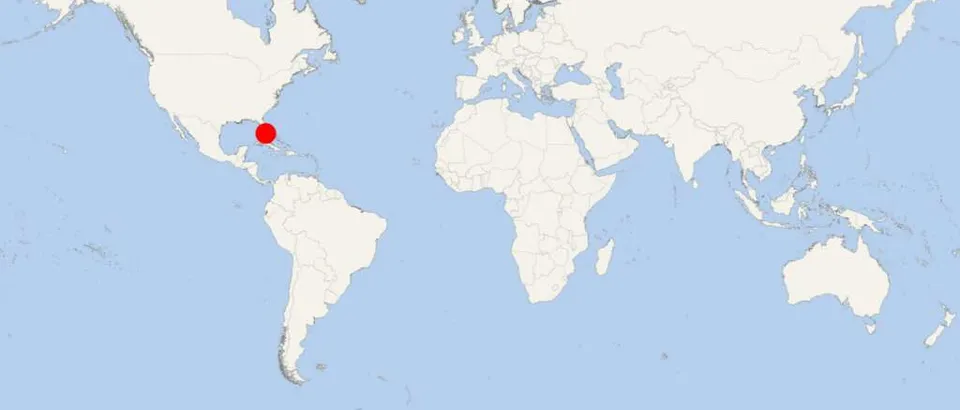
PortMiami is located on Dodge Island in Biscayne Bay, just east of downtown Miami, Florida. Its address is 1015 North America Way, Miami, FL 33132. Visit the official PortMiami website for real-time vessel schedules and terminal updates.
Geographic Advantages
The port’s location offers several distinct logistical benefits:
- Proximity to the Panama Canal: PortMiami is the closest major US East Coast container port to the Panama Canal, reducing sailing distance from Asian origins compared to ports further north.
- Florida Market Access: Miami-Dade County alone has over 2.7 million residents, and the broader Florida market exceeds 22 million consumers — all within same-day trucking range.
- Gateway to Latin America: Miami serves as a de facto commercial hub for trade with Central America, South America, and the Caribbean. Many Chinese importers use PortMiami as a transshipment hub to reach these secondary markets.
- Interstate Connectivity: Immediate access to I-95 and I-75 corridors, putting the entire Southeast US market within reach.
Service Area
| Destination | Estimated Trucking Time from PortMiami |
|---|---|
| Miami Metro | Same day |
| Orlando, FL | 4–6 hours |
| Atlanta, GA | 10–12 hours |
| Charlotte, NC | 12–14 hours |
| Jacksonville, FL | 5–6 hours |
| Tampa, FL | 4–5 hours |
Port Terminals
PortMiami operates three major container terminals, each serving different carrier alliances and cargo types:
South Florida Container Terminal (SFCT)
Operated by CMA CGM, SFCT is PortMiami’s newest and most technologically advanced terminal. It features six post-Panamax gantry cranes, automated gate systems, and a dedicated on-dock rail facility. SFCT primarily handles vessels from the Ocean Alliance (CMA CGM, COSCO, Evergreen) and processes a significant share of PortMiami’s transpacific container volume.
Port of Miami Terminal Operating Company (POMTOC)
POMTOC is a multi-user terminal handling vessels from the 2M Alliance (Maersk, MSC) and other independent carriers. It offers refrigerated container capacity for perishable goods and maintains direct truck gate access to the PortMiami Tunnel, which bypasses downtown traffic for faster cargo egress.
Seaboard Marine Terminal
This terminal specializes in trade with the Caribbean, Central America, and northern South America. It combines container handling with breakbulk and rolling stock (RoRo) capabilities, making it the preferred terminal for mixed cargo destined for smaller Latin American markets.
Shipping Routes from China to Miami
Most containerized cargo from China reaches PortMiami via the Panama Canal route, with vessels calling at Caribbean transshipment hubs before arriving in Miami. Direct services and relay connections are available from all major Chinese ports:
| Origin Port | Route Type | Typical Service |
|---|---|---|
| Shanghai | Direct / Relay | Ocean Alliance, 2M Alliance weekly sailings |
| Shenzhen (Yantian) | Direct / Relay | Multiple weekly departures via Panama Canal |
| Ningbo-Zhoushan | Direct / Relay | Weekly services via major alliances |
| Qingdao | Relay via Busan | 2–3 departures per week |
| Xiamen | Relay | Weekly service with transshipment at Kaohsiung or Hong Kong |
For LCL (less-than-container-load) shipments, cargo is often consolidated at major Chinese hub ports and routed via Kingston, Jamaica or Cartagena, Colombia as transshipment points before final delivery to PortMiami.
Transit Time from China to Miami
Ocean transit times from China to PortMiami vary depending on the origin port, vessel speed, and whether the service is direct or requires transshipment:
| Origin Port | Transit Time (Direct) | Transit Time (Relay) |
|---|---|---|
| Shanghai | 32–38 days | 38–45 days |
| Shenzhen (Yantian) | 33–40 days | 40–48 days |
| Ningbo-Zhoushan | 32–38 days | 38–46 days |
| Qingdao | 35–42 days | 42–50 days |
| Xiamen | 36–44 days | 42–52 days |
Several factors can affect actual transit times:
- Panama Canal congestion: During peak seasons, vessel queuing at the canal can add 3–7 days to total transit.
- Caribbean weather: Hurricane season (June–November) may cause routing adjustments and delays.
- Port call rotation: The number of intermediate stops between China and Miami affects door-to-door timing.
- Holiday surges: Pre-Chinese New Year and pre-Christmas rush periods often strain vessel capacity and schedules.
Shipping Cost from China to Miami
Freight costs for the China-to-Miami route depend on container type, shipping season, and market conditions. For a broader comparison across US destinations, see our detailed guide on container shipping costs from China to USA. As a reference, the table below shows typical all-in cost ranges for PortMiami:
| Container Type | Typical Cost Range (USD) |
|---|---|
| 20ft Dry Container (FCL) | $2,800 – $4,500 |
| 40ft Dry Container (FCL) | $3,800 – $6,500 |
| 40ft High Cube (FCL) | $4,000 – $7,000 |
| LCL (per CBM) | $120 – $220 |
Key Cost Factors
- Bunker fuel surcharges: Fluctuating oil prices directly impact ocean freight rates, typically adjusted monthly or quarterly.
- Panama Canal tolls: Vessels transiting the canal incur tolls based on TEU capacity, which carriers pass through to shippers.
- Peak season premiums: Rates can spike 20–50% from August through October as retailers stock up for the holiday season.
- Port handling charges: Miami’s terminal handling fees are generally competitive with other US East Coast ports.
Tips to Reduce Shipping Costs
- Plan shipments outside peak seasons: Book during the spring shoulder season (March–May) for lower rates.
- Use FTZ 281: Defer, reduce, or eliminate customs duties by processing goods within PortMiami’s Foreign Trade Zone.
- Consolidate LCL shipments: Combine smaller loads with a reliable freight forwarder to lower per-unit ocean freight costs.
- Negotiate long-term contracts: Carriers offer more favorable rates for shippers committing to annual volume agreements.
Warehousing Services
PortMiami and surrounding Miami-Dade County offer a robust ecosystem of warehousing and distribution services:
Foreign Trade Zone 281
PortMiami operates FTZ 281, which allows importers to store, repackage, assemble, and process goods without paying US customs duties until the merchandise leaves the zone for domestic consumption. If goods are re-exported to Latin America, no US duties are ever due — a major advantage for transshipment operations.
Bonded Warehousing
Several customs-bonded facilities are located within a 5-mile radius of PortMiami. These warehouses allow importers to defer duty payments while goods await final distribution or re-export. Bonded storage is particularly useful for high-value electronics, branded apparel, and seasonal merchandise.
Third-Party Logistics (3PL) & Distribution
The Miami market hosts a dense network of 3PL providers offering:
- Pick-and-pack fulfillment for e-commerce and retail distribution
- Temperature-controlled storage for perishables and pharmaceuticals
- Cross-docking for rapid transshipment to Caribbean and Latin American destinations
- Inventory management systems with real-time visibility
For importers who need a fully managed logistics solution from origin to final delivery, we also offer comprehensive door to door shipping from China to USA — covering everything from factory pickup in China to last-mile delivery at your Florida warehouse or fulfillment center.
Frequently Asked Questions
How long does ocean shipping take from China to PortMiami? Direct sailings from Shanghai or Shenzhen to PortMiami typically take 32–40 days. Relay services with transshipment add approximately one week. Total door-to-door time including customs clearance and inland trucking is usually 38–50 days.
What is the cheapest way to ship from China to Miami? LCL (less-than-container-load) is the most cost-effective option for shipments under 15 cubic meters. For larger volumes, a 40ft FCL container generally offers the lowest per-unit cost. Using PortMiami’s FTZ 281 can further reduce total landed costs through duty optimization.
Does PortMiami handle Amazon FBA shipments? Yes. Many freight forwarders and 3PL providers in the Miami area specialize in Amazon FBA inbound logistics, including palletizing, labeling, and appointment scheduling for Florida fulfillment centers.
Is PortMiami a good alternative to West Coast ports? For shipments destined to Florida and the Southeast US, PortMiami offers significant advantages: lower inland trucking costs, no West Coast port congestion, and access to Latin American transshipment markets. However, ocean transit is 18–25 days longer than the LA/Long Beach route.
Can I store goods duty-free at PortMiami? Yes. FTZ 281 allows duty-free storage, processing, and assembly. If goods are re-exported from the zone to foreign markets, US customs duties are never applied.
What types of cargo does PortMiami handle best? PortMiami is well-equipped for containerized consumer goods, electronics, apparel, perishable foods, construction materials, and any cargo destined for Latin American transshipment. Its refrigerated container capacity makes it a top choice for temperature-sensitive imports.