Port of Veracruz
Port Overview
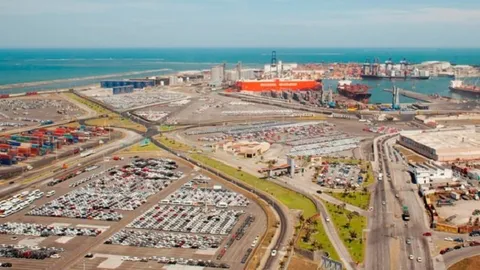
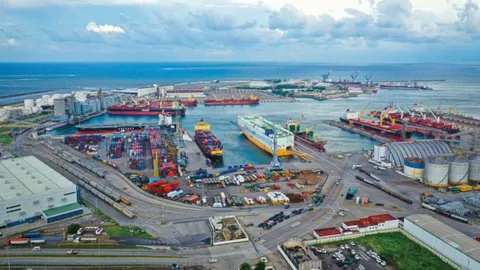
Overview of Veracruz Port
The Port of Veracruz is Mexico’s oldest and second-busiest container port, located in the state of Veracruz on the Gulf of Mexico. As the country’s premier Atlantic gateway, it handles approximately 1.2 million TEUs annually and serves as a vital entry point for containerized goods, automobiles, bulk agricultural products, and breakbulk cargo from Asia, Europe, and the Americas. It is also a critical gateway for shipping from China to Mexico.
For importers shipping from China, Veracruz offers a strategic Gulf Coast alternative to the Pacific port of Manzanillo. While Manzanillo provides the shortest ocean transit from China, Veracruz delivers significantly shorter inland transit to Mexico City — approximately 400 km by highway or rail compared to nearly 900 km from Manzanillo. This Gulf Coast advantage translates into lower drayage costs and faster final-mile delivery to Mexico’s largest consumer market. For a broader comparison of shipping options, see our guide on sea freight from China to Mexico.
Why the Port of Veracruz Matters for China Importers
- Closest Deep-Water Port to Mexico City: At roughly 400 km from the capital — half the distance from Manzanillo — Veracruz offers the shortest inland haul to Mexico’s largest consumer market with over 22 million people.
- Major Expansion Underway: The New Port of Veracruz (Nuevo Puerto de Veracruz) — a $4.6 billion project — is expanding capacity to 6.6 million TEUs with new breakwaters, deeper berths, and modern container terminals. Phase 1 is already operational.
- Strong Multimodal Connectivity: Direct rail via Ferromex and KCSM connects Veracruz to Mexico City, the Bajío industrial corridor, and northern manufacturing hubs. Toll highways MEX-140D and MEX-150D provide efficient trucking.
- Diversified Cargo Handling: Dedicated terminals for containers, RoRo, agricultural bulk, mineral bulk, and project cargo mean importers benefit from specialized infrastructure without competing for general-purpose berths.
Key Facts at a Glance
| Metric | Value |
|---|---|
| Annual Container Volume | ~1.2 million TEUs |
| Total Cargo Tonnage | ~22 million tons annually |
| Channel Depth | 14–16 meters (expanding to 18m in new port area) |
| Container Terminals | ICAVE, TEC I, TEC II (New Port) |
| Total Berths | 25+ across commercial and specialized terminals |
| Rail Connectivity | Ferromex & Kansas City Southern de México (KCSM) |
| Key China Trade Lanes | Shanghai, Ningbo, Shenzhen, Qingdao (via Panama Canal) |
| Cargo Types | Containers, automobiles/RoRo, grains, sugar, fertilizers, steel, mineral bulk, project cargo |
| Distance to Mexico City | ~400 km (4–5 hours by truck) |
Port Location
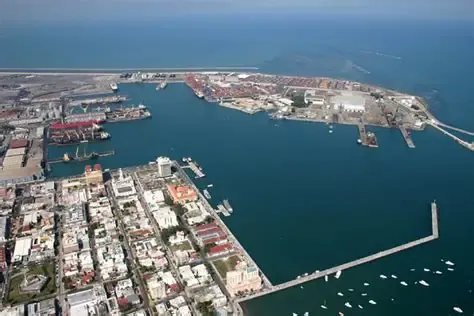
The Port of Veracruz occupies a natural harbor on Mexico’s Gulf Coast, approximately 400 km east of Mexico City in the state of Veracruz. Its geographic position at the intersection of major Pacific-to-Atlantic shipping routes and the North American rail network makes it a critical node in Mexico’s import supply chain.
Service Region
The Port of Veracruz’s distribution reach covers Mexico’s most economically significant regions:
- Mexico City Metropolitan Area: The largest market in Latin America with over 22 million consumers. Veracruz is the closest deep-water port at 4–5 hours via the MEX-150D toll highway.
- Bajío Industrial Corridor: Querétaro, Guanajuato, San Luis Potosí, and Aguascalientes — a major automotive, aerospace, and electronics manufacturing hub relying heavily on Asian component imports.
- Puebla-Tlaxcala Corridor: A growing manufacturing cluster including Volkswagen and Audi assembly plants, within 4 hours of the port.
- Southern and Southeastern Mexico: Primary import gateway for the Yucatán Peninsula, Tabasco, Chiapas, and Oaxaca — regions underserved by Pacific ports.
Port Terminals
The Port of Veracruz operates a diversified terminal structure with specialized facilities for containers, vehicles, bulk, and general cargo. The New Port expansion is adding world-class container capacity while legacy terminals continue handling breakbulk and specialized cargo.
Major Terminals
-
ICAVE (Terminal Internacional de Contenedores Asociados de Veracruz): The port’s primary container terminal, a Hutchison Ports joint venture. Equipped with post-Panamax gantry cranes, on-dock rail, and 500,000+ TEU annual capacity. Handles the majority of containerized imports from China, including electronics, auto parts, textiles, and industrial machinery.
-
TEC I (Terminal Especializada de Contenedores I): The New Port’s first operational container terminal with 1,150 meters of berth space and 18-meter draft. Accommodates Neo-Panamax vessels transiting the expanded Panama Canal and features automated gate systems with dedicated rail sidings.
-
TEC II (Terminal Especializada de Contenedores II): Planned second-phase container terminal that will add capacity for ultra-large vessels and solidify Veracruz’s role as Mexico’s premier Gulf Coast container gateway.
-
Usos Múltiples Terminals: Multi-purpose berths handling RoRo (finished vehicles), breakbulk steel, agricultural bulk (grains, fertilizers, sugar), and project cargo including wind turbine components and heavy machinery.
-
Granel Agrícola Terminals: Specialized bulk terminals for corn, soybeans, wheat, and fertilizers — critical inputs for Mexico’s food processing and agricultural sectors.
Shipping Routes to This Port
Veracruz is served by all-water services from China’s major ports transiting the Panama Canal, routing through the Caribbean Sea into the Gulf of Mexico. Multiple carrier alliances maintain regular sailings, with service reliability generally high.
From Shenzhen (Yantian / Shekou)
As the primary export hub for South China’s manufacturing heartland — electronics, consumer goods, and auto parts — Shenzhen offers frequent Panama Canal services to Veracruz with competitive transit times. Multiple weekly sailings available through COSCO, CMA CGM, and Maersk alliance strings.
From Shanghai
Shanghai is the largest single origin for China-to-Mexico freight, with the highest sailing frequency to Veracruz. Vessel space is typically available within 2–3 days of cargo readiness. Direct Panama Canal services run weekly via the Ocean Alliance and 2M Alliance.
From Ningbo
Ningbo-Zhoushan is often paired with Shanghai on the same vessel rotation. Its proximity to Zhejiang and Jiangsu manufacturing clusters — major sources of machinery, textiles, and automotive components — makes it a natural gateway for Veracruz-bound shipments.
From Qingdao and Other Ports
Qingdao is served via Panama Canal loops also calling Shanghai and Ningbo. Cargo from northern Chinese ports (Tianjin, Dalian) and secondary ports (Xiamen, Fuzhou) transships through Shanghai, Ningbo, or Busan. For smaller ports, feeder connections via Kingston (Jamaica) or Cartagena (Colombia) provide additional routing options.
Transit Time from China to Veracruz
All-water transit from China to Veracruz via the Panama Canal is well-established. The following table shows typical port-to-port transit times from major Chinese origin ports:
| Origin Port | Transit Time to Veracruz | Sailing Frequency |
|---|---|---|
| Shanghai | 30–36 days | Multiple per week |
| Ningbo | 32–38 days | Weekly |
| Shenzhen (Yantian) | 31–37 days | Weekly |
| Qingdao | 33–40 days | Weekly |
| Xiamen | 34–41 days | Bi-weekly |
Actual transit times vary by carrier, Panama Canal transit availability, and Gulf weather (hurricane season June–November may add 1–3 days). For LCL shipments, add 3–5 days for consolidation and deconsolidation.
Compared to Manzanillo (16–22 days), Veracruz’s Panama Canal routing adds 10–14 days — but the shorter inland haul to Mexico City often offsets this with faster final delivery and lower trucking costs.
Shipping Cost from China to Veracruz
Ocean freight rates from China to Veracruz are shaped by Panama Canal transit costs, Gulf routing, and Mexico-specific port charges.
Factors Affecting Freight Rates
- Panama Canal fees: Tolls are embedded in ocean freight rates, with water management surcharges adding $50–$150 per container during low-water periods at the canal.
- East Coast premium: Veracruz rates via Panama typically run $600–$1,000 per FEU higher than equivalent Manzanillo services, reflecting the longer voyage and canal transit. This is partially offset by lower inland costs to Mexico City.
- Seasonality: Peak season (August–November, ahead of holiday retail and El Buen Fin) can push rates 25–50% higher. Post-Chinese New Year (February–March) and early summer (May–July) offer the best rates.
- Container type: 40’ standard (FEU) offers the best per-unit economics. High-cube containers command a modest premium; reefers, open-tops, and flat-racks carry significant surcharges. See our cost of shipping 40ft container from China to Mexico guide for details.
- Port charges: Budget approximately $250–$450 per container for wharfage, dockage, and terminal handling fees at Veracruz.
How to Lower Your Shipping Costs
| Strategy | Potential Impact |
|---|---|
| Ship FCL instead of LCL | 30–50% lower per-unit cost |
| Book during off-peak (February–July) | 20–40% rate reduction |
| Pre-clear customs (pedimento) | Avoid demurrage and storage charges |
| Use rail for Mexico City/Bajío volumes | Lower per-unit inland cost for 5+ TEU |
| Consolidate with a China-based forwarder | Access to volume-negotiated rates |
| Compare Veracruz vs. Manzanillo total landed cost | Inland savings may offset higher ocean freight |
Warehousing Services
The Veracruz logistics corridor supports a growing ecosystem of warehousing and distribution services, driven by the port’s expansion and its proximity to Mexico City.
Bonded Warehousing (Recinto Fiscalizado)
Mexico’s Recinto Fiscalizado Estratégico regime allows importers to store goods without immediate duty payment. Key benefits:
- Duty and VAT deferral: Import duties (IGI) and 16% IVA are paid only when goods leave the bonded facility for domestic consumption — no time limit on storage.
- IMMEX compatibility: Goods destined for maquiladora (IMMEX) manufacturing can transfer directly from bonded storage without triggering duties.
- Re-export flexibility: Goods re-exported to other Latin American markets from bonded storage are exempt from Mexican import duties.
Overseas Warehousing & 3PL
Veracruz’s warehousing market has grown alongside the port’s expansion, with 3PL providers offering container deconsolidation, cross-docking, e-commerce fulfillment (Amazon/Mercado Libre FBA prep), inventory management with real-time WMS, pick-and-pack, kitting, and returns processing.
Warehousing & Distribution Strategy
Positioning inventory near Veracruz delivers measurable advantages:
- Lower inland costs: The 400 km haul to Mexico City is half the distance from Manzanillo, reducing per-container trucking costs by 35–50%. Rail options via KCSM further improve economics for high-volume shippers.
- Faster delivery: Next-day ground service to Mexico City and Puebla; 2–3 rail days to the Bajío corridor and Monterrey.
- Reduced risk: Unlike the Manzanillo-Mexico City corridor (prone to MEX-15D truck congestion), the Veracruz-Mexico City route has multiple parallel highway options.
DANTFUL partners with vetted 3PL providers in the Veracruz-Puebla-Mexico City corridor, offering end-to-end logistics including customs brokerage, bonded storage, FBA/Mercado Libre prep, and last-mile delivery.
Frequently Asked Questions
Q: Veracruz or Manzanillo — which is better for importing from China?
A: It depends on your destination. Manzanillo offers faster ocean transit (16–22 days) on the Pacific coast. Veracruz offers half the inland distance to Mexico City (400 km vs. ~900 km), lower trucking costs, and growing capacity via the New Port expansion. For Mexico City, Puebla, or the Bajío region, Veracruz often delivers a lower total landed cost. For Monterrey or Chihuahua, Manzanillo or Lázaro Cárdenas may be more cost-effective.
Q: How long does customs clearance take at Veracruz?
A: With a properly prepared pedimento de importación filed by a licensed Mexican customs broker (agente aduanal), customs release typically takes 1–3 business days. Mexico’s ANAM operates digital clearance through the VUCEM platform. Importers enrolled in the Operador Económico Autorizado (OEA) program — Mexico’s C-TPAT equivalent — benefit from reduced inspection rates and expedited clearance.
Q: What is the cheapest way to ship from China to Veracruz?
A: FCL ocean freight during off-peak season (February–July) via the Panama Canal, using volume-negotiated rates through a China-based freight forwarder. For shipments under 15 CBM, LCL consolidation may be more economical. Compare door-to-door shipping from China to Mexico options, which bundle ocean freight, customs, and inland delivery into a single rate.
Q: What types of cargo does Veracruz handle best?
A: Veracruz excels with containerized consumer goods, automobiles and RoRo, agricultural bulk (grains, fertilizers, sugar), and steel products. Its diversified terminal structure means container freight doesn’t compete with bulk or RoRo operations for berth space. It’s one of Mexico’s top vehicle-handling ports with dedicated RoRo ramps and processing areas.
Q: How is the New Port of Veracruz expansion affecting service?
A: Phase 1 — including a 4.3 km breakwater, TEC I container terminal, and deepened channels — is operational, reducing vessel waiting times and enabling Neo-Panamax vessel service. Once fully complete (projected 2030s), the New Port will quadruple Veracruz’s container capacity, cementing its role as Mexico’s premier Gulf Coast logistics hub.