Port of Coatzacoalcos
Port Overview
Overview of Coatzacoalcos
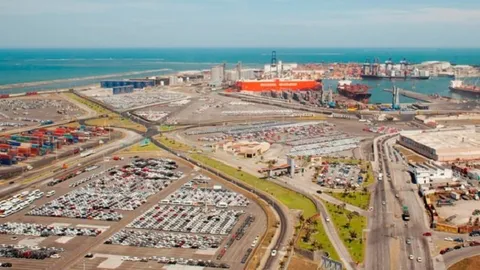
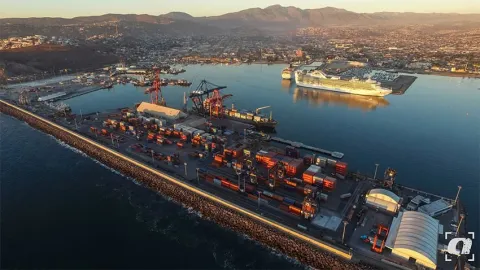
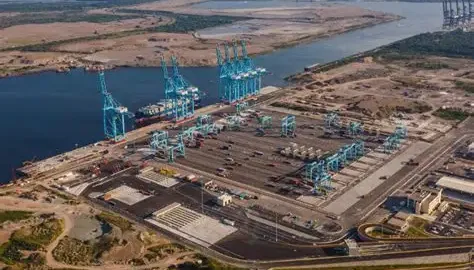
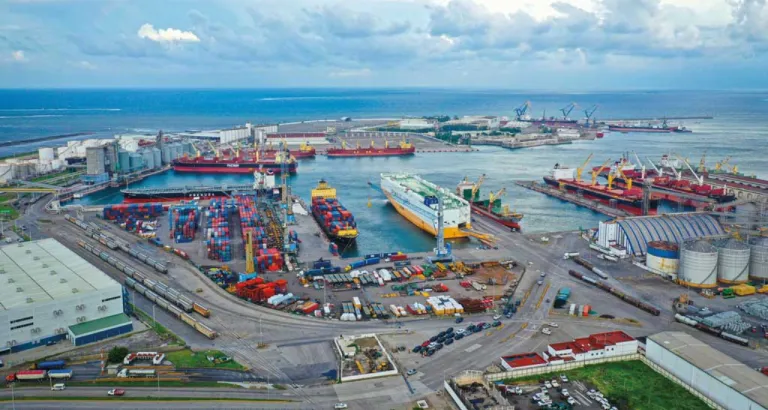
The Port of Coatzacoalcos is one of Mexico’s most significant Gulf Coast ports, located in southern Veracruz state at the mouth of the Coatzacoalcos River. Historically Mexico’s premier petrochemical and energy hub, it handles over 30 million tons of cargo annually — predominantly crude oil, petroleum derivatives, petrochemicals, and bulk minerals — and now serves as a critical gateway for shipping from China to Mexico. For importers managing sea freight from China to Mexico, Coatzacoalcos represents an emerging alternative Gulf gateway, particularly for industrial cargo destined for southern and southeastern Mexican markets.
The port has gained renewed strategic importance as the Gulf terminus of the Interoceanic Corridor of the Isthmus of Tehuantepec (CIIT) — a transformative Mexican federal infrastructure project linking Coatzacoalcos on the Gulf with Salina Cruz on the Pacific via upgraded rail, highway, and industrial park corridors spanning just 300 km. This interoceanic land bridge positions Coatzacoalcos as a future transshipment and logistics hub for Asia-to-Americas trade flows.
Why the Port of Coatzacoalcos Matters for China Importers
- Isthmus of Tehuantepec Interoceanic Corridor: The CIIT project — connecting Coatzacoalcos to Salina Cruz across just 300 km — creates a strategic alternative to the Panama Canal for targeted cargo types. Once fully operational, this corridor could reshape routing options for Asia-to-Gulf and Asia-to-US East Coast freight, with estimated vessel-to-rail-to-vessel transit of under 6 hours for intermodal freight crossing the Isthmus.
- Energy & Petrochemical Hub: The Pajaritos, Cangrejera, and Morelos PEMEX petrochemical complexes form one of Latin America’s largest integrated processing zones. Importers of industrial chemicals, energy-sector equipment, and raw materials benefit from established liquid and bulk handling infrastructure unmatched at other Mexican ports.
- Southeastern Mexico Gateway: Coatzacoalcos provides the shortest inland logistics route to Tabasco, Chiapas, Campeche, Oaxaca, and the Yucatán Peninsula — regions underserved by Veracruz and other Gulf ports. For importers targeting the growing industrial and consumer markets of southern Mexico, routing through Coatzacoalcos delivers measurable savings over more distant alternatives.
- Expanding Multimodal Connectivity: The Ferrosur rail line connects Coatzacoalcos north to Veracruz and the Ferromex network, while the upgraded CIIT line provides two-coast reach from a single Gulf port-of-entry. The CIIT project includes 10 industrial development poles with tax incentives and streamlined customs.
- Growing Container Capabilities: While historically bulk-centric, Coatzacoalcos is expanding container handling with new mobile harbor cranes, yard expansions, and multimodal terminals designed to support CIIT corridor container traffic.
Key Facts at a Glance
| Metric | Value |
|---|---|
| Total Cargo Tonnage | ~30 million tons annually |
| Primary Cargo Types | Petroleum, petrochemicals, bulk minerals, containers, breakbulk, project cargo |
| Channel Depth | 12–14 meters |
| Key Terminals | Pajaritos (PEMEX), Laguna de Pajaritos, Multimodal CIIT Terminal |
| Rail Connectivity | Ferrosur / Ferromex, CIIT corridor to Salina Cruz |
| Key China Trade Lanes | Shanghai, Ningbo, Shenzhen (via Panama Canal or CIIT transshipment) |
| Distance to Mexico City | ~520 km |
| Special Economic Zones | CIIT Development Poles — 10 industrial parks along the corridor |
Port Location
The Port of Coatzacoalcos sits at the mouth of the Coatzacoalcos River where it empties into the Bay of Campeche in the southern Gulf of Mexico, approximately 520 km southeast of Mexico City. Its location at the narrowest point of the Mexican landmass — the Isthmus of Tehuantepec — gives it a unique geographic advantage: just 300 km separates the Gulf from the Pacific at Salina Cruz, making Coatzacoalcos a natural two-ocean logistics node.
The port operates within a sheltered river-mouth basin with a dredged access channel. Breakwaters at the river entrance ensure year-round vessel access, though draft restrictions limit the port primarily to Handysize and Panamax vessels rather than larger Neo-Panamax ships.

Service Region
Coatzacoalcos serves a distinctive distribution footprint that complements rather than competes with other Mexican Gulf ports:
- Southern Veracruz & Tabasco: The immediate hinterland includes Coatzacoalcos, Minatitlán, Villahermosa, and the southern Veracruz industrial corridor — key markets for industrial inputs, machinery, and petrochemical-related imports.
- Yucatán Peninsula: Mérida, Cancún, Campeche, and Quintana Roo are reachable via coastal shipping and highway connections that are often more cost-effective than trucking from Veracruz — particularly for bulk and breakbulk cargo.
- Chiapas & Oaxaca: The port serves as the primary Gulf import gateway for southern Mexico’s growing agricultural processing and consumer goods industries, including the Tapachula and Tuxtla Gutiérrez economic zones.
- CIIT Corridor Transshipment: Via the interoceanic rail link, cargo entering Coatzacoalcos can reach Pacific destinations through Salina Cruz — creating a unique two-coast distribution capability from a single import point.
Port Terminals
Coatzacoalcos operates a diversified terminal structure with long-established strengths in liquid and bulk cargo, complemented by growing container and general cargo capabilities:
-
Pajaritos Terminal (PEMEX): The port’s largest facility and one of Latin America’s most significant petrochemical terminals. Handles crude oil exports, petroleum product imports, and petrochemical derivatives — including ethylene, propylene, and polyethylene — for PEMEX’s downstream processing plants. Features dedicated liquid berths, pipeline connections to the Pajaritos-Cangrejera-Morelos complex, and specialized vapor-recovery loading arms.
-
Laguna de Pajaritos Terminal: A sheltered multi-purpose terminal within Pajaritos Lagoon handling bulk minerals (iron ore, manganese, bauxite), agricultural bulk (grains, fertilizers), and general breakbulk. Equipped with conveyor systems, mobile cranes, and covered storage for weather-sensitive commodities.
-
Multimodal CIIT Terminal: The port’s newest facility, purpose-built to support the Interoceanic Corridor with container handling equipment, rail-to-vessel transfer capability, and dedicated yard space. Designed to facilitate seamless transshipment between Gulf-arriving vessels and the CIIT rail line to Salina Cruz.
-
Public General Cargo Berths: Multiple public-use berths operated by API Coatzacoalcos handle breakbulk steel, project cargo, wind energy components, and heavy machinery — serving industrial importers in the Isthmus region and growing CIIT industrial parks.
Shipping Routes to This Port
Coatzacoalcos is served via all-water routes through the Panama Canal from Asia or, increasingly, through the hybrid CIIT transshipment routing via Salina Cruz. For broader context on Mexico’s trade lanes, see our guide on shipping routes from China to Mexico.
From Shenzhen (Yantian / Shekou)
South China cargo — including electronics, consumer goods, and machinery from Guangdong — reaches Coatzacoalcos via Panama Canal services with Caribbean hub transshipment. Most Shenzhen-origin freight routes through Kingston (Jamaica) or Cartagena (Colombia), connecting to Gulf feeder services. Direct calls at Coatzacoalcos are negotiable for 100+ TEU industrial bookings.
From Shanghai
Shanghai benefits from the highest Panama Canal sailing frequency of any Chinese port. Direct services to the Gulf call Veracruz and Altamira; Coatzacoalcos is served via coastal feeder from Veracruz or as a direct inducement call for large-volume industrial and project cargo shipments.
From Ningbo
Ningbo-Zhoushan is frequently paired with Shanghai on Panama Canal service rotations, offering additional weekly capacity from the Yangtze River Delta. The growing machinery, chemical, and industrial equipment exports from Zhejiang province are a natural fit for Coatzacoalcos’s specialized cargo handling capabilities.
From Qingdao and Northern Ports
Qingdao, Tianjin, and Dalian cargo transships through Shanghai, Ningbo, or Busan for Panama Canal routing. For time-sensitive industrial equipment and energy-sector project cargo, premium services with minimal transshipment wait times are available.
CIIT Intermodal Route (Emerging)
An innovative hybrid option: vessels discharge at Salina Cruz on the Pacific, with cargo crossing the Isthmus via the upgraded CIIT rail line. Transit from Salina Cruz berth to Coatzacoalcos rail terminal takes approximately 6–8 hours — potentially shaving 8–12 days off the all-water Panama Canal routing. This route is especially relevant for Asian cargo ultimately destined for US Gulf and East Coast markets via Coatzacoalcos transshipment.
Transit Time from China to Coatzacoalcos
All-water transit from China to Coatzacoalcos via the Panama Canal typically involves one or two transshipment legs. The following table shows estimated port-to-port transit times:
| Origin Port | Transit Time to Coatzacoalcos (via Panama) | Sailing Frequency |
|---|---|---|
| Shanghai | 33–40 days | Weekly (via Veracruz feeder) |
| Ningbo | 35–42 days | Weekly (via Veracruz feeder) |
| Shenzhen (Yantian) | 34–42 days | Weekly (via Caribbean transshipment) |
| Qingdao | 36–44 days | Bi-weekly |
| Xiamen | 38–46 days | Bi-weekly |
For the CIIT hybrid route via Salina Cruz (Pacific crossing to Salina Cruz, then rail across the Isthmus), deduct approximately 8–12 days from the estimates above, then add 6–8 hours for rail transit and 1–2 days for intermodal handling. For LCL (Less-than-Container-Load) shipments, add 3–5 days for consolidation and deconsolidation at each end.
Compared to Veracruz, Coatzacoalcos adds 3–6 days for the feeder leg or the additional Panama Canal distance — but the southern Gulf location can reduce inland transit to Tabasco, Chiapas, and the Yucatán by a full trucking day.
Shipping Cost from China to Coatzacoalcos
Ocean freight rates to Coatzacoalcos reflect its position as a secondary Gulf gateway with specialized industrial cargo strengths. For current rate benchmarks, see our shipping cost from China to Mexico guide.
Factors Affecting Freight Rates
- Panama Canal transit & feeder surcharges: Coatzacoalcos cargo typically transships via Veracruz, Altamira, or Caribbean hubs, adding a $200–$400 per container feeder surcharge relative to direct Veracruz calls. Direct inducement calls are negotiable for high-volume bookings.
- CIIT corridor economics: Interoceanic rail tariffs are still maturing; current estimates place rail transit at $300–$600 per container, competitive with Panama Canal tolls for many routing scenarios. Rail rates are expected to decrease as CIIT volumes scale up.
- Industrial cargo pricing: Coatzacoalcos’s strength in project cargo, breakbulk, and bulk shipments means specialized rates that differ substantially from standard container pricing. Work with a freight forwarder experienced in industrial and energy-sector logistics. See our guide on freight forwarder from China to Mexico for expert assistance.
- Hurricane season impact: The Gulf of Mexico’s hurricane season (June–November) can disrupt feeder schedules and add 2–5 days to transit. Booking during November–May offers the most reliable scheduling and stable rates.
How to Lower Your Shipping Costs
| Strategy | Potential Impact |
|---|---|
| Ship FCL instead of LCL | 30–50% lower per-unit freight cost |
| Book direct inducement calls (100+ TEU) | $200–$400/container feeder savings |
| Consider CIIT hybrid routing via Salina Cruz | 8–12 days faster transit, competitive total cost |
| Consolidate with a China-based forwarder | Volume-negotiated rates, optimized routing |
| Evaluate Coatzacoalcos vs. Veracruz total landed cost | Southern Mexico destinations may favor Coatzacoalcos |
| Leverage CIIT industrial park tax incentives | Reduced import processing and operating costs in the corridor |
Warehousing Services
The Coatzacoalcos logistics ecosystem is evolving rapidly, driven by CIIT corridor investments and the port’s established industrial cargo foundation.
Bonded Warehousing (Recinto Fiscalizado)
Coatzacoalcos offers bonded warehousing within the port zone under Mexico’s Recinto Fiscalizado Estratégico regime, enabling duty-deferred storage and value-added processing:
- Duty and IVA deferral: Import duties (IGI) and 16% IVA are paid only when goods exit bonded storage for domestic consumption — with no time limit on storage, a critical advantage for industrial equipment staging and project cargo.
- CIIT zone benefits: Industrial parks within the Isthmus corridor development poles qualify for additional fiscal incentives, including accelerated VAT recovery, reduced income tax rates, and streamlined customs procedures — making Coatzacoalcos bonded warehousing particularly attractive for manufacturing operations.
- IMMEX compatibility: Goods destined for maquiladora operations in southern Mexico can transfer directly from bonded storage without triggering duties, preserving working capital for manufacturers.
Overseas Warehousing & 3PL Services
Third-party logistics in the Coatzacoalcos region are expanding alongside CIIT corridor development, with providers offering container deconsolidation, industrial equipment staging and laydown yards, cross-docking for southern Mexico distribution, and project cargo management including heavy-lift and oversized cargo handling for energy-sector imports.
Warehousing & Distribution Strategy
Positioning inventory at Coatzacoalcos delivers three strategic advantages: (1) near-port deconsolidation to avoid trucking full containers to costlier inland warehouses, (2) shorter inland routes to Tabasco, Chiapas, and the Yucatán compared to routing through Veracruz — often saving a full trucking day, and (3) CIIT rail connections to Salina Cruz enabling two-coast distribution from a single warehousing location.
For lower-volume importers, LCL shipping from China to Mexico supports smaller, more frequent replenishment cycles.
DANTFUL partners with vetted logistics providers in the Coatzacoalcos–Veracruz corridor to offer end-to-end services including customs brokerage, bonded storage, and last-mile delivery across southern and southeastern Mexico.
Frequently Asked Questions
Q: Is Coatzacoalcos a viable alternative to Veracruz for container imports from China?
A: For most containerized consumer goods, Veracruz remains the preferred Gulf gateway due to higher sailing frequency, deeper draft enabling Neo-Panamax vessels, and more established container terminal infrastructure. Coatzacoalcos is most competitive for industrial cargo, petrochemical-related imports, project cargo, and shipments destined for Tabasco, Chiapas, Campeche, or the Yucatán Peninsula — where its southern Gulf location delivers meaningful inland freight savings. As CIIT corridor volumes grow, Coatzacoalcos’s container service frequency and capacity are expected to increase.
Q: What is the CIIT corridor and how does it affect China-to-Mexico shipping?
A: The Corredor Interoceánico del Istmo de Tehuantepec (CIIT) is a Mexican federal infrastructure program upgrading the rail line, highway, and port facilities connecting Coatzacoalcos (Gulf) to Salina Cruz (Pacific) across approximately 300 km. For China importers, the CIIT creates an alternative hybrid shipping route — Pacific vessel to Salina Cruz, then intermodal rail across the Isthmus to Coatzacoalcos — that can be faster than the all-water Panama Canal routing. The corridor also includes 10 industrial development poles offering tax incentives for manufacturing, positioning Coatzacoalcos as a nearshoring logistics hub for companies serving North American markets from southern Mexico.
Q: What types of cargo does Coatzacoalcos handle best?
A: Coatzacoalcos excels with petrochemicals and petroleum derivatives, bulk minerals (iron ore, manganese, bauxite), industrial equipment and project cargo, breakbulk steel, and agricultural bulk (grains and fertilizers). Its liquid handling infrastructure, heavy-lift capabilities, and proximity to PEMEX processing facilities make it Mexico’s premier energy-sector port. Container handling capacity is growing but remains secondary to the port’s bulk and breakbulk strengths.
Q: How does customs clearance work at Coatzacoalcos?
A: Customs clearance is processed through Mexico’s ANAM (Agencia Nacional de Aduanas de México) via the VUCEM digital platform. With a properly prepared pedimento de importación filed by a licensed agente aduanal, container release typically takes 1–3 business days. Coatzacoalcos’s lower cargo volume compared to Veracruz or Manzanillo means inspection queues are generally shorter. OEA-certified importers and CIIT industrial park tenants may qualify for expedited clearance.
Q: How do I get started shipping through Coatzacoalcos?
A: Partner with a freight forwarder experienced in Gulf of Mexico logistics and the CIIT corridor. Look for a provider with active carrier relationships on the China–Panama–Gulf lane and familiarity with Coatzacoalcos’s terminal operators and customs procedures. For comprehensive door-to-door service bundling ocean freight, customs brokerage, and final-mile delivery, explore door-to-door shipping from China to Mexico. DANTFUL provides end-to-end logistics support for the Coatzacoalcos gateway, including carrier booking, customs coordination, and distribution across Veracruz, Tabasco, Chiapas, and the Yucatán Peninsula.