Port of Lázaro Cárdenas
Port Overview
Overview of Lázaro Cárdenas
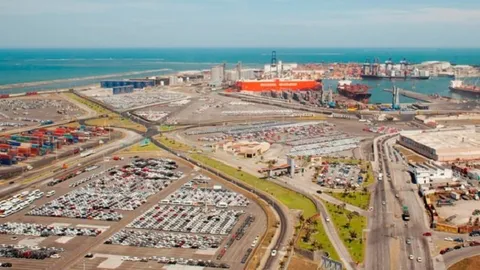
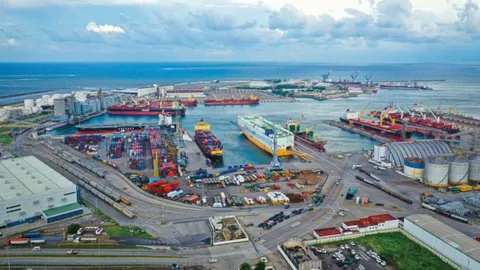
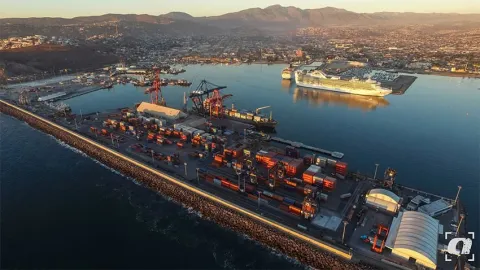
The Port of Lázaro Cárdenas is Mexico’s deepest seaport and fastest-growing Pacific container gateway, located in Michoacán on the central Pacific coast. With a natural draft exceeding 18 meters, it is the only Mexican port capable of accommodating fully laden Ultra-Large Container Vessels (ULCVs) of 20,000+ TEUs without tidal restrictions — making it a critical gateway for shipping from China to Mexico. For importers managing sea freight from China to Mexico, Lázaro Cárdenas offers a compelling alternative to Manzanillo — combining deep-water access, modern terminal infrastructure, and the shortest rail corridor to Mexico City.
Why the Port of Lázaro Cárdenas Matters for China Importers
- Mexico’s Deepest Port: At 18 meters of natural draft, Lázaro Cárdenas is the only Mexican Pacific port capable of handling fully laden megamax vessels — eliminating the need for vessels to arrive partially loaded or wait for high tide.
- Shortest Rail to Mexico City: The Kansas City Southern de México (KCSM) rail line connects the port to Mexico City (~600 km), reducing inland transit by 6–8 hours compared to Manzanillo — the fastest rail corridor from any Mexican Pacific port to the capital.
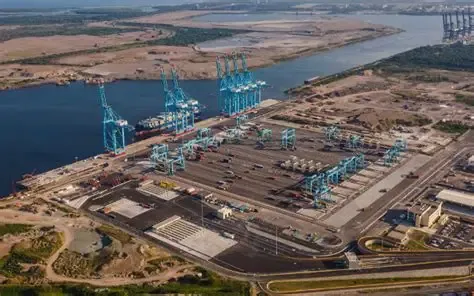
- APM Terminals Presence: The APM Terminals-operated TEC2 facility is Latin America’s first semi-automated container terminal, featuring remote-controlled ship-to-shore cranes, automated yard operations, and integrated on-dock rail — delivering faster vessel turnaround with fewer operational delays.
- Rapid Growth Trajectory: Container throughput has grown over 12% annually since 2020, fueled by carrier diversification away from Manzanillo congestion and investments in terminal automation and intermodal connectivity.
- Bajío Industrial Access: Direct KCSM rail connections serve the Bajío corridor (Querétaro, Guanajuato, San Luis Potosí), a major automotive and aerospace manufacturing zone dependent on reliable port-to-plant logistics.
Key Facts at a Glance
| Metric | Value |
|---|---|
| Annual Container Volume | ~2.0 million TEUs (growing) |
| Total Cargo Tonnage | ~30 million tons annually |
| Berth Depth | 16–18 meters (natural deep water) |
| Container Terminals | 2 major terminals (APMT + LCT) |
| Rail Connectivity | Kansas City Southern de México (KCSM) |
| Key China Trade Lanes | Shanghai, Ningbo, Shenzhen, Qingdao |
| Distance to Mexico City | ~600 km (~7 hours by rail) |
| Port Area | ~1,500 hectares |
Port Location
The Port of Lázaro Cárdenas is situated on the Pacific coast of Michoacán state, approximately 350 km southeast of Manzanillo. Its location at the mouth of the Balsas River forms a naturally deep, sheltered harbor protected by the Isla de la Palma peninsula — providing year-round operability without the sedimentation challenges that affect some competing ports.
Service Region
Lázaro Cárdenas serves a strategically important distribution footprint:
- Mexico City Metropolitan Area: The capital’s 22-million-person consumer market is reachable in 7 hours by dedicated KCSM intermodal rail — the fastest rail connection from any Mexican Pacific port, making Lázaro Cárdenas the preferred gateway for time-sensitive Asian imports.
- Bajío Industrial Corridor: Guanajuato, Querétaro, Aguascalientes, and San Luis Potosí — Mexico’s automotive, aerospace, and advanced manufacturing heartland — receive regular intermodal service via the KCSM mainline, bypassing the congested Manzanillo–Guadalajara freight corridor.
- Central and Southern Mexico: Morelia, Toluca, Puebla, and the Estado de México industrial zones are within efficient truck and rail reach. The port’s southern Pacific location also serves growing manufacturing clusters in Guerrero and Oaxaca.
- US Midwest & Texas Corridor: KCSM’s cross-border rail network connects Lázaro Cárdenas directly to Monterrey, Nuevo Laredo, and onward to Houston and the US Midwest — a viable transshipment route for US-bound Asian cargo bypassing congested West Coast ports.
Port Terminals
Lázaro Cárdenas operates two major container terminals, each backed by global terminal operators and distinct carrier alliances:
-
APM Terminals Lázaro Cárdenas (TEC2): Operated by the Maersk Group, this 102-hectare semi-automated terminal is Latin America’s most technologically advanced container facility. Equipped with 7 remote-controlled super post-Panamax gantry cranes, automated stacking cranes, and a 720-meter berth with 16.5-meter depth, TEC2 handles two 15,000+ TEU vessels simultaneously. Features include integrated on-dock rail, 1,200 reefer plugs, and OCR gate systems reducing truck turn times to under 30 minutes. Primary hub for Maersk, MSC, Hamburg Süd, and 2M Alliance services.
-
Hutchison Ports LCT (Terminal de Contenedores I): A 63-hectare terminal operated by Hutchison Port Holdings, serving as the primary hub for CMA CGM, COSCO, Evergreen, and Ocean Alliance services. Features 6 post-Panamax cranes, a 600-meter berth, and near-dock rail. LCT handles a balanced mix of import containers, empty repositioning, and transshipment cargo.
Beyond containers, Lázaro Cárdenas hosts dedicated terminals for bulk minerals (ArcelorMittal’s steel complex), petroleum products (Pemex), and vehicle handling (RoRo), all in separate port zones — ensuring container operations never compete with industrial bulk traffic for berth space.
Shipping Routes to This Port
Lázaro Cárdenas is served by multiple weekly sailings from China’s major container ports, with carrier diversity growing as importers and shipping lines increasingly route volume through this congestion-free deep-water gateway. For a broader perspective, see our shipping routes from China to Mexico guide.
From Shenzhen (Yantian / Shekou)
Yantian is the primary South China loading port for Lázaro Cárdenas-bound services, with Ocean Alliance and 2M both operating dedicated weekly loops. Shenzhen-origin cargo is dominated by consumer electronics, automotive components, and industrial machinery.
From Shanghai
Shanghai is the largest origin for Lázaro Cárdenas volumes from the Yangtze River Delta, with multiple weekly sailings across all major alliances and vessel space typically available within 2–3 days. Shanghai consistently offers the most competitive rates on this lane due to high cargo density.
From Ningbo
Ningbo is frequently paired with Shanghai on the same Pacific service strings, providing additional weekly capacity. Major exports include machinery, textiles, furniture, and industrial raw materials — many destined for Bajío manufacturing integration.
From Qingdao and Northern Ports
Qingdao, Tianjin, and Dalian cargo typically feeds through Shanghai or Busan transshipment hubs, adding 3–5 days for the feeder leg. The growing industrial output of Shandong and Liaoning provinces makes northern-origin cargo increasingly important to Lázaro Cárdenas volumes.
Transit Time from China to Lázaro Cárdenas
Lázaro Cárdenas’ deep-water advantage eliminates the tidal-wait delays that can add unpredictability to schedules. Direct Pacific crossings deliver competitive transit windows:
| Origin Port | Transit Time to Lázaro Cárdenas | Sailing Frequency |
|---|---|---|
| Shanghai | 17–21 days | 5–7 per week |
| Ningbo | 18–22 days | 5–7 per week |
| Shenzhen (Yantian) | 17–22 days | 3–5 per week |
| Qingdao | 19–24 days | 2–4 per week |
| Xiamen | 20–25 days | 1–2 per week |
Lázaro Cárdenas’ transit times are 1–2 days longer than Manzanillo’s, but faster vessel turnaround (no tidal delays, automated terminals) and shorter rail transit to Mexico City (7 vs. ~10 hours) often close the door-to-door gap entirely. For LCL shipments, add 3–5 days for consolidation. See our how long sea shipping takes from China to Mexico guide for a complete breakdown.
Shipping Cost from China to Lázaro Cárdenas
Ocean freight rates to Lázaro Cárdenas reflect Pacific market dynamics and terminal-specific characteristics. Working with a freight forwarder from China to Mexico who understands the terminal landscape helps navigate these variables. For current rate benchmarks, see our shipping cost from China to Mexico guide.
Factors Affecting Freight Rates
- Carrier concentration: Fewer weekly sailings than Manzanillo can mean tighter vessel space during peak season (August–October). Booking 3–4 weeks ahead helps secure favorable rates.
- Equipment availability: Empty container repositioning can be tighter at Lázaro Cárdenas. Carriers with balanced round-trip equipment flows offer the most consistent availability and pricing.
- Terminal handling efficiency: APMT’s semi-automated operations and LCT’s streamlined gates translate to lower terminal handling charges. Budget approximately $180–$350 per container for wharfage and terminal fees.
- Container type: Standard 40’ containers (FEUs) deliver best unit economics. For detailed comparisons, see our cost of shipping 40ft container from China to Mexico guide.
How to Lower Your Shipping Costs
| Strategy | Potential Impact |
|---|---|
| Ship FCL instead of LCL | 30–50% lower per-unit freight cost |
| Leverage APMT’s automated terminal for faster turns | Fewer demurrage and detention charges |
| Use KCSM intermodal rail for Bajío destinations | Lower per-unit inland cost vs. trucking |
| Book during off-peak (February–July) | 20–40% rate reduction |
| Pre-clear Mexican customs documentation | Avoid storage fees and expedited clearance costs |
| Consider DDP shipping from China to Mexico | Bundled rate eliminates surprise charges |
DANTFUL’s carrier relationships and volume-negotiated contracts provide competitive rates to Lázaro Cárdenas, with real-time guidance on terminal conditions and equipment availability.
Warehousing Services
The Lázaro Cárdenas corridor has seen substantial warehousing investment, driven by KCSM’s intermodal connectivity and growing import volumes.
Bonded Warehousing
Mexico’s Recinto Fiscalizado regime enables duty-deferred storage and value-added processing within the port zone. Bonded facilities support labeling, kitting, quality inspection, and repackaging before customs entry. For IMMEX-registered maquiladoras, goods transfer directly from bonded storage to manufacturing without triggering IGI or IVA.
Overseas Warehousing & 3PL Services
Third-party logistics providers operate modern distribution centers near the port and along the KCSM corridor, offering container deconsolidation, cross-docking, e-commerce fulfillment, Amazon Mexico/Mercado Libre FBA preparation, and cloud-based inventory management.
Warehousing & Distribution Strategy
Positioning inventory in the Lázaro Cárdenas corridor offers key advantages: faster container turnaround at APMT reduces per-diem charges, near-port deconsolidation avoids sending full containers to costlier inland warehouses, and KCSM intermodal enables cost-effective distribution to Mexico City, San Luis Potosí, and the Bajío region. For lower-volume needs, LCL shipping from China to Mexico supports more frequent, smaller shipments.
Frequently Asked Questions
Q: Lázaro Cárdenas vs. Manzanillo — which is better for China imports?
A: Manzanillo offers higher sailing frequency and carrier choice; Lázaro Cárdenas offers deepest-water berths (no tidal restrictions), automated terminal operations, and the shortest rail to Mexico City (~7 hours vs. ~10). For importers prioritizing inland speed and terminal efficiency, Lázaro Cárdenas often delivers shorter door-to-door times. For those valuing maximum sailing frequency, Manzanillo remains the default. Many large importers now split volumes between both ports for supply chain resilience.
Q: How does customs clearance work at Lázaro Cárdenas?
A: Customs clearance is handled through Mexico’s ANAM via the digital VUCEM platform. With a properly prepared pedimento de importación filed by a licensed agente aduanal, release typically takes 1–3 business days. A modern inspection facility adjacent to APMT minimizes truck movements during examination. Operador Económico Autorizado (OEA) importers benefit from priority processing and reduced inspection rates.
Q: What types of cargo ship through Lázaro Cárdenas?
A: Lázaro Cárdenas handles containerized goods (consumer electronics, automotive parts, textiles, industrial machinery), steel and mineral bulk through ArcelorMittal’s terminal, and roll-on/roll-off vehicles. Its dedicated terminal layout means container, bulk, and RoRo operations function independently with no berth competition — a structural advantage ensuring reliable container service.
Q: Is Lázaro Cárdenas a secure port for cargo?
A: Yes. Lázaro Cárdenas operates under Mexico’s C-TPAT-compatible security framework and ISPS Code. Both terminals feature 24/7 CCTV, perimeter intrusion detection, and controlled access. The port’s contained geography — a single entrance channel behind a natural peninsula — enables effective access control harder to achieve at more sprawling port complexes.
Q: How do I get started shipping through Lázaro Cárdenas?
A: Work with a China-based freight forwarder who has active carrier contracts on the China-to-Lázaro Cárdenas lane and relationships with KCSM intermodal providers. For door-to-door service bundling freight, customs, and inland delivery, see door-to-door shipping from China to Mexico. DANTFUL provides end-to-end logistics through Lázaro Cárdenas, including carrier booking, Mexican customs brokerage, and KCSM-served inland distribution.