Port of Ensenada
Port Overview
Overview of Ensenada
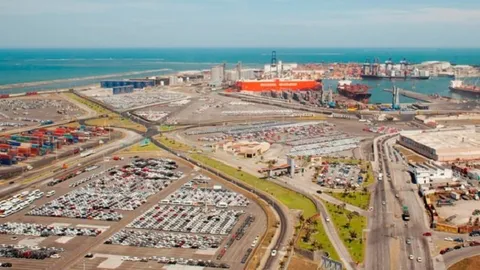
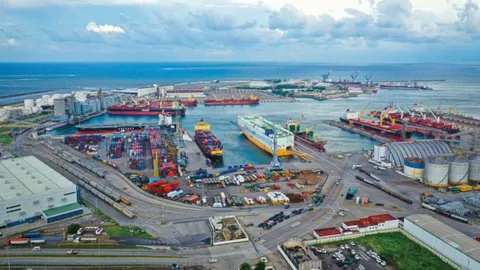
The Port of Ensenada is Baja California’s primary container gateway and the closest Mexican deep-water port to the United States border, just 110 km south of San Diego. Container throughput surged from 145,000 TEU in 2014 to over 444,000 TEU in 2022, driven by shippers diversifying from congested US West Coast ports — establishing Ensenada as a critical gateway for shipping from China to Mexico. For importers managing sea freight from China to Mexico, Ensenada offers a low-congestion alternative with unique cross-border logistics advantages.
Why the Port of Ensenada Matters for China Importers
- Closest Mexican Port to the US Border: Just 110 km from San Diego, Ensenada enables same-day truck delivery to Southern California, Arizona, and the broader US Southwest — making it a viable transshipment alternative to Los Angeles/Long Beach for Asian imports.
- Rapidly Expanding Capacity: Hutchison Ports EIT is investing US$128 million to add 300 meters of quay, 4 hectares of container yard, and 432 additional reefer connections, projecting annual capacity beyond 565,000 TEU.
- Direct Asia–Mexico Services: OOCL’s TLP8 and COSCO’s WSA8 routes now connect Shanghai and Qingdao directly to Ensenada with competitive 16-day transit, reflecting growing carrier confidence in the port.
- Low Congestion, Fast Turnaround: Average container release time is approximately 4.5 hours — significantly faster than Manzanillo or LA/LB — with 24/7 terminal operations and minimal berth waiting.
- Baja California Maquiladora Access: Direct truck connections serve Tijuana, Mexicali, and Tecate manufacturing zones, supporting the region’s electronics, automotive, and medical device industries.
Key Facts at a Glance
| Metric | Value |
|---|---|
| Annual Container Volume | ~444,000 TEUs (growing) |
| Terminal Operator | Hutchison Ports EIT |
| Berth Depth | 10–15.5 meters |
| Container Berths | 2 (300 m + 186 m) |
| Static Capacity | 7,500 TEU |
| Reefer Connections | 288 (expanding to 720) |
| Key China Trade Lanes | Shanghai, Qingdao, Ningbo |
| Distance to US Border | ~110 km (San Diego) |
| Distance to Tijuana | ~100 km |
Port Location
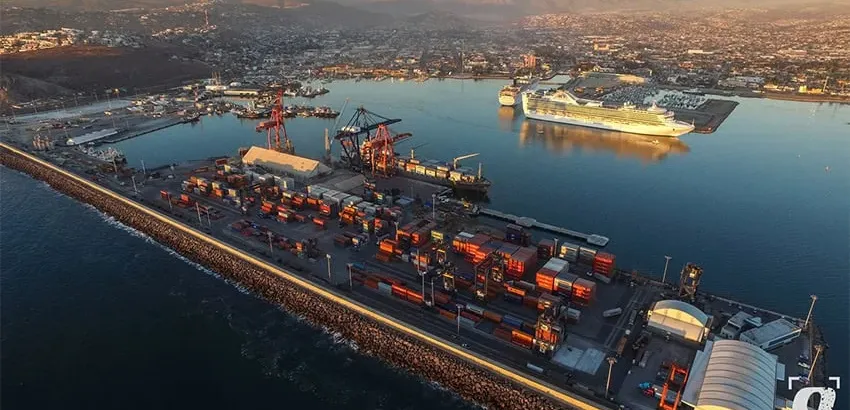
The Port of Ensenada is situated on the Pacific coast of Baja California, within the sheltered Bahía de Todos Santos. Its northern latitude makes it the closest Mexican container port to the US border, positioned approximately 100 km south of Tijuana and 110 km south of San Diego. The port’s protected natural harbor, framed by the Punta Banda peninsula, provides year-round operational reliability.
Service Region
Ensenada serves a distinctive cross-border distribution footprint unmatched by other Mexican ports:
- Baja California Manufacturing Corridor: Tijuana, Mexicali, and Tecate — home to hundreds of maquiladoras producing electronics, medical devices, and automotive components — are within 1–2 hours by truck, enabling just-in-time delivery from port to plant.
- Southern California & US Southwest: Same-day trucking reaches San Diego, Los Angeles, and the Inland Empire. Ensenada functions as a cost-effective overflow and alternative gateway to the congested San Pedro Bay ports, with estimated savings of $1,500–$2,000 per 40-ft container versus routing through LA/LB.
- Sonora & Arizona Corridor: Via Mexicali and Nogales, Ensenada-served cargo reaches Sonora’s growing industrial zones and the Arizona consumer market, providing a Pacific gateway for northwestern Mexico.
- Baja California Sur: Ensenada serves as the primary cargo gateway for La Paz, Cabo San Lucas, and the Baja Peninsula’s southern communities via coastal feeder and road connections.
Port Terminals
Ensenada’s container operations are concentrated in a single, well-operated facility:
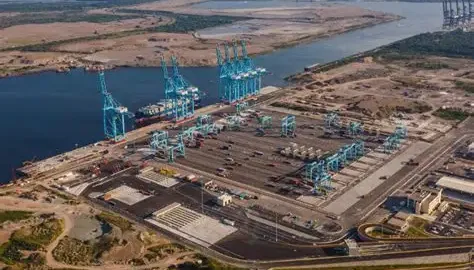
- Hutchison Ports EIT (Ensenada International Terminal): The port’s sole container and multi-purpose terminal, operated by Hutchison Port Holdings since 2001. Currently spanning 14.4 hectares (expanding to 17.3 ha), the terminal features two berths — a 300-meter main berth with 15.5-meter depth and a 186-meter secondary berth. Equipment includes 3 super post-Panamax gantry cranes (40-ton), 5 RTG cranes, and a 110-ton mobile harbor crane. The terminal handles containerized cargo, breakbulk, project cargo, and refrigerated goods via 288 reefer plugs. A 2,255 m² on-dock CFS warehouse supports LCL deconsolidation and cross-docking.
The ongoing US$128 million expansion — adding 300 meters of quay, 4 hectares of yard, and 432 additional reefer connections — will enable simultaneous handling of two container vessels with 4 gantry cranes and 12 RTGs, projected to lift annual capacity past 565,000 TEU. A new 80-meter wave deflection wall will further improve berth operability during winter swells.
Beyond containers, Ensenada hosts dedicated facilities for bulk agricultural exports, fishing industry vessels, and cruise tourism — all operating in separate port zones without competing for container berth space.
Shipping Routes to This Port
Ensenada’s carrier coverage has strengthened significantly with new direct Asia–Mexico services. For context on the broader trade lane, see our shipping routes from China to Mexico guide.
From Shanghai
Shanghai is the primary Yangtze River Delta loading port for Ensenada-bound services. OOCL’s TLP8 and COSCO’s WSA8 both call Shanghai as their first loading port, offering weekly sailings with 16–18 days transit to Ensenada. Shanghai consistently offers the most competitive rates on this lane due to high cargo density across multiple carrier alliances.
From Qingdao
Qingdao is the fastest China–Ensenada connection, with OOCL’s TLP8 achieving a market-leading 16 days transit — among the shortest Pacific crossing times to any Mexican port. This makes Qingdao the preferred North China loading port for time-sensitive cargo destined for Baja California and the US Southwest.
From Ningbo
Ningbo is frequently paired with Shanghai on Pacific service strings, providing additional weekly capacity for Zhejiang-origin exports. Transit times range from 17–20 days depending on the specific service rotation.
From Shenzhen and South China
Shenzhen (Yantian/Shekou) cargo destined for Ensenada typically transships via Shanghai or Busan, adding 3–5 days to the total transit. Direct South China–Ensenada services remain limited compared to Manzanillo and Lázaro Cárdenas, though growing Baja demand is attracting carrier interest in dedicated South China strings.
Transit Time from China to Ensenada
Ensenada’s northern Pacific position translates to competitive transit windows — in some cases the fastest to any Mexican port:
| Origin Port | Transit Time to Ensenada | Sailing Frequency |
|---|---|---|
| Qingdao | 16–18 days | 2–3 per week |
| Shanghai | 16–20 days | 2–3 per week |
| Ningbo | 17–20 days | 1–2 per week |
| Shenzhen (via transshipment) | 20–25 days | 1–2 per week |
| Xiamen (via transshipment) | 22–27 days | 1 per week |
Ensenada’s transit advantage is most pronounced for North China origins (Qingdao, Tianjin) where the great-circle route to Ensenada is measurably shorter than to more southerly Mexican ports. For LCL shipments, add 3–5 days for consolidation and deconsolidation. See our how long sea shipping takes from China to Mexico guide for a complete lane comparison.
Shipping Cost from China to Ensenada
Ocean freight rates to Ensenada reflect its position as a growing but still niche Pacific gateway. Working with a freight forwarder from China to Mexico familiar with Ensenada’s carrier landscape helps navigate these dynamics. For current benchmarks, see our shipping cost from China to Mexico guide.
Factors Affecting Freight Rates
- Carrier availability: Fewer weekly sailings than Manzanillo means tighter vessel space. Booking 3–4 weeks ahead is recommended, especially during Q4 peak season.
- Equipment positioning: Empty container availability at Ensenada can be tighter than at larger Mexican ports. Carriers with balanced Ensenada import/export flows offer the most reliable equipment and pricing.
- Terminal handling charges: Hutchison EIT’s efficient operations translate to competitive terminal fees. Budget approximately $150–$300 per container for wharfage and handling.
- Cross-border cost advantage: For cargo ultimately destined for the US, Ensenada’s proximity to the border eliminates 1–2 days of inland trucking versus Manzanillo or Lázaro Cárdenas, delivering meaningful door-to-door savings.
How to Lower Your Shipping Costs
| Strategy | Potential Impact |
|---|---|
| Ship FCL instead of LCL | 30–50% lower per-unit freight cost |
| Route US-bound cargo through Ensenada vs. LA/LB | $1,500–$2,000 savings per 40-ft container |
| Book during off-peak (February–July) | 20–40% rate reduction |
| Pre-clear Mexican customs documentation | Avoid storage fees and border delays |
| Leverage Ensenada’s fast container turnaround | Minimize demurrage and detention charges |
| Consider DDP shipping from China to Mexico | Bundled rate eliminates surprise charges |
DANTFUL’s carrier relationships provide competitive rates to Ensenada, with real-time guidance on equipment availability and cross-border logistics coordination.
Warehousing Services
The Ensenada logistics corridor offers unique warehousing advantages for both Mexican domestic distribution and cross-border supply chains.
Bonded Warehousing
Ensenada provides Recinto Fiscalizado (bonded warehousing) within the port zone, enabling duty-deferred storage and value-added processing. The bonded yard area spans approximately 39,000 m² (expanding to 80,000 m²), supporting labeling, kitting, quality inspection, and repackaging before customs entry. For IMMEX-registered maquiladoras in Tijuana and Mexicali, goods transfer directly from bonded storage to manufacturing without triggering IGI or IVA — a critical cash-flow advantage.
Overseas Warehousing & 3PL Services
Third-party logistics providers operate distribution centers near the port and along the Tijuana–Ensenada corridor, offering container deconsolidation, cross-docking, e-commerce fulfillment, Amazon Mexico/Mercado Libre FBA preparation, and temperature-controlled storage for perishables. A dedicated on-dock reefer inspection facility with 4 docks supports fresh and frozen cargo imports.
Warehousing & Distribution Strategy
Positioning inventory in Ensenada offers three strategic advantages: (1) near-port deconsolidation avoids trucking full containers to costlier inland warehouses, (2) fast container turnaround (~4.5 hours) minimizes per-diem charges, and (3) same-day cross-border trucking to Southern California enables a “Mexico-stored, US-delivered” model combining Mexican warehousing economics with US market access. For lower-volume importers, LCL shipping from China to Mexico supports smaller, more frequent replenishment cycles.
Frequently Asked Questions
Q: Ensenada vs. Manzanillo — which is better for China imports?
A: Manzanillo offers higher sailing frequency, deeper carrier diversity, and greater total capacity. Ensenada’s advantages are proximity to the US border (110 km), lower congestion with faster container turnaround (~4.5 hours), and the shortest transit from North China (16 days from Qingdao). For Baja California, Southern California, or Arizona, Ensenada often delivers lower total landed cost. For central Mexico, Manzanillo or Lázaro Cárdenas are typically more efficient.
Q: Can I use Ensenada to ship goods into the United States?
A: Yes. Goods clear Mexican customs in Ensenada, then cross into the US via Tijuana–San Diego or Mexicali–Calexico border crossings under US customs entry. This “Mexico-first” routing can yield significant savings on ocean freight (avoiding US-port Pier Pass and TMF fees), terminal handling, and trucking. However, it requires coordination of both Mexican and US customs — work with a forwarder experienced in cross-border Ensenada logistics.
Q: How does customs clearance work at Ensenada?
A: Customs clearance is handled through Mexico’s ANAM via the VUCEM digital platform. With a properly prepared pedimento de importación filed by a licensed agente aduanal, container release typically takes 1–3 business days. Ensenada’s compact port layout and lower volume mean inspection queues are shorter than at larger Mexican ports. IMMEX and OEA-certified importers benefit from expedited processing.
Q: What types of cargo ship through Ensenada?
A: Ensenada handles containerized consumer goods (electronics, auto parts, textiles, retail merchandise), refrigerated cargo (produce, seafood, frozen foods), breakbulk and project cargo, and bulk agricultural exports. The separate terminal zones ensure container operations are not disrupted by other cargo types.
Q: Is Ensenada a secure port for cargo?
A: Yes. Hutchison Ports EIT operates under ISPS Code compliance with 24/7 CCTV surveillance, perimeter intrusion detection, and controlled access. The port’s contained geography within Bahía de Todos Santos — a single-entrance natural harbor — enables effective access control and cargo security monitoring.
Q: How do I get started shipping through Ensenada?
A: Work with a China-based freight forwarder who has active carrier contracts on the China–Ensenada lane and cross-border logistics capabilities. For door-to-door service bundling ocean freight, customs brokerage (both Mexico and US sides), and final-mile delivery, see door-to-door shipping from China to Mexico. DANTFUL provides end-to-end logistics through Ensenada, including carrier booking, Mexican and US customs coordination, and distribution across Baja California and the US Southwest.