Port of Altamira
Port Overview
Overview of Altamira
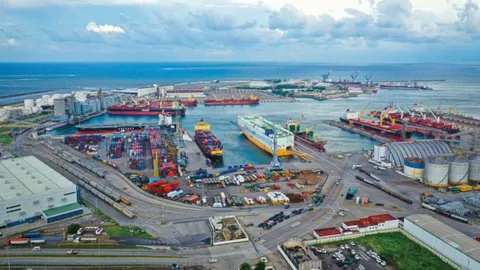
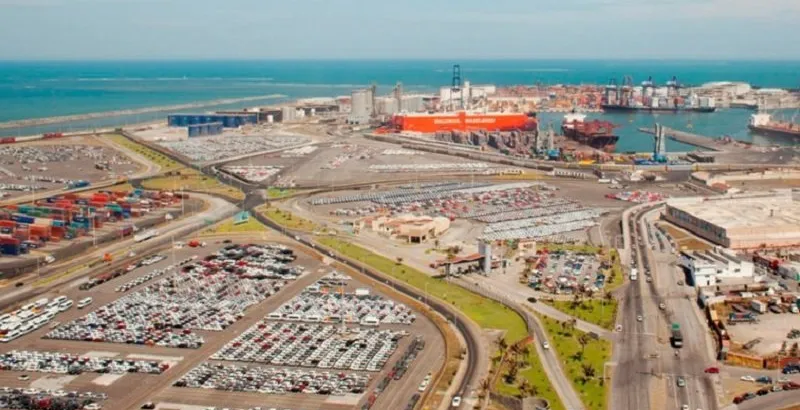
The Port of Altamira is a strategically vital Gulf Coast port in southern Tamaulipas, approximately 25 km north of Tampico. As Mexico’s premier industrial and petrochemical gateway, Altamira handles approximately 20 million tons of cargo annually — predominantly petrochemicals, bulk minerals, steel, and project cargo serving northeastern Mexico’s industrial heartland — and serves as a critical gateway for shipping from China to Mexico.
Unlike consumer-goods-focused container ports, Altamira is the Gulf Coast’s heavy-industry logistics hub, surrounded by one of Latin America’s largest petrochemical complexes with over 30 plants in the Altamira-Tampico-Madero corridor. For importers managing sea freight from China to Mexico, Altamira offers specialized handling capabilities unmatched by general-purpose container ports.
Why the Port of Altamira Matters for China Importers
- Petrochemical Gateway: Altamira anchors one of Latin America’s largest petrochemical clusters, processing millions of tons of polyethylene, PVC, and industrial chemicals annually. Importers of chemical equipment and raw materials benefit from unmatched specialized infrastructure.
- Direct Rail to Monterrey: Kansas City Southern de México (KCSM) provides dedicated freight rail from Altamira to Monterrey — Mexico’s industrial capital — covering ~500 km in 12–18 hours. This is the fastest port-to-Monterrey rail corridor on the Gulf Coast.
- Northeastern Industrial Corridor: Altamira is the closest deep-water port to the Tamaulipas-Nuevo León-Coahuila manufacturing triangle — home to automotive assembly, steel mills, and a growing nearshoring-driven industrial base.
- Bulk and Project Cargo Expertise: With heavy-lift cranes and specialized handling systems, Altamira is the preferred Gulf port for over-dimensional cargo, steel coils, mineral concentrates, and wind-energy components.
- Expanding Container Capacity: Altamira’s container terminals are growing to serve diversified Asian imports, offering a complementary Gulf option alongside Veracruz with less congestion and faster Monterrey-bound rail connections.
Key Facts at a Glance
| Metric | Value |
|---|---|
| Annual Cargo Tonnage | ~20 million tons |
| Primary Cargo Types | Petrochemicals, steel, minerals, project cargo, containers, breakbulk |
| Channel Depth | 12–14 meters |
| Key Terminals | TMA (Terminal Marítima de Altamira), IPM, private petrochemical terminals |
| Rail Connectivity | Kansas City Southern de México (KCSM) |
| Key China Trade Lanes | Shanghai, Ningbo, Shenzhen (via Panama Canal) |
| Distance to Monterrey | ~500 km (6–7 hours by truck, 12–18 hours by rail) |
| Industrial Park Proximity | 30+ petrochemical and manufacturing plants within 30 km |
Port Location
The Port of Altamira is situated on Mexico’s Gulf Coast in Tamaulipas, 25 km north of Tampico. Its position — ~500 km south of Brownsville, Texas, and ~500 km north of Veracruz — places it at the center of Mexico’s northeastern industrial corridor.
The port operates within a naturally sheltered basin with year-round access. The 12–14 meter channel draft accommodates Handymax and Panamax vessels; Neo-Panamax vessels are limited, but this is offset by Altamira’s industrial cargo specialization and rail connectivity.

Service Region
The Port of Altamira’s distribution footprint covers Mexico’s most industrialized regions:
- Monterrey Metropolitan Area: Mexico’s industrial capital with major automotive (Kia), steel (Ternium), and appliance manufacturing. Altamira is the closest deep-water port at ~500 km.
- Tamaulipas Industrial Corridor: Altamira, Tampico, and Ciudad Madero form a dense zone with over 30 chemical plants and industrial parks generating substantial bulk and project cargo demand.
- Saltillo-Ramos Arizpe: A major automotive cluster — GM, Stellantis, Daimler — within 8–10 hours by rail. Imports routed through Altamira reach Saltillo faster than via Pacific ports.
- Nuevo Laredo Border Gateway: Direct KCSM rail connects Altamira to the busiest US-Mexico commercial border crossing, enabling efficient distribution to Texas and the southeastern US.
Port Terminals
Altamira operates a specialized terminal ecosystem reflecting its industrial-cargo identity, with core strength in bulk, breakbulk, and project cargo alongside growing container capacity.
Major Terminals
-
Terminal Marítima de Altamira (TMA): The port’s flagship multi-purpose terminal handling steel products (coils, plates, rebar), mineral bulk (iron ore, manganese, zinc concentrates), project cargo including wind turbine components and heavy machinery, and an expanding container yard with mobile harbor cranes and on-dock rail. Heavy-lift capacity exceeds 100 metric tons.
-
Infraestructura Portuaria Mexicana (IPM): A diversified operator managing fluid petrochemicals, dry bulk minerals, and agricultural commodities with specialized tank storage, conveyor systems, and covered warehouses supporting the surrounding petrochemical cluster.
-
Private Petrochemical Terminals: Dedicated terminals operated by INEOS, Mexichem, and BASF handle ethylene, propylene, polyethylene, PVC resins, and industrial solvents — with pipeline connections directly to adjacent plants.
-
API Altamira Public Berths: Multi-use berths serving breakbulk general cargo, steel, and smaller-scale project cargo with flexible scheduling and competitive rates.
Shipping Routes to This Port
Altamira is served by all-water container services from China via the Panama Canal, plus specialized breakbulk and project cargo vessels. For a broader overview, see our guide on shipping routes from China to Mexico.
From Shenzhen (Yantian / Shekou)
Cargo from South China’s Guangdong province reaches Altamira via Panama Canal services, typically transshipping through Kingston (Jamaica) or Cartagena (Colombia) to Gulf feeder services. Direct Altamira calls are available for breakbulk charter and project cargo with sufficient volume.
From Shanghai
Shanghai offers the highest sailing frequency from China to Mexico’s Gulf Coast. Direct Panama Canal services call Veracruz and Altamira on rotating weekly schedules — ideal for industrial machinery, auto parts, and steel products.
From Ningbo
Ningbo-Zhoushan pairs with Shanghai on the same Panama Canal strings, providing additional weekly capacity from the Yangtze River Delta. Zhejiang’s machinery and chemical exports align naturally with Altamira’s cargo-handling strengths.
From Qingdao and Northern Ports
Cargo from Qingdao, Tianjin, and Dalian transships via Shanghai, Ningbo, or Busan onto Panama Canal services. For bulk and breakbulk — steel, minerals, heavy equipment — charter vessels offer direct routing without transshipment.
Transit Time from China to Altamira
All-water transit from China to Altamira via the Panama Canal involves transshipment for containerized cargo. Estimated port-to-port transit times:
| Origin Port | Transit Time to Altamira (via Panama) | Sailing Frequency |
|---|---|---|
| Shanghai | 32–38 days | Weekly |
| Ningbo | 34–40 days | Weekly |
| Shenzhen (Yantian) | 33–39 days | Weekly (via Caribbean hub) |
| Qingdao | 35–42 days | Bi-weekly |
| Xiamen | 36–44 days | Bi-weekly |
For breakbulk and project cargo on charter vessels, transit ranges from 35 to 50 days. For LCL shipments, add 3–5 days for consolidation and deconsolidation. Compared to Veracruz, Altamira’s slightly longer ocean transit is offset by faster rail connections to Monterrey and northeastern Mexico.
Shipping Cost from China to Altamira
Ocean freight rates to Altamira reflect its position as a secondary Gulf container gateway focused on industrial and bulk cargo. For current benchmarks, see our shipping cost from China to Mexico guide.
Factors Affecting Freight Rates
- Feeder Surcharges: Most containerized cargo to Altamira transships through Veracruz or Caribbean hubs, adding $200–$400 USD per container compared to direct Veracruz calls. Direct Altamira service is negotiable for 100+ TEU bookings.
- Industrial Cargo Pricing: Breakbulk and project cargo — steel coils, heavy machinery, wind components — is negotiated per-shipment rather than per-container. Partner with a freight forwarder from China to Mexico with industrial cargo expertise for accurate pricing.
- Port Charges: Budget $200–$400 USD per container for terminal handling, wharfage, and documentation. Bulk and breakbulk fees are calculated per ton or per-square-meter.
- Rail vs. Truck: KCSM rail to Monterrey costs 30–40% less per ton than trucking — significant for steel, minerals, and heavy industrial cargo.
- Hurricane Season: Gulf hurricane season (June–November) may add 2–5 days of variability. Booking November–May offers the most predictable schedules and rates.
How to Lower Your Shipping Costs
| Strategy | Potential Impact |
|---|---|
| Ship FCL instead of LCL | 30–50% lower per-unit freight cost |
| Use KCSM rail to Monterrey for 5+ TEU | 30–40% savings vs. trucking on heavy cargo |
| Combine container and breakbulk with same forwarder | Volume discount across cargo types |
| Book direct Altamira call for 100+ TEU volumes | Avoid $200–$400/container feeder surcharge |
| Evaluate total landed cost Altamira vs. Veracruz | Rail savings to Monterrey often favor Altamira |
| Consolidate with a China-based forwarder | Access to negotiated rates and optimized routing |
Warehousing Services
Altamira’s logistics ecosystem is built around industrial shippers, with extensive storage for bulk commodities, petrochemicals, and project cargo — plus growing containerized-goods capabilities.
Bonded Warehousing (Recinto Fiscalizado)
Altamira offers bonded storage within the port zone under Mexico’s Recinto Fiscalizado Estratégico regime:
- Duty and VAT Deferral: Import duties (IGI) and 16% IVA are payable only when goods exit bonded storage — with no time limit — ideal for project cargo and industrial equipment staged for phased installation.
- IMMEX Compatibility: Goods for maquiladora manufacturing in Tamaulipas, Nuevo León, or Coahuila transfer directly from bonded storage without triggering duties.
- Chemical Storage Compliance: Specialized facilities for hazardous and regulated chemical products, compliant with Mexican environmental and safety standards — infrastructure rarely available at consumer-goods ports.
Overseas Warehousing & 3PL
Third-party logistics providers in the Altamira-Tampico corridor offer: container deconsolidation, open-yard storage for steel and heavy equipment, cross-docking and transloading for Monterrey-bound rail, WMS-integrated inventory management, and specialized hazardous-cargo handling.
Warehousing & Distribution Strategy
Positioning inventory near Altamira delivers three key advantages for northeastern Mexico importers:
- Shortest inland haul to Monterrey: At ~500 km, the closest Gulf Coast port-to-Monterrey connection, with cost-efficient KCSM rail for heavy industrial cargo.
- Nuevo Laredo cross-border access: Direct KCSM rail to the busiest US-Mexico border crossing enables seamless distribution to Texas and the southeastern US.
- Petrochemical cluster proximity: Stage equipment and raw materials within kilometers of end-users in the Altamira-Tampico petrochemical complex.
For smaller volumes, LCL shipping from China to Mexico enables frequent, low-volume replenishment. For turnkey logistics, explore door-to-door shipping from China to Mexico — bundling ocean freight, customs clearance, and inland delivery into a single service.
DANTFUL partners with vetted providers in the Altamira-Monterrey corridor for customs brokerage, bonded storage, rail/truck distribution, and last-mile delivery throughout northeastern Mexico.
Frequently Asked Questions
Q: Is Altamira a better choice than Veracruz for shipping from China?
A: It depends on your cargo type and destination. Veracruz is Mexico’s primary Gulf container gateway with higher sailing frequency and deeper draft — ideal for consumer goods bound for Mexico City. Altamira excels for industrial cargo — petrochemicals, steel, minerals, and project cargo — destined for Monterrey, Saltillo, and the Tamaulipas-Nuevo León corridor. Altamira’s direct KCSM rail to Monterrey offers 30–40% inland savings on heavy cargo versus trucking from Veracruz, often yielding a lower total landed cost despite slightly longer ocean transit.
Q: What types of cargo does Altamira handle best?
A: Altamira specializes in petrochemicals (polyethylene, PVC, ethylene derivatives), steel products (coils, plates, rebar), mineral bulk (iron ore, manganese, zinc concentrates), project and over-dimensional cargo (wind components, heavy machinery), and agricultural bulk (grains, fertilizers). Its container capacity is growing but remains secondary to bulk and breakbulk strengths.
Q: How long does customs clearance take at Altamira?
A: With a properly filed pedimento de importación by a licensed Mexican customs broker, clearance at Altamira typically takes 1–3 business days. The port’s moderate container volume means shorter inspection queues versus Veracruz or Manzanillo. OEA-certified importers benefit from reduced inspections and priority clearance.
Q: How do I get started shipping through Altamira?
A: Partner with a freight forwarder experienced in Gulf Coast logistics and Altamira’s specialized terminal operators. Look for a provider with active China–Panama–Gulf route relationships and proven industrial cargo expertise. For comprehensive support covering ocean freight, customs brokerage, rail/truck distribution, and final delivery, contact DANTFUL for a tailored import solution through the Port of Altamira.
Q: What is the rail connectivity like from Altamira?
A: Altamira is directly served by Kansas City Southern de México (KCSM) with on-dock and near-dock rail access. Key corridors: Altamira to Monterrey (~12–18 hours), to Saltillo (~18–24 hours), and to Nuevo Laredo on the US border (~24–30 hours). For high-volume industrial shipments, KCSM rail from Altamira is the most cost-efficient Gulf Coast option for reaching northeastern Mexico and the Texas border.