Port of Progreso
Port Overview
Overview of Progreso
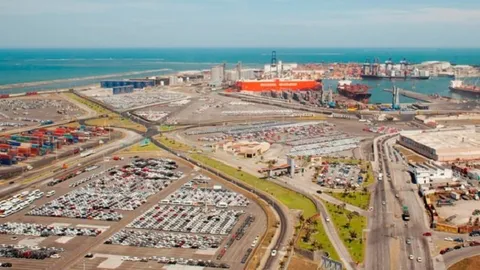
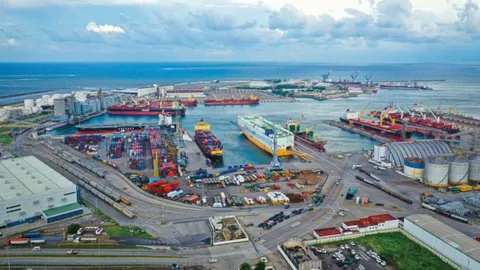
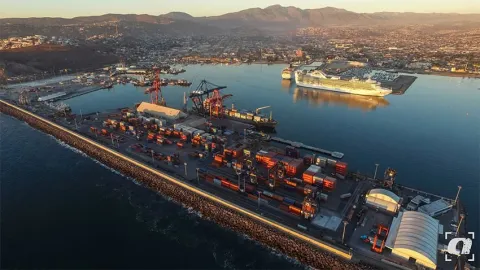
The Port of Progreso is the principal seaport for Mexico’s Yucatán Peninsula, located on the Gulf of Mexico approximately 43 km north of Mérida, the state capital. Once a modest regional port, Progreso has emerged as Mexico’s fastest-growing Gulf Coast gateway for shipping from China to Mexico — container traffic rose 10% in 2025 — driven by nearshoring, the expansion of Yucatán’s manufacturing sector, and a major public-private modernization program. For a broader overview of shipping options from Asia, see our guide on sea freight from China to Mexico.
Why Progreso Matters for China Importers
- Yucatán’s Only Deep-Water Port: Progreso is the sole container-capable port serving the entire Yucatán Peninsula — over 5 million consumers and a rapidly growing industrial base spanning Mérida, Cancún, and the Maya Riviera.
- APM Terminals Modernization: A US$160 million, 19-year investment — including new mobile cranes, dredging to 14.4 meters, warehouse expansion, and digital tracking — is transforming Progreso into a modern regional container hub.
- Maya Train Connectivity: Integration with the Tren Maya rail corridor links Progreso directly to inland logistics hubs, dramatically reducing inland transportation costs across the peninsula.
- Underserved Market Access: Unlike Manzanillo and Veracruz, which feed central and northern Mexico, Progreso offers less-congested entry into a market with lower logistics competition and significantly reduced last-mile costs to Yucatán destinations.
Key Facts at a Glance
| Metric | Value |
|---|---|
| UN/LOCODE | MXPGO |
| Port Type | Sea (multipurpose: containers, breakbulk, dry bulk, cruise, tanker) |
| Container Terminal Operator | APM Terminals |
| Current Draft | 11 meters (dredging to 14.4m underway) |
| Viaduct Pier Length | 6.5 km (one of the world’s longest) |
| Annual Container Growth | ~10% YoY (2025) |
| Key China Trade Lanes | Shanghai, Ningbo, Shenzhen (via Panama Canal, transshipment via Kingston or Cartagena) |
| Primary Service Region | Yucatán Peninsula: Mérida, Cancún, Campeche, Quintana Roo |
| Rail Connectivity | Tren Maya (expanding) |
| Cargo Types | Containers, breakbulk, agricultural dry bulk, petroleum products, cruise passengers |
Port Location
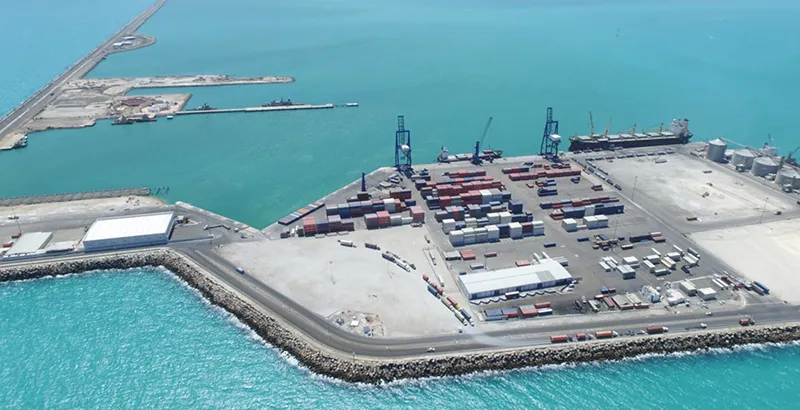
The Port of Progreso sits on the northern coast of the Yucatán Peninsula, within the municipality of Progreso, Yucatán. Its most distinctive physical feature is a 6.5-kilometer viaduct pier — among the longest in the world — built to reach deep water across the shallow limestone shelf that characterizes the Yucatán coastline. The pier connects the onshore cargo yards to berths located in the deeper Gulf waters.
Service Region
- Mérida Metropolitan Area: Yucatán’s economic engine with over 1.3 million residents. A growing hub for aerospace, automotive components, IT services, and food processing — all reliant on imported inputs.
- Riviera Maya / Cancún Corridor: Mexico’s largest tourism region, driving sustained demand for imported consumer goods, construction materials, hotel equipment, and food products.
- Campeche, Tabasco & Quintana Roo: The energy, agricultural, and tourism corridor to the south and west, with expanding population centers generating consistent import demand, accessible via the Gulf coastal highway network.
Port Terminals
Progreso operates a diversified terminal structure, though smaller than Manzanillo or Veracruz. APM Terminals’ modernization program is reshaping the port’s capacity and efficiency.
APM Terminals Puerto Progreso
The port’s primary container terminal, operated by APM Terminals (Maersk group) under a renewed 19-year concession. The terminal currently operates two mobile harbor cranes, with two additional cranes on order. Recent and planned upgrades include:
- Dredging & Channel Widening: Deepening the navigation channel from 11 meters to approximately 14.4 meters and widening to over 150 meters to accommodate larger vessels. Federal and state investment totals over MX$10 billion.
- 80-Hectare Expansion: Adding container yard space, warehouse capacity, and two new 40-hectare cargo platforms to increase annual throughput.
- Cold Storage: Modernized refrigerated container handling for perishable imports — critical for Yucatán’s food processing and hospitality sectors.
- Digital Tracking: Implementation of real-time cargo visibility systems, improving gate turnaround times and reducing container dwell.
Multipurpose & General Cargo Terminals
Beyond containers, Progreso handles breakbulk, agricultural dry bulk (grains, fertilizers), petroleum products via offshore monobuoys, and cruise vessels at a dedicated passenger pier. This diversified structure ensures container operations do not compete for berth space with other cargo types.
Shipping Routes to This Port
Progreso is served by all-water services from China via the Panama Canal, routing through the Caribbean Sea and Yucatán Channel into the Gulf of Mexico. As a secondary port, most services transship through regional hubs rather than calling direct.
From Shenzhen (Yantian / Shekou)
South China cargo — electronics, consumer goods, textiles — routes via Panama Canal services transshipping at Kingston (Jamaica) or Cartagena (Colombia) onto feeder vessels. Maersk and CMA CGM provide the dominant carrier options.
From Shanghai
Shanghai-origin freight connects to Progreso through Panama Canal services transshipping at Manzanillo (Panama) or Kingston, with weekly sailings and vessel space typically available within 3–5 days.
From Ningbo
Ningbo-Zhoushan cargo is handled on the same vessel rotations as Shanghai, with feeder connections via Caribbean transshipment hubs.
From Other Chinese Ports
Qingdao, Xiamen, and Tianjin cargo transships through Shanghai, Ningbo, or Busan before Panama Canal transit and Caribbean feeder connection. For LCL, Shanghai and Shenzhen consolidation hubs are the most practical options.
Transit Time from China to Progreso
All-water transit from China to Progreso via the Panama Canal with Caribbean transshipment is well-established. The following estimates include both the mainline Panama Canal leg and the feeder connection from the Caribbean hub:
| Origin Port | Transit Time to Progreso | Sailing Frequency |
|---|---|---|
| Shanghai | 33–42 days | Weekly (via Kingston/Cartagena) |
| Ningbo | 35–44 days | Weekly |
| Shenzhen (Yantian) | 34–43 days | Weekly |
| Qingdao | 36–46 days | Bi-weekly |
| Xiamen | 37–48 days | Bi-weekly |
Actual transit times vary by carrier, Panama Canal transit availability, feeder connection timing at the Caribbean hub, and Gulf weather (hurricane season June–November may add 2–4 days). For LCL shipments, add 5–7 days for consolidation and deconsolidation at both ends.
Compared to Veracruz (30–36 days), Progreso’s feeder connection adds roughly 3–6 days — but for importers whose goods are destined for Mérida, Cancún, or the Yucatán Peninsula, the dramatically lower inland haul more than offsets the extra ocean transit.
Shipping Cost from China to Progreso
Ocean freight rates from China to Progreso are shaped by Panama Canal transit costs, Caribbean transshipment fees, and the port’s smaller scale compared to Manzanillo or Veracruz.
Factors Affecting Freight Rates
- Feeder surcharge: The additional transshipment leg from a Caribbean hub typically adds $150–$300 per container compared to direct-call ports like Veracruz. However, this is frequently offset by lower inland costs for Yucatán-bound cargo.
- Panama Canal fees: Tolls embedded in freight rates, with variable surcharges during low-water periods adding $50–$150 per container.
- Port scale: Progreso’s smaller throughput means fewer direct carrier contracts. Rates may run $200–$400 per FEU higher than Veracruz all-in, though the gap is narrowing as APM Terminals’ expansion attracts more carrier services.
- Seasonality: Peak season (August–November, ahead of holiday retail) can push rates 25–50% higher. Post-Chinese New Year (February–March) and early summer offer the best pricing.
- Container type: 40’ standard (FEU) delivers the best per-unit economics. High-cube and reefer containers carry premiums — reefers are particularly relevant for Yucatán’s food and hospitality supply chains. See our cost of shipping 40ft container from China to Mexico guide for a detailed breakdown.
How to Lower Your Shipping Costs
| Strategy | Potential Impact |
|---|---|
| Combine with Veracruz consolidation | Shared inland distribution for multi-city deliveries |
| Ship FCL instead of LCL | 30–50% lower per-unit cost |
| Book off-peak (February–July) | 20–40% rate reduction |
| Use Mérida-based customs brokerage | Local brokers understand Progreso-specific clearance procedures |
| Pre-clear customs documentation | Avoid demurrage at a smaller terminal with limited yard space |
| Partner with a China-based forwarder | Access to volume-negotiated rates across multiple carriers |
Warehousing Services
The Progreso-Mérida logistics corridor supports a growing warehousing ecosystem, spurred by the port’s expansion, the Maya Train integration, and Yucatán’s nearshoring-driven industrial growth.
Bonded Warehousing (Recinto Fiscalizado)
Mexico’s Recinto Fiscalizado Estratégico program is available in the Progreso-Mérida corridor, allowing importers to:
- Defer duty and VAT (IVA 16%) until goods leave the bonded facility for domestic sale — with no time limit on storage
- Re-export duty-free to other Latin American or Caribbean markets
- Transfer directly to IMMEX maquiladora operations without triggering import duties
Overseas Warehousing & 3PL
The Mérida-Progreso corridor has attracted third-party logistics providers offering container deconsolidation, cross-docking, e-commerce fulfillment (Amazon/Mercado Libre FBA prep), and temperature-controlled storage. The region’s modern industrial parks — including the Parque Industrial Yucatán and Hunucmá Logistics Center — provide Class A warehouse space within 40 minutes of the port.
Warehousing & Distribution Strategy
Positioning inventory in the Progreso-Mérida corridor offers distinct Yucatán-specific advantages:
- Shortest inland haul: Goods destined for Mérida (43 km south) reach their destination within an hour — compared to the 1,500+ km overland route from Veracruz or 1,800+ km from Manzanillo. This eliminates days of trucking time and cuts per-container inland freight by 60–80% for Yucatán-bound shipments.
- Peninsula-wide coverage: Next-day trucking to Cancún, Playa del Carmen, Campeche, and Chetumal from a Mérida distribution center.
- Maya Train integration: As rail infrastructure matures, shippers will gain intermodal options for high-volume freight across the peninsula.
DANTFUL partners with vetted 3PL providers in the Progreso-Mérida corridor, delivering end-to-end logistics including customs brokerage, bonded storage, FBA/Mercado Libre prep, and last-mile delivery across the Yucatán Peninsula.
Frequently Asked Questions
Q: Progreso vs. Veracruz — which port should I use for Yucatán-bound imports from China?
A: For goods whose final destination is in the Yucatán Peninsula (Mérida, Cancún, Campeche, Quintana Roo), Progreso almost always delivers a lower total landed cost. While ocean freight may be $200–$400 higher per container than Veracruz, the inland savings are dramatic: 43 km from Progreso to Mérida versus 1,000+ km from Veracruz to Mérida. For importers distributing to both central Mexico and Yucatán, splitting inventory between Veracruz and Progreso often optimizes total logistics spend.
Q: How long does customs clearance take at Progreso?
A: With a properly prepared pedimento de importación filed by a licensed Mexican customs broker, customs release at Progreso typically takes 1–2 business days — faster than at larger ports due to lower congestion. Mexico’s ANAM operates digital clearance through the VUCEM platform.
Q: Can large vessels call at Progreso?
A: Currently, Progreso accommodates feeder and smaller mainline vessels. The dredging program to 14.4 meters and channel widening will allow larger vessels by 2027–2028. APM Terminals’ crane additions are also increasing the terminal’s vessel-handling capability. For now, most China-origin freight transships from a Caribbean hub.
Q: What is the cheapest way to ship from China to Progreso?
A: FCL ocean freight via the Panama Canal, transshipping at Kingston or Cartagena onto Progreso-bound feeder vessels, booked through a China-based forwarder for volume-negotiated rates. Off-peak booking (February–July) delivers the best pricing. For shipments under 15 CBM, LCL consolidation via Veracruz with trucking to Yucatán may offer a cost advantage. For hassle-free, all-inclusive logistics, explore our door-to-door shipping from China to Mexico solutions — compare both scenarios with your forwarder.
Q: What types of cargo does Progreso handle best?
A: Progreso excels with containerized consumer goods, construction materials, food and beverage products, hotel and hospitality supplies, and perishables requiring cold chain. The port’s growing cold storage infrastructure makes it well-suited for temperature-sensitive imports serving the Riviera Maya tourism market. It also handles breakbulk, agricultural dry bulk, and petroleum products through separate facilities — so container freight faces minimal berth competition.