Port of Pecém
Port Overview
Overview of Pecém
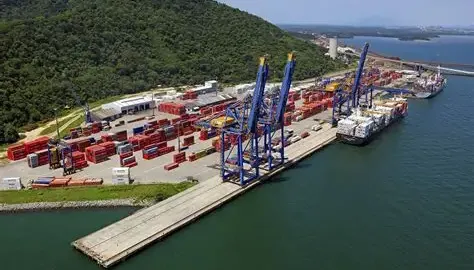
The Port of Pecém (officially the Pecém Industrial and Port Complex — CIPP) is one of Brazil’s most modern ports. Opened in 2002 in São Gonçalo do Amarante, Ceará, it was designed as a deep-water offshore terminal — a design that sets it apart from most Brazilian ports. Handling over 400,000 TEUs annually, it is a critical hub for importers managing shipping from China to Brazil.
Why the Port of Pecém matters for China importers
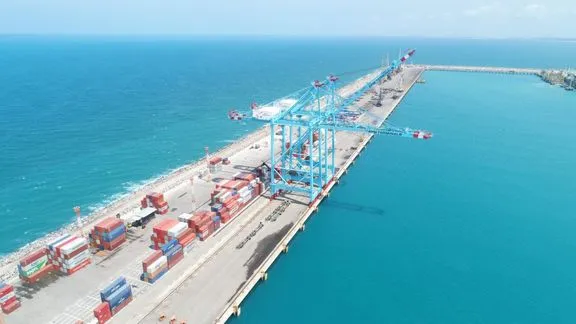
- Deep-water offshore design: Pecém was built with a 2.7 km breakwater and access bridge, enabling a draft of up to 17 meters without the siltation constraints that affect traditional estuarine ports. Large vessels berth without tide-related delays.
- APM Terminals (Maersk) operation: The Pecém Container Terminal (TCP) is run by one of the world’s largest port operators, delivering international-standard efficiency, modern equipment, and connectivity with major global shipping lines.
- EPZ and integrated industrial complex: Pecém hosts the Ceará Export Processing Zone (ZPE) and anchor industries such as the Pecém Steel Company (CSP). The surrounding industrial infrastructure reduces total logistics costs for importers who also process or distribute locally.
- Gateway to Northern Northeast Brazil: Pecém directly serves Ceará, Piauí, Maranhão, Rio Grande do Norte, and western Paraíba — a region with over 30 million consumers and strong industrial and agricultural growth.
Quick facts
| Metric | Value |
|---|---|
| Annual container volume | ~400,000 TEUs |
| Total cargo tonnage | ~20 million tons per year |
| Maximum draft | 17 meters |
| Container terminals | 1 main terminal (TCP — APM Terminals) |
| Road connectivity | BR-222, CE-085, CE-422 |
| Key China trade routes | Shanghai, Ningbo, Shenzhen, Qingdao |
Port Location
The Port of Pecém is situated on the northern coast of Ceará, in the municipality of São Gonçalo do Amarante, approximately 60 km from Fortaleza — Brazil’s fifth-largest city. Its position on the northern coast of the Northeast makes it the closest major Brazilian port to Europe and North America, with excellent connectivity to Asia as well.
Service region
Pecém is the primary import/export gateway for Brazil’s Northern Northeast, covering:
- Ceará: The port’s home state, with a diversified economy spanning textiles, footwear, metalworking, processed foods, and tourism. Fortaleza is the region’s largest distribution hub, reachable in under 1 hour from the port.
- Maranhão and Piauí: Strategic agribusiness and mining states accessible via BR-222 and BR-402. Goods cleared at Pecém reach Teresina in about 6 hours and São Luís in about 10 hours by road.
- Rio Grande do Norte and Paraíba: Growing consumer and industrial markets connected via BR-101 and state highways, reachable within 4–8 hours from the port.
- MATOPIBA: The agricultural frontier spanning Maranhão, Tocantins, Piauí, and Bahia connects to Pecém via BR-222 and BR-316, with soybean, corn, and cotton export flows.
The port is connected to the highway network via BR-222 (Fortaleza–Teresina–interior) and state roads CE-085 (west coast) and CE-422 (direct terminal access).
Port Terminals
The Port of Pecém is a modern port complex with integrated terminals:
Pecém Container Terminal (TCP)
- TCP (APM Terminals): Opened in 2002 and operated by APM Terminals (the port arm of the Maersk Group), TCP occupies approximately 130,000 m² with a 700-meter berth and an annual capacity exceeding 600,000 TEUs. The terminal features super post-Panamax gantry cranes, rail-mounted gantry cranes (RMGs), container scanners, and digital gate and appointment systems. TCP handles containerized imports of electronics, machinery, auto parts, textiles, and consumer goods from China, while exporting fruit, footwear, ceramics, and steel products. Direct integration with Maersk’s global shipping network ensures stable frequency on major Asia routes.
Specialized and bulk terminals
- Pecém Port Terminal (TPP — Cearáportos): Operates the port’s liquid bulk pier, handling fuels, petroleum derivatives, and LNG. It serves the energy and industrial demands of the CIPP complex.
- LNG Terminal: Dedicated infrastructure for liquefied natural gas import and regasification, supplying gas-fired power plants integrated into the industrial complex.
- Pecém Steel Company (CSP): A steel mill integrated with the port via a private berth and dedicated conveyor, exporting steel slabs and importing steelmaking raw materials.
Shipping Routes to This Port
Pecém is served by container services from major shipping lines, notably the Maersk network via APM Terminals. Routes from China typically call at Pecém after rounding the Cape of Good Hope, with the port often among the first Brazilian calls along the northern coast.
From Shenzhen (Yantian / Shekou)
Shenzhen — an export powerhouse for electronics, components, and consumer goods — connects to Pecém via regular services from global shipping alliances. The Cape of Good Hope route positions Pecém as an attractive call before vessels proceed to southern ports, offering competitive transit times for importers targeting North and Northeast Brazil.
From Shanghai
The Port of Shanghai, the world’s largest container hub, provides consistent connections to Pecém via deep-sea services. Pecém’s geographic position — the northernmost major Brazilian hub — shortens total sailing distance, resulting in faster transit compared to southern ports.
From Ningbo
Ningbo-Zhoushan often shares vessel rotations with Shanghai on the same service strings. Ningbo’s export strength in machinery, industrial equipment, tools, and durable consumer goods aligns well with Northeast Brazil’s industrial demand.
From Qingdao and other ports
Qingdao connects to Pecém primarily via transshipment through Shanghai or Ningbo, adding 3–5 days to total transit. Ports such as Xiamen, Dalian, Fuzhou, and Lianyungang utilize feeder services to the main hubs, with a similar time addition.
Transit Time from China to Pecém
Pecém is the closest major Brazilian port to Asia among the big hubs, offering a transit advantage over southern and southeastern ports:
| Origin port | Transit time to Pecém | Sailing frequency |
|---|---|---|
| Shanghai | 29–35 days | 1–2 per week |
| Ningbo | 30–36 days | 1–2 per week |
| Shenzhen (Yantian) | 28–34 days | 1–2 per week |
| Qingdao | 33–39 days | 1 per week |
| Xiamen | 34–40 days | 1 per week |
For LCL (less-than-container-load) shipments, add 5–7 days for consolidation at origin and deconsolidation at Pecém. Pecém’s offshore terminal virtually eliminates berth waiting times due to tides or siltation — 24-hour access is available for vessels of all sizes.
Shipping Cost from China to Pecém
Sea freight rates from China to Pecém follow the broader Brazil-route market dynamics, with specific factors that can generate savings:
Factors affecting freight rates
- Shorter sailing distance: Pecém is roughly 800 nautical miles closer to China than Santos — an advantage reflected in proportionally lower bunker surcharges.
- Lower congestion: As a newer port with less total volume than Santos, Pecém rarely faces berthing queues, eliminating demurrage and extended-stay costs.
- Competitive port fees: TCP charges handling fees in line with the national average. Budget approximately $250–$400 per container for THC, berthing, and documentation fees.
- Container type: Standard 40’ containers (FEU) offer the best cost-efficiency. Specialized equipment (high-cube, reefer, open-top) incurs additional surcharges.
How to reduce your shipping costs
| Strategy | Potential impact |
|---|---|
| Ship FCL instead of LCL | 30–50% unit cost reduction |
| Book in off-peak season (February–July) | 20–40% rate reduction |
| Pre-file Brazilian customs documentation | Avoid demurrage and storage fees |
| Consolidate with a China-based freight forwarder | Access to volume-negotiated rates |
| Route via Pecém for North/Northeast destinations | Save hundreds of km of inland trucking |
| Leverage EPZ for duty-drawback operations | Suspension of federal taxes |
Partnering with a freight forwarder like DANTFUL gives importers access to competitive freight contracts, consolidated rates, and expert guidance on TCP terminal procedures and Brazilian customs clearance.
Warehousing Services
The Pecém–Fortaleza region offers a growing logistics ecosystem:
Bonded warehousing (Entreposto Aduaneiro)
The bonded warehouse regime under Brazil’s Federal Revenue supervision allows goods to be stored in the Pecém area without immediate payment of import duties, IPI, and ICMS. Taxes are deferred until goods leave the warehouse for domestic consumption — for up to 1 year, extendable to 3 years. Facilities allow labeling, repacking, and quality inspection before final customs entry.
Distribution and logistics hubs
Key logistics zones in the region include:
- CIPP (Pecém Industrial and Port Complex): Offers logistics warehouses integrated with the port, with direct berth and EPZ access. Ideal for operations combining importing, light processing, and regional distribution.
- Fortaleza Metropolitan Region: Multiple logistics parks along BR-222 and around Maracanaú, serving Ceará’s largest consumer market and neighboring states. Fortaleza is the primary redistribution hub for the North and Northeast.
- Maracanaú: An industrial and logistics hub 40 km from Fortaleza and 100 km from the port, with excellent road connectivity and a skilled workforce base.
Warehousing strategy for Northern Northeast Brazil
Positioning inventory near Pecém offers distinct logistics advantages:
- Fast regional reach: Same-day delivery to Greater Fortaleza, next-day to Teresina and Natal, 2–3 days to São Luís and western Paraíba.
- Competitive cost structure: Shorter port-to-end-customer distances compared to southern ports, resulting in significantly reduced inland freight costs.
- Port redundancy: Using Pecém as a complementary entry port diversifies operational risk and strengthens supply chain resilience.
FAQs
Q: How does Pecém compare to Santos for imports from China?
A: Pecém offers 3–5 days faster transit from China and negligible congestion, but with fewer weekly sailings. For importers targeting the North, Northeast, or Central-West via Teresina, Pecém can cut inland trucking distances by over 2,000 km compared to Santos. Santos remains the top choice for cargo destined for the Southeast and South.
Q: How long does customs clearance take at the Port of Pecém?
A: With properly pre-filed documentation through the Federal Revenue’s Siscomex system, customs clearance at Pecém typically takes 1–3 business days. The port’s moderate import volume and modern infrastructure result in efficient processing and fewer red-channel inspections. Importers enrolled in the AEO (Authorized Economic Operator) program receive additional priority handling.
Q: What is the most cost-effective way to ship from China to Pecém?
A: FCL sea freight during the off-peak season (February–July) through a China-based freight forwarder delivers the lowest unit cost. For shipments under 15 CBM, LCL consolidation may be more economical despite higher unit rates. Pecém’s location as Brazil’s northernmost major port provides a built-in fuel-cost advantage on every container.
Q: Can Pecém handle project cargo and oversized equipment?
A: Yes. The CIPP complex features specialized berths, ample laydown areas, and proven experience with breakbulk and oversized cargo. Industrial projects, wind energy equipment, and steelmaking components are routinely handled at the port, with integrated logistics space facilitating assembly and handling.
Q: Can Pecém replace Santos as my primary import port?
A: It depends on your geographic distribution. For businesses focused on Ceará, Maranhão, Piauí, Rio Grande do Norte, western Paraíba, and Tocantins, Pecém is an excellent primary port choice. For nationwide distribution, the most balanced strategy is to split volumes: Pecém for North/Northeast and Santos or Paranaguá for the rest of the country.