Port of Itaguaí
Port Overview
Overview of Itaguaí Port
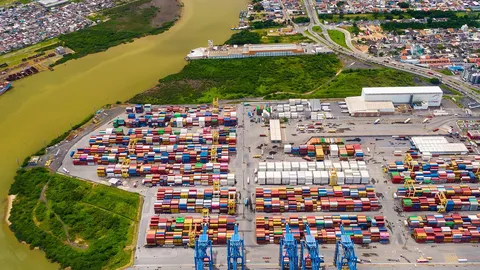
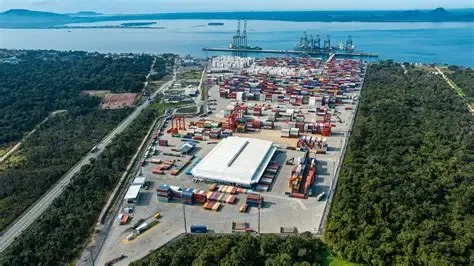
The Port of Itaguaí (Porto de Itaguaí), located on Sepetiba Bay approximately 85 km west of Rio de Janeiro city, is one of Brazil’s deepest and most strategically positioned ports. With an 18.2-meter draft and the capacity to accommodate Capesize and large Neo-Panamax container vessels, Itaguaí offers a vital deep-water alternative for importers managing shipping from China to Brazil. Its container terminal, Sepetiba Tecon, handled approximately 510,000 TEUs in 2024 — a 27% year-over-year increase — underscoring the port’s rapid growth as a Southeast gateway for containerized imports.
Why the Port of Itaguaí Matters for China Importers
- Deepest draft on Brazil’s southeast coast: The 18.2-meter access channel accommodates the largest vessels calling Brazil — reducing per-container ocean freight and eliminating transshipment for many trade routes.
- Lower congestion than Santos: Itaguaí’s more fluid terminal operations mean significantly lower probability of port congestion surcharges, faster berthing, and more predictable container release times.
- Strategic Rio–Minas Gerais–São Paulo triangle: The port sits at the intersection of three of Brazil’s wealthiest states. The Arcoweb Industrial District sits adjacent to the port zone itself.
- Industrial port ecosystem: The adjacent CSA Siderúrgica steel complex and multiple industrial users create an integrated logistics environment where import cargo and industrial supply chains share infrastructure efficiently.
- Expanding container capacity: Sepetiba Tecon is executing a BRL 300 million+ capacity expansion targeting 700,000 TEUs annually, backed by CSN’s long-term commitment to the container segment.
Key Facts at a Glance
| Metric | Value |
|---|---|
| Maximum draft | 18.2 meters |
| Access channel width | 300 meters |
| Sepetiba Tecon throughput | ~510,000 TEUs (2024) |
| Tecon quay length | 637 meters (3 berths) |
| Key terminals | Sepetiba Tecon (containers), Vale (iron ore), CSA (steel), Ternium (slabs) |
| Key China trade lanes | Shanghai, Ningbo, Shenzhen, Qingdao |
Port Location
The Port of Itaguaí lies at the northern end of Sepetiba Bay, in the municipality of Itaguaí, Rio de Janeiro state. The bay is partially sheltered by Ilha Grande and the Marambaia sandbar, providing natural protection against Atlantic swells. The port entrance channel — 300 meters wide and dredged to 18.2 meters — provides direct deep-water access from the Atlantic. The port sits at approximately latitude 22°55’S, longitude 043°50’W.
Service Region
Itaguaí is the primary deep-water gateway for southeastern Brazil’s industrial core:
- Rio de Janeiro Metropolitan Area: Greater Rio’s 13 million consumers and its diverse industrial base — pharmaceuticals, chemicals, machinery, and consumer goods — lie within 60–90 minutes by truck.
- Minas Gerais: Brazil’s mining and heavy-industry powerhouse, connected via the MRS railway and BR-040 highway. Key cities Belo Horizonte and Juiz de Fora are served through the MRS rail network.
- Southern Espírito Santo: The Cachoeiro de Itapemirim industrial zone is accessible via BR-101.
- Eastern São Paulo: The Paraíba Valley industrial corridor — home to Embraer, General Motors, and automotive suppliers — is connected via the Presidente Dutra Highway (BR-116).
The BR-101 (Rio–Santos Highway), BR-116 (Presidente Dutra), and the MRS Logística railway form the primary freight corridors. The adjacent Arco Metropolitano ring road further connects the port to BR-040 and the Minas Gerais corridor.
Port Terminals
The Itaguaí complex spans multiple terminals handling containers, iron ore, coal, steel products, and general cargo. Unlike single-purpose ports, Itaguaí’s multi-modal terminal infrastructure ensures container traffic does not compete with bulk operations for berth space.
Container Terminal
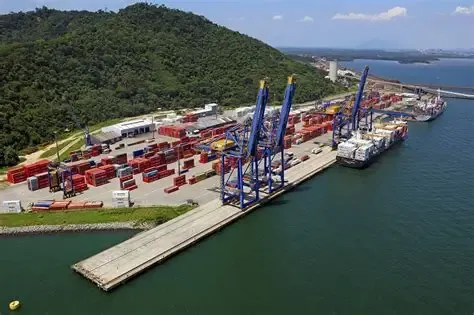
- Sepetiba Tecon (TECON): Owned and operated by CSN (Companhia Siderúrgica Nacional), the port’s container terminal features a 637-meter quay with 3 berths, 4 ship-to-shore (STS) cranes, and modern terminal operating system technology. The terminal handled approximately 510,000 TEUs in 2024 — a 27% year-over-year increase. A multi-year expansion program targeting 700,000 TEUs annual capacity includes new RTGs, expanded yard space, and additional STS cranes. The terminal serves major carrier alliances with regular calls connecting to Asian, European, and North American trade lanes.
Specialized Facilities
- Vale Iron Ore Terminal: Capable of loading Capesize and Very Large Ore Carriers (VLOC) up to 400,000 DWT — the terminal’s presence underscores Itaguaí’s exceptional deep-water credentials.
- CSA Siderúrgica / CSN Steel Terminal: The adjacent integrated steel plant operates dedicated berths for coal import and steel product export, representing one of Latin America’s largest steel production sites.
- Ternium Brasil Terminal: Handles semifinished steel products (slabs), reinforcing Itaguaí’s position as a steel processing and logistics hub.
Shipping Routes to This Port
Itaguaí is served by regular container services from China, with connections via transshipment at Southeast Asian hub ports or via direct calls on select carrier service strings.
From Shanghai
Shanghai-origin cargo reaches Itaguaí via transshipment at Singapore, Port Klang, or Santos, with combined transit of approximately 36–42 days. Several COSCO and CMA CGM services offer direct calls, providing a competitive alternative to Santos for Rio de Janeiro and Minas Gerais cargo.
From Shenzhen (Yantian / Shekou)
Shenzhen connects through MSC, COSCO, and CMA CGM services, typically via feeder relay or transshipment at Southeast Asian hubs. The route aligns Shenzhen’s electronics, machinery, and consumer goods export profile with the import requirements of Brazil’s southeastern industrial region.
From Ningbo
Ningbo-Zhoushan pairs with Shanghai on most Asia–South America East Coast rotations serving Sepetiba Bay. Cargo is often consolidated at Shanghai or transshipped via Singapore, with total origin-to-berth transit ranging from 35 to 43 days.
From Qingdao and Other Northern China Ports
Qingdao, Tianjin, and Xiamen connect primarily through transshipment at Shanghai, Ningbo, or Singapore, adding approximately 4–8 days to total transit. These feeder-based connections provide dependable, cost-effective service to southern Brazil for northern China’s manufacturing centers.
Transit Time from China to Itaguaí
Ocean transit from China to Itaguaí varies by origin port and whether the service calls directly or requires an intermediate transshipment leg.
| Origin Port | Transit Time to Itaguaí | Service Structure |
|---|---|---|
| Shanghai | 36–42 days | Direct or via Singapore/Santos |
| Ningbo | 35–43 days | Via Shanghai or Singapore |
| Shenzhen (Yantian/Shekou) | 36–43 days | Via Singapore or Santos |
| Qingdao | 39–47 days | Via Shanghai/Singapore |
| Xiamen | 40–49 days | Coastal feeder → mainline |
For LCL (less-than-container-load) shipments, add 5–7 days for consolidation and deconsolidation at both ends. The Brazilian harvest season (December–March) can extend transits by 2–4 days due to elevated vessel utilization.
Shipping Cost from China to Itaguaí
Ocean freight to Itaguaí is shaped by deep-water vessel economics, transshipment routing, and the port’s growing role as a Santos alternative.
Factors Affecting Freight Rates
- Deep-draft advantage: The 18.2-meter channel enables large vessel deployment, reducing per-unit ocean freight against ports requiring lighter vessel loading.
- Transshipment economics: Many services route through Singapore or Santos, incurring a transshipment handling fee — but routing via Itaguaí eliminates the 500–600 km Santos-to-Rio inland trucking leg, saving $500–$1,200 per container on total landed cost.
- Lower congestion risk: Compared to Santos — where congestion surcharges can add 5–15% to base freight — Itaguaí’s fluid terminal operations provide more stable and predictable freight rates.
- Inland freight advantage: For deliveries to Rio de Janeiro city, Minas Gerais, or the Paraíba Valley, inland trucking from Itaguaí is 30–60% cheaper than from Santos.
- Seasonality: Pre-Chinese New Year peaks (January–February) and the Brazilian export harvest season (March–August) push rates 20–30% above low-season levels (September–November).
How to Lower Your Shipping Costs
| Strategy | Potential Impact |
|---|---|
| Ship FCL instead of LCL | 30–50% lower per-unit freight cost |
| Book during off-peak (September–November) | 20–30% rate reduction |
| Use direct-call services where available | Eliminate transshipment handling fees |
| Route via Itaguaí (not Santos) for Rio/Minas cargo | 30–60% lower inland trucking cost |
| Pre-file Brazilian customs clearance documentation | Avoid demurrage charges |
| Consolidate with a China-based forwarder | Access to volume-negotiated rates |
Partnering with a China-based freight forwarder like DANTFUL gives importers access to competitive ocean contracts, consolidated cargo solutions, and expert guidance on routing via Itaguaí for southeastern Brazil’s industrial and consumer markets.
Warehousing Services
The logistics ecosystem around Itaguaí and the Rio de Janeiro metropolitan area offers expanding options for bonded storage, distribution, and industrial supply chain integration.
Bonded Warehousing
The Entreposto Aduaneiro (Customs Bonded Warehouse) regime in Rio de Janeiro state allows storage of imports without paying federal duties, IPI, and ICMS for up to 1 year (extendable to 3). Given Itaguaí’s proximity to multiple states — Rio de Janeiro, Minas Gerais, São Paulo — bonded warehousing here supports efficient cash flow management, with goods nationalized in batches for staged distribution across the Southeast.
Overseas Warehousing & 3PL Services
The Rio de Janeiro–Itaguaí corridor hosts a growing network of integrated 3PL operators offering container deconsolidation, cross-docking, pick-and-pack, and e-commerce fulfillment. Key logistics assets include:
- Arcoweb Industrial District: Located adjacent to the port zone, providing modern warehousing facilities for importers requiring transit-time-sensitive inventory positioning.
- Rio de Janeiro Logistics Hubs: The Santa Cruz and Campo Grande districts — between the port and Rio city — host established warehousing and distribution centers serving the metropolitan area’s 13 million consumers.
- Rail-connected storage: MRS Logística-linked rail yards in the port hinterland support bulk and containerized cargo transfer, reducing inland transport costs for high-volume shippers.
Warehousing & Distribution Strategy
Positioning inventory near the Itaguaí complex delivers clear advantages:
- Lower inland transport cost: Eliminates the 500–600 km trucking leg from Santos, saving $500–$1,200 per container for Rio de Janeiro, southern Minas Gerais, and Paraíba Valley destinations.
- Faster port clearance: Fewer vessel queues and fluid terminal turnaround translate to predictable inventory release cycles and lower demurrage exposure.
- Speed to market in the Southeast: Same-day delivery to Rio de Janeiro city, next-day to Belo Horizonte and Juiz de Fora (via BR-040), and 2-day to the São Paulo metro area — significantly faster than the 3–5 days typical from Santos.
- Industrial supply integration: Deep-draft berths and adjacent industrial zones make Itaguaí an ideal entry point for manufacturers importing raw materials, components, and machinery requiring just-in-time delivery.
DANTFUL partners with qualified 3PL providers along the Itaguaí–Rio de Janeiro corridor, offering integrated customs brokerage, bonded warehousing, distribution, and last-mile delivery throughout southeastern Brazil.
Frequently Asked Questions
Q: How does the Port of Itaguaí compare to Santos for China imports?
A: Itaguaí vs. Santos comes down to cargo destination. For goods bound to Rio de Janeiro city, Minas Gerais, or the Paraíba Valley, Itaguaí consistently delivers a lower total landed cost. Inland trucking from Itaguaí to Rio is approximately 85 km (1.5 hours) versus 500–600 km from Santos — saving $500–$1,200 per container. Itaguaí’s deeper draft and lower congestion also result in fewer demurrage incidents. Santos remains the default for São Paulo city and Center-West destinations.
Q: What vessel sizes can the Port of Itaguaí accommodate?
A: The port’s 18.2-meter draft and 300-meter-wide access channel accommodate Capesize bulk carriers up to 400,000 DWT and Neo-Panamax container vessels up to 14,000 TEUs — making it the deepest-draft commercial port on Brazil’s southeast coast. For container importers, this translates to more efficient vessel utilization, lower per-unit shipping costs, and fewer draft-related loading restrictions versus shallower alternatives.
Q: How long does customs clearance take at Itaguaí?
A: With documentation pre-registered in Brazil’s Siscomex system, clearance typically takes 1–3 business days. The port’s lower traffic volume translates to fewer inspection backlogs than at Santos. OEA (Operador Econômico Autorizado) certified importers benefit from reduced inspection rates and priority green-channel processing.
Q: Is Itaguaí viable for containerized imports, or is it primarily a bulk port?
A: While Itaguaí’s historical reputation rests on iron ore and steel, the port is rapidly emerging as a credible container gateway. Sepetiba Tecon’s expansion to 700,000 TEUs is backed by CSN — one of Brazil’s largest industrial groups. For Chinese electronics, machinery, automotive parts, and consumer goods destined for Rio de Janeiro and Minas Gerais, the terminal offers growing service coverage with ample expansion headroom.
Q: What is the cheapest way to ship from China to Itaguaí?
A: FCL ocean freight during the off-peak window (September–November), routed through a China-based freight forwarder, delivers the lowest per-unit cost. Consolidating smaller shipments into FCL via a forwarder’s CFS (container freight station) service eliminates high LCL per-unit rates. For cargo destined to Rio de Janeiro and Minas Gerais, the 30–60% inland trucking savings versus Santos routinely offset any transshipment-related ocean freight differential, making door-to-door economics the deciding factor.