Port of Manaus
Port Overview
Overview of Manaus
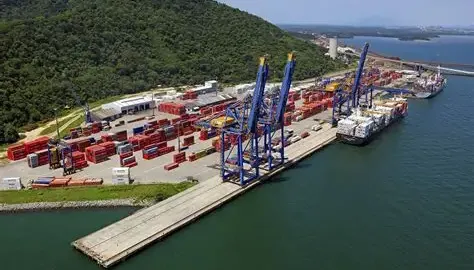
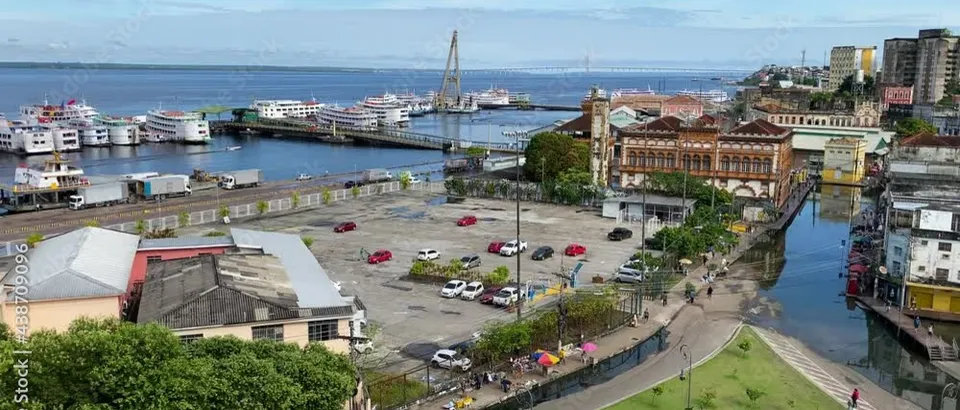
The Port of Manaus (Porto de Manaus) is Brazil’s largest inland port and the Amazon region’s most critical logistics hub. Situated on the Rio Negro approximately 13 km upstream from its confluence with the Amazon River, Manaus is a floating port — its docks rise and fall with the river’s dramatic 14-meter seasonal fluctuation, ensuring year-round operations. Despite being over 1,500 km from the Atlantic Ocean, the port handles ocean-going container vessels that navigate the Amazon’s deep-draft channel, connecting directly to global trade lanes from China and serving as a critical hub for importers managing shipping from China to Brazil.
Why the Port of Manaus Matters for China Importers
- Manaus Free Trade Zone (Zona Franca de Manaus): Established in 1967, the ZFM is one of the world’s largest special economic zones. It hosts major production facilities for smartphones, televisions, air conditioners, and motorcycles — industries heavily reliant on components imported from China.
- Strategic Amazon Gateway: Manaus is the sole container port for Brazil’s western Amazon — covering Amazonas, Roraima, Rondônia, and Acre — plus cross-border trade with Colombia, Peru, and Venezuela.
- Madeira River Waterway: Barge transport extends Manaus’s reach to Porto Velho (Rondônia), creating a logistics corridor covering over 2 million km².
- Growing Industrial Demand: The ZFM generates over BRL 170 billion annually and employs more than 500,000 workers. Component imports from China — PCB assemblies, displays, semiconductors, and plastic resins — flow steadily year-round.
- Tax Incentives: ZFM-destined imports benefit from federal tax exemptions (IPI, PIS/COFINS, Import Duty reductions), making Manaus a cost-competitive entry point for Free Zone assembly lines.
Key Facts at a Glance
| Metric | Value |
|---|---|
| Port Type | Inland River Port (Floating) |
| Distance from Atlantic | ~1,500 km (via Amazon River) |
| Annual Cargo Volume | ~15 million tons |
| Container Throughput | ~400,000 TEUs annually |
| Channel Depth | 12–15 m (wet season) / 9–12 m (dry season) |
| Key Terminals | Super Terminais, Chibatão |
| Key China Trade Lanes | Ningbo, Shanghai, Shenzhen (via transshipment) |
Port Location
The Port of Manaus sits on the Rio Negro waterfront in Manaus, capital of Amazonas state. The floating dock system (flutuantes) is the port’s defining feature: pontoons adjust to seasonal river levels, guaranteeing reliable berthing regardless of flood or drought conditions.
Service Region
Manaus is the industrial and logistics gateway for Brazil’s North Region:
- Amazonas State: Population 4.2 million, economy dominated by the ZFM. Over 600 industrial plants consume component inputs from China daily.
- Roraima: Connected via BR-174 highway, Roraima imports electronics, building materials, and consumer goods through Manaus, with onward distribution to the Venezuela border at Pacaraima.
- Rondônia: The Madeira River waterway links Manaus to Porto Velho across 1,000+ km, serving Rondônia’s growing agribusiness and consumer sectors.
- Acre: Goods reach Rio Branco via river and road through Porto Velho (5–7 days).
- Colombia & Peru: The Amazon waterway supports cross-border trade to Leticia (Colombia) and Iquitos (Peru), with Manaus as the principal transshipment hub.
Port Terminals
Manaus features private and public terminals, with container handling concentrated at two major facilities:
Container Terminals
-
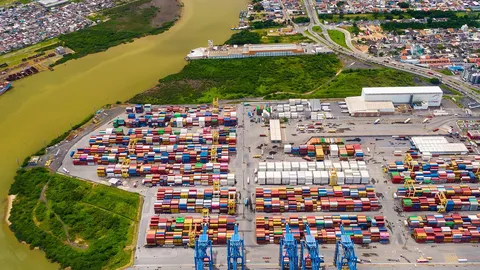
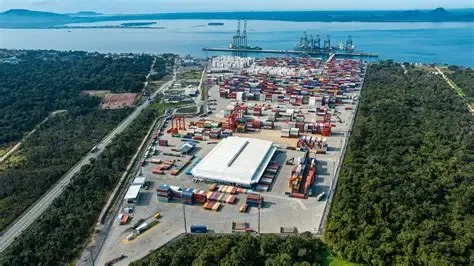
Super Terminais: The largest container terminal in northern Brazil, operating a floating dock with a 430-meter berth, two mobile harbor cranes, and annual capacity of 350,000 TEUs. Features include 600 reefer plugs, on-site customs inspection, and a modern terminal operating system. Super Terminais handles the majority of China-sourced ZFM cargo — electronic components, motorcycle CKD kits, plastics, chemicals, and machinery — and sits just 8 km from the Manaus Industrial District (PIM).
-
Chibatão: The second-largest container terminal, with 600 meters of combined berth across container and general cargo facilities. Equipped with gantry cranes, it handles containers alongside breakbulk and project cargo, plus on-site bonded warehousing.
General & Liquid Cargo Terminals
- Porto Chibatão: Ro-Ro and general cargo terminal handling vehicles, steel, and project cargo for Amazonas’s interior.
- Raízen Terminal: Liquid bulk fuels and ethanol for the Manaus metropolitan area.
- Fogás Terminal: LPG terminal for Amazonas state’s energy network.
Shipping Routes to This Port
For sea freight from China to Brazil via Manaus, regular container services are structured as a relay: Asia–South America mainline vessels transship at Caribbean or Brazilian coastal hubs into Amazon-feeder vessels.
From Shenzhen (Yantian / Shekou)
Cargo transships via Cartagena, Manzanillo (Panama), or Santos. MSC, Maersk, and CMA CGM offer through bills of lading with a single transshipment. Shenzhen is a key loading port for electronic components bound for Manaus’s consumer electronics assembly lines.
From Shanghai
Shanghai provides the widest carrier choice. COSCO, MSC, and Hapag-Lloyd offer through service via Caribbean transshipment, with competitive rates driven by high ZFM-bound volume from the Yangtze Delta manufacturing belt.
From Ningbo
Ningbo-Zhoushan pairs with Shanghai on the same rotations, providing reliable weekly connections. Ningbo’s strength in electrical components, injection-molded parts, and machinery matches the ZFM’s manufacturing profile.
From Other Chinese Ports
Qingdao, Xiamen, Tianjin, and Dalian flow predominantly through transshipment at Shanghai/Ningbo or via Caribbean relay, adding 3–5 days versus direct Yangtze Delta loading.
Transit Time from China to Manaus
Transit involves two legs: deep-sea vessel from China to a Caribbean hub (25–32 days), then Amazon River feeder upriver to Manaus (5–7 days). Plan for transshipment dwell time at the relay port.
| Origin Port | Transit Time to Manaus | Service Structure |
|---|---|---|
| Shanghai | 37–44 days | Caribbean transship (Cartagena/Manzanillo) |
| Ningbo | 38–45 days | Caribbean transship |
| Shenzhen (Yantian) | 36–43 days | Caribbean transship |
| Qingdao | 40–47 days | Caribbean transship |
| Xiamen | 42–49 days | Coastal relay (Santos) → Amazon feeder |
Seasonal considerations: The wet season (December–May) brings deeper drafts and regular schedules. The dry season (August–November) may see draft restrictions, extending transit by 2–3 days with low-water surcharges of $150–$300 per TEU.
Shipping Cost from China to Manaus
Ocean freight to Manaus carries a premium over coastal Brazilian ports due to transshipment and river-leg costs, but ZFM tax advantages often more than offset the difference.
Factors Affecting Freight Rates
- Transshipment premium: The feeder leg from the Caribbean or Santos adds $400–$800 per container versus a direct Santos call. Caribbean routing is typically cheaper than via Santos (shorter feeder distance).
- Low-water surcharges: During the dry season (August–November), carriers levy $150–$300 per TEU to account for draft restrictions.
- Volume contracts: Annual FAK/NAC contracts with volume commitment reduce the transshipment premium by 15–25% versus spot rates.
- Port charges: Terminal handling at Super Terminais or Chibatão ranges from $250–$450 per container, consistent with Brazilian port norms.
- ZFM tax offsets: IPI, PIS/COFINS, and import duty exemptions for ZFM-destined goods frequently exceed the freight premium. Total landed cost through Manaus with ZFM benefits is often lower than through Santos without them.
How to Lower Your Shipping Costs
| Strategy | Potential Impact |
|---|---|
| Consolidated FCL (not LCL) | 30–50% lower per-unit freight cost |
| Annual contract (FAK/NAC) | 15–25% reduction vs. spot |
| Caribbean transshipment over Santos relay | Save 3–5 days and $200–$400 |
| Ship during wet season (December–May) | Avoid low-water surcharges |
| Pre-clear ZFM customs (Suframa) | Avoid port storage & demurrage |
| Leverage ZFM tax incentives | Offset total landed cost |
Partnering with an experienced freight forwarder from China to Brazil like DANTFUL ensures optimal transshipment routing and proper management of Suframa Import License (LI) and ZFM eligibility documentation.
Warehousing Services
Manaus has a mature warehousing ecosystem built around the ZFM’s industrial supply chain:
Bonded Warehousing (Entreposto Aduaneiro)
The Receita Federal’s bonded warehouse regime operates extensively in Manaus for ZFM importers. Goods can be stored without immediate payment of import duties, IPI, or PIS/COFINS — and for ZFM-eligible cargo, duties may be fully suspended upon exit to the Free Zone. Bonded facilities support component kitting, quality inspection, repackaging, and JIT inventory staging for PIM factories. Storage: up to 1 year, extendable to 3.
Key Logistics Zones
- PIM Vicinity (Distrito Industrial): Logistics parks within 15 km of the Manaus Industrial District, specializing in component receiving, kitting, and sequenced delivery to electronics and motorcycle assembly lines.
- Port-Adjacent (Colônia Oliveira Machado): Facilities within 5 km of Super Terminais and Chibatão for container devanning, cross-docking, and short-term storage.
- Puraquequara: An emerging zone on the east bank of the Rio Negro for river-route distribution into the Amazon basin and Madeira River corridor.
Warehousing Strategy for Northern Brazil
- ZFM tax-advantaged entry: Bonded storage with ZFM destination qualification reduces the total import tax burden.
- Amazon basin distribution: River barges reach Santarém (2 days), Macapá (3 days), Porto Velho (4–5 days), and tri-border markets within 5–7 days.
- Supply chain continuity: Buffer stock at Manaus bonded facilities insulates manufacturers from ocean transit variability.
Frequently Asked Questions
Q: How does Manaus compare to Santos for ZFM-destined imports?
A: For ZFM cargo, Manaus is the only practical gateway. Santos offers faster transit from China (29–35 days vs. 37–45 days), but inland transport from Santos to Manaus spans over 4,000 km, partially via BR-319 which closes during the rainy season. Total ocean-plus-inland costs from Santos are 2–3× higher than direct entry at Manaus. ZFM tax benefits are also processed at the port of entry — Manaus customs and Suframa are purpose-built for Free Zone clearance.
Q: Is the Port of Manaus operational year-round?
A: Yes. The floating dock system ensures uninterrupted berthing regardless of seasonal river level changes. During severe droughts (most recently 2023–2024), draft restrictions may limit feeder vessel size and trigger low-water surcharges, but container terminals remain fully operational. Extreme drought may suspend some Madeira River barge services to Porto Velho.
Q: How does customs clearance work for ZFM imports at Manaus?
A: ZFM imports follow dual clearance: standard Receita Federal Siscomex handles national formalities, while Suframa administers ZFM tax incentive eligibility. Importers must hold valid ZFM registration and submit the Import License (LI) with ZFM-specific coding. Clearance typically takes 3–5 business days with pre-filed documentation. OEA (Operador Econômico Autorizado) certified companies receive expedited processing.
Q: What is the cheapest way to ship from China to Manaus?
A: FCL via Caribbean transshipment (typically Cartagena) through a China-based forwarder provides the lowest per-unit cost. Key tactics: ship during the wet season to avoid low-water surcharges, negotiate annual FAK/NAC contracts that include Manaus, and maximize container utilization. For cargo under 12 CBM, LCL consolidation may be more practical, though per-CBM rates are higher than for coastal Brazilian ports due to transshipment and feeder costs.
Q: What cargo types is the Port of Manaus best suited for?
A: Manaus is optimized for containerized ZFM component imports: PCB assemblies, displays, semiconductors, plastic resins, metal stampings, wiring harnesses, and motorcycle CKD kits. It also handles consumer goods for the Amazonas retail market, industrial machinery, chemicals, and liquid fuels. Manaus is not suited for bulk agricultural exports — the Amazon region lacks grain production at scale and no deep-water grain terminals exist.