Port of Itapoá
Port Overview
Overview of Port of Itapoá
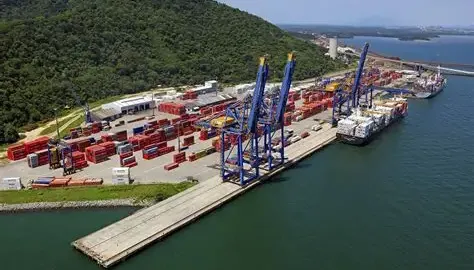
Porto Itapoá is one of Brazil’s most modern private container terminals and the second-largest container complex in Santa Catarina state. Launched in 2011 as a joint venture between APM Terminals (Maersk Group, 30%) and Portoinvest (70%) — which integrates the Battistella Group and LOGZ — the terminal handled 1.5 million TEUs in 2025, a 25% year-over-year increase. For importers managing shipping from China to Brazil, Itapoá offers a strategic alternative to Santos, combining high-productivity private operations with fast access to southern Brazil’s industrial markets.
Why Port of Itapoá Matters for China Importers
- Industry-leading efficiency: The terminal holds southern Brazil’s berth productivity records, exceeding 131 moves per hour. In November 2025, it handled 3,371 containers on a single vessel in just over 30 hours using five STS cranes simultaneously.
- 16-meter draft and Neo-Panamax capability: Dredging to 16 meters allows the terminal to receive vessels up to 366 meters and approximately 16,000 TEUs, eliminating transshipment via intermediate hubs and lowering per-container ocean freight costs.
- Asia accounts for over 70% of imports: Asian cargo — predominantly Chinese — dominates the terminal’s import profile, spanning solar components, electronics, machinery, and home appliances.
- Santa Catarina tax incentives: The state’s TTD (Differentiated Tax Treatment) program offers ICMS tax benefits that can yield significant savings, especially for high-value imports such as electronics and machinery.
- Reduced congestion and demurrage costs: Private management and a digital gate appointment system speed up clearance, while on-site empty container depots cut detention costs by US$100–300 per container compared to congested public ports.
Key Facts at a Glance
| Metric | Value |
|---|---|
| Annual throughput | ~1.5 million TEUs (2025) |
| Quay length | 800 meters |
| STS cranes | 8 units |
| Maximum draft | 16 meters |
| Expansion capacity target | 2 million TEUs (by end of 2026) |
| Ownership | APMT (Maersk) 30% / Portoinvest 70% |
| Key China trade routes | Shanghai, Ningbo, Shenzhen, Qingdao |
Port Location
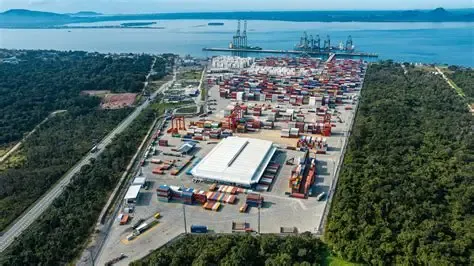
Porto Itapoá is located in the municipality of Itapoá, on the northern coast of Santa Catarina, near the Paraná state border. The terminal sits on the shore of Babitonga Bay, approximately 14 nautical miles from the Port of São Francisco do Sul and about 80 km from Joinville, the region’s largest city. Maritime access is via a channel dredged to 16 meters, connecting the terminal directly to the Atlantic Ocean.
Service Region
Itapoá serves as the entry point for key economic hubs across southern and southeastern Brazil:
- Santa Catarina: Joinville (the state’s largest metalworking hub), Jaraguá do Sul, and Blumenau lie within a 1–2 hour trucking radius, supporting textile, compressor, ceramics, and technology industries.
- Paraná & Curitiba: The Curitiba metropolitan area is approximately 120 km away, often with lower trucking costs than the route from Paranaguá.
- Northern São Paulo & Southeast: Although road distance to São Paulo city adds roughly 500–800 km compared to Santos, the combination of lower ocean freight, reduced demurrage, and Santa Catarina tax incentives can offset the extra logistics cost for cargo bound for inland São Paulo and Minas Gerais.
The BR-101 and BR-280 highways form the primary freight corridors, with BR-101 linking the port to Curitiba, Joinville, and Florianópolis.
Port Terminals
Unlike the Itajaí-Navegantes complex — where two competing terminals operate on opposite riverbanks — Itapoá is a single-operator greenfield terminal, purpose-built from the ground up for maximum container efficiency.
Terminal Infrastructure
- 800-meter quay: Three berths capable of simultaneously handling Neo-Panamax vessels. Eight ZPMC STS cranes operate along the quay, with the latest units delivered in 2025 as part of the expansion to 2 million TEUs.
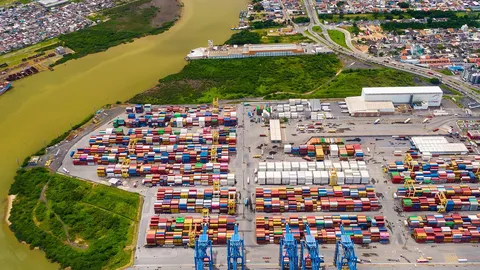
- Container yard: Undergoing a 120,000 m² expansion toward the 2 million TEU annual capacity target by end of 2026, featuring electric RTGs, a digital gate appointment system, and an integrated empty container depot that reduces repositioning costs.
- Reefer connectivity: The terminal offers reefer plugs for temperature-controlled cargo, supporting the growing flow of food, ingredients, and pharmaceutical imports from China requiring cold chain integrity.
- Shipping lines served: Maersk, MSC, CMA CGM, Hapag-Lloyd, ONE, ZIM, HMM, and SM Line operate regular calls connecting Itapoá to Europe, North America, and Asia.
Shipping Routes to This Port
Itapoá is served by regular calls from all major carrier alliances, with direct services from China operated by Cosco and CMA CGM deploying Neo-Panamax vessels of 13,260 to 14,100 TEUs.
From Shenzhen (Yantian / Shekou)
The Pearl River Delta export cluster — electronics, solar panels, and consumer goods — finds a direct, efficient gateway in Itapoá. Cosco and CMA CGM services connect Shekou and Yantian to the terminal with competitive transit times and lower destination port congestion risk.
From Shanghai
Shanghai is the primary loading port for the Asia–East Coast South America trade lane. Direct CMA CGM and Cosco services call Shanghai with transit times of approximately 33 to 37 days to Itapoá. Competition among multiple carriers keeps rates competitive year-round.
From Ningbo
Ningbo-Zhoushan shares the same rotations as Shanghai on most services, providing stable weekly connections. Transit time is typically just 1–2 days longer than from Shanghai.
From Qingdao and Other Northern China Ports
Qingdao, Tianjin, and Dalian connect predominantly via transshipment through Shanghai, Ningbo, or Asian hubs. Transshipment adds 4–8 days to total transit but provides cost-effective access to southern Brazil for northern China’s industrial centers.
Transit Time from China to Itapoá Port
Ocean transit from China to Itapoá varies by origin port and service structure. The times below assume direct services or minimal transshipment.
| Origin Port | Transit Time to Itapoá | Service Structure |
|---|---|---|
| Shanghai | 33–37 days | Direct (CMA CGM / Cosco) |
| Ningbo | 34–39 days | Direct or via Shanghai |
| Shenzhen (Yantian/Shekou) | 33–38 days | Direct (Cosco / CMA CGM) |
| Qingdao | 38–46 days | Via Shanghai or Singapore |
| Xiamen | 39–47 days | Coastal feeder → mainline |
For LCL (less-than-container-load) shipments, add 5–7 days for origin consolidation and destination deconsolidation. Peak import season (October–February, aligned with Chinese New Year and the Brazilian summer) tends to produce higher vessel utilization and longer release times.
Shipping Cost from China to Itapoá Port
Ocean freight rates to Itapoá are shaped by Neo-Panamax vessel economics, private terminal management, and Santa Catarina’s tax environment.
Factors Affecting Freight Rates
- Vessel economies of scale: The 16-meter draft accommodates large vessels (~16,000 TEUs), lowering per-unit ocean freight costs versus ports dependent on feeder connections.
- Single-operator efficiency: Private management without direct intra-complex competition ensures stable productivity but removes the inter-terminal rate pressure found at Itajaí-Navegantes.
- Seasonality: The pre-Chinese New Year import peak (January–February) and Brazilian export harvest season (March–August) drive higher vessel utilization, with rates up to 30% above the low season (September–November).
- ICMS tax advantage: Santa Catarina’s TTD program reduces state-level tax burden, generating savings that frequently outweigh ocean freight differences — especially relevant for higher-value electronics and machinery.
- Inland trucking trade-off: For cargo bound for São Paulo or Minas Gerais, the additional 500–800 km of road transport must be accounted for. For Santa Catarina and Paraná, inland freight is competitive with or lower than from Santos.
How to Reduce Your Shipping Costs
| Strategy | Potential Impact |
|---|---|
| Ship FCL instead of LCL | 30–50% lower unit freight cost |
| Book outside the pre-CNY peak | 20–30% rate reduction |
| Leverage Santa Catarina ICMS incentives (TTD) | Significant tax savings on high-value goods |
| Pre-file customs documentation | Avoid demurrage charges |
| Use terminal’s integrated empty depot | US$100–300 savings in detention costs |
| Consolidate with a China-based freight forwarder | Access to volume-negotiated rates |
Working with a China-based freight forwarder like DANTFUL ensures access to competitive contracts, efficient consolidation, and expert guidance on Brazilian customs clearance and tax-efficient routing.
Warehousing Services
The logistics ecosystem around Itapoá is expanding rapidly, driven by the terminal’s 25% annual growth. While warehousing infrastructure is not yet as mature as the São Paulo–Santos corridor, the region is progressing fast.
Bonded Warehousing
Brazil’s Federal Revenue Customs Bonded Warehouse regime allows storage of goods without immediate payment of federal and state import duties for up to 1 year (extendable by 2 more). In Santa Catarina, bonded warehousing is particularly advantageous for importers operating under the TTD program: goods can be nationalized in batches, optimizing cash flow and tax liability.
International Warehousing & 3PL Services
The Itapoá–Joinville–Curitiba corridor is attracting specialized 3PL operators in cross-docking, container devanning, and e-commerce fulfillment. Proximity to Joinville (80 km) and Curitiba (120 km) provides access to distribution centers with competitive trucking rates. For cargo requiring safety stock near the port, the terminal’s expanding yard and partner warehouses in the region offer short- and medium-term solutions.
Warehousing & Distribution Strategy
Positioning inventory along the Itapoá–Joinville axis delivers concrete advantages:
- Lower total port cost: The combination of competitive ocean freight, reduced demurrage, and ICMS incentives frees up working capital for inventory investment.
- Speed to market in the South: Same-day delivery to Joinville, next-day to Curitiba, and 2-day to northern Rio Grande do Sul.
- Built-in expansion headroom: The terminal’s planned expansion to 2 million TEUs by end of 2026 signals long-term growth capacity for importers looking to consolidate their supply chain in the region.
DANTFUL partners with select 3PL operators along the Itapoá–Joinville–Curitiba corridor, offering integrated customs clearance, bonded warehousing, and regional distribution solutions.
FAQs
Q: How does Itapoá compare to Santos and Itajaí for China imports?
A: Itapoá vs. Santos: Itapoá offers less congestion, faster private operations, ICMS tax incentives via the TTD program, and lower demurrage costs. The trade-off is an additional 500–800 km of trucking to São Paulo city. Itapoá vs. Itajaí: Itajaí benefits from two-terminal competition (JBS + Portonave), larger reefer infrastructure (Iceport), and a more mature 3PL ecosystem. Itapoá counters with deeper draft, larger vessels, leaner single-operator efficiency, and integrated Maersk management.
Q: How long does customs clearance take at Port of Itapoá?
A: With documentation pre-registered in Brazil’s Siscomex system, clearance typically takes 1–3 business days. The terminal’s digital appointment system reduces gate queues, and private management streamlines operational procedures. AEO (Authorized Economic Operator) certified importers benefit from lower inspection rates and priority processing.
Q: Does Port of Itapoá have reefer and cold chain infrastructure?
A: Yes. The terminal provides reefer plugs and handles the growing flow of temperature-controlled imports from China. For larger-scale cold chain operations, neighboring Port of Itajaí — with the automated Iceport warehouse (16,000 pallet positions) and over 3,800 reefer plugs — serves as a complementary alternative just 80 km away.
Q: Is Itapoá viable if my distribution center is in São Paulo?
A: It depends on your cargo profile. For high-value goods — electronics, solar components, machinery — Santa Catarina’s TTD tax incentives can generate savings that outweigh the additional trucking cost. For low-value, high-volume cargo, Santos is usually more competitive. A specialized freight forwarder can model total door-to-door cost for both scenarios, comparing ocean freight, duties, port fees, and inland trucking to your final destination.
Q: What are the operational risks of routing through Itapoá?
A: The main risk is weather-related: cold fronts and strong winds can temporarily close the Babitonga Bay access channel, delaying berthing. These events are seasonal and typically short-lived, but importers should factor in a 2–4 day buffer in inventory planning. The 3PL ecosystem, while growing, is still less diverse than Santos — it is recommended to validate local logistics operators’ capacity and reach before rerouting.