Port of Paranaguá
Port Overview
Overview of Paranaguá
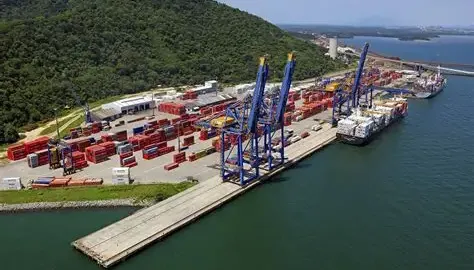
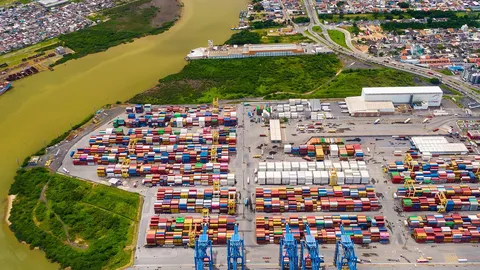
The Port of Paranaguá (Porto de Paranaguá) is Brazil’s premier agricultural export port and one of South America’s largest container hubs. Located in Paraná state, it handles over 50 million tons of cargo and more than 1.2 million TEUs annually, making it a critical Brazil-China trade link for importers managing shipping from China to Brazil.
Why the Port of Paranaguá Matters for China Importers
- Brazil’s Agricultural Powerhouse: Paranaguá is the primary export gateway for Brazil’s grain belt, handling the majority of soybeans, corn, and frozen meat exports to China. For importers, this translates to abundant backhaul container capacity, helping balance freight rates.
- TCP Container Terminal Excellence: The TCP terminal (Terminal de Contêineres de Paranaguá) is one of South America’s most advanced container facilities, featuring 1,099 meters of berth, super post-Panamax cranes, and an annual capacity exceeding 1.5 million TEUs.
- Strategic Southern Brazil Location: Paranaguá is the optimal import gateway for the prosperous southern and central-western regions of Brazil — including Paraná, Santa Catarina, Mato Grosso do Sul, and Paraguay via the Paraná-Paraguay waterway.
- Strong China Trade Volume: As a key node in the Brazil-China agricultural supply chain, Paranaguá benefits from high vessel call frequency, competitive freight rates, and well-established carrier networks.
Key Facts at a Glance
| Metric | Value |
|---|---|
| Annual Container Volume | ~1.2 million TEUs |
| Total Cargo Tonnage | ~50 million tons annually |
| Channel Depth | 12.5–14 meters |
| Container Terminal | TCP (Terminal de Contêineres de Paranaguá) |
| Road Connectivity | BR-277 → Curitiba (90 km) & interior |
| Key China Trade Lanes | Shanghai, Ningbo, Shenzhen, Qingdao |
Port Location
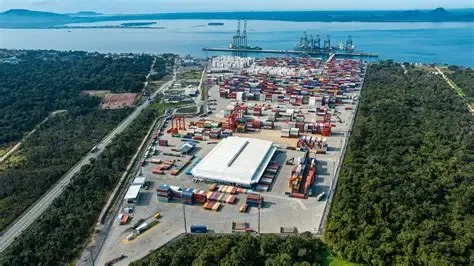
The Port of Paranaguá is situated on the Paranaguá Bay in the state of Paraná, approximately 90 km east of Curitiba—the state capital and one of Brazil’s most industrialized cities. The port occupies a naturally sheltered estuarine harbor with direct access to the South Atlantic.
Service Region
Paranaguá serves as the primary import-export gateway for Brazil’s southern and central-western economic zones:
- Paraná State: One of Brazil’s wealthiest and most industrialized states, home to a strong automotive sector (Volkswagen, Renault), agribusiness processing, and a growing consumer goods market centered on Curitiba’s metropolitan area of 3.5 million people.
- Santa Catarina: A thriving industrial and consumer market to the south, with major clusters in textiles, ceramics, metalworking, and technology. Paranaguá provides a competitive alternative to Itapoá and Navegantes for northern Santa Catarina destinations.
- Mato Grosso do Sul: A major agricultural and industrial state in Brazil’s Center-West region. Goods can reach Campo Grande via BR-277/BR-376/BR-163 corridor within 2–3 days.
- Paraguay (via Paraná-Paraguay Waterway): Paranaguá is a traditional transit port for Paraguayan imports, offering bonded transit services and established logistics corridors.
The port is connected by BR-277, a modern dual-carriageway highway linking directly to Curitiba and the wider Brazilian interstate network.
Port Terminals
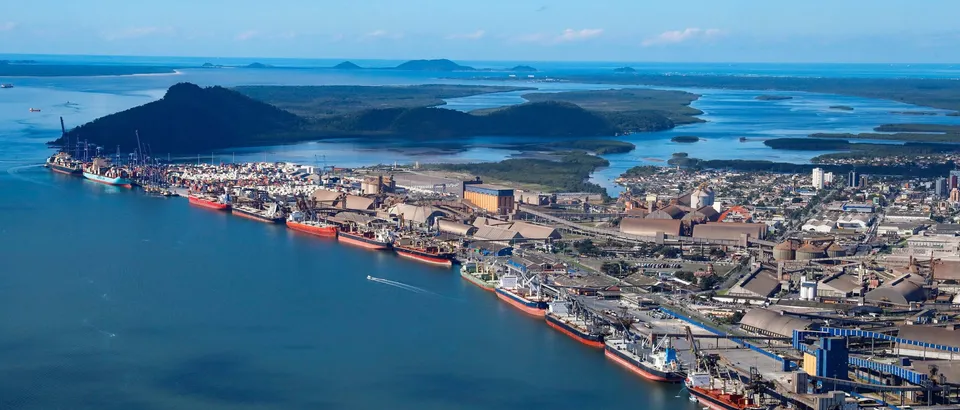
The Port of Paranaguá is a multi-terminal port complex with specialized facilities for containers, bulk, and liquid cargo:
Container Terminal
- TCP (Terminal de Contêineres de Paranaguá): One of the largest container terminals in South America, TCP operates 1,099 meters of berth with a 14-meter draft, equipped with 8 super post-Panamax gantry cranes. Annual capacity exceeds 1.5 million TEUs, with current throughput around 1.2 million. TCP handles containerized imports from China — including electronics, machinery, auto parts, textiles, and consumer products — while serving as a major export load center for refrigerated containers (frozen poultry, pork, and beef), wood products, and agricultural commodities. The terminal features on-dock rail connections, 3,200 reefer plugs, and an advanced gate automation system. TCP is jointly owned by China Merchants Port Holdings and other investors, ensuring strong Asia trade lane connectivity.
Bulk & Specialized Terminals
- Corridor of Exports (Corredor de Exportação): A dedicated grain handling complex operated by multiple agribusiness players including Cargill, Bunge, Cotriguaçu, and Coamo, moving soybeans, corn, wheat, and soybean meal at industrial scale.
- Cattalini Terminais: The largest liquid bulk terminal in southern Brazil, handling vegetable oils, fuels, chemicals, and methanol with a storage capacity of over 400,000 m³.
- Fospar: A specialized terminal for phosphate fertilizers and raw materials, critical for Brazil’s agricultural input supply chain.
- Rocha Terminais: Operating liquid and solid bulk facilities for fertilizers and agricultural products.
Shipping Routes to This Port
Paranaguá is served by regular weekly sailings from all major Chinese container ports, with high frequency due to the heavy China-Brazil agricultural trade.
From Shenzhen (Yantian / Shekou)
Shenzhen is one of Paranaguá’s best-connected Chinese origins. Multiple carriers including COSCO, MSC, Maersk, CMA CGM, and Hapag-Lloyd offer direct calls or competitive transshipment services. The heavy southbound agricultural flow from Paranaguá to China ensures consistent vessel deployment and competitive pricing on the return leg.
From Shanghai
Shanghai provides the most frequent service to Paranaguá across the carrier landscape. As the central hub for China’s Yangtze River Delta manufacturing belt, Shanghai consolidates cargo from Jiangsu, Zhejiang, and Anhui for direct shipment to southern Brazil.
From Ningbo
Ningbo-Zhoushan is typically paired with Shanghai on the same vessel rotation, providing steady weekly connections. Ningbo’s strength in machinery, industrial equipment, electrical products, and hardware matches well with Paraná’s industrial import demand.
From Qingdao and Other Ports
Qingdao serves northern China’s manufacturing regions (Shandong, Hebei) and connects to Paranaguá via direct calls or feeder to Shanghai/Ningbo. Dalian, Xiamen, Tianjin, and Fuzhou connect via feeder service, generally adding 3–5 days to total transit.
Transit Time from China to Paranaguá
Paranaguá is located on Brazil’s southern coast, making it roughly 2–3 days farther from China than Santos. Transit times are competitive and consistent:
| Origin Port | Transit Time to Paranaguá | Sailing Frequency |
|---|---|---|
| Shanghai | 33–39 days | 3–4 per week |
| Ningbo | 34–40 days | 3–4 per week |
| Shenzhen (Yantian) | 31–37 days | 3–4 per week |
| Qingdao | 36–42 days | 1–2 per week |
| Xiamen | 38–44 days | 1 per week |
For LCL (Less-than-Container-Load) shipments, add 5–7 days for origin consolidation and destination deconsolidation. Paranaguá’s TCP terminal operates with high efficiency; berth waiting times are typically under 24 hours, though peak grain season (March–July) can create temporary congestion around the port complex.
Shipping Cost from China to Paranaguá
Ocean freight rates from China to Paranaguá are influenced by the heavy agricultural backhaul trade, which helps maintain competitive pricing:
Factors Affecting Freight Rates
- Backhaul balance: Paranaguá’s enormous agricultural export volume to China means vessels are almost always fully loaded southbound. Return (northbound) capacity to Brazil is abundant during peak export months, keeping import rates competitive.
- Carrier competition: All major global carriers call Paranaguá, giving shippers rate competition. Long-term contract rates (FAK/NAC) with volume commitment typically yield 15–30% savings versus spot bookings.
- Port charges: Budget approximately $280–$480 per container for TCP terminal handling, wharfage, and documentation fees. Port charges are in line with other major Brazilian ports.
- Seasonality: Spot rates typically rise during Q3–Q4 as retailers prepare for Black Friday and Christmas, and again during the Chinese New Year slowdown in January–February.
How to Lower Your Shipping Costs
| Strategy | Potential Impact |
|---|---|
| Ship FCL instead of LCL | 30–50% lower per-unit freight cost |
| Book during off-peak (February–July) | 20–40% rate reduction |
| Pre-clear Brazilian customs documentation | Avoid demurrage & storage charges |
| Leverage Paranaguá’s backhaul advantage | More competitive rates vs. lower-volume ports |
| Consolidate with a China-based forwarder | Access to volume-negotiated rates |
| Use bonded transit (Trânsito Aduaneiro) | Defer ICMS tax until final destination state |
Partnering with a China-based freight forwarder like DANTFUL gives importers access to competitive carrier contracts and expert navigation of Paranaguá’s terminal operations and Brazilian customs procedures.
Warehousing Services
The Paranaguá-Curitiba corridor offers one of southern Brazil’s most robust warehousing and logistics ecosystems:
Bonded Warehousing (Entreposto Aduaneiro)
Brazil’s bonded warehouse regime under Receita Federal oversight allows importers to store goods at Paranaguá or Curitiba without immediate payment of import duties, IPI, and ICMS. Duties are deferred until goods exit the facility for domestic consumption — up to 1 year, extendable to 3 years. Bonded facilities support labeling, repackaging, kitting, and quality inspection before final customs clearance.
Distribution & Logistics Hubs
Key logistics zones in the Paranaguá-Curitiba corridor include:
- Paranaguá Vicinity: Multiple logistics parks within 10 km of the port offer immediate port-proximate warehousing, ideal for cross-docking, container devanning, and import deconsolidation.
- Curitiba Metropolitan Area (CIC, São José dos Pinhais, Araucária): Located 90 km from the port via BR-277, the Curitiba region is southern Brazil’s premier logistics hub, with modern distribution centers serving Paraná, Santa Catarina, and Mato Grosso do Sul.
- Ponta Grossa: A growing logistics node 170 km inland, positioned at the intersection of major road corridors for distribution into western Paraná and Mato Grosso do Sul.
Warehousing Strategy for Southern Brazil
Positioning inventory in the Paranaguá-Curitiba corridor delivers measurable advantages:
- Lower inland freight: The port’s proximity to Curitiba (90 km) means goods clear the port zone quickly and reach one of Brazil’s wealthiest consumer markets within hours.
- Nationwide reach: From Curitiba, goods can reach São Paulo within 6 hours, Santa Catarina within 3 hours, and Mato Grosso do Sul within 2 days.
- Port diversification: Using Paranaguá alongside Santos provides supply chain redundancy and the ability to route cargo based on destination and congestion conditions.
Frequently Asked Questions
Q: How does Paranaguá compare to Santos for China imports?
A: Santos offers slightly faster transit from China (2–3 days less) and higher overall service frequency, but Paranaguá compensates with lower port congestion, more efficient terminal operations at TCP, and better backhaul balance that supports competitive freight rates. For importers with cargo destined to Paraná, Santa Catarina, western São Paulo state, Mato Grosso do Sul, or Paraguay, Paranaguá is often the more efficient choice due to shorter inland transport distances.
Q: How long does customs clearance take at the Port of Paranaguá?
A: With properly pre-filed documentation through Receita Federal’s Siscomex system, customs clearance at Paranaguá typically takes 2–4 business days. Paranaguá handles substantial cargo volume, but TCP’s modern systems and dedicated customs inspection areas keep processing times competitive. Importers enrolled in the OEA (Operador Econômico Autorizado) program receive expedited clearance with fewer physical inspections.
Q: What is the cheapest way to ship from China to Paranaguá?
A: FCL ocean freight during the off-peak season (February–July) through a China-based forwarder offers the lowest per-unit cost. Paranaguá’s strong agricultural backhaul to China keeps northbound vessel capacity plentiful, so importers often find competitive rates. For cargo under 15 CBM, LCL consolidation may be more economical despite higher per-unit rates.
Q: What cargo types is Paranaguá best suited for?
A: Paranaguá excels in containerized imports — electronics, machinery, auto parts, textiles, and consumer goods — as well as reefer container exports and imports (frozen meat, poultry, pork from Paraná’s strong agribusiness sector). The port is also a global leader in agricultural bulk exports (soybeans, corn). For liquid and chemical bulk, Cattalini and Rocha terminals provide specialized handling.
Q: Can Paranaguá serve as my only Brazil import port?
A: Paranaguá is well-suited as a primary import gateway for cargo destined to southern and central-western Brazil, as well as Paraguay. For importers focused on the São Paulo metropolitan market, Santos remains the natural first choice. Many nationwide distributors operate a dual-port strategy: Paranaguá for the South and Center-West, Santos for São Paulo and Rio de Janeiro, optimizing both transit time and inland logistics costs.