

Every year, thousands of vehicles — from daily-driver sedans to collector-grade classic cars — make the 7,000-mile Pacific crossing from Guangzhou Nansha Port to American driveways. If you’re researching the cost to ship a car from Guangzhou China to USA, you’ve probably already discovered that pricing is anything but straightforward. One forwarder quotes $1,200. Another quotes $5,500. And neither number tells the full story — because the base freight is only half the equation. Section 301 tariffs, EPA and DOT compliance fees, port handling charges, and inland delivery can easily double what you thought you’d pay.
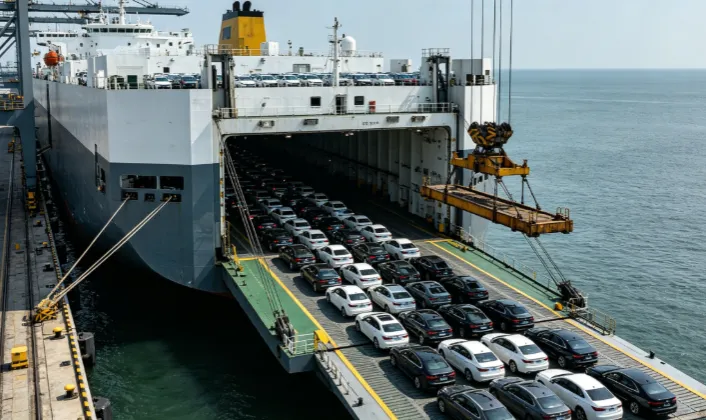
As a Senior Freight Forwarding Expert with over 15 years of hands-on experience at Dantful.US International Logistics — operating daily from our Shenzhen headquarters through Guangzhou Nansha Port — I’ve managed hundreds of vehicle shipments from Guangdong Province to destinations across the United States. This guide distills everything I’ve learned into one transparent, no-surprises resource. By the time you finish reading, you’ll know exactly which shipping method fits your vehicle and budget, how to calculate your true landed cost down to the dollar, how to leverage the 25-year import rule to save thousands, and what red flags to watch for when choosing a freight forwarder.
At-a-Glance (Quick Answer):
| Shipping Method | Base Freight (Per Vehicle) | Transit Time | Best For |
|---|---|---|---|
| RoRo (Roll-on/Roll-off) | $1,200 – $2,500 | 16–28 days | Standard, operable vehicles |
| 20ft Container (FCL) | $2,500 – $4,500 | 20–30 days | Classic, luxury, or high-value cars |
| 40ft Container (FCL) | $3,800 – $7,500 | 20–30 days | 2–4 vehicles shipped together |
| LCL (Shared Container) | $1,800 – $2,700 | 25–35 days | Single car needing enclosed protection |
| Air Freight | $8,000 – $20,000+ | 3–7 days | Ultra-urgent or ultra-high-value vehicles |
Total landed cost (all-in): $3,000 – $10,000+ per vehicle, depending on shipping method, vehicle value, destination port, and compliance requirements.
Guangzhou Nansha Port: The Gateway for Car Shipping to the USA
Before we get into pricing, you need to understand why Guangzhou Nansha Port matters — because where your vehicle departs from directly affects what you pay.
China’s Third-Largest Ro-Ro Hub
Guangzhou Nansha is no ordinary port. In 2024, it handled 890,000 vehicles through its Ro-Ro (Roll-on/Roll-off) terminals — making it China’s third-largest vehicle export hub — alongside 20.49 million TEUs of container traffic that ranks it among the world’s top 10 container ports. Foreign trade volume through Nansha grew 13% year-over-year in 2024, driven largely by surging Chinese automotive exports.
For anyone shipping a car from Guangdong Province, Nansha is the natural departure point. It sits at the geographic center of the Pearl River Delta, putting it within a short trucking distance of major manufacturing cities: Guangzhou proper, Foshan, Zhongshan, Dongguan, and Jiangmen.
The Inland Cost Advantage: Nansha vs. Shenzhen Ports
Here’s a detail that most English-language guides miss: choosing Nansha over Shenzhen’s Yantian or Shekou ports can save you $150–$200 USD per container in inland trucking costs alone. That’s because Nansha is simply closer to the factories.
| Origin City | Trucking to Nansha (CNY) | Trucking to Yantian (CNY) | Savings with Nansha |
|---|---|---|---|
| Zhongshan | ~1,400 | ~2,600 | ~1,200 CNY ($165 USD) |
| Foshan | ~1,500 | ~2,500 | ~1,000 CNY ($140 USD) |
| Guangzhou City | ~800 | ~1,800 | ~1,000 CNY ($140 USD) |
| Dongguan | ~1,200 | ~1,600 | ~400 CNY ($55 USD) |
For a single vehicle shipment, that’s a modest saving. But for dealers and commercial importers shipping multiple units per month, the advantage compounds quickly.
Key Routes from Guangzhou Nansha to the USA
These corridors form part of the critical shipping routes from China to USA network, with three primary corridors connecting Nansha to American shores:
- Nansha → Los Angeles / Long Beach: The busiest lane. 16–25 days transit. Handles the majority of vehicle imports to the US West Coast.
- Nansha → New York / Newark: Primary East Coast entry point. 30–40 days transit via the Panama Canal.
- Nansha → Savannah / Houston: Alternative East Coast and Gulf Coast gateways. 28–38 days transit.
Your destination port choice affects both transit time and cost — West Coast delivery is consistently 20–30% cheaper than East Coast or Gulf Coast.
Shipping Methods Compared: RoRo, Container & Air Freight
Choosing the right shipping method is the single biggest decision affecting your cost to ship a car from China to USA. Let’s break down each option in detail.
RoRo (Roll-on/Roll-off) — The Most Cost-Effective Method
RoRo shipping is exactly what it sounds like: your vehicle is driven onto a specialized vessel via built-in ramps at Nansha, secured on a designated vehicle deck, and driven off at the destination port. For a detailed side-by-side breakdown, see our dedicated guide on shipping car from China to USA cost RORO or container. No cranes. No container loading. No disassembly.
Cost: $1,200–$2,500 per standard vehicle from Nansha to Los Angeles. Larger vehicles (SUVs, pickup trucks) carry a 25–40% volume surcharge.
Transit: 16–25 days to the US West Coast; 30–40 days to the East Coast.
Who operates the Guangzhou→USA RoRo lane?
| Carrier | Transit (Nansha→LA) | Per-Vehicle Freight | Space Reliability |
|---|---|---|---|
| COSCO Ro-Ro | 18–22 days | $850–$950 | 92% |
| Kawasaki Kisen (“K” Line) | 20–25 days | $800–$900 | 85% |
| Wallenius Wilhelmsen | 16–20 days | $950–$1,100 | 95% |
| MOL (Mitsui O.S.K. Lines) | 18–24 days | $850–$1,000 | 88% |
Best for: Standard, operable vehicles — sedans, SUVs, minivans, and pickups that can drive on and off the vessel under their own power.
Limitations to know:
- No personal items inside the vehicle — this is a strict RoRo rule enforced by port security and customs.
- Vehicle must be drivable — non-running cars require container shipping instead.
- Limited to ports with Ro-Ro terminals (all major US ports listed above qualify).
Container Shipping (20ft & 40ft FCL) — Maximum Protection
If RoRo is the economy option, container shipping is the premium one. Your vehicle is secured inside a steel shipping container using wooden blocks, heavy-duty straps, and wheel chocks — completely protected from the elements and prying eyes.
Cost:
- 20ft container: $2,500–$4,500 (fits 1 standard vehicle comfortably; 2 compact cars if positioned carefully)
- 40ft container: $3,800–$7,500 (fits 2–4 vehicles depending on size; or 1 vehicle plus personal effects/furniture)
Transit: 20–30 days to the US West Coast.
Best for:
- Classic, luxury, or high-value vehicles — a 1960s Porsche or a brand-new Range Rover deserves enclosed protection.
- Non-running vehicles — if the car doesn’t start, RoRo isn’t an option. The vehicle can be winched into a container.
- When you need to ship personal belongings alongside the car — container shipping lets you load boxes, furniture, or spare parts in the same container (just include an inventory list for US Customs).
- Privacy-sensitive shipments — container contents aren’t visible during transit or at port.
The key trade-off is cost versus protection: you’ll pay roughly double the RoRo rate for the peace of mind of a sealed, weatherproof container.
Shared Container (LCL) — The Middle Ground
LCL (Less than Container Load) splits a container with other cargo. Your vehicle is loaded alongside other shippers’ goods — pallets, machinery, or sometimes another vehicle.
Cost: $1,800–$2,700 per vehicle.
Transit: 25–35 days (slower due to consolidation and deconsolidation at both ends).
LCL is a sensible compromise when you want container protection but can’t justify the cost of a dedicated 20ft box. The downside is longer transit and less scheduling control — your shipment moves on the consolidator’s timeline, not yours.
Air Freight — When Time Trumps Everything
Cost: $8,000–$20,000+ per vehicle.
Transit: 3–7 days door-to-door (Guangzhou Baiyun International Airport → major US airports).
Air freight for vehicles is rare — reserved for show cars on tight schedules, emergency replacement vehicles, or ultra-high-value automobiles where even a scratch is unacceptable. For 99% of car shipments, ocean freight is the rational choice.
Quick Decision Framework
| Your Situation | Recommended Method | Estimated Cost |
|---|---|---|
| Standard daily-driver, budget-focused | RoRo | $1,200–$2,500 |
| Classic, luxury, or collector car | 20ft Container | $2,500–$4,500 |
| 2–4 vehicles shipping together | 40ft Container | $3,800–$7,500 |
| Non-running / inoperable vehicle | 20ft Container | $2,800–$5,000 |
| Single car + personal belongings | 20ft Container | $2,500–$4,500 |
| Urgent delivery (days, not weeks) | Air Freight | $8,000–$20,000+ |
Complete Cost Breakdown: Every Fee from Guangzhou to Your US Driveway
Here’s where most first-time shippers get blindsided. The ocean freight quote you receive is just one piece of an 8-component puzzle. Let me walk you through every cost you’ll actually pay to get a car from a Guangzhou factory or dealership to your US address. (For a broader overview of freight pricing across all cargo types, see our complete shipping cost from China to USA guide.)
The 8-Component Cost Framework
| # | Cost Component | Typical Range (USD) | What It Actually Covers |
|---|---|---|---|
| 1 | China Origin Charges | $200 – $500 | Factory/dealer pickup, inland trucking to Nansha Port, export customs declaration, port terminal handling, vehicle inspection |
| 2 | Ocean Freight | $850 – $7,500 | The actual sea transport — method-dependent (RoRo cheapest, 40ft container most expensive for single vehicles) |
| 3 | Marine Cargo Insurance | 0.2% – 2.5% of vehicle value | All Risk coverage: damage during loading/unloading, water ingress, theft, collision, total loss. At $100–$500 for most vehicles, it’s foolish to skip. |
| 4 | US Port Handling (DHC) | $140 – $350 | Destination terminal handling — unloading, storage (usually 3–7 free days), and transfer to customs-bonded area |
| 5 | US Customs Clearance | $200 – $500 | Licensed customs broker fee ($150–$350), ISF filing ($35–$50), customs bond, document processing |
| 6 | Import Duties & Taxes | 2.5% – 100%+ of CIF value | Base duty + Section 301 China tariff + MPF (0.3464%) + HMF (0.125%) — detailed breakdown in Section 4 |
| 7 | EPA/DOT Compliance | $0 – $3,000+ | Required if vehicle is under 25 years old and not originally manufactured to US standards. $0 if vehicle qualifies for the 25-year exemption (see Section 4.3) |
| 8 | US Inland Delivery | $300 – $1,500+ | Port-to-driveway truck transport. LA → San Francisco (~$400); LA → Dallas (~$800); NY/NJ → Chicago (~$700); port → local (~$300) |
Seasonal Rate Calendar: When to Ship (and When to Avoid)
Ocean freight isn’t a fixed price — it fluctuates significantly throughout the year. Timing your shipment strategically can save 15–30% on the ocean freight component.
| Period | Rate Level | What’s Happening |
|---|---|---|
| March – May | ✅ Lowest | Post-CNY normalization, factory output ramping up, carrier space plentiful. Best time to ship. |
| June – July | ⚖️ Moderate | Steady demand, stable rates. Good window if you missed spring. |
| August – October | 🔴 Peak (+15–30%) | US holiday inventory rush. Space tight on all carriers. Book 3–4 weeks ahead. |
| November – January | ⚠️ Volatile | Pre-CNY surge then crash. Rates spike in early January as factories rush shipments before closing. |
| Late January – February | 🔴 Chaos (+30–50%) | Chinese New Year shutdown. Factories closed. Port congestion. Worst time to ship — avoid if possible. |
💡 Pro Tip: Kawasaki Kisen (“K” Line) runs promotional discounts of 10–15% in March and September on their Guangzhou→USA RoRo services. If your timeline is flexible, targeting these windows can save $150–$300 per vehicle.
Door-to-Door (DDP) vs. Port-to-Port: Know What You’re Buying
One of the biggest misunderstandings in car shipping is the distinction between port-to-port and door-to-door pricing.
Port-to-Port (CIF/FOB): The forwarder handles China export + ocean freight to the destination port. You — the importer — handle US customs clearance, duty payment, and inland delivery yourself. (Not sure which trade term works best for your situation? See our comparison of CIF vs FOB: which is better for US importers.) The initial quote looks cheaper, but your real total cost typically ends up 40–60% higher than the ocean freight alone once you add brokerage, duties, port fees, and trucking.
Door-to-Door (DDP – Delivered Duty Paid): The forwarder handles everything — factory pickup → China export → ocean freight → US import clearance → duty/tax prepayment → final delivery to your address. DDP commands a premium of roughly $230–$2,000 over port-to-port (depending on vehicle value and destination distance), but you get complete price certainty — no surprise bills, no scrambling to find a customs broker at the destination port, and no last-minute storage fees because you weren’t sure which form to file.
When DDP is worth it: First-time car importers, anyone shipping a vehicle requiring complex EPA/DOT compliance, buyers who want one invoice and one point of contact, and commercial importers who need predictable landed costs for margin calculations.
When port-to-port might work: Experienced importers with an existing US customs broker relationship, budget-focused shippers comfortable managing the US-side logistics themselves, and vehicles with straightforward compliance profiles (25+ years old, no modifications needed).
US Import Duties, Tariffs & the 25-Year Rule Explained
If there’s one section of this guide that can save you thousands of dollars, it’s this one. Understanding how import duties and tariffs apply to Chinese-made vehicles — and when they don’t apply — is the difference between a smooth import and a financial shock at the port.
Import Duty & Tariff Breakdown for Chinese Vehicles
| Tax/Fee | Rate | Applies To |
|---|---|---|
| Base Import Duty (HTSUS 8703) | 2.5% of CIF value | All passenger vehicles |
| Section 301 China Tariff | 25% of CIF value | Vehicles manufactured in China (on top of base duty) |
| “Chicken Tax” (HTSUS 8704) | 25% base duty | Pickup trucks, cargo vans, commercial vehicles |
| Additional EV Tariff (2024–2025) | Up to 100% | Chinese-brand electric vehicles (BYD, Nio, XPeng, Li Auto, etc.) |
| MPF (Merchandise Processing Fee) | 0.3464% of value (min $31.67, max $614.35) | All formal entries |
| HMF (Harbor Maintenance Fee) | 0.125% of CIF value | Ocean freight shipments only |
The key takeaway: for a standard Chinese-made passenger car, the effective combined duty rate is approximately 27.5% of the CIF (Cost + Insurance + Freight) value. That means a $25,000 FOB vehicle with $2,500 in freight and insurance (CIF = $27,500) carries roughly $7,500 in duties and fees before it clears customs. For a deeper look at the shifting trade landscape, read our analysis of how U.S.-China trade tariffs are evolving in 2026.
Worked Example: Landed Cost Comparison
| Cost Component | Standard Gas Sedan | Chinese EV (e.g., BYD) |
|---|---|---|
| FOB Vehicle Value | $25,000 | $30,000 |
| Ocean Freight + Insurance (CIF) | $27,500 | $32,500 |
| Base Duty (2.5%) | $688 | $813 |
| Section 301 Tariff (25%) | $6,875 | $8,125 |
| Additional EV Tariff (100%) | N/A | $30,000 |
| MPF + HMF | ~$130 | ~$148 |
| Customs Brokerage | $300 | $300 |
| Total Duties & Fees | $7,993 | $39,386 |
| Total Landed Cost | ~$35,500 | ~$71,900 |
⚠️ The EV example illustrates why most individual buyers currently avoid importing new Chinese electric vehicles — the 100% tariff alone exceeds the vehicle’s purchase price, making the landed cost more than double the FOB value. For the vast majority of individual imports, used gasoline vehicles are the economically viable choice.
The 25-Year Rule: Your Shortcut to Compliance-Free Import
Here’s the single most valuable piece of knowledge in this entire guide — and one that zero English-language competitors explain in depth.
Under NHTSA regulations, any vehicle 25 years or older (calculated from the exact month and year of manufacture) is exempt from EPA emissions standards and DOT Federal Motor Vehicle Safety Standards (FMVSS). This is commonly known as the “25-year rule.”
What this means for you:
- You do not need to modify the vehicle to meet US safety or emissions standards.
- You save $1,500–$3,000+ in Registered Importer (RI) compliance modification costs.
- You avoid the risk of the vehicle being denied entry or requiring re-export.
- The import process is dramatically simpler — your customs broker files EPA Form 3520-1 with exemption code “E” and DOT HS-7 Form with Box 1 checked, and that’s it.
How to verify eligibility: Look at the manufacturer’s compliance label on the driver’s side door jamb. It shows the exact month and year of manufacture. Count forward 25 years from that date — if today’s date is past that point, your vehicle qualifies.
Popular 25-year-rule vehicles imported from China → USA:
- 1990s Toyota Land Cruisers (built by joint ventures in China)
- Classic Beijing BJ212 Jeeps (China’s iconic military 4×4)
- Vintage Hongqi (Red Flag) sedans
- Early-production Chinese-market European and Japanese joint-venture models
- 1990s Nissan Patrols and Mitsubishi Pajeros from Chinese production lines
Important nuance: Even with the federal 25-year exemption, some states — notably California (CARB) — impose their own emissions requirements on imported vehicles regardless of age. If you’re registering the car in California, consult a CARB specialist before shipping.
EPA/DOT Compliance for Newer Vehicles (Under 25 Years)
If your vehicle is less than 25 years old and was not originally manufactured to US specifications, you’ll need to go through the compliance process:
- EPA Form 3520-1 is required for ALL vehicle imports, regardless of age (code “E” for 21+ year exemption; full compliance declaration for newer).
- DOT HS-7 Form must declare safety compliance — either the vehicle conforms (Box 2A) or will be modified by a DOT-Registered Importer (RI) to conform (Box 3).
- RI modification costs typically range from $1,500 to $3,000+, depending on what needs to be changed (lighting, glass, bumper reinforcement, emissions equipment, labeling, etc.).
| Vehicle Age | EPA Requirement | DOT Requirement | Estimated Compliance Cost |
|---|---|---|---|
| Under 21 years | Full compliance or RI modification | Full compliance or RI modification | $1,500 – $3,000+ |
| 21–24 years | EPA exempt (code “E”) | RI modification still required | $1,000 – $2,500 |
| 25+ years | EPA exempt (code “E”) | DOT exempt (Box 1) | $0 |
Step-by-Step: How to Ship a Car from Guangzhou to the USA
You’ve chosen your shipping method, understood the costs, and confirmed your vehicle’s compliance path. Now here’s exactly how to execute — a practical, 9-step walkthrough of the entire journey from Guangdong Province to your American driveway. If you’d like a broader overview of the complete import process, see our dedicated guide on how to ship a car from China to USA.
The 9-Step Shipping Process
Step 1: Classify Your Vehicle & Verify Eligibility
Identify the correct HS Code — 8703 for passenger cars, 8704 for trucks/commercial vehicles. Determine whether the 25-year exemption applies. If the vehicle is newer, confirm with a US Registered Importer whether compliance modifications are feasible and at what cost. Do not skip this step — a vehicle denied entry at the US port becomes an expensive problem.
Step 2: Choose Your Shipping Method
Use the decision table in Section 2.5. For 90% of standard vehicle shipments, RoRo is the right answer. For classics, non-runners, or shipments with personal effects, container shipping wins.
Step 3: Request & Compare Quotes
Contact 3+ freight forwarders with vehicle-shipping experience on the Guangzhou→USA lane. Provide: exact vehicle make/model/year, VIN, dimensions, weight, fuel type, running condition, pickup city in China, and final US delivery address. A quality quote breaks down every cost line by line using the 8-component framework from Section 3 — if you receive an “all-in $3,500” with no breakdown, treat it as a red flag.
Step 4: Book & File ISF
Once you’ve selected a forwarder, confirm vessel schedule and booking. Your forwarder (or their US customs broker partner) must file the ISF (Importer Security Filing) — also known as “10+2” — with US Customs and Border Protection at least 24 hours before the vessel departs Nansha. Missing the ISF deadline can result in a $5,000+ penalty.
Step 5: Prepare Your Vehicle & Documents
See Section 6 for the complete vehicle preparation and documentation checklist. Key items: thorough exterior/underbody cleaning (USDA quarantine), under 1/4 tank of fuel (RoRo fire safety), and a complete document package.
Step 6: China Export Clearance at Nansha
Your forwarder handles the Chinese export customs declaration (出口报关单) and vehicle inspection at Nansha Port. The vehicle is handed over to the port, undergoes final inspection, and is staged for loading onto the vessel. This step typically takes 1–2 working days.
Step 7: Ocean Transit
16–35 days depending on destination. Your forwarder should provide vessel tracking — most major carriers (COSCO, Wallenius Wilhelmsen, K-Line) offer online container/vessel tracking portals. You won’t receive real-time GPS updates like a FedEx package, but you’ll know when the vessel departs, its estimated arrival, and when it docks.
Step 8: US Customs Clearance & Duty Payment
Upon arrival at the US port, your customs broker files CBP Form 7501 (Entry Summary) along with the EPA and DOT forms. Duties must be paid before CBP releases the vehicle. For a complete walkthrough of the clearance process, see our 2026 US customs clearance guide for imports from China. CBP may flag the shipment for a random inspection — if clean, release typically takes 2–5 days. The vehicle is held in a bonded warehouse during this period.
Step 9: Final Delivery & Registration
Once CBP releases the vehicle, arrange inland transport from the port to your address. Upon receipt, register the vehicle with your state DMV — you’ll need the CBP entry documents, foreign title/deregistration certificate, and compliance forms. Pay applicable state sales tax and registration fees.
Total Timeline Overview
| Phase | West Coast (LA/LB) | East Coast (NY/Savannah) |
|---|---|---|
| Vehicle Prep + China Export | 2 – 4 days | 2 – 4 days |
| Ocean Transit | 16 – 25 days | 30 – 40 days |
| US Customs Clearance | 2 – 5 days | 2 – 5 days |
| Inland Delivery | 1 – 4 days | 1 – 4 days |
| Total Door-to-Door | ~22 – 35 days | ~35 – 50 days |
Vehicle & Document Preparation Checklist
What you do before your car reaches Nansha Port directly affects whether it sails smoothly or gets stuck in inspection.
Vehicle Preparation — 7 Essential Checks
- Cleaning — Do Not Skip This: US Customs and Border Protection (CBP) and the USDA inspect imported vehicles for foreign soil, plant material, and pests. A dirty underbody or wheel wells can trigger a quarantine hold, costing $35–$500 in cleaning fees — or outright rejection at the port. Get a professional exterior wash and underbody steam clean before handover.
- Fuel Level: Under 1/4 tank for RoRo shipments (international maritime fire safety regulation). Container shipping may allow slightly more, but 1/4 tank is the safest rule.
- EV/Hybrid Battery: State of Charge (SOC) must be maintained at 30–50% for shipping. You’ll also need the UN38.3 battery testing certificate and MSDS (Material Safety Data Sheet) documentation — your forwarder should help arrange these.
- Drivability: Vehicle must start and drive under its own power for RoRo loading. Non-running vehicles require container shipping with winch loading.
- Personal Items: RoRo — none allowed inside the vehicle. Period. Container shipping — allowed, but provide an inventory list for customs. Pro tip: don’t ship valuables; container contents can shift during ocean transit.
- Keys: Provide two sets — one stays with the vehicle for port workers and loading/unloading; the other is kept secure with shipping documents.
- Photographs: Take date-stamped photos of the vehicle from every angle (front, rear, both sides, roof, wheels, interior, odometer) immediately before handover. If damage occurs during transit, these photos are your evidence for an insurance claim.
Complete Documentation Checklist
| Document | Required By | Purpose |
|---|---|---|
| Commercial Invoice | Both | Declares vehicle value, seller/buyer information, transaction date |
| Packing List | Both | Vehicle specifications, dimensions, weight, VIN |
| Certificate of Origin | Both | Proves country of manufacture — critical for determining applicable tariff rates |
| Bill of Lading (B/L) | Both | Contract of carriage between shipper and carrier; proof of shipment |
| China Export Declaration | China Customs | Required for export clearance from Nansha |
| ISF (Importer Security Filing) | US CBP | Must be filed 24+ hours before vessel departure; $5,000+ penalty for late filing |
| CBP Form 7501 (Entry Summary) | US CBP | Formal import entry documentation with duty calculation |
| EPA Form 3520-1 | US EPA | Emissions compliance declaration (use code “E” for 21+ year exemption) |
| DOT HS-7 Form | US DOT/NHTSA | Safety standards compliance declaration (use Box 1 for 25+ year exemption) |
| Customs Bond | US CBP | Financial guarantee for duties — your broker arranges this |
| Vehicle Title / Deregistration | Both | Proof of ownership; required for US DMV title application |
⚠️ Ensure the VIN on every document matches exactly — a single digit mismatch can delay clearance by days or weeks.
How to Choose a Reliable Freight Forwarder for Guangzhou to USA Car Shipping
You’ve seen the costs and the process. Now the most important operational decision: who do you trust with your vehicle?
What to Look For
Specialized vehicle shipping experience. Not every freight forwarder handles cars — and of those that do, not all have experience on the Guangzhou→USA lane specifically. Ask a simple qualifying question: “How many vehicles did you ship from Guangzhou Nansha to the US last month?” A forwarder who can answer with a specific number — not “we handle vehicles sometimes” — is who you want.
FIATA / IATA / NVOCC certification. These aren’t just acronyms for a website footer. FIATA (International Federation of Freight Forwarders Associations) certification signals adherence to global forwarding standards. IATA certification matters if air freight is on the table. NVOCC (Non-Vessel Operating Common Carrier) licensing means the forwarder can issue their own Bill of Lading — a sign of a serious operator, not a reseller.
Direct carrier contracts. Forwarders with direct contracts with COSCO, K-Line, Wallenius Wilhelmsen, or MOL get better rates and — more importantly — priority space allocation when capacity tightens. A forwarder buying space through a secondary agent pays more and gets bumped first when vessels are overbooked.
Transparent, itemized quotes. A quality quote breaks down every cost using the same 8-component framework we laid out in Section 3. If you receive an “all-in $3,500” with no breakdown, assume those “all-in” numbers exclude something — usually duties or destination handling.
Guangzhou-local presence. Forwarders with physical offices or staff in Guangzhou or Shenzhen can personally oversee your vehicle’s handover at Nansha Port — checking the condition, verifying documentation, and confirming loading — rather than relying on a subcontracted agent they’ve never met.
Proper insurance offerings. The carrier’s base liability under maritime law is minimal (often capped at $500 per vehicle). A competent forwarder proactively offers comprehensive All Risk marine cargo insurance and can explain what’s covered, what’s excluded, and how to file a claim.
Red Flags — When to Walk Away
- The quote is significantly below market — RoRo at $500/vehicle? That’s either a bait price (surprise fees later) or an inexperienced forwarder who hasn’t factored real costs.
- No physical office or vague company information — “we’re based in China” with no specific address.
- Refusal to provide references or examples of past vehicle shipments to the USA.
- Pushy sales tactics about “urgent booking” without explaining the process or compliance requirements.
- Cannot explain the 25-year rule or Section 301 tariffs coherently — if they don’t understand US import regulations, your vehicle becomes their learning experience.
The Local Advantage: Why a Guangdong-Based Forwarder Matters
A freight forwarder headquartered in Guangdong Province isn’t just closer to your vehicle — they’re embedded in the ecosystem. They know Nansha Port’s cut-off times, which terminals handle RoRo, how to navigate China Customs vehicle export inspections efficiently, and which trucking companies offer reliable Guangdong-to-Nansha service at competitive rates.
At Dantful.US International Logistics, we’ve spent over 15 years building exactly this expertise. As a leading freight forwarder specializing in shipping from China to USA and the broader Americas corridor, our team headquartered in Shenzhen operates daily through Guangzhou Nansha Port. our FIATA and IATA certified team has managed hundreds of vehicle shipments to destinations across the United States — from individual classic car imports to commercial multi-vehicle consignments. Every client works with a dedicated account manager who provides transparent, itemized door-to-door (DDP) quotes with zero hidden fees. Our direct contracts with major RoRo and container carriers on the Trans-Pacific lane ensure competitive pricing and guaranteed space allocation — even during the August–October peak season. Whether you’re shipping a single sedan to Los Angeles or three vehicles to New York, you’ll have one point of contact, one invoice, and complete visibility from Nansha Port to your US driveway.
5 Questions to Ask Any Freight Forwarder
- Is this quote DDP (all-in door-to-door) or port-to-port? What exactly is NOT included?
- Which carriers do you use on the Guangzhou→USA route, and what’s their current space availability?
- Can you provide a line-by-line breakdown of every cost component (matching the 8-component framework)?
- How do you handle marine cargo insurance — what’s covered, what’s the claims process, and what documentation do I need if damage occurs?
- Can you share references from recent vehicle shipments to the USA — ideally to the same destination port I’m shipping to?
FAQs
How much does it cost to ship a car from Guangzhou to Los Angeles?
Shipping a standard sedan from Guangzhou Nansha to Los Angeles via RoRo costs approximately $1,200–$2,500 for ocean freight. The total landed cost — including China-side charges, marine insurance, US customs clearance, import duties (2.5% base + 25% Section 301 tariff), port handling, and inland delivery — typically ranges from $3,000 to $10,000+, depending on the vehicle’s declared value and whether it requires EPA/DOT compliance modifications. For a real-world reference, see Case Study 1 in Section 7.
What is the cheapest way to ship a car from China to the USA?
RoRo (Roll-on/Roll-off) is consistently the cheapest method, at $1,200–$2,500 per standard vehicle from Guangzhou to the US West Coast — making it the cheapest way to ship from China to USA for vehicles. To further minimize costs: ship during March–May (off-peak, lowest rates), use Guangzhou Nansha rather than Shenzhen ports (saves ~$150–$200 in inland trucking), and time your booking around carrier promotional periods — K-Line runs 10–15% discounts in March and September.
How long does it take to ship a car from Guangzhou to the USA?
Door-to-door transit from Guangzhou to the US West Coast (Los Angeles/Long Beach) takes approximately 22–35 days total: 2–4 days for vehicle preparation and China export clearance, 16–25 days ocean transit across the Pacific (see our full breakdown of how long sea shipping takes from China to USA), 2–5 days for US customs clearance and CBP release, and 1–4 days for final inland delivery. East Coast destinations (New York, Savannah) add approximately 12–20 additional days due to the longer ocean voyage.
Is it legal to import a car from China to the USA?
Yes — but the vehicle must comply with US DOT (Department of Transportation) safety standards and EPA (Environmental Protection Agency) emissions regulations. Vehicles 25 years or older are exempt from both under the NHTSA “25-year rule,” dramatically simplifying the import process. Non-exempt vehicles (newer than 25 years) must be modified by a DOT-Registered Importer (RI) to meet US standards, at a cost of $1,500–$3,000+. Chinese electric vehicles currently face additional tariffs of up to 100%, making individual import uneconomical for most buyers.
What documents do I need to ship a car from Guangzhou to the USA?
The essential document package includes: Commercial Invoice, Packing List, Certificate of Origin, Bill of Lading (B/L), China Export Declaration, ISF filing (submitted 24+ hours before vessel departure), CBP Form 7501 (Entry Summary), EPA Form 3520-1 (emissions compliance), DOT HS-7 Form (safety compliance), and a US Customs Bond. A licensed US customs broker typically handles the US-side forms, while your freight forwarder manages the China-side documentation.
Can I ship personal items inside my car from Guangzhou?
RoRo shipping: No — personal items are strictly prohibited inside the vehicle. This is enforced by port security and international maritime regulations. Container shipping: Yes — personal items can be placed inside the vehicle or elsewhere in the container. Provide an itemized inventory list for US Customs, and avoid shipping high-value items that could shift or be damaged during ocean transit.
How much is import duty on a car from China to the USA?
The base import duty for passenger vehicles (HS Code 8703) is 2.5% of the CIF (Cost + Insurance + Freight) value. However, an additional 25% Section 301 tariff applies specifically to Chinese-manufactured vehicles, bringing the effective duty to approximately 27.5% for passenger cars. Pickup trucks and commercial vehicles (HS Code 8704) face a 25% base rate under the “Chicken Tax” plus the 25% Section 301 tariff. Chinese-brand EVs are subject to tariffs of up to 100%. Additional fees include the MPF (0.3464% of value) and HMF (0.125% of value).
Do I need insurance when shipping a car from Guangzhou to the USA?
Yes — marine cargo insurance is strongly recommended. The carrier’s basic liability coverage under maritime law is minimal, often capped at just $500 per vehicle. Comprehensive All Risk marine cargo insurance costs 0.2%–2.5% of the declared vehicle value — approximately $100–$500 for a typical vehicle — and covers damage during loading/unloading, water ingress, theft, collision, and total loss during ocean transit. At that price point, it is one of the most cost-effective protections you can buy for a trans-Pacific vehicle shipment. Reputable freight forwarders (including Dantful.US) can arrange this coverage as an integrated part of your shipping package.
Leave a reply