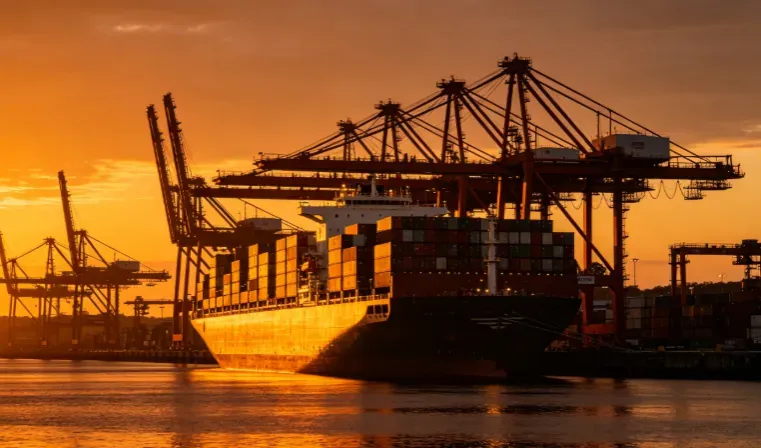
Uruguay is a small market by volume — barely 3.4 million people — but it buys like a much bigger country: roughly one in every five dollars Uruguay spends on imports goes to China, its largest trading partner for more than a decade. And an outsized share of those goods carries Shenzhen DNA. The smartphones and telecom gear, LED lighting, solar panels, auto parts, textiles and home appliances that fill Montevideo warehouses are mostly designed, assembled or sourced within a 150 km radius of Shenzhen.
This guide covers the Shenzhen–Uruguay lane as it actually works in 2026: what loads at Yantian and Shekou, September 2026 sea and air rates to Montevideo, real transit times, the DNA/VUCE customs process, and the free-zone decision. Start with our shipping from China to Uruguay overview for the country-level picture.
What Uruguay Actually Imports from Shenzhen
The lane is built on a handful of product families, each tied to a specific slice of the Pearl River Delta supply base:
| Product family | Where it is made | Why Uruguay buys it |
|---|---|---|
| Smartphones, tablets, wearables & accessories | Shenzhen (Huaqiangbei ecosystem, Bao’an assembly lines) | Consumer electronics dominate Uruguay’s import bill from China |
| Telecom & networking equipment | Shenzhen (Huawei, ZTE and their suppliers) | Carrier and enterprise network rollouts across the country |
| LED lighting & luminaires | Zhongshan, just 100 km from Shenzhen | Retail, industrial and public-lighting replacement cycles |
| Auto parts & accessories | Shenzhen, Dongguan, Huizhou | Uruguay’s large used-vehicle fleet needs constant parts supply |
| Textiles, apparel & footwear | Guangzhou, Foshan, Dongguan | Mass-market retail imports |
| Solar panels & energy gear | Shenzhen, Dongguan | Uruguay’s renewable-heavy matrix keeps adding distributed solar |
Knowing this mix matters before you book: it decides FCL vs LCL vs air, and it shapes the duty and IVA math below. For a full country cost breakdown, our how much does shipping from China to Uruguay cost guide walks through every charge line by line.
How the Route Works: Terminals, Cut-Offs and the Feeder Reality
Shenzhen cargo for Montevideo loads at one of four port areas. Your forwarder picks the terminal by your supplier’s location and the carrier’s cut-off, not by preference:
| Loading area | Terminals | Role on the Uruguay lane |
|---|---|---|
| Yantian | YICT | The main FCL gateway; most mainline Asia–South America sailings call here |
| Shekou | SCT, CCT | Closest to western Shenzhen factories; the LCL consolidation heart of the lane |
| Chiwan | Chiwan Container Terminal | Flexible option for tight cut-offs and smaller lots |
| Dachan Bay | Phase I–III | Newer deep-water berths; growing mainline coverage |
Two operational realities shape this trade:
- Few ships go Shenzhen → Montevideo nonstop. Most containers move on Asia–East Coast South America services that call Santos and Buenos Aires, with the River Plate leg to Montevideo covered by a direct call or a short feeder. That is why the same origin can quote 28 or 45 days depending on the week and string.
- Cut-offs are unforgiving. Yantian’s CY cut-off typically closes 24–48 hours before the vessel’s estimated departure. Miss it and your container rolls a week — painful in September, when space tightens ahead of China’s National Day holiday (October 1–7).
A forwarder with people on the ground in both Shenzhen and Montevideo earns its fee on exactly these details. See our sea freight forwarder from China guide for what to check before appointing one.
Sea Freight Rates from Shenzhen to Montevideo
The ranges below are realistic all-in ocean freight quotes for September 2026 — ocean freight, BAF/CAF, origin THC and documentation, and Montevideo destination charges — but exclude Uruguayan import taxes:
| Shenzhen/Yantian → | 20ft FCL | 40ft FCL | 40ft HQ |
|---|---|---|---|
| Montevideo (direct or via Santos/BSAS) | $2,400–$4,500 | $3,000–$5,700 | $3,200–$6,000 |
| Montevideo (routed via Buenos Aires, LCL-friendly) | on request | on request | on request |
| Nueva Palmira (project / river cargo) | quote only, typically +$300–$600 | quote only | quote only |
September 2026 reality check: August–October is peak season on the South America lane and rates carry a 10–20% peak premium. Add China’s Golden Week (October 1–7) and space gets tight from mid-September — book 3–4 weeks ahead if you need a guaranteed sailing before the holiday.
LCL from Shenzhen to Montevideo is the right call below ~15 CBM:
| Volume | Typical rate | Notes |
|---|---|---|
| 1 CBM | $100–$180 | Minimum charge applies |
| 5 CBM | $500–$900 | Typical first-order size |
| 10 CBM | $1,000–$1,800 | Above ~15 CBM, compare FCL |
Add a $30–$60 consolidation fee at Shekou and deconsolidation charges in Montevideo — the mechanics are identical to those on the region’s biggest lane, explained in our LCL shipping from China to Brazil guide.
Air Freight from Shenzhen (SZX) to Montevideo (MVD)
Air cargo lands at Carrasco International Airport (MVD). Direct China–Uruguay flights are rare, so most cargo connects via São Paulo (GRU), Buenos Aires (EZE) or Miami (MIA), with Hong Kong (HKG) as the overflow option for urgent bookings.
| Service | Rate (September 2026) | Door-to-door transit |
|---|---|---|
| Consolidated air (100–300 kg) | $5.0–$8.0 per kg | 5–10 days |
| Consolidated air (300–500 kg) | $4.5–$7.5 per kg | 5–9 days |
| Blocked space / priority (500+ kg) | $4.2–$7.0 per kg | 5–9 days |
| Express courier (DHL/FedEx/UPS) | $9–$15 per kg | 3–6 days |
Most air shipments carry a $60–$120 minimum charge.
How air freight is priced: airlines charge on the greater of actual weight and volumetric weight — length × width × height ÷ 6000 (cm). A 40 kg carton of LED strip lights measuring 80 × 60 × 60 cm bills at 48 kg (80×60×60÷6000), not 40. Bulky, lightly packed goods from Shenzhen’s e-commerce ecosystem are routinely billed at double their physical weight, so keep packaging dense.
Air vs Sea from Shenzhen to Uruguay: Side by Side
| Factor | Air freight (SZX→MVD) | Sea freight (Yantian→Montevideo) |
|---|---|---|
| Door-to-door transit | 5–10 days | 35–55 days |
| Typical cost | $4.2–$8.0 per kg | $100–$180 per CBM (LCL) |
| Minimum charge | $60–$120 | ~$200–$400 (LCL handling) |
| Best for | Samples, urgent parts, high-value electronics | Restocks, bulky or heavy goods, anything over ~15 CBM |
| Customs rhythm | Clear in days at MVD | Clear in days after a 1–2 month voyage |
When air makes sense on this lane: first trial orders of a new product, spare parts that stop a production line, and high-value electronics where the interest on inventory capital exceeds the air premium. Many Uruguayan importers fly the first two orders from Shenzhen to validate the product, then switch to LCL/FCL once volume builds.
Transit Times: Shenzhen → Montevideo and Where the Days Go
| Routing | Typical transit | Notes |
|---|---|---|
| Yantian → Montevideo (direct call) | 28–34 days | When the mainline string includes the River Plate |
| Via Santos (feeder) | 33–42 days | The most common routing in low season |
| Via Buenos Aires (feeder) | 34–45 days | Frequent for LCL groupage |
| LCL add-on (consolidation) | +3–7 days | Waiting for a full groupage at Shekou |
| Air SZX → MVD | 5–10 days | Door-to-door, including clearance |
The ocean transit is only part of the clock. Add 2–4 days at the Uruguayan end: vessel berthing at the Terminal Cuenca del Plata, DNA clearance, and trucking to your warehouse in Montevideo or inland to Salto, Paysandú or Punta del Este. Seasonally, winter fog on the River Plate (June–August) and Argentine labour disruptions can ripple into feeder schedules.
Montevideo, Nueva Palmira and the Free-Zone Decision
For imports consumed in Uruguay, Montevideo is the gateway: roughly 90% of the country’s containerized trade moves through the port, with the Terminal Cuenca del Plata (TCP) handling the large majority of container vessels. Nueva Palmira, on the Uruguay River, matters for a different reason: it is the transshipment point for Paraguay and Bolivian river cargo and a grain hub — for a routine Shenzhen container it is rarely the right destination.
The decision most importers overlook is which customs territory to land in. Uruguay’s free-zone regime (Law 15.921) lets you move Shenzhen cargo into a zone — Zonamerica (the large private business-and-logistics park next to Carrasco airport), Zona Franca de Montevideo (port-adjacent) or Nueva Palmira — exempt from IVA and import duties while it sits there. Tax is only triggered if and when the goods enter Uruguayan customs territory. That makes free zones genuinely useful for:
- Regional distribution hubs — stock Chinese goods in Uruguay and sell into Brazil, Argentina or Paraguay under customs transit, paying Uruguayan taxes only on what actually enters Uruguay;
- Value-add operations — light assembly, kitting or repackaging inside the zone;
- Deferred cash flow — hold inventory near the market without prepaying IVA on it.
If your goods are sold and consumed in Uruguay, the zone does not save you tax — you simply defer it until withdrawal. But for re-export models, it is the single biggest cost lever on this lane, and most competitor guides do not mention it at all.
Uruguay Customs & Taxes: DNA, VUCE and the 2026 Stack
Uruguayan customs is administered by the Dirección Nacional de Aduanas (DNA) within the Ministry of Economy, with import declarations filed electronically through the VUCE single window by a licensed customs broker — the despachante de aduana — who is mandatory for commercial shipments. Clearance at Montevideo is typically fast: 2–4 working days for a clean, correctly documented container.
What your Shenzhen shipment pays in 2026:
- Import duty — the Mercosur Common External Tariff (CET), 0–35% of CIF. Most consumer goods sit at 12–20%; electronics typically 14–16%; capital goods and machinery often 0–14%; textiles and apparel at the top of the scale.
- IVA — 22% standard rate (10% reduced rate for basic necessities), charged on CIF plus duty.
- Small extras — customs control fee (around 0.06% of CIF), port charges, and the despachante fee (roughly $80–$150 per declaration).
- No China–Uruguay FTA. Negotiations have dragged on since 2016, but as of 2026 no preferential agreement is in force — you pay standard CET duties. Ignore any source promising “FTA duty savings” on this lane.
Quick illustration: an $8,000 CIF shipment of solar inverters (duty ~12%) pays $960 duty, then IVA at 22% on $8,960 = $1,971 — about $2,931 in taxes, roughly 37% on top of CIF. For a full worked example across three product types, see our how much is shipping from China to Uruguay guide. The 20ft & 40ft container cost from China to Uruguay breakdown covers the FCL side in detail.
Shipping Checklist for a Shenzhen–Montevideo Container
- Send your forwarder the real data — product, NCM/HS codes, weight, dimensions, and supplier pickup address (most Shenzhen suppliers are EXW/FOB).
- Fix the NCM classification before sailing — it drives both duty rate and any non-standard inspection at Montevideo.
- Book 3–4 weeks ahead in September — peak-season space and the Golden Week cutoff make last-minute bookings expensive or impossible.
- Confirm the routing and terminal — direct call vs Santos/Buenos Aires feeder changes your arrival week by up to 17 days.
- Appoint the despachante early — they register the shipment in VUCE before the vessel arrives; clearance starts the day the ship berths.
- Decide the free-zone question consciously — if any part of the shipment is destined for re-export or regional distribution, route it through a zone from day one.
- Insure the cargo — marine insurance is ~0.1–0.3% of value and covers the feeder legs where transshipment damage most often occurs.
Frequently Asked Questions
Q: How much does it cost to ship from Shenzhen to Uruguay in 2026?
A: A 20ft container from Shenzhen/Yantian to Montevideo runs $2,400–$4,500 and a 40ft container $3,000–$5,700 in September 2026, excluding Uruguayan taxes. LCL is $100–$180 per CBM and air freight $4.2–$8.0 per kg.
Q: How long does shipping from Shenzhen to Montevideo take?
A: Direct or single-transshipment sailings take 28–38 days; Santos/Buenos Aires feeder routings 33–45 days. Add 2–4 days for clearance and delivery. Air freight takes 5–10 days door-to-door.
Q: Which Uruguayan port should I ship to?
A: Montevideo — it handles ~90% of containerized trade and the TCP terminal receives the main services. Nueva Palmira suits river/project cargo and Paraguay–Bolivia transit, not routine containers.
Q: Do free zones reduce import taxes on Shenzhen goods?
A: For re-export or regional distribution, yes — goods in a Uruguayan free zone (Zonamerica, Zona Franca de Montevideo, Nueva Palmira) are exempt from IVA and duties while inside. For goods sold in Uruguay, normal IVA 22% and CET duty apply.
Q: Is air or sea better from Shenzhen to Uruguay?
A: Sea for routine volume — FCL from $2,400 or LCL from $100/CBM. Air suits samples, urgent spare parts and high-value electronics at $4.2–$8.0/kg with 5–10 day door-to-door transit.
Q: Is Shenzhen or Shanghai cheaper for shipping to Uruguay?
A: Base rates are close, with Shenzhen usually $50–$200 lower. Choose by supplier location: Guangdong/PRD suppliers load naturally at Shenzhen; Yangtze River Delta suppliers at Shanghai.
Make the Shenzhen–Uruguay Lane Work for You
Uruguay’s DNA customs process is highly predictable, Montevideo’s terminal handles the services that matter, and the free-zone regime adds a re-export lever most competitors never mention. Combine that with Shenzhen’s unmatched electronics supply base and you have a lane that rewards preparation: classify correctly, book early, and decide the zone question before the container leaves Yantian.
Ready to plan your shipment? Contact Dantful.US for a free, itemized Shenzhen–Montevideo quote — sea or air, port-to-port or door-to-door.