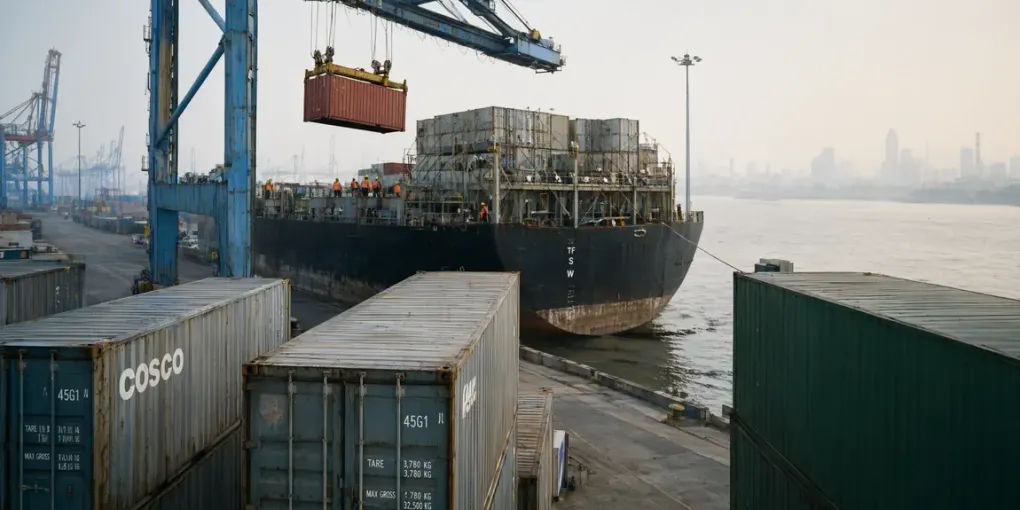
A Nansha quote that looks $90 cheaper than the same box out of Yantian can cost you $400 before the container leaves Guangdong. That is the arithmetic of this lane: the ocean freight is the most visible line on the invoice and the least decisive one, because Guangzhou is a sourcing region rather than a port, and Ecuador is a river port plus a deep-water alternative rather than a single destination.
This guide covers shipping from Guangzhou to Ecuador in Q4 2026 — what Nansha, Huangpu and the Shenzhen fallback actually cost, how the Pearl River cut-off collides with the Guayaquil tidal window, what CAN air freight and the Quito altitude do to your chargeable weight, and the SENAE duty stack waiting at the other end. For the country-level view start with our shipping from China to Ecuador hub.
Shipping from Guangzhou to Ecuador in Q4 2026: What the Lane Really Costs
Five lines decide the invoice, and only one of them is ocean freight. Here is the October–December 2026 picture out of the Pearl River Delta, port to port:
| Loading point | 20GP | 40GP | 40HQ | When it is the right call |
|---|---|---|---|---|
| Nansha (Guangzhou Port) | $1,600–$2,700 | $2,400–$4,150 | $2,450–$4,250 | Default for Foshan, Zhongshan, Panyu and Guangzhou city cargo |
| Huangpu (upriver, barge to Nansha) | +$120–$260 barge fee | +$150–$300 | +$150–$300 | Eastern Guangzhou and Dongguan suppliers, cheaper drayage |
| Yantian / Shekou (Shenzhen) | $1,600–$2,700 | $2,400–$4,150 | $2,500–$4,250 | Suppliers already in Dongguan, Huizhou or eastern Shenzhen |
| Shanghai / Ningbo (via feeder or truck) | $1,650–$2,800 | $2,500–$4,250 | $2,550–$4,350 | Only for cargo bought outside the delta |
Those ocean numbers are deliberately a range, because on this lane they move with equipment rather than demand: a 40HQ booked in the first week of November can carry a $150–$300 premium over an identical box in February, and dry equipment tightens as the Christmas build-out meets the South American reefer season.
The other four lines are where Guangzhou shippers lose money without noticing:
- Origin charges — THC, documentation, export declaration, VGM and CFS handling, typically $350–$650 per container.
- Drayage and consolidation — $180–$420 per 20ft inside the delta, more if you are collecting from five suppliers.
- Ecuadorian destination charges — $250–$450 per container at Posorja or Guayaquil, plus $50–$70 per bill of lading.
- Customs brokerage and inland trucking — $150–$350 for the DAI, then $450–$900 to move a 40ft from the coast to Quito, Cuenca or Ambato.
If you want the arithmetic on your own volumes before asking for a quote, run the numbers through our Freight Cost Calculator — it uses the same rate bands we quote from, so it is a sanity check rather than a sales tool.
Guangzhou to Ecuador Transit Time: Nansha Cut-Offs and the Guayaquil Tidal Window
No carrier sails Guangzhou–Ecuador direct, so every box relays — through Busan, Manzanillo, Colón or Callao — and the relay is where the quoted 28 days becomes the delivered 41.
| Route | Port to port | Notes |
|---|---|---|
| Nansha → Posorja (DP World) | 28–34 days | Deep-water, 15.5 m draft, no tidal restriction, weekly strings |
| Nansha → Guayaquil (Contecon, TPG, Fertisa) | 30–36 days | River terminals, ~40 nm upriver behind a 9.7–11 m channel |
| Nansha → Esmeraldas | 34–40 days | Fewer Asia calls, feeder from the mainline |
| Nansha → Puerto Bolívar (Machala) | 33–39 days | Banana belt; reefers and project cargo |
| CAN → GYE (air) | 3–6 days door to door | 2–4 flight days plus clearance |
Two clocks run underneath that table, and both are Guangzhou-specific on the export side.
The cut-off clock. Nansha works on a 3–4 day gate-in window before sailing, and the autumn sourcing season compresses it. The Canton Fair’s third phase closes in the first days of November, which is exactly when the contracts signed in the Pazhou halls become bookings — carriers fill the first two December sailings and the third one rolls. A supplier who confirms production on 5 November and expects a 10 November cut-off is usually seven days late, not two.
The river clock. Guayaquil’s terminals sit about 40 nautical miles up the Guayas behind a channel of roughly 9.7–11 metres, so deep-draft vessels wait for water, berths queue, and dry-season dredging shortfalls tighten the window. Posorja, 60 km downriver on the open Pacific with 15.5 metres of natural draft, removes the wait entirely — same sailing, same carrier, two to four days earlier at the Ecuadorian end. Nominate the port your consignee can clear and truck from cheapest, and the transit time usually follows.
Door to door, the honest build-up for a Nansha booking looks like this:
| Stage | Time |
|---|---|
| Supplier pickup and CFS consolidation in the delta | 3–7 days |
| Gate-in, export declaration, VGM, sailing | 1–3 days |
| Ocean leg to Posorja or Guayaquil | 28–36 days |
| Discharge, berth, terminal handling | 1–3 days |
| SENAE clearance in ECUAPASS (aforo dependent) | 2–5 working days |
| Duty, IVA and ISD settlement | Same day to 2 days |
| Inland delivery to Quito, Cuenca, Ambato, Manta | 1–2 days |
Air Freight from Guangzhou to Ecuador: CAN Rates, Chargeable Weight and the Quito Altitude Problem
Air is a real option on this lane, not a footnote, because Ecuador imports high-value electronics, spare parts, cosmetics and apparel replenishment that cannot wait six weeks. Rates out of Guangzhou Baiyun (CAN) in Q4 2026:
| Service | Weight break | Rate per kg | Door-to-door time |
|---|---|---|---|
| Consolidated air freight | 45–100 kg | $5.5–$8.0 | 7–10 days |
| Consolidated air freight | 100–300 kg | $4.2–$6.2 | 6–9 days |
| Consolidated air freight | 300 kg + | $3.5–$5.4 | 5–8 days |
| Express courier (DHL/FedEx/UPS) | Any | $9–$15 | 3–6 days |
Two mechanics decide what you actually pay. The first is volumetric weight: air bills the greater of actual weight and L×W×H÷6000 in centimetres, so a carton of 60 × 50 × 40 cm occupies 20 chargeable kilos even if it weighs nine. Guangzhou’s light export categories — lighting from Guzhen, foam and packaging, garments on hangers — are exactly the cargo that trips this rule, and repacking a pallet to 70% fill can cut the air bill by a fifth. Our Volumetric Weight Calculator does the same division in the browser if you want to test a carton before booking.
The second is altitude. Quito’s Mariscal Sucre (UIO) sits at roughly 2,840 m, so widebody freighters lift less payload per departure and rates into UIO run $0.4–$1.0 per kg above GYE. Most Ecuadorian air cargo therefore lands at Guayaquil’s José Joaquín de Olmedo (GYE) at sea level and trucks up to the sierra — 420 km and 8–9 hours over the Alóag pass, a leg that costs $180–$420 per tonne and needs a customs bond if the cargo is moving in-transit under a single declaration.
| Sea FCL | Air freight | Express | |
|---|---|---|---|
| Door-to-door | 38–50 days | 5–10 days | 3–6 days |
| Cost for 300 kg / 2 CBM | ~$1,900–$3,100 | ~$1,260–$1,860 | ~$2,700–$4,500 |
| Best for | 15 CBM and up, no deadline | Urgent, high value, under ~3 CBM | Samples, documents, spares |
| Minimum charge | One container or LCL floor | ~$120–$180 per shipment | Per parcel |
Container Shipping Cost from Guangzhou to Ecuador: 20ft, 40ft or LCL by Cargo Density
The delta’s export mix makes this decision earlier than most cost guides admit. Foshan and Shunde send ceramics, tiles, sanitaryware and appliances — cargo at 1,600–2,100 kg per CBM. Light cargo sits at 120–250 kg per CBM. Both travel on the same sailing and neither pays the same per tonne.
Work the tiles through: at 1,800 kg per CBM, filling a 20GP’s 33 CBM would mean 59 tonnes, roughly twice the legal payload. So the box becomes weight-limited at about 15 CBM, and the 20GP is the correct purchase — $1,600–$2,700 for 15 CBM of tile is $107–$180 per CBM. LCL on the same cargo bills 1,000 kg per CBM, so 12 CBM becomes 21.6 revenue tonnes at $75–$150, or $1,620–$3,240: the same money as a 20GP for a quarter of the cargo. Dense Guangzhou cargo should almost never travel LCL.
Light cargo runs the other way. A 40HQ carries 68–76 CBM at a payload you will not approach, so 55 CBM of flat-pack furniture or LED fixtures belongs in a 40HQ at $2,450–$4,250, or roughly $36–$77 per CBM. The switch point sits near 15 CBM: below it LCL plus its $75 floor is cheaper, above it the container wins on both cost and damage risk.
How to Ship from Guangzhou to Ecuador: From Five Supplier Districts to One Export Declaration
Guangzhou cargo almost never comes from one factory. It comes from a ring of districts with different products, different lead times and separate invoices, and the job of the forwarder is to turn that into one export declaration and one bill of lading.
- Map the suppliers to the port. Foshan and Shunde for ceramics, tiles, furniture and appliances; Zhongshan and Jiangmen for lighting, LED and hardware; Dongguan and Huizhou for electronics and small appliances; Panyu and Baiyun for audio, cosmetics and leather goods; Guangzhou city for apparel, footwear and packaging. Suppliers east of the river often ship cheaper through Huangpu or straight to Yantian.
- Consolidate in a Nansha CFS. Three to six suppliers feed one warehouse, where cartons are counted, photographed, marked and stuffed. This is the step that catches the 8-carton shortfall before it becomes a claim.
- File the export declaration. One declaration covers the consolidated lot; the Chinese 13% export VAT rebate documentation is prepared here, and it is the reason supplier invoices must match the packing list to the carton.
- Hit the cut-off. Gate-in 3–4 days before sailing, VGM submitted before the terminal closes, and a booking that survives the November equipment squeeze — confirm 40HQ availability in writing, not verbally.
- Clear and deliver in Ecuador. The DAI is pre-filed in ECUAPASS while the vessel is still at sea, the aforo channel decides whether a physical inspection adds 2–4 days, and the inland leg to the sierra is booked before discharge, not after.
Ecuador Import Duty and Taxes on Guangzhou Cargo: FTA, 15% IVA, FODINFA and ISD
Ecuador is dollarised, which removes the currency guesswork and leaves a tax stack that is entirely predictable — if the certificate of origin is right.
| Charge | Base | Rate |
|---|---|---|
| Ad valorem duty | CIF | 0% with the China–Ecuador FTA and a valid certificate, otherwise the tariff line rate |
| FODINFA | CIF | 0.5% |
| IVA | CIF + duty + FODINFA | 15% |
| ISD | Amount remitted abroad | 5% |
| SENAE / terminal charges | Per declaration and container | $250–$450 |
A 40HQ of Foshan tiles, FOB $16,800, with $2,450 ocean freight and $95 insurance:
| Item | Amount |
|---|---|
| FOB Guangzhou | $16,800 |
| Origin charges | $520 |
| Ocean freight, Nansha → Posorja | $2,450 |
| Marine insurance | $95 |
| CIF value | $19,345 |
| Duty at 0% under the FTA | $0 |
| FODINFA at 0.5% | $97 |
| IVA at 15% on $19,442 | $2,916 |
| ISD at 5% on the $16,800 remittance | $840 |
| Destination charges and broker | $640 |
| Inland Posorja → Quito | $780 |
| Landed total | $25,138 |
That is 50% above the factory price, and the freight is only a tenth of it. Strip the certificate of origin out and duty returns at 15% of CIF — $2,902 — which also pushes IVA up by $435. The missing piece of paper costs $3,337, more than the entire ocean freight bill.
Documents Required to Import from Guangzhou into Ecuador: Certificate of Origin, DAI and RUC
| Document | Issued by | What goes wrong without it |
|---|---|---|
| Commercial invoice and packing list | Supplier | Valuation query, delayed aforo, inspection triggered |
| Bill of lading / air waybill | Carrier or forwarder | Consignee must match the RUC holder exactly |
| FTA certificate of origin | CCPIT or the exporter’s authorised body | Full duty, no retroactive refund |
| RUC registration | SRI (Ecuadorian tax authority) | Declaration cannot be filed |
| DAI in ECUAPASS | Licensed agente de aduana | Cargo sits at the terminal incurring storage |
| INEN certificate | INEN-accredited lab | Release blocked for regulated consumer goods |
| ARCSA registration | ARCSA | Food, cosmetics, medicines held on arrival |
| Agrocalidad phytosanitary certificate | Agrocalidad | Plants, seeds, wood packaging refused |
| ISPM 15 stamp on wood | Packaging supplier | Fumigation, re-export or a fine |
| Insurance certificate | Insurer | Claim exposure and a customs query on CIF |
The two failures that cost Guangzhou shippers the most are mundane: a bill of lading consigned to a group company whose name does not match the RUC registration, and a certificate of origin issued after the vessel sailed. Both are fixable in China before gate-in and unfixable in Guayaquil afterwards.
The Cheapest Way to Ship from Guangzhou to Ecuador: LCL Threshold, Density and Consolidation
Cheapness on this lane is mostly a packaging and routing decision, not a rate negotiation.
| Lever | What to do | Typical saving |
|---|---|---|
| Buy the right box | 20GP for dense delta cargo, 40HQ above 45 CBM of light goods | $200–$900 per shipment |
| Load at Nansha when suppliers are west of the river | Avoid $350–$750 of drayage to Yantian | $350–$750 per 40ft |
| Consolidate three to six suppliers in one CFS | One declaration, one bill, one delivery | $150–$400 per supplier removed |
| Repack to 70% pallet fill | Cuts chargeable weight on air and revenue tonnes on LCL | 10–20% of the freight line |
| Book before the November equipment squeeze | Lock 40HQ availability, not just space | $150–$300 per box |
| Use DAP if you are IVA-registered | Recover the 15% import IVA against sales VAT | Up to 15% of CIF |
That last line deserves emphasis: door to door is a service, and DDP and DAP are the Incoterms used to price it. Under DDP the forwarder pays Ecuadorian duty and IVA inside a fixed price; under DAP you pay them yourself and reclaim the IVA. For an importer with sales VAT to offset, an all-in DDP quote can quietly cost 15% of CIF. Our door to door from China to Ecuador guide works through both structures, the container shipping from China to Ecuador page handles box selection, and the sea freight from China to Ecuador guide settles the Guayaquil versus Posorja nomination port by port.
Frequently Asked Questions
How much does it cost to ship from Guangzhou to Ecuador in Q4 2026?
Port to port out of Nansha, a 20GP runs $1,600–$2,700, a 40GP $2,400–$4,150 and a 40HQ $2,450–$4,250, before $350–$650 of origin charges and $250–$450 of Ecuadorian destination charges. LCL bills $75–$150 per CBM and air freight $3.5–$6.5 per kg depending on the weight break.
How long does sea freight from Guangzhou to Ecuador take?
Nansha to Posorja is 28–34 days port to port and Nansha to the Guayaquil river terminals 30–36 days, because vessels work around a tidal window in a channel of roughly 9.7–11 metres. Add 3–7 days before sailing, 2–5 working days for SENAE clearance and 1–2 days inland, and door to door lands at 38–50 days.
Is it cheaper to ship from Guangzhou or from Shenzhen to Ecuador?
The ocean rate is within $50–$100 per container either way. The difference is drayage: Nansha is 60–70 km from central Guangzhou, while trucking to Yantian costs $350–$750 per 40ft and burns a day. West-of-river suppliers should load at Nansha; Dongguan and eastern Shenzhen suppliers should not.
What documents do I need to import from Guangzhou into Ecuador?
Commercial invoice, packing list, bill of lading or air waybill, the FTA certificate of origin, an active RUC matching the consignee, and a DAI filed in ECUAPASS by a licensed agente de aduana. Regulated goods add an INEN certificate, ARCSA registration or an Agrocalidad phytosanitary certificate.
Do I pay duty on goods shipped from Guangzhou to Ecuador?
With the China–Ecuador FTA and a valid certificate of origin, most lines enter at 0% or a reduced rate on the agreed schedule. IVA at 15% still applies on CIF plus duty, FODINFA adds 0.5% of CIF, and the 5% ISD applies to the payment sent abroad.
Get a Guangzhou to Ecuador Shipping Quote in 24 Hours
Send us your supplier districts, the carton dimensions and total weight, the HS code you expect to declare, and the Ecuadorian delivery address. We will come back with a quote that names the loading point, the sailing and cut-off, the Guayaquil or Posorja nomination, whether the FTA preference applies to your tariff line, and whether door to door should be priced DDP or DAP. Start at contact Dantful.US, or read the how much shipping from China to Ecuador cost guide and the freight forwarder from China to Ecuador page for the service side of the same route.