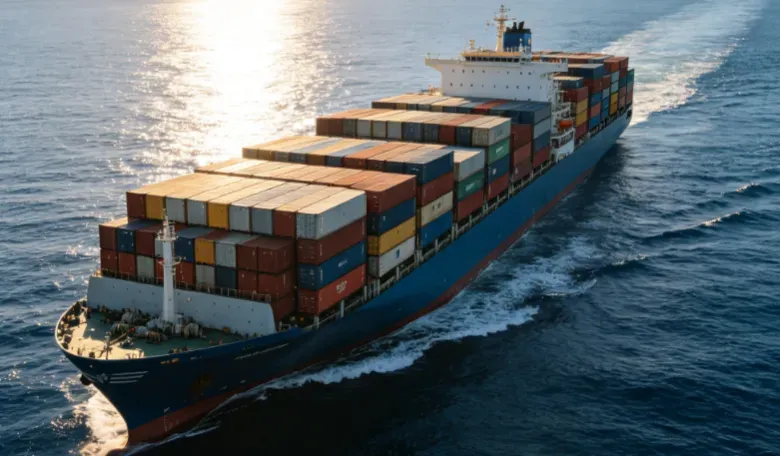
Ecuador imports most of its manufactured goods by container, and China has been its largest non-oil trading partner for years — supplying electronics, machinery, auto parts, textiles, plastics and household goods in exchange for shrimp, bananas, cacao and oil. Because Ecuador is dollarized (the US dollar is its official currency), importers face none of the currency risk that complicates shipments to other South American markets, and the newly strengthened trade relationship means container shipping from China to Ecuador is both cheaper and faster to clear than it was a few years ago.
This guide covers everything you need to know about container shipping from China to Ecuador in 2026: FCL rates for 20ft and 40ft containers, transit times and routes to Guayaquil and Manta, container sizes and loading, customs clearance under the China–Ecuador Free Trade Agreement, and the documents you will need — based on 15 years of hands-on freight forwarding experience at Dantful.US International Logistics. For a full overview of your options, start with our shipping from China to Ecuador guide.
Why Container Shipping from China to Ecuador?
- China is Ecuador’s #1 non-oil trading partner — machinery, electronics, textiles and plastics lead the import list
- The US dollar is the local currency — no exchange-rate risk, no currency controls at the border
- The China–Ecuador FTA has been in force since May 1, 2024 — tariffs on roughly 60% of Chinese products were eliminated immediately, and the rest are phasing down (details below)
- Direct and frequent transshipment services from Shanghai, Shenzhen, Ningbo and Qingdao to Guayaquil, with 28–40 day transits
- A full container beats LCL economics above ~15 CBM — for regular importers, FCL is the cheapest and most predictable way to move goods
Container Types & Dimensions: 20ft vs 40ft vs 40HQ
Choosing the right box is the first decision in container shipping from China to Ecuador. Here are the standard sizes every forwarder quotes:
| Container | Internal Dimensions (L×W×H) | Usable Volume | Max Payload |
|---|---|---|---|
| 20ft GP | 5.90 × 2.35 × 2.39 m | ~28 CBM | ~28,200 kg |
| 40ft GP | 12.03 × 2.35 × 2.39 m | ~58 CBM | ~26,500 kg |
| 40ft HQ | 12.03 × 2.35 × 2.69 m | ~68 CBM | ~26,300 kg |
Which one fits your cargo? A 20ft container suits 15–28 CBM of cargo or heavy goods up to ~25 metric tons; a 40ft GP handles 28–58 CBM; a 40ft HQ adds roughly 10 CBM of height for voluminous, light products such as furniture, mattresses or inflated goods. For a deeper look at container economics on the South American lane, see our 20ft container shipping cost from China to Brazil guide — the rate structure follows the same logic.
2026 Container Shipping Costs from China to Ecuador
FCL rates to Ecuador in 2026 are driven by the origin port, the season and the carrier. The ranges below are realistic all-in ocean freight quotes (excluding Ecuadorian import taxes) for the main China–Ecuador routes:
| Origin Port → Guayaquil | 20ft FCL | 40ft FCL | 40ft HQ |
|---|---|---|---|
| Shanghai | $2,500–$4,200 | $3,500–$5,800 | $3,700–$6,100 |
| Shenzhen / Yantian | $2,600–$4,400 | $3,600–$6,000 | $3,800–$6,300 |
| Ningbo | $2,550–$4,300 | $3,550–$5,900 | $3,750–$6,200 |
| Qingdao | $2,800–$4,800 | $3,900–$6,500 | $4,100–$6,800 |
2026 reality check: Rates on the Pacific South America lane have stabilized after the 2024–2025 volatility, but peak-season surcharges (August–October) and Red Sea rerouting spillovers can still add 15–30% to base rates. Booking 3–4 weeks ahead locks in standard pricing. For a methodology deep-dive, our container shipping costs from China to USA article explains every component of an FCL quote.
What is inside an FCL quote? Ocean freight, BAF/CAF fuel surcharges, origin THC and documentation, and destination charges at Guayaquil (THC, delivery order, customs systems fee). Ecuadorian import duties and IVA are charged separately by customs — see the customs section below.
LCL (Less than Container Load)
If your shipment is under ~15 CBM, LCL is usually more economical:
| Cargo Volume | Typical LCL Rate | Notes |
|---|---|---|
| 1 CBM | $120–$190 | Minimum charge applies |
| 5 CBM | $550–$900 | Ideal for first-time importers |
| 10 CBM | $1,000–$1,700 | Consider FCL above ~15 CBM |
Add a $30–$60 consolidation fee at origin and deconsolidation charges at Guayaquil. For a detailed LCL walkthrough, see our LCL shipping from China to Brazil guide — the consolidation mechanics are identical on the Ecuador lane.
Transit Times & Main Shipping Routes to Ecuador
| Route | Typical Transit | Notes |
|---|---|---|
| Shanghai → Guayaquil | 28–35 days | Most frequent service, weekly sailings |
| Shenzhen/Yantian → Guayaquil | 27–33 days | Direct or via Balboa/Manzanillo transshipment |
| Ningbo → Guayaquil | 29–36 days | Strong carrier coverage |
| Qingdao → Guayaquil | 32–42 days | Less frequent, often via Busan or Hong Kong |
| Via Panama transshipment | 33–45 days | Balboa or Manzanillo, adds 4–8 days |
Most China–Ecuador services either sail direct across the Pacific or transship at Balboa or Manzanillo (Panama) — both hubs feed Guayaquil, Ecuador’s dominant container port, which handles roughly 80% of the country’s containerized imports. Remember that transit time ≠ door-to-door time: add 3–6 days for arrival, Ecuadorian customs clearance and trucking to Quito, Cuenca or your warehouse.
FCL vs LCL: Which Option Fits Your Cargo?
| Factor | FCL (Full Container) | LCL (Consolidated) |
|---|---|---|
| Best volume | 15+ CBM | Under ~15 CBM |
| Cost per CBM | Lower | Higher (plus consolidation fees) |
| Transit reliability | Higher — no waiting to consolidate | Can wait 3–7 days for a full groupage |
| Damage risk | Lower | Higher — shared container handling |
| Customs complexity | Same clearance process | Same clearance process |
The break-even point is usually ~15 CBM: below it, LCL wins on price; above it, FCL wins on per-CBM cost, speed and safety. Your forwarder can run the exact calculation for your product dimensions.
How to Load & Pack a Container Correctly
Poor packing is the most common cause of damage claims on the China–Ecuador lane (rough handling at Guayaquil and inland trucking over the Andes are both hard on cargo). Follow these rules:
- Distribute weight evenly — heavy cartons at the bottom, light ones on top; keep the center of gravity low and centered
- Protect against humidity — use desiccants; the Pacific crossing and Guayaquil’s tropical climate cause container sweat
- Lash and brace — use airbags, dunnage and straps so cargo cannot shift during the voyage
- Declare VGM accurately — the Verified Gross Mass is mandatory for loading; a wrong VGM means a missed sailing
- Balance dense and voluminous goods — combining heavy and light products in one 40ft box maximizes both volume and weight utilization
Customs Clearance & Duties for Containers to Ecuador
Ecuadorian customs is managed by SENAE (Servicio Nacional de Aduana del Ecuador) through the ECUAPASS digital platform. A customs broker files the import declaration with the commercial invoice, packing list, bill of lading and certificate of origin, and clearance typically takes 2–4 working days for a clean, correctly documented container.
What will you pay?
- Import duties (arancel): calculated on the CIF value (cost + insurance + freight), typically 5–20% depending on the HS code
- IVA (value-added tax): 15% — increased from 12% in April 2024; charged on CIF + duties
- FODINFA: a 0.5% levy on CIF value (Fondo de Desarrollo Infantil) applied to most imports
- Customs control fee: small fixed fee per declaration (US$10–20 range)
China–Ecuador FTA advantage: the Free Trade Agreement signed in May 2023 entered into force on May 1, 2024. Around 60% of tariff lines (including most electronics, machinery parts and consumer goods) are now duty-free with a valid Certificate of Origin (Form F), and the remainder phases down to zero over 5–20 years. This is the single biggest cost lever for 2026 importers — most competitor guides still quote pre-FTA duty scenarios.
Documents Required for Container Shipments
- Bill of Lading (B/L) — the contract of carriage (MBL + HBL if using a forwarder)
- Commercial invoice — used for customs valuation in Ecuador
- Packing list — contents, weights and dimensions per carton
- Certificate of Origin (Form F) — required to claim China–Ecuador FTA preferential duty
- Marine cargo insurance certificate — protect against loss and damage
- Import license / sanitary certificate — for regulated goods (food, pharma, agricultural, some electronics)
How to Save on Container Shipping to Ecuador
- Claim the FTA benefit — ship with a valid Form F certificate and eliminate duties on most products
- Book off-peak — avoid August–October; Q1 rates are typically 10–20% lower
- Use Shanghai or Shenzhen as origin — the two cheapest loading ports on this lane
- Consolidate to FCL — above ~15 CBM, a full container beats LCL economics
- Ship to Guayaquil, not Manta, by default — the largest port has the best trucking connections to Quito and the sierra; reserve Manta for northern-region distribution
- Work with an experienced forwarder — one who itemizes every fee. Our sea freight forwarder from China page explains what to look for
Frequently Asked Questions
Q: How much does a container cost from China to Ecuador in 2026?
A: A 20ft container runs $2,500–$4,800 and a 40ft container $3,500–$6,800 depending on origin port, season and carrier, excluding Ecuadorian import taxes. LCL is $120–$190 per CBM.
Q: How long does container shipping from China to Ecuador take?
A: Direct sailings from Shanghai or Shenzhen reach Guayaquil in 27–35 days; transshipped cargo via Panama takes 33–45 days. Add 3–6 days for clearance and inland delivery.
Q: Which port in Ecuador should I ship to?
A: Guayaquil handles about 80% of containerized imports and has the best inland connections. Manta suits northern-region distribution, and the newer Posorja deep-water terminal (DP World) is gaining calls from mainline services.
Q: Do I pay import duties on containers from China to Ecuador?
A: Yes — import duties (usually 5–20% of CIF) plus 15% IVA and a 0.5% FODINFA levy. Under the China–Ecuador FTA (in force since May 2024), most products are duty-free with a valid Form F certificate.
Q: 20ft or 40ft — which container should I book?
A: Up to ~28 CBM of cargo, use a 20ft; 28–58 CBM, a 40ft GP; voluminous light cargo benefits from the 40ft HQ’s extra height. Heavy goods near 25+ tons should stay in a 20ft for payload reasons.
Q: Is FCL or LCL better for my shipment to Ecuador?
A: Under ~15 CBM, LCL is more economical; above that, FCL wins on per-CBM cost, reliability and lower damage risk. Ask your forwarder for a break-even comparison on your actual volumes.
Ship Your Container from China to Ecuador with Confidence
Container shipping from China to Ecuador is well-established, dollar-denominated and — thanks to the 2024 FTA — cheaper to clear than almost any other South American destination. With the right container size, a realistic 2026 budget and a forwarder who handles SENAE clearance properly, your first FCL shipment can go smoothly.
Ready to ship? Contact Dantful.US for a free, itemized quote — we handle everything from Chinese port pickup to Ecuadorian doorstep delivery.