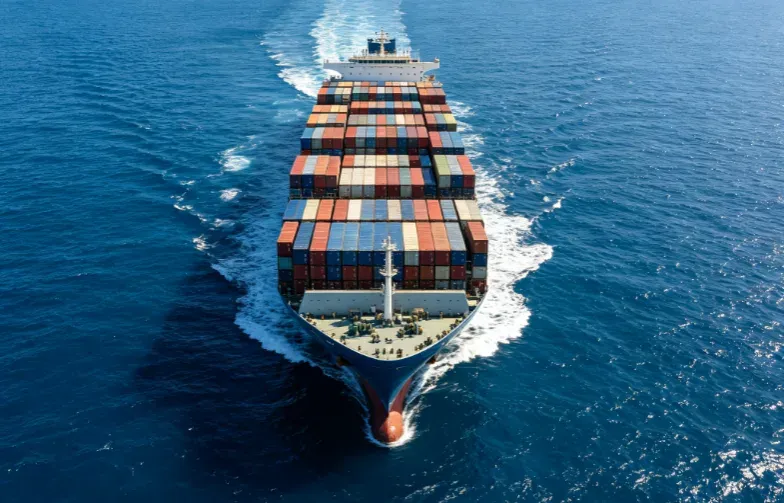
Ecuador is one of the few South American markets where the ocean leg is decided by a number that never appears in a quotation: draft. The country’s biggest container gateway, Guayaquil, sits 40 nautical miles up the Guayas river behind a channel of roughly 9.7 metres. Its neighbour, Posorja, opened 60 km downriver in 2019 with 15.5 metres of natural draft and no tidal restriction. That 5.8-metre difference decides which vessels can call direct from Asia, which cargo rolls, and whether your 20ft box waits three days for high tide or starts getting trucked the morning it berths.
This guide covers sea freight from China to Ecuador as it actually works in September 2026: what the rates are by Chinese origin port, how long the ocean leg takes on direct versus transshipment routings, which Ecuadorian port to nominate, how the China–Ecuador FTA changed the duty stack, and where the money leaks out — demurrage, tidal berth delays, rollovers and the ISD nobody quotes.
Sea Freight Cost from China to Ecuador: September 2026 FCL and LCL Rates
Ecuador is a dollarised economy, so every quote you receive is already in US dollars with no FX clause. That is genuinely rare in Latin America and it makes comparing carriers unusually clean.
The table below is port-to-port ocean freight only for September 2026, the standard basis on which carriers publish FAK rates to the Asia–West Coast South America (WCSA) loops:
| Chinese origin port | 20GP | 40GP | 40HQ / 40HC |
|---|---|---|---|
| Yantian / Shekou (Shenzhen) | $1,600–$2,700 | $2,400–$4,150 | $2,500–$4,250 |
| Nansha (Guangzhou) | $1,650–$2,750 | $2,450–$4,200 | $2,500–$4,300 |
| Shanghai (Yangshan / Waigaoqiao) | $1,650–$2,800 | $2,500–$4,250 | $2,550–$4,350 |
| Ningbo (Beilun) | $1,650–$2,800 | $2,500–$4,250 | $2,550–$4,350 |
| Qingdao | $1,800–$3,000 | $2,700–$4,550 | $2,750–$4,700 |
LCL is priced per revenue tonne or per cubic metre, whichever is greater, with a floor:
| LCL item | September 2026 |
|---|---|
| Ocean freight per CBM | $75–$150 |
| Minimum charge | $75 (1 CBM equivalent) |
| Origin CFS + consolidation | $10–$20 per CBM |
| Destination CFS + devanning (Ecuador) | $20–$35 per CBM + $50–$70 per B/L |
A port-to-port number is not your cost. The two charge blocks that sit outside it are the ones importers forget:
| Charge block | Typical range (20ft / 40ft) |
|---|---|
| China origin: pickup trucking | $120–$360 |
| China origin: THC + export customs + docs | $210–$375 |
| Ecuador destination: THC, delivery order, terminal fees | $305–$495 |
| Ecuador inland delivery (Posorja or Guayaquil → Quito) | $385–$575 |
Peak-season alert: rates on this lane move on carrier capacity decisions, not just demand. The Q4 build-up and the run-in to Chinese New Year (February 2027) historically add 15–30% to WCSA rates and 10–14 days of vessel waiting time in Guayaquil. Book 3–4 weeks before your cargo cut-off, not 5 days.
China to Ecuador Transit Time by Sailing Route: Direct, Transshipment and Feeder
There are only two ways a Chinese container reaches Ecuador: a direct WCSA call, or a transshipment. Which one you get is decided by the carrier’s service string and the draft at the Ecuadorian end.
| Routing | Ocean transit (port to port) | Frequency |
|---|---|---|
| Shanghai → Posorja, direct WCSA string | 28–33 days | weekly |
| Ningbo → Posorja, direct | 29–34 days | weekly |
| Yantian / Shekou → Posorja, direct | 27–32 days | weekly |
| Nansha → Posorja, direct | 28–33 days | weekly |
| Any Chinese port → Guayaquil river terminals | 30–36 days | weekly |
| Via Busan or Hong Kong first transshipment | 33–42 days | 2–3 sailings per week |
| Via Manzanillo (MX), Colón or Callao | 34–45 days | weekly per hub carrier |
Two structural facts drive those numbers:
- Direct strings exist because Posorja can take them. Vessels that call Ecuador on an Asia WCSA loop are typically in the 4,000–8,500 TEU range. Guayaquil’s river channel restricts how deep those ships can load, so on a Guayaquil rotation the carrier either light-loads or splits the call. Posorja’s 15.5 m draft removes that constraint, which is why an increasing share of direct Asia capacity now calls there first and feeds Guayaquil by truck or barge.
- Transshipment is cheap in theory and expensive in practice. A Busan or Callao relay looks like 4–8 extra days on paper. Add the feeder’s own weekly frequency and you are looking at 5–12 days, plus one more handover where a container can be held for documentation or a missed connection.
Everything above is the ocean leg. Add 3–7 days of Chinese export handling before sailing (pickup, consolidation, customs, gate-in), 2–5 working days for SENAE clearance, and 1–3 days of inland trucking, and a realistic door-to-door window is 38–50 days. If you need the timeline in full detail, the segment-by-segment breakdown on our shipping cost from China to Ecuador page is worth reading alongside this one.
Ecuador’s Container Ports: Guayaquil, Posorja, Puerto Bolívar and Manta
Guayaquil — the volume port with a river problem
Guayaquil still moves the bulk of Ecuador’s containerised trade through terminals inside the city: Contecon Guayaquil on the Trinitaria island complex, Terminal Portuario Guayaquil (TPG) and the Fertisa/Nicolás Isaías facilities. Advantages are real — the terminals sit next to Guayaquil’s industrial and cold-chain belt, trucking to the city is short, and almost every carrier offers a Guayaquil call. The catch is the approach channel: around 9.7–11 m depending on dredging and tide, which means deep-draft vessels sail on a tidal window, berth queues build up, and terminals occasionally work cargo by barge or lighter. That is where storage and demurrage clocks start ticking for reasons that have nothing to do with you.
Posorja — the deep-water port that changed the lane
DP World Posorja sits on the open Pacific coast, about 90 minutes from Guayaquil by the Playas road. It opened in August 2019 with 15.5 m of natural draft, no tidal restriction and 24/7 access, and its master plan runs to roughly 4.2 million TEU with a first phase around 750,000 TEU. For China importers the practical effects are a shorter ocean leg, fewer rollovers and vessels that can load to full draft. The trade-off is inland haulage: you pay for the extra 60 km to Guayaquil, and more again to Quito, Ambato or Cuenca.
The secondary ports: Puerto Bolívar, Manta and Esmeraldas
Puerto Bolívar (Machala, El Oro) is a banana and refrigerated-bulk port with limited container capability — useful for agricultural exports, not for your imports. Manta (Manabí) handles fishing fleets, bulk and RoRo/vehicle traffic with an 11–12 m draft; it is a real option for cars and machinery, rarely for general container freight. Esmeraldas in the north is an oil and bulk terminal. If a quote mentions Esmeraldas or Manta for a container from China, ask why: the routing usually ends with a truck move anyway.
LCL vs FCL from China to Ecuador: Which Container Option Fits Your Cargo
The decision is a volume calculation, not a preference.
| Your shipment | Better option | Why |
|---|---|---|
| 1–6 CBM | LCL | Minimum charge plus CBM rate beats a container you cannot fill |
| 7–13 CBM | LCL, unless the cargo is heavy or fragile | Consolidation and devanning fees still cost less than unused container space |
| 13–15 CBM | Crossover zone | Run both quotes — this is where the two lines cross |
| 15+ CBM, or 8–10 tonnes dense | 20ft FCL | You stop paying per-CBM fees and gain exclusive use, VGM control and faster release |
| 28–30 CBM of light goods | 40ft or 40HQ | The cheapest cost per CBM on the lane |
Two LCL-specific traps matter here. First, LCL bills on the greater of volume or weight at 1,000 kg per CBM, so dense cargo (tiles, hardware, machine parts) is charged on weight and the “cheap” per-CBM rate multiplies. Second, LCL adds 5–10 days because your cartons wait for co-loaders at the Chinese CFS and are devanned again in Ecuador, and every handover is a chance for damage or a documentation mismatch. Our LCL shipping from China to Brazil guide explains the consolidation mechanics in detail if you are shipping mixed pallets for the first time.
Air Freight vs Sea Freight from China to Ecuador: Cost, Transit Time and When to Switch
Sea freight is not always the answer, and on this lane the air option is better developed than most importers assume: Ecuador is served through Quito’s Mariscal Sucre (UIO) and Guayaquil’s José Joaquín de Olmedo (GYE) via Miami, Bogotá, Lima and Panama.
| Chargeable weight | Air rate per kg | Door-to-door transit |
|---|---|---|
| Under 45 kg | $5.2–$7.6 | 5–8 days |
| 45–100 kg | $4.6–$6.8 | 5–8 days |
| 100–300 kg | $4.0–$6.0 | 5–9 days |
| 300–500 kg | $3.7–$5.4 | 6–10 days |
| 500–1,000 kg | $3.5–$5.0 | 6–11 days |
Air freight bills on chargeable weight — the greater of gross weight and volumetric weight, calculated as length × width × height in centimetres divided by 6,000 (5,000 for express courier). A pallet of light packaging that physically weighs 60 kg can bill at 200 kg. That single rule explains most air-freight invoice surprises.
| Sea (FCL 20ft) | Air freight | Express courier | |
|---|---|---|---|
| Door-to-door transit | 38–50 days | 5–11 days | 3–7 days |
| Cost basis | per container | per chargeable kg | per kg, all-in |
| Minimum charge | 1 container | ~$144 | ~$48 |
| Cost for 300 kg / 2 CBM | ~$2,320–$3,360 | ~$1,120–$1,640 | ~$2,320–$3,840 |
| Best for | volume, low-value, heavy | launch SKUs, restocks, electronics, samples | documents, emergency spares |
The switch point is usually 250–300 kg or about 2 CBM: below it, air freight is fast and the absolute premium is tolerable; above it, the gap widens fast and sea freight wins unless the cargo’s margin is high enough to carry the air premium. A practical rule for e-commerce sellers: fly the first 90 days of a new SKU, then containerise once weekly sales justify a shipment that takes 40 days. When the comparison is close, our air freight vs sea freight analysis sets out the same decision framework with worked numbers.
Customs Clearance and Import Duties on Sea Freight to Ecuador: SENAE, Form F, IVA and ISD
Ecuador’s customs authority is SENAE (Servicio Nacional de Aduana del Ecuador). All commercial imports are declared electronically in ECUAPASS, and a licensed agente afianzado de aduana (customs broker) files for you — self-filing is not available for normal commercial cargo. Your company needs an RUC, and the consignee on the bill of lading must match the importer of record.
Once the declaration is filed it goes into a channel, or aforo: automatic (released without inspection), documentary (papers reviewed) or physical (the container is opened). The channel is assigned randomly with risk profiling, and physical aforo typically adds 2–4 working days.
| Import charge | Basis | September 2026 rate |
|---|---|---|
| Arancel (tariff) with Form F | CIF | 0% on covered tariff lines |
| Arancel without Form F | CIF | roughly 5–15% by HS code |
| FODINFA (child-development fund) | CIF | 0.5% |
| IVA (VAT) | CIF + arancel + FODINFA | 15% |
| ISD (outgoing-currency tax) | payments remitted abroad | 5%, creditable |
| ICE (special consumption tax) | certain goods only | by product |
The biggest change on this lane came on 1 May 2025, when the China–Ecuador free trade agreement entered into force. It covers roughly 99.6% of tariff lines: many industrial goods dropped to zero duty immediately, while other chapters phase down over 5–15 years. The catch is that the zero rate is conditional — without a Form F certificate of origin issued under the agreement, stamped and matching the exporter on the bill of lading, the most-favoured-nation tariff applies and the saving disappears.
Customs Documents for Sea Freight to Ecuador
Have these ready before the vessel berths: original or telex-released bill of lading, commercial invoice, packing list, Form F certificate of origin, marine insurance certificate, and product-specific approvals where the goods are regulated — INEN technical standards for electrical goods, footwear and textiles; ARCSA registrations for cosmetics, food and supplements; Spanish labelling for retail packaging. A single missing certificate is the most common reason a container sits in storage for a week.
Demurrage, Detention and Storage at Guayaquil and Posorja
Free time in Ecuador is shorter than in the United States. Expect 5–7 free days of almacenaje (terminal storage) and 7–14 free days of container detention after pick-up, with demurrage/storage running $20–$44 per 20ft per day and detention $36–$68 per day once free time lapses. Add the tidal-window factor at Guayaquil — if your vessel waits two days for water, your berth window and your free-time clock move together. Build the clearance documents in parallel with the sailing, not after the arrival notice.
Sea Freight Booking Deadlines, VGM and Rollovers on the China–Ecuador Lane
Most first-time importers lose a week not at sea but in the five days before sailing. The deadline chain for a typical WCSA booking out of Yantian or Shekou looks like this:
| Milestone | When | What goes wrong |
|---|---|---|
| Booking confirmation / SO | 14–21 days before ETD | Booking after cut-off means waiting for next week’s vessel |
| Shipping instruction (SI) | 48–72 hours before ETD | Wrong consignee or HS description forces a B/L amendment fee |
| VGM (SOLAS weight declaration) | 24 hours before loading | Wrong VGM means the container is not loaded |
| Cargo cut-off / gate-in | 3–5 days before ETD | Late gate-in is the number-one cause of rollovers on this lane |
| ETD → Posorja / Guayaquil | — | 27–36 days at sea |
VGM deserves special attention here. Because Guayaquil’s river berths are tidal, the carrier’s stow plan is sensitive to weight: an overweight container declared late may be rolled even when space exists. Weigh your cargo, declare accurately, and note that a 20ft container is legally capped at 30.48 tonnes gross — which is easy to exceed with dense goods from China.
Rollovers are also a capacity story. On a lane with one weekly string per carrier, a rolled container waits seven days, not one, and the missed connection cascades into a second cable of storage fees. Booking three to four weeks ahead and using a forwarder with allocations on more than one carrier (rather than a broker hunting spot space) is the only reliable protection.
Worked Example: Landed Cost of a 20ft Container from China to Ecuador
A furniture importer ships 200 flat-packed cabinets, FOB Guangzhou $16,000, in one 20ft container to Posorja, delivered to a warehouse in Quito in September 2026.
| Line | Amount | Notes |
|---|---|---|
| FOB value of goods | $16,000 | Commercial invoice |
| China origin charges | $416 | Pickup, export customs, THC, documents |
| Ocean freight (20GP, Guangzhou → Posorja) | $2,280 | Port to port, September 2026 |
| Marine insurance | $165 | ~0.9% of CIF |
| CIF customs value | $18,445 | FOB + freight + insurance |
| Arancel (China–Ecuador FTA, Form F) | $0 | Without Form F: ~$2,029 at 11% MFN |
| FODINFA 0.5% of CIF | $92 | Statutory |
| IVA 15% of (CIF + arancel + FODINFA) | $2,781 | Statutory |
| ISD 5% on remittance abroad | $922 | Creditable against income tax |
| Ecuador destination charges | $312 | THC, delivery order, terminal fees |
| Customs broker (agente afianzado) | $240 | Declaration + aforo handling |
| Inland delivery Posorja → Quito | $448 | 25-tonne truck |
| Total landed cost | ≈$23,656 | +48% over FOB, ≈ +42% net of the creditable ISD |
Per unit, the cabinets land at about $118 against an $80 FOB price. Two lines decide whether that number is good or bad: the $0 arancel (a Form F worth roughly $2,029 on this shipment) and the ISD — $922 that you have paid out but can credit, which is why Ecuador’s landed cost is friendlier than it first looks.
Five levers that actually cut the bill
- Get Form F right. It is the single largest saving on the lane and it is a document, not a negotiation.
- Nominate Posorja when your consignee is in Quito or on the coast. Shorter ocean leg, fewer rollovers, less storage risk.
- Play the LCL/FCL crossover honestly. Below 13 CBM LCL wins; above 15 CBM it rarely does.
- Protect free time. Have documents ready pre-arrival; demurrage and detention cost more per day than the rate difference between two carriers.
- Book before peak season, not during it. A 15–30% Q4 premium plus 10 days of waiting time is avoidable with three weeks’ notice.
Frequently Asked Questions
How much does sea freight from China to Ecuador cost in 2026?
In September 2026, port-to-port FCL ocean freight runs about $1,600–$3,000 for a 20ft and $2,400–$4,550 for a 40ft or 40HQ. LCL is $75–$150 per CBM with a $75 floor. Add $960–$1,760 for origin charges, destination charges, the customs broker and inland delivery.
How long does sea freight from China to Ecuador take?
Direct sailings take 27–36 days port to port: 28–33 days Shanghai or Ningbo to Posorja, 27–32 days from Yantian or Shekou, 30–36 days to Guayaquil. Transshipment via Busan, Manzanillo, Colón, Callao or Paita adds 5–12 days. Door to door, plan 38–50 days plus 2–5 working days for SENAE clearance.
Should I ship to Guayaquil or Posorja?
Posorja, when the consignee is in Quito or on the coast: 15.5 m of draft and no tidal restriction mean fewer delays and fewer rollovers. Guayaquil, when the cargo stays in the city’s industrial belt and the extra 60 km of trucking outweighs the berth risk. Nominate the port your consignee can clear and truck from most cheaply.
Do I pay import duty on sea freight from China to Ecuador?
Most industrial goods arrive at 0% tariff under the China–Ecuador FTA in force since 1 May 2025, provided you hold a valid Form F certificate of origin. Ecuador still charges FODINFA at 0.5% of CIF and IVA at 15%, and the 5% ISD applies to payments sent abroad — the ISD is creditable.
What is the minimum cargo volume for sea freight to Ecuador?
LCL starts at 1 CBM with a minimum charge around $75, so small trial orders can ship by sea. The crossover to a 20ft container is roughly 13–15 CBM or 8–10 tonnes of dense cargo.
Get a Sea Freight Quote from China to Ecuador in 24 Hours
Dantful.US moves sea freight from every major Chinese port to Posorja, Guayaquil and beyond, with FCL, LCL and door-to-door DDP options on the China–Ecuador lane. Send us your product list, volume and delivery address and a senior forwarder will come back within one business day with a costed routing — ocean leg, origin charges, Ecuador destination charges and the landed-cost estimate including FTA duties.
Request your free quote · Ecuador shipping overview · Container shipping from China to Ecuador · Door to door with DDP · Sea freight forwarder service