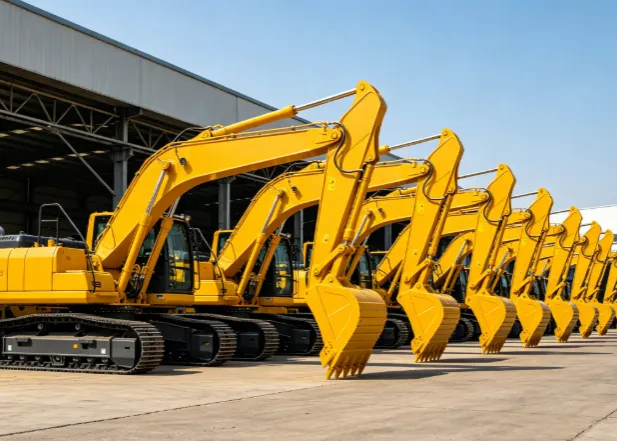
China exported over 120,000 excavators globally in 2025, and a rapidly growing share of those machines are landing on Canadian soil. From Calgary construction firms to Toronto excavation contractors, Canadian businesses are discovering what many already know — shipping excavators from China to Canada can save 30% to 50% on equipment costs compared to buying locally. But saving money on the purchase price means nothing if you get blindsided by the wrong shipping method, surprise port fees, or a CFIA hold at Vancouver that drags on for weeks.
This guide is built from 15-plus years of hands-on freight forwarding experience moving heavy machinery across the Pacific. You will learn exactly which shipping method fits your excavator’s size and budget, see a transparent line-by-line cost breakdown in 2026 USD, walk through Canadian import regulations step by step — including HS codes, duties, and CFIA requirements — and discover how to avoid the five most expensive mistakes first-time importers make. Whether you are importing a single mini excavator or a fleet of 30-ton crawlers, this is the playbook.
Why Import Excavators from China to Canada?
The economics are straightforward. A brand-new SANY SY215C 22-ton crawler excavator costs approximately $75,000–$90,000 USD ex-factory in China. A comparable new Caterpillar 320 sells for $180,000–$220,000 in the Canadian market. Even after adding $10,000–$15,000 in shipping and logistics costs, the landed price still undercuts the Western equivalent by 40% to 50%. The gap is even wider in the used equipment market, where three-to-five-year-old Chinese excavators routinely sell for 50% to 65% less than comparable used North American machines.
But cost is only part of the story. The quality of Chinese construction equipment has improved dramatically over the past decade. Here are the brands Canadian importers should know:
- SANY Heavy Industry: The world’s largest construction equipment manufacturer by sales volume. SANY has been aggressively building its North American dealer and parts network, making it the safest bet for first-time importers concerned about after-sales support.
- XCMG Group: China’s largest construction machinery company by revenue, renowned for heavy-duty crawler excavators in the 20-to-50-ton range. XCMG machines are common on major infrastructure projects across Asia and Africa.
- LiuGong Machinery: The most practical entry point for many Canadian buyers. LiuGong already has an established parts and service presence in Canada, which significantly reduces the after-sales risk that worries many first-time importers.
- Sunward, Zoomlion, and SDLG: Budget-friendly brands dominating the mini and mid-size excavator segments. Ideal for landscaping, utility work, and small-scale construction.
For context, a Calgary-based excavation contractor we worked with saved approximately CAD $45,000 by importing a SANY SY215C directly from Shanghai versus purchasing an equivalent used Caterpillar 320 from a local dealer. The machine arrived in 32 days door-to-door and was on the job site the following week.
What Determines Your Shipping Method? Key Excavator Specs That Matter
Before comparing shipping methods, you need to know five things about your excavator. These five factors directly determine which transport option is available to you — and how much it will cost.
Weight is the first filter. Mini excavators (1–5 tons) open up the cheapest container shipping option. Mid-size machines (6–20 tons) typically require flat racks. Large crawler excavators above 25 tons may push the limits of standard flat rack equipment, and anything exceeding 40 tons almost certainly needs breakbulk handling. The heavier the machine, the fewer options you have — and the faster costs escalate.
Dimensions matter as much as weight. A standard 40-foot container has an internal width of 2.35 meters. If your excavator — even with the arm folded and bucket removed — exceeds that width, you cannot use a standard container and must move up to a flat rack, open-top, or RO-RO solution. Height is the secondary constraint: open-top containers can accommodate taller cargo, but flat racks have no height ceiling.
Self-propelled status determines RO-RO eligibility. If your excavator can drive onto a vessel under its own power — which most tracked and wheeled excavators can — Roll-on/Roll-off (RO-RO) becomes an option. RO-RO is often both cheaper and safer than crane-dependent methods, but the machine must be fully operational, with the battery disconnected and fuel drained below one-quarter tank before loading.
New versus used is the documentation multiplier. New excavators ship with straightforward paperwork: commercial invoice, packing list, and manufacturer certifications. Used machines trigger additional requirements on both ends — CCIC pre-shipment inspection in China and CFIA steam-cleaning and biosecurity inspection in Canada. We cover these in detail in the used equipment section below.
Final destination in Canada shapes your port strategy. A machine headed to Vancouver or Calgary should route through Vancouver or Prince Rupert on the West Coast — 14 to 20 days ocean transit. A machine destined for Toronto or Montreal typically lands at Vancouver and transloads to CN Rail or CPKC rail for the cross-country leg, adding 7 to 12 days. Direct all-water service to Halifax is available but takes 30 to 38 days. Port choice alone can swing your total door-to-door timeline by two to three weeks.
4 Shipping Methods for Excavators: Cost, Speed & Safety Compared
Choosing the right shipping method is the single most important logistics decision you will make. Get it right and your excavator arrives on time and on budget. Get it wrong and you pay more for a higher-risk shipment. Here is how the four methods stack up for excavator shipping in 2026.
Method 1: FCL Container — Cheapest for Small Excavators
If your excavator is light and compact enough to fit inside a standard shipping container after removing the arm, bucket, and sometimes the cab, Full Container Load (FCL) is your most economical option by a wide margin. A 20-foot GP container can typically accommodate mini excavators up to 5 tons, and a 40-foot HQ container can handle machines up to roughly 8 tons after disassembly. For a detailed breakdown of container dimensions and pricing, see our 20 ft container shipping cost from China to Canada guide.
| Factor | Detail |
|---|---|
| Best for | Mini excavators (1–8 tons) that fit after disassembly |
| Ocean freight (20GP to Vancouver) | $2,500–$4,000 USD |
| Transit time | 14–20 days port-to-port |
| Damage risk | Medium (disassembly/reassembly required) |
| Key advantage | Lowest cost; container protects from weather |
| Key disadvantage | $300–$800 disassembly labor in China + reassembly cost in Canada |
The container itself acts as a protective shell against salt spray, rain, and handling damage — a meaningful advantage over exposed methods like flat racks. The trade-off is the disassembly and reassembly labor. You will need a qualified mechanic at the destination to put the machine back together and verify that all hydraulic connections, electrical systems, and structural bolts are correctly reinstalled.
Method 2: Flat Rack Container (20FR / 40FR) — The Workhorse for Mid-Size Excavators
Flat rack containers are the go-to solution for the vast majority of excavators imported from China. A flat rack is essentially a container floor with collapsible end walls — no sides, no roof. This means over-width cargo extends beyond the standard container footprint without issue. A 40-foot flat rack can carry up to 35–40 tons, covering most 10-to-30-ton excavator models without disassembly.
| Factor | Detail |
|---|---|
| Best for | Most 10–30 ton excavators that exceed standard container width |
| Ocean freight (40FR to Vancouver) | $3,800–$5,200 USD + $800–$1,500 OOG surcharge |
| Transit time | 14–20 days port-to-port |
| Damage risk | Low–Medium (exposed to elements; securely lashed) |
| Key advantage | No disassembly needed; widely available at major Chinese ports |
| Key disadvantage | Weather exposure; limited flat rack supply during Q3 peak season |
Because the cargo sits exposed on deck or in a hold, proper lashing and weather protection are critical. A professional freight forwarder will use heavy-duty chains, tensioners, and dunnage to secure the excavator, and will apply shrink-wrap or tarpaulins to critical components — especially the cab, engine compartment, and hydraulic cylinders.
Method 3: RO-RO (Roll-on/Roll-off) — Safest for Self-Propelled Excavators
Roll-on/Roll-off (RO-RO) shipping is the method we recommend most often for self-propelled excavators, and for one simple reason: the machine is never lifted by crane. The excavator drives onto the vessel at the origin port under its own power and drives off at the destination. No crane lifts means no dropped-machine risk — the leading cause of catastrophic cargo damage in heavy equipment shipping.
| Factor | Detail |
|---|---|
| Best for | Any self-propelled tracked or wheeled excavator |
| Cost | $100–$250 per CBM (typically $3,500–$5,000 total for mid-size) |
| Transit time | 18–28 days (fewer direct RO-RO sailings than container services) |
| Damage risk | Lowest (no crane lifts; minimal handling) |
| Key advantage | Safest method; no disassembly; no special container equipment |
| Key disadvantage | Fewer sailings; excavator must be fully operational |
The operational requirement is non-negotiable: the excavator must drive on and off under its own power. You will also need to disconnect the battery and drain the fuel tank to roughly one-quarter full before loading — standard safety protocol for all RO-RO shipments.
Method 4: Breakbulk / LOLO — For the Biggest Machines
When an excavator exceeds flat rack capacity — typically above 40 tons or with extreme dimensions — breakbulk (LOLO, Lift-on/Lift-off) is the only remaining option. The machine is lifted by heavy-duty port cranes directly onto the vessel deck or into the hold, secured with industrial-grade lashing, and transported as non-containerized cargo.
| Factor | Detail |
|---|---|
| Best for | Excavators exceeding 40 tons or flat rack dimensional limits |
| Cost | $85–$380 per ton + $800–$3,500 lashing fees + heavy-lift surcharges |
| Transit time | 25–45 days (dependent on breakbulk vessel scheduling) |
| Damage risk | Medium–High (multiple crane lifts; open-deck exposure) |
| Key advantage | No size or weight limit; economical for multi-unit shipments |
| Key disadvantage | Most expensive per-unit for single machines; port crane capacity must be verified |
Decision Matrix: Which Method for Your Excavator?
| Excavator Type | Weight | Best Method | Est. Ocean Freight | Transit | Risk |
|---|---|---|---|---|---|
| Mini Excavator | 1–5 tons | FCL Container | $2,500–$4,000 | 14–20 days | Medium |
| Compact Excavator | 5–8 tons | FCL (40HQ) or Flat Rack | $3,000–$4,500 | 14–20 days | Medium |
| Mid-Size Crawler | 10–22 tons | Flat Rack (40FR) | $3,800–$5,200 | 14–20 days | Low–Medium |
| Mid-Size (Self-Propelled) | 10–30 tons | RO-RO | $3,500–$5,000 | 18–28 days | Lowest |
| Large Crawler | 25–40 tons | Flat Rack or Breakbulk | $5,000–$12,000+ | 20–45 days | Medium |
| Mining-Class | 40+ tons | Breakbulk / LOLO | $85–$380/ton | 25–45 days | Medium–High |
Here is a simple decision framework: If it fits a container after removing the arm and bucket, choose FCL. If it is self-propelled and operational, choose RO-RO. If it exceeds container width but stays under 40 tons, choose Flat Rack. If none of the above apply, Breakbulk is your answer.
How Much Does It Cost to Ship an Excavator from China to Canada?
Transparency matters. Too many importers get a “competitive” ocean freight quote only to discover thousands of dollars in destination charges they never budgeted for. For current rate benchmarks across all container types, see our regularly updated overview of sea freight from China to Canada price and how much to ship a container from China to Canada. Here is what a real, all-in cost breakdown looks like for shipping a 22-ton crawler excavator from Shanghai to Vancouver via 40-foot flat rack — the single most common excavator shipping scenario we handle.
Line-by-Line Cost Breakdown: 22-Ton Excavator, Shanghai → Vancouver
| Cost Component | Estimate (USD) | What It Covers |
|---|---|---|
| Inland trucking (factory → Shanghai Port) | $600–$1,200 | Heavy-haul flatbed; 200–500 km typical |
| Export customs clearance (China) | $150–$300 | Broker fee + documentation processing |
| Origin terminal handling (OOG flat rack) | $400–$650 | Port handling surcharge for out-of-gauge cargo |
| Ocean freight (40FR, Shanghai → Vancouver) | $3,800–$5,200 | Base ocean rate; subject to BAF/FAF |
| OOG / Flat rack surcharge | $800–$1,500 | Carrier premium for non-standard equipment |
| BAF (Bunker Adjustment Factor) | $200–$500 | Quarterly fuel surcharge adjustment |
| Cargo insurance (~0.35% of CIF value) | $250–$400 | Based on ~$80,000 declared value |
| Destination THC (Port of Vancouver) | $450–$750 | Canadian terminal handling |
| Canadian customs brokerage | $150–$350 | Licensed CBSA broker fee |
| Single Entry Bond / CBSA processing | $300–$800 | Varies by declared value |
| Destination trucking (port → final site) | $800–$2,000 | Heavy-haul flatbed to your address |
| Total Landed Cost (Excl. Duties & Taxes) | ~$7,900–$13,650 | |
| Canadian GST (5%) | On CIF + duty value | Mandatory on all imports |
| Provincial Sales Tax (PST/HST) | Varies by province | BC 7%, ON 13% HST, QC 9.975%, AB 0% |
| Customs Duty (HS 8429.51 / 8429.52) | Typically 0% | Most excavator HS codes are MFN duty-free |
Cost Estimates by Excavator Size
| Excavator Category | Weight Range | Recommended Method | Total Landed Cost (Est.) |
|---|---|---|---|
| Mini Excavator | 1–5 tons | FCL Container (20GP) | $3,500–$6,000 |
| Compact Excavator | 5–10 tons | FCL (40HQ) or Flat Rack | $5,500–$9,000 |
| Mid-Size Crawler | 10–22 tons | Flat Rack (40FR) | $9,000–$16,000 |
| Large Crawler | 25–45 tons | Flat Rack or Breakbulk | $16,000–$35,000+ |
Five Ways to Reduce Your Excavator Shipping Cost
- Disassemble to fit a container. Removing the arm, bucket, and cab can shrink an excavator enough to use FCL instead of flat rack — saving $1,000 to $2,000 per shipment.
- Ship in Q1 (January through March). Ocean freight rates during the post-Chinese-New-Year lull are typically 15% to 25% lower than the Q3 peak season rush.
- Consolidate multiple machines. Shipping two or three excavators on a single breakbulk vessel drops the per-unit cost significantly compared to booking individual flat racks.
- Compare RO-RO against flat rack. For mid-size self-propelled excavators, RO-RO is sometimes both cheaper and safer. Always get quotes for both methods.
- Route through Prince Rupert instead of Vancouver. Prince Rupert typically has lower congestion and sometimes lower terminal fees. The ocean transit is also one to two days shorter from Shanghai.
Major Shipping Routes, Ports & Transit Times
Your choice of origin port in China and destination port in Canada directly affects cost, transit time, and equipment availability. We cover every major shipping route from China to Canada in detail, including transit benchmarks for each corridor. Here is what you need to know for excavator shipping.
Origin Ports in China
| Port | Best For |
|---|---|
| Shanghai | Largest port; most frequent sailings; best flat rack and OOG equipment availability |
| Ningbo | Deep-water port; excellent heavy-lift and OOG cargo handling infrastructure |
| Shenzhen (Yantian/Shekou) | Ideal for excavators manufactured in the Pearl River Delta (Guangdong/Guangxi) |
| Qingdao | Specialized in machinery and industrial equipment exports; serves northern China |
| Guangzhou (Nansha) | Close to southern China’s dense manufacturing ecosystem |
| Tianjin | Northern gateway for Beijing, Hebei, and surrounding provinces |
For most excavator shipments, Shanghai and Ningbo offer the best combination of sailing frequency, flat rack availability, and competitive rates. If your supplier is in southern China, Shenzhen’s Yantian terminal handles OOG cargo reliably.
Destination Ports & Transit Times
| Route | Ocean Transit | Total Door-to-Door (Est.) |
|---|---|---|
| Shanghai → Vancouver | 14–18 days | 25–30 days |
| Ningbo → Vancouver | 14–18 days | 25–30 days |
| Shenzhen → Vancouver | 16–22 days | 27–35 days |
| Shanghai → Prince Rupert | 13–17 days | 24–28 days (fastest route) |
| Shanghai → Montreal (via Vancouver + CN Rail) | 28–35 days | 40–50 days |
| Shanghai → Halifax (all-water) | 30–38 days | 42–52 days |
Inland Canada: What Happens After the Port?
Most excavators entering Canada land at Vancouver or Prince Rupert on the West Coast. From there, inland delivery depends on the final destination:
- Vancouver → Calgary / Edmonton: 3–5 days via heavy-haul flatbed truck or CPKC rail. This is the most common inland corridor for construction equipment in Western Canada.
- Vancouver → Toronto: 7–10 days via CN Rail transload. The excavator is transferred from the port to a rail flatcar for the cross-Canada journey, then transferred to a truck for final delivery.
- Vancouver → Montreal: 8–12 days via CN Rail transload, following the same rail corridor.
- Winter considerations (November through March): Seasonal weight restrictions on some Canadian highways can affect heavy-haul truck routing. Rail transloading is less affected by weather. Prince Rupert tends to experience fewer winter weather disruptions than Vancouver.
Canadian Customs Clearance: Regulations, Duties & Required Documents
This is the section that separates a smooth import from a costly customs hold. Canada has specific — and strictly enforced — requirements for importing heavy construction equipment. Here is everything you need to know.
HS Code Classification for Excavators
Getting the Harmonized System (HS) code right is step one. For excavators, three codes are most relevant:
| HS Code | Description | Typical Duty Rate |
|---|---|---|
| 8429.51 | Self-propelled bulldozers, angledozers, graders, levellers, scrapers, mechanical shovels, excavators, shovel loaders (front-end shovel type) | 0% (MFN) |
| 8429.52 | Machinery with a 360° revolving superstructure (covers most crawler excavators — this is the most common code for standard excavators) | 0% (MFN) |
| 8429.59 | Other mechanical shovels, excavators, and shovel loaders (specialized or non-revolving types) | 0% (MFN) |
Most excavators entering Canada fall under HS 8429.52 and benefit from a 0% Most-Favored-Nation (MFN) tariff rate. However, always verify your specific model against the CBSA Customs Tariff Finder before shipping — misclassification, even at a 0% rate, can trigger compliance audits.
Duties and Taxes: What You Actually Pay
Even at a 0% duty rate, taxes still apply:
| Tax Type | Rate | Applied To |
|---|---|---|
| GST (Goods and Services Tax) | 5% | (CIF value + duty amount) |
| PST (Provincial Sales Tax) | 7% BC, 6% SK, 7% MB | (CIF value + duty amount) — varies by province |
| HST (Harmonized Sales Tax) | 13% ON, 15% NB/NS/NL/PEI | (CIF value + duty amount) — combined GST+PST provinces |
| QST (Quebec Sales Tax) | 9.975% | Applied on top of GST in Quebec |
Example calculation for a $80,000 USD excavator (CIF value) imported to British Columbia: $0 duty + $4,000 GST (5%) + $5,600 PST (7%) = $9,600 total taxes payable.
The CBSA Clearance Process, Step by Step
- Pre-arrival (before vessel loading in China): File the ACI (Advanced Commercial Information) eManifest at least 48 hours before the vessel departs. This gives CBSA time to risk-assess the shipment.
- PARS (Pre-Arrival Review System): Your Canadian customs broker submits the customs entry before the cargo arrives. PARS clearance means the excavator can be released immediately upon vessel arrival — no waiting.
- Upon arrival at the Canadian port: The broker files the formal entry. Duties and taxes are assessed and must be paid before release.
- Potential CBSA examination: Random or targeted physical inspection. OOG excavators on flat racks may need to be moved to a designated inspection yard, adding 1–3 days.
- Release: Once cleared, the excavator is available for inland transport.
CFIA Requirements: The Used Equipment Trap
The Canadian Food Inspection Agency (CFIA) is responsible for preventing agricultural pests and soil-borne diseases from entering Canada. This is the single most common cause of used excavator import delays — and it is entirely avoidable.
Any excavator that has been used in soil — which is virtually all of them — must arrive in Canada thoroughly steam-cleaned and completely free of soil, plant material, seeds, and organic debris. CFIA inspectors will examine the undercarriage, tracks, bucket, and any crevice where soil can hide. If they find contamination, your excavator is placed on hold. You pay for mandatory professional cleaning at the port — plus storage fees, inspection fees, and weeks of delay. In severe cases, CFIA can order re-export at the importer’s expense.
Construction-only machines face lower CFIA scrutiny than machines used in agriculture. If your excavator was previously used on a farm, expect more thorough inspection.
Emissions Compliance: EPA Tier 4 Equivalent
Diesel-powered excavators imported into Canada must meet emissions standards equivalent to US EPA Tier 4 Final. New Chinese excavators manufactured from 2020 onward — particularly from SANY, XCMG, and LiuGong — increasingly ship with Tier 4-compliant engines as standard. Older or used excavators may require emissions retrofitting, which can cost $15,000 to $30,000 depending on the engine. Insist on an engine emissions certificate or manufacturer’s statement of compliance before committing to any used excavator purchase.
Bilingual Labeling: English & French Required
Canadian law requires that all safety decals, warning labels, and operator manuals be available in both English and French. This is frequently overlooked — many Chinese manufacturers ship with English-only or Chinese-only labeling. The importer is responsible for compliance. The most practical solution: request bilingual decal kits from the manufacturer before shipping, or work with a local Canadian decal supplier to produce replacement labels before the machine enters service.
Complete Documentation Checklist
Here is every document you need to clear an excavator through Canadian customs. Print this list and check it twice before your vessel sails.
- Commercial Invoice — Detailed description, HS code, declared value, Incoterm, seller and buyer information
- Packing List — Per-item dimensions, gross/net weight, marks and numbers
- Bill of Lading (B/L) — Ocean freight contract; surrender or original depending on payment terms
- Certificate of Origin (COO) — May qualify for tariff relief under applicable trade agreements
- ISPM 15 Fumigation Certificate — Required for ALL wooden packaging, crating, or dunnage material
- Engine Emissions Certificate — Manufacturer’s statement confirming Tier 4 or equivalent compliance
- Steam-Cleaning Certificate — Required for used excavators; issued by a recognized inspection agency in China
- CCIC Pre-Shipment Inspection Certificate — Recommended for used equipment; verifies condition and value before export
- Importer’s Business Number (BN) — Your Canadian tax identifier; required for CBSA entry
- Canada Customs Invoice (CCI) — Or equivalent electronic submission through your customs broker
Shipping Used Excavators from China to Canada: Extra Steps You Cannot Skip
The used excavator market is where the biggest savings live — and where the biggest headaches hide. A three-year-old SANY or XCMG excavator can cost 50% to 65% less than a comparable used North American machine, often with under 2,000 operating hours. But getting it into Canada requires additional steps that first-time importers frequently overlook.
China Export Side: Extra Requirements for Used Equipment
Before a used excavator can leave China, it must pass CCIC (China Certification & Inspection Group) pre-shipment inspection. This is mandatory for used machinery exports — CCIC verifies the machine’s condition, confirms the declared value, and checks that the equipment is legally exportable. You will also need complete service history documentation: maintenance records, repair history, and an engine-hour log. Budget $300 to $600 for CCIC inspection and an additional $500 to $1,000 for an independent third-party inspection from a firm like QIMA or Asia Quality Focus.
Canada Import Side: The CFIA Factor
We covered CFIA steam-cleaning requirements above, but it bears repeating here: this is non-negotiable. A professional steam-cleaning in China costs $500 to $1,500 and takes one to two days. A CFIA-mandated cleaning at the Port of Vancouver after a failed inspection costs $2,500 to $5,000 and delays your shipment by two to four weeks. The math is simple.
Used excavators also face closer emissions scrutiny. Diesel engines manufactured before 2014 may not meet Tier 4 equivalent standards. Before purchasing, confirm the engine model year, obtain the emissions certificate, and consult with your freight forwarder or customs broker about admissibility. A $30,000 engine retrofit on a $40,000 used excavator destroys the economics of the deal.
Used vs. New: Cost Comparison
| Factor | New Excavator | Used Excavator (3–5 Years) |
|---|---|---|
| Machine purchase price | $75,000–$120,000 | $25,000–$55,000 |
| Shipping & logistics | $9,000–$16,000 | $9,000–$16,000 (same shipping cost) |
| CCIC inspection | Not required | $300–$600 |
| Steam-cleaning (China) | Not required | $500–$1,500 |
| CFIA compliance risk | Minimal | Moderate (cleaning, inspection, potential delays) |
| Emissions risk | Low (2020+ models Tier 4 compliant) | Moderate to High (depends on engine age) |
| Documentation burden | Standard | 3–5 additional documents |
| Total landed cost (est.) | $85,000–$136,000 | $35,000–$74,000 |
| Lead time | 2–6 months (factory production) | 2–4 weeks (ready to ship) |
Used excavators make sense when the machine is young (under 5 years), has low hours (under 3,000), comes with complete service records, and has a Tier 4-compliant engine. If any of those conditions are missing, the savings may not justify the additional complexity and risk.
We have seen shipments of used excavators held at the Port of Vancouver for three-plus weeks because a CFIA inspector found soil residue packed into the track undercarriage — an entirely avoidable $3,200 cleaning, inspection, and storage bill. Do not let this be you.
DDP Door-to-Door Shipping: The Simplest Way to Get Your Excavator from Factory to Jobsite
Here is the option that eliminates every coordination headache we have described so far. DDP (Delivered Duty Paid) is an Incoterm where the freight forwarder handles the entire chain — factory pickup, Chinese export customs, ocean freight, Canadian import customs, duty and GST payment, and final delivery to any address in Canada. This is what we call true door to door shipping from China to Canada — one provider, one invoice, zero coordination headaches.
The DDP Process, Step by Step
- You select your excavator model and negotiate with the supplier in China.
- Your freight forwarder picks up the machine from the factory — anywhere in China.
- Export documentation and Chinese customs clearance are handled for you.
- The optimal ocean freight method is selected based on the excavator’s weight, dimensions, and whether it is new or used.
- The excavator arrives at a Canadian port. Import customs clearance is managed by a licensed broker.
- Duties, GST, and provincial taxes are calculated and paid on your behalf.
- Inland transport — rail or heavy-haul truck — delivers the excavator to your specified address.
- You inspect the machine and sign off. It is ready to work.
For a broader walkthrough covering all cargo types and Incoterms, see our how to ship from China to Canada step-by-step guide.
DDP vs. FOB vs. CIF: Which Incoterm Fits You?
| Incoterm | What It Covers | Best For |
|---|---|---|
| FOB (Free On Board) | Supplier delivers to the Chinese port; you handle everything after | Experienced importers with an existing Canadian customs broker and trucking relationships. Learn more about FOB shipping from China to Canada and when it makes sense for heavy equipment. |
| CIF (Cost, Insurance, Freight) | Supplier arranges and pays for freight and insurance to the Canadian port; you still handle customs, duties, and inland delivery | A middle ground — less coordination than FOB but you still own the import process |
| DDP (Delivered Duty Paid) | One provider handles everything — factory to your door — including all customs, duties, and taxes | First-time importers, SMEs without in-house logistics teams, anyone who values predictability over micromanagement |
Why DDP Makes Sense for Excavator Shipping
Excavators are among the most logistically complex cargo you can import. You are coordinating a heavy-haul truck in China, an OOG flat rack or RO-RO booking, a trans-Pacific ocean carrier, a Canadian customs broker, CBSA and potentially CFIA clearance, and an inland heavy-haul carrier in Canada. That is at least five separate service providers, each with their own documentation, scheduling, and payment processes. Under DDP, you deal with one point of contact who manages all five.
Choosing the Right Heavy Equipment Freight Forwarder
Not every freight forwarder can handle excavators. A specialized freight forwarder from China to Canada brings the heavy-lift expertise and destination-side relationships that general forwarders simply do not have. When evaluating providers, look for these qualifications:
- Demonstrated OOG and heavy-lift experience. General container freight forwarders lack the specialized knowledge for flat rack bookings, crane lifts, and lashing plans. Ask for examples of recent excavator shipments.
- Canadian presence or trusted Canadian agent. The destination side is where problems surface — you want a forwarder who has boots on the ground at Canadian ports.
- Transparent, all-inclusive DDP pricing. A written, line-by-line quote with no vague “destination charges” categories. If they cannot break down the cost, they are probably hiding something.
- FIATA and IATA certifications signal that the forwarder meets international professional standards for freight logistics.
At Dantful.US International Logistics, your partner for shipping from China to Canada, we have spent 15-plus years specializing in exactly this corridor — heavy machinery and construction equipment from China to the Americas. Our Shenzhen-based team knows the Chinese excavator manufacturing ecosystem intimately. Our direct contracts with major ocean carriers mean competitive rates and secured space — even during peak season. And our dedicated Canadian customs brokerage partners ensure that your excavator clears CBSA without unnecessary delays. If you are planning to ship an excavator from China to Canada, contact Dantful International Logistics for a tailored DDP quote — transparent, all-inclusive, and built on real experience, not estimates from a website.
FAQs
How long does it take to ship an excavator from China to Canada?
Ocean transit to Vancouver or Prince Rupert takes 14 to 20 days. Add 5 to 10 days for customs clearance and inland delivery. For a detailed timeline breakdown by port and shipping season, see our guide on how long does sea shipping take from China to Canada. Total door-to-door for West Coast destinations is typically 25 to 30 days. For East Coast destinations like Toronto or Montreal — which typically route through Vancouver and then transload to rail — expect 40 to 50 days door-to-door.
What is the cheapest way to ship an excavator from China to Canada?
If your excavator is small enough to fit a standard shipping container after removing the arm and bucket — typically mini excavators under 5 to 8 tons — FCL container shipping is the cheapest method. For larger excavators, RO-RO often delivers the best combination of cost and safety, particularly for self-propelled machines.
Do I have to pay import duty on excavators from China to Canada?
Most excavators classified under HS codes 8429.51, 8429.52, or 8429.59 benefit from a 0% MFN (Most-Favored-Nation) tariff rate. However, GST (5%) and provincial sales tax (PST or HST, varying by province) still apply to the CIF value of the import.
What documents do I need to ship an excavator from China to Canada?
The complete list includes: Commercial Invoice, Packing List, Bill of Lading, Certificate of Origin, ISPM 15 fumigation certificate (for wood packaging), engine emissions certificate, steam-cleaning certificate (if used), CCIC inspection certificate (recommended for used), your Canadian Business Number, and a Canada Customs Invoice prepared by your broker.
Can I ship a mini excavator in a regular shipping container?
Yes. Most mini excavators in the 1-to-5-ton range can fit inside a 20-foot or 40-foot standard container after removing the arm, bucket, and sometimes the cab. This is the most economical shipping method available for small excavators.
Which Chinese port is best for shipping excavators to Canada?
Shanghai and Ningbo offer the most frequent sailings and the best availability of flat rack and OOG handling equipment — making them the top choices for excavator shipping. Shenzhen (Yantian/Shekou) is the best option for excavators manufactured in southern China. Qingdao is a strong choice if your supplier is in the northern provinces.
Get A Free Shipping Quote