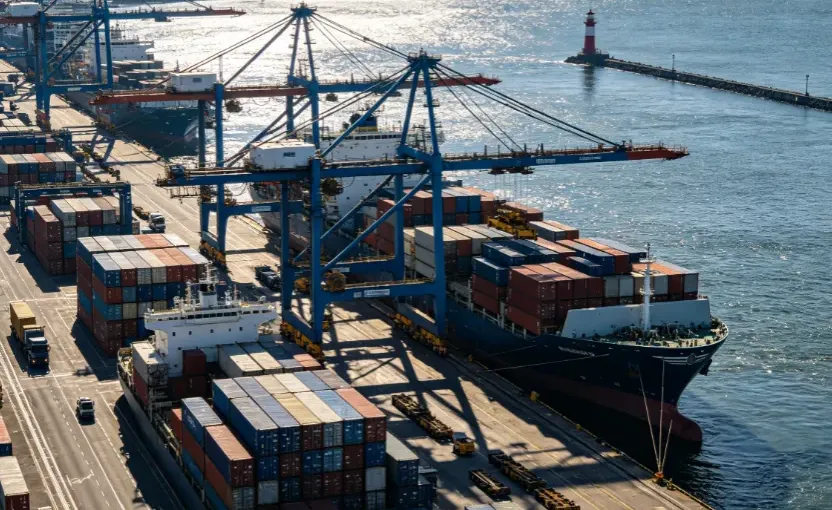
Vietnam’s exports to the United States surpassed $136 billion in 2025, and with brands like Walmart, Nike, and Samsung deepening their Vietnamese supply chains, demand for container shipping from Vietnam to the USA has never been higher. If you are an importer, e-commerce seller, or business owner sourcing from Vietnam, you are likely facing a maze of decisions: Should you ship FCL or LCL? Do you need a 20ft or 40ft container? Should you choose FOB or DDP? West Coast or East Coast? One wrong choice can add thousands of dollars in unexpected costs — or weeks of delays to your supply chain.
In this complete guide, you will get real 2026 container shipping rates by port pair, a clear FCL vs LCL cost comparison, step-by-step shipping process with timeline estimates, US customs and tariff requirements (including the new 20% reciprocal tariff on Vietnamese goods), and a practical framework for choosing a reliable freight forwarder. Everything is based on current market data and firsthand freight forwarding experience on the Vietnam–USA corridor.
FCL vs LCL Container Shipping from Vietnam to USA: 20ft, 40ft & 40ft HC Guide
Before you book a shipment, the first decision is: which container type fits your cargo — and should it be FCL (Full Container Load) or LCL (Less than Container Load)? Getting this right determines your per-unit shipping cost, transit time, and cargo safety.
20ft, 40ft & 40ft HC Container Types: Which Size Fits Your Cargo?
Most importers default to the familiar 20ft or 40ft container, but there is a third option — the 40ft HC (High Cube) — that can save you 13% on per-unit freight without spending an extra dollar.
| Container Type | Internal Dimensions (L × W × H) | Capacity | Max Payload | Typical Pallet Load |
|---|---|---|---|---|
| 20ft GP (General Purpose) | 5.90m × 2.35m × 2.39m | ~33 CBM | ~28,000 kg | 10–11 standard pallets |
| 40ft GP (General Purpose) | 12.03m × 2.35m × 2.39m | ~67 CBM | ~26,500 kg | 21–24 standard pallets |
| 40ft HC (High Cube) | 12.03m × 2.35m × 2.69m | ~76 CBM | ~26,500 kg | 21–24 standard pallets |
| 45ft HC (High Cube) | 13.56m × 2.35m × 2.69m | ~86 CBM | ~25,500 kg | 24–27 standard pallets |
Which container for which cargo?
- 20ft GP is ideal for heavy, dense goods — metal components, machinery parts, ceramic tiles, bags of raw materials. Because the payload limit (~28 tons) is slightly higher than a 40ft, you can load more weight per CBM without hitting the ceiling.
- 40ft GP is the workhorse for general cargo — flat-pack furniture, textiles, consumer electronics, plastic goods. At ~67 CBM, it is the most widely available option on Vietnam–US routes.
- 40ft HC is the hidden efficiency play. It has the same footprint and same ocean freight rate as a standard 40ft GP, but its extra 30cm of height delivers roughly 13% more cargo volume (~76 CBM vs ~67 CBM). If your goods are voluminous but not heavy — assembled furniture, garments on hangers, bulky packaging, lightweight home goods — the 40ft HC gives you more space per dollar than any other option.
- Reefer containers (refrigerated) are essential for Vietnam’s massive seafood export sector (frozen shrimp, pangasius, produce) as well as temperature-sensitive pharmaceuticals. If your goods require temperature control, a standard dry container is not an option — plan for reefer from the start.
Pro tip: Always calculate your CBM before booking. Multiply your total carton count by (L × W × H) in meters per carton. If your shipment fills 13+ CBM, FCL starts becoming more cost-effective than LCL. If you are close to 60+ CBM, a 40ft HC lets you consolidate what would otherwise need two 20ft containers into a single box — cutting your freight bill roughly in half.
FCL (Full Container Load) vs LCL (Less than Container Load)
| Criterion | FCL | LCL |
|---|---|---|
| Best for | Shipments above 13–15 CBM | Shipments below 13 CBM |
| Pricing model | Flat rate per container | Per CBM ($80–$200/CBM Vietnam→USA) |
| Transit speed | Faster — container stays sealed origin to destination | Slower — adds 5–10 days for CFS consolidation and deconsolidation |
| Cargo security | Lower risk — single shipper, sealed container, fewer hand-offs | Higher risk — shared space, multiple cargo handling events |
| Vietnam-side surcharges | None beyond standard THC | CFS fee ($15–$30/CBM), consolidation charges |
The CBM tipping point is the threshold where FCL’s flat rate becomes cheaper than LCL’s per-CBM pricing. In practice, for Vietnam→USA shipments, this usually falls between 13 and 15 CBM.
Here is how the math works. If LCL costs $150/CBM and FCL (20ft) costs $2,100, then: 13 CBM × $150 = $1,950 (LCL still slightly cheaper), but 15 CBM × $150 = $2,250 (FCL wins). Once you cross that line, FCL is both cheaper and safer.
For regular LCL shippers who consistently ship 8–12 CBM per month, consider master consolidation: combine multiple supplier orders into a dedicated container. This can reduce per-CBM cost by 20–35% compared to paying individual LCL rates, while also giving you the speed and security of FCL.
Rule of thumb: If your shipment consistently exceeds ~13 CBM, switch to FCL. The per-unit cost drops, your goods arrive faster, and they spend less time being handled.
How Much Does Container Shipping from Vietnam to the USA Cost? (2026 Rates)
The single most common question from importers is straightforward: what is the actual container shipping cost from Vietnam to the USA? The answer depends on four variables — your origin port in Vietnam, your destination in the US, container size, and the season you ship.
2026 Container Shipping Rates: Vietnam to Major US Ports
The rates below reflect the spot market as of late 2025 and serve as a reliable 2026 planning reference. Ocean freight is dynamic — rates update weekly based on carrier capacity, fuel prices, and seasonal demand. Always request a live quote before budgeting.
| US Destination | 20ft Container | 40ft Container |
|---|---|---|
| Los Angeles / Long Beach (West Coast) | $1,800 – $2,400 | $2,500 – $3,500 |
| Seattle / Portland (Pacific Northwest) | $1,600 – $2,200 | $2,000 – $3,000 |
| Houston / Mobile (Gulf Coast) | $2,500 – $2,700 | $3,100 – $3,300 |
| New York / Baltimore / Savannah (East Coast) | $2,600 – $2,800 | $3,200 – $3,500 |
| Chicago / Atlanta / Dallas (Inland Ramp) | $3,300 – $4,200 | $3,800 – $5,000 |
West Coast ports are the most affordable because of the direct Pacific crossing — the shortest oceanic distance from Vietnam. East Coast destinations cost $1,000–$2,000 more per container due to the longer route, typically via the Panama Canal or transshipment through Singapore. Inland ramp destinations (Chicago, Dallas, Denver, Atlanta) carry the highest rates because they include rail or trucking from the port of entry to the interior.
Total Landed Cost: What You Actually Pay Beyond Ocean Freight
Ocean freight is just the starting point. The total landed cost of your container shipment includes a dozen or more line items. If you only compare port-to-port rates, you are missing 40–60% of the true cost. Here is the complete formula:
Total Landed Cost = Ocean Freight + THC + BAF + Documentation Fee + ISF/AMS
+ Customs Clearance + Import Duty + Reciprocal Tariff (20%)
+ MPF + Inland Delivery + Cargo Insurance
| Cost Component | Typical Range | What It Covers |
|---|---|---|
| Ocean Freight (base rate) | $1,600 – $5,000 | Vessel transport from Vietnam to US port |
| THC (Terminal Handling Charge) | $200 – $500 | Container handling at both origin and destination ports |
| BAF (Bunker Adjustment Factor) | 15–25% of base freight | Fuel cost surcharge, linked to global bunker fuel index |
| Documentation + ISF/AMS | $55 – $130 | Bill of Lading issuance, ISF filing fee, AMS submission |
| Customs Clearance (broker fee) | $100 – $300 | US customs broker service for CBP entry filing |
| Import Duty (HS code dependent) | 0% – 37.5% of CIF value | Standard US import duty rate for your product category |
| ⚠️ Reciprocal Tariff (2026) | 20% of CIF value | Additional tariff applied to most goods imported from Vietnam |
| MPF (Merchandise Processing Fee) | 0.3464% (min $31.67, max $614.35) | CBP formal entry processing fee |
| Inland Trucking (port to warehouse) | $300 – $2,000+ | Drayage/trucking from US port to final destination |
| Cargo Insurance | 0.1% – 0.3% of cargo value | All Risks marine cargo insurance |
Worked Cost Example: One 40ft Furniture Container, Vietnam to Dallas
To make this concrete, here is a real-world cost breakdown for a typical Vietnam-to-USA shipment:
Scenario: One 40ft container of wooden furniture (HS 9403.60, 0% standard duty) loaded at a factory in Binh Duong province, shipped via Cat Lai Port (Ho Chi Minh City) to a distribution warehouse in Dallas, Texas, on DDP (Delivered Duty Paid) terms. CIF declared value: $40,000. Shipped September 2026.
| Line Item | Detail | Amount |
|---|---|---|
| Ocean Freight | Ho Chi Minh → Houston (Gulf Coast) | $3,100 |
| THC, Documentation & ISF | Both origin and destination | $500 |
| US Customs Brokerage | Entry filing and clearance | $200 |
| Reciprocal Tariff (20%) | 20% × $40,000 CIF value | $8,000 |
| MPF (Merchandise Processing Fee) | $40,000 × 0.3464% | $138.56 |
| Inland Trucking | Houston port → Dallas warehouse (~240 miles) | $800 |
| Cargo Insurance (All Risks) | $40,000 × 0.2% | $80 |
| Total Landed Cost | ~$12,819 | |
| Cost per CBM (67 CBM loaded) | ~$191/CBM |
Notice that the reciprocal tariff of $8,000 is by far the largest single line item — more than double the ocean freight itself. This is why understanding the 2026 duty landscape (covered in detail in Section 6) is essential before you budget.
How to Get the Cheapest Container Shipping Rates from Vietnam to USA
- Book 6–8 weeks in advance. Last-minute bookings during peak season can carry 15–30% rate premiums. Carriers reward early commitment.
- Ship 40ft or 40ft HC instead of 20ft. On a per-CBM basis, a 40ft container is roughly 30–40% cheaper than a 20ft. If you can fill the space, always go larger.
- Consolidate LCL shipments into FCL. Once you consistently hit 13+ CBM per shipment, FCL beats LCL on both cost and transit time.
- Route through West Coast ports when possible. LA/Long Beach offers the lowest ocean freight from Vietnam. If your final destination is on the East Coast, compare total DDP cost — inland trucking from LA may cancel the ocean savings.
- Avoid the Aug–Oct Q4 peak. Rates spike 20–40%+. If Q4 inventory is essential, book space by June.
- Work with a forwarder that has direct carrier contracts. Freight forwarders with negotiated allocations with Maersk, MSC, CMA CGM, COSCO, and ONE can offer rates that spot-market buyers simply cannot access. Dantful.US holds direct contracts with all major carriers serving the Vietnam–US corridor.
- Always request an all-inclusive DDP quote. Port-to-port rates hide 40–60% of your actual costs. A transparent, line-item DDP quote shows exactly what you pay at every stage.
Vietnam to USA Container Shipping Time: Ocean Freight Transit Times & Routes
Container shipping time from Vietnam to the USA varies dramatically by route. A shipment bound for Los Angeles can arrive in under three weeks. The same container headed for New York may take over five weeks. Understanding these differences is critical for inventory planning.
Container Shipping Transit Times: Port-to-Port & Door-to-Door
| Origin (Vietnam) | US Destination | Ocean Transit | Total DDP (Door-to-Door) |
|---|---|---|---|
| Ho Chi Minh (Cat Lai / Cai Mep) → Los Angeles | 20–25 days | 28–33 days | |
| Ho Chi Minh → Houston, TX | 25–30 days | 33–40 days | |
| Ho Chi Minh → New York / New Jersey | 35–40 days | 43–50 days | |
| Ho Chi Minh → Savannah, GA | 30–35 days | 38–45 days | |
| Hai Phong → Los Angeles | 25–30 days | 33–38 days | |
| Hai Phong → New York / New Jersey | 35–40 days | 43–50 days | |
| Da Nang → Los Angeles | 25–30 days | 33–38 days |
The fastest route is Ho Chi Minh City (Cai Mep deep-water port) to Los Angeles/Long Beach — a direct Pacific crossing with no transshipment, delivering in as little as 20 days port-to-port.
Vietnam’s Major Export Ports: Where Your Container Departs
Ho Chi Minh City (Cat Lai Port & Cai Mep-Thi Vai Port) is Vietnam’s dominant container gateway, handling roughly 80% of the country’s southern container exports. Cat Lai serves as the main feeder and mid-sized vessel hub, while the deep-water Cai Mep complex accommodates the ultra-large vessels that sail directly to the US. This port cluster serves the southern industrial heartland — Binh Duong (furniture), Dong Nai (textiles, footwear), and Long An (consumer goods, electronics).
Hai Phong Port is the northern gateway, serving the Hanoi–Bac Ninh–Hai Duong manufacturing corridor. This region is dense with electronics assembly, garment factories, and automotive parts suppliers. However, Hai Phong’s channel depth limits vessel size — many shipments transship through Singapore or Busan before crossing the Pacific, adding 3–7 days versus a direct sailing from Cai Mep.
Da Nang Port serves central Vietnam. Volume is smaller, and direct US services are less frequent. Most Da Nang cargo feeds into Ho Chi Minh City for transshipment onto US-bound vessels.
Choosing Your US Arrival Port: West Coast vs East Coast vs Gulf Coast
West Coast (Los Angeles/Long Beach, Seattle, Oakland) offers the fastest transit (20–25 days ocean) and lowest ocean freight. However, LA/Long Beach is the busiest container port complex in the Western Hemisphere, handling over 10 million TEU annually. During peak season (Aug–Oct), congestion, chassis shortages, and terminal delays can erode the speed advantage.
Gulf Coast (Houston, Mobile) provides a middle ground: moderate transit (25–30 days), competitive rates, and significantly less congestion than LA/LB. Houston is an excellent choice for importers distributing to Texas and the Southern US.
East Coast (New York/NJ, Savannah, Baltimore, Miami) has the longest transit (30–40 days ocean) and the highest freight rates — but gives you direct access to the largest US consumer market. If your warehouse or customers are on the Eastern Seaboard, shipping directly to an East Coast port often beats the combined cost of West Coast ocean freight plus cross-country trucking or rail.
Inland ramp destinations (Chicago, Dallas, Atlanta, Denver) are rail-served from coastal ports. These rates include the rail leg, which is why they appear more expensive than coastal ports — but you avoid separate inland transportation arrangements.
What Slows Down Your Container Shipping Time
- Transshipment routing adds 3–7 extra transit days versus a direct sailing.
- Tet holiday (Lunar New Year) in January or February shuts down factories for 1–2 weeks and reduces port operations for up to three weeks. Manufacturers rush to ship before Tet, creating a pre-holiday rate surge and space crunch.
- US CBP inspection can add 1–2 days for a VACIS/NII x-ray scan, or 5–7 days for an intensive physical examination. Clean, accurate documentation is your best defense.
- Chassis and rail shortages at US ports can delay container pickup by several days, especially during peak season at LA/LB.
- Vietnam typhoon season (June–November) occasionally disrupts sailing schedules from central and northern ports.
Container Shipping from Vietnam to USA Step by Step:
Understanding the container shipping process from Vietnam to the USA step by step transforms an overwhelming experience into a manageable timeline. Below is the complete 10-step door-to-door journey on DDP terms — meaning your freight forwarder handles everything from the factory gate to your warehouse door, including all customs and duties.
10-Step Container Shipping Process (DDP Door-to-Door)
| Step | Action | Duration | Responsibility |
|---|---|---|---|
| 1 | Factory Pickup & Container Loading | Day 1–2 | Freight Forwarder |
| 2 | Export Document Preparation | Day 2–3 | Forwarder + Exporter |
| 3 | Vietnam Export Customs Clearance (VNACCS) | Day 3–4 | Forwarder’s Customs Broker |
| 4 | Container Delivery to Port & Vessel Loading | Day 4–5 | Forwarder + Shipping Line |
| 5 | ⚠️ ISF Filing (10+2) — must be filed ≥24h before departure | Day 3–5 | Forwarder or Importer |
| 6 | International Ocean Transit | Day 5 – Day 35 | Shipping Line |
| 7 | US CBP Import Clearance (Form 3461) | 1–3 days after arrival | US Customs Broker |
| 8 | Duty & Tariff Payment (Form 7501) | Within 10 days of release | Importer (or Forwarder if DDP) |
| 9 | Container Release & Drayage from Port | 1–2 days after clearance | Forwarder |
| 10 | Final-Mile Delivery to Warehouse or Amazon FBA | 2–5 days | Trucking Company |
Critical Process Details Every Importer Should Know
Step 3 — Vietnam Export Customs Clearance. Most standard cargo clears through Vietnam’s VNACCS electronic system within 24–48 hours. Delays occur when: the HS code is incorrect, the declared weight or dimensions do not match the Packing List, or the goods are subject to export restrictions requiring additional permits. Always have your forwarder verify HS codes before filing.
Step 5 — ISF (Importer Security Filing). Known as the “10+2” rule, ISF requires the importer to submit 10 data elements and the carrier to submit 2 data elements to US Customs and Border Protection (CBP). This filing must be completed at least 24 hours before the vessel departs Vietnam. There is no grace period. Late, inaccurate, or missing ISF filings carry a penalty of $5,000 or more per violation. On a DDP shipment, your forwarder files ISF on your behalf — confirm this responsibility explicitly in your contract.
Step 7 — US CBP Import Clearance. Upon arrival, CBP reviews your entry documentation (Form 3461). Containers may be selected for a VACIS/NII x-ray scan (1–2 days) or a more disruptive intensive examination (5–7 days). Clean documentation — matching Commercial Invoice, Packing List, and Bill of Lading — significantly reduces your examination probability.
Step 8 — Duty & Tariff Payment. A critical detail many first-time importers miss: US duties are calculated on CIF value (Cost + Insurance + Freight), not the FOB factory price. The 20% reciprocal tariff also applies to CIF value. So if your goods cost $30,000 FOB but $33,500 CIF, your duty is calculated on the higher CIF figure.
Required Documents for Container Shipping from Vietnam to USA
| Document | Purpose |
|---|---|
| Commercial Invoice | Declares HS codes, transaction value, buyer/seller details, and Incoterm used |
| Packing List | Details weight, dimensions, and contents of every carton and pallet |
| Bill of Lading (B/L) | Contract of carriage between shipper and carrier — also serves as proof of ownership |
| Certificate of Origin (C/O Form B) | Proves Vietnamese origin of goods — essential for correct tariff classification and to distinguish from China-origin products |
| ISF Filing (10+2) | Mandatory US importer security filing — vessel cannot legally sail without it |
| Customs Bond | Required for all commercial imports valued over $2,500 (Single Entry or Continuous) |
| CBP Form 3461 (Entry Manifest) | Filed upon vessel arrival to request immediate cargo release |
| CBP Form 7501 (Entry Summary) | Filed within 10 calendar days of release with final duty and fee calculation |
| Fumigation Certificate | Required for all wood packaging materials (pallets, crates) under ISPM 15 standards |
| Product-Specific Permits | FDA (food, cosmetics, medical devices), CPSC (consumer products), FCC (electronics), USDA (agricultural goods) |
Vietnam to USA Import Duties, Customs Clearance & DDP Shipping Guide
If there is one section of this guide that can save you the most money — or cost you the most if you skip it — it is this one. The 2026 US import duty landscape for Vietnamese goods has a major new element: a 20% reciprocal tariff applied to most imports from Vietnam. Combined with standard HS code-based duties, this tariff is now the single largest cost factor in container shipping from Vietnam to the USA.
US Import Duties & Tariffs on Vietnam Goods (2026)
Every product imported into the United States is classified under a Harmonized System (HS) code, which determines its standard duty rate (ranging from 0% to 37.5%). In 2026, the US also applies an additional 20% reciprocal tariff on the CIF value of most goods originating from Vietnam.
Critical: Duty is calculated on CIF value (Cost + Insurance + Freight), not your factory FOB price. For budgeting, take your factory price, add freight and insurance, then apply both the HS-based duty and the 20% reciprocal tariff.
| Common Vietnam Export | HS Code Example | Standard Duty | + 20% Reciprocal Tariff | Total Duty Rate |
|---|---|---|---|---|
| Wooden furniture | 9403.60 | 0% | 20% | 20% |
| Cotton T-shirts / garments | 6109.10 | 16.5% | 20% | 36.5% |
| Leather footwear / shoes | 6403.99 | 8% | 20% | 28% |
| Smartphones / electronics | 8517.12 | 0% | 20% | 20% |
| Ceramic tableware | 6912.00 | ~6% | 20% | ~26% |
| Frozen shrimp / seafood | 0306.17 | 0% | 20% | 20% |
In addition to duties, every formal US customs entry incurs:
- MPF (Merchandise Processing Fee): 0.3464% of CIF value, with a minimum of $31.67 and a maximum of $614.35 per entry.
- HMF (Harbor Maintenance Fee): 0.125% of CIF value, applied to ocean freight imports only.
- Section 232 tariffs: Additional 25% on steel products and 10% on aluminum products, regardless of country of origin.
- Customs Bond: A Single Entry Bond (
$50–$100 per entry) is sufficient for occasional importers. A Continuous Bond ($300–$800 per year) is more cost-effective if you ship two or more times per year and is required for annual import values exceeding $100,000.
Vietnam to USA Shipping Incoterms: FOB, CIF & DDP Explained
Your chosen Incoterm determines who bears the cost and risk at every stage — from the factory floor in Binh Duong to your warehouse door in the United States. Choosing the wrong Incoterm is one of the most expensive mistakes an importer can make. For a detailed side-by-side comparison of costs and risks, read our guide on CIF vs FOB: which is better for US importers.
| Incoterm | Seller (Vietnam) Pays For | Buyer (US Importer) Pays For | Best For |
|---|---|---|---|
| EXW (Ex Works) | Goods made available at factory | Everything — pickup, export, freight, import duties, US delivery | Large, experienced importers with established logistics teams in Vietnam |
| FOB (Free On Board) | Factory-to-port delivery + Vietnam export customs | Ocean freight, insurance, US import duties, inland delivery | Buyers who want to control ocean freight booking and carrier selection |
| CIF (Cost, Insurance, Freight) | Delivery to US port + ocean freight + insurance | US import duties, customs clearance, onward inland delivery | Cost comparison where insured freight cost is bundled |
| DDP (Delivered Duty Paid) | Everything — door-to-door including all duties, tariffs, and taxes | Receive goods at warehouse — nothing else | Best choice for SMEs, first-time importers, and anyone who wants a single predictable cost |
Why DDP is the smartest choice for most Vietnam-to-USA importers: A DDP shipment gives you a single all-inclusive price — factory pickup in Vietnam, export customs clearance, ocean freight, US CBP clearance, all duties and tariffs (including the 20% reciprocal tariff), MPF, and final-mile delivery to your warehouse or Amazon FBA center. One contract, one point of contact, zero surprise costs. The forwarder handles the regulatory complexity so you can focus on your business.
US Customs Clearance: Tips to Avoid Delays
- File ISF 48–72 hours before vessel departure, not the 24-hour minimum. This buffer protects against last-minute filing errors.
- Ensure your Commercial Invoice and Packing List match exactly. Weight, quantity, and product description must be identical across both documents. Discrepancies are a red flag that triggers CBP scrutiny.
- Always include a Vietnam Certificate of Origin (C/O Form B). This document proves your goods were genuinely manufactured in Vietnam — critical for correct tariff application and to prevent misclassification as China-origin goods (which may face Section 301 tariffs).
- Be prepared for CBP examinations. A VACIS/NII x-ray scan takes 1–2 days; an intensive physical examination takes 5–7 days. Accurate, complete documentation is the best way to minimize your chance of being selected.
- Work with a US-licensed customs broker who knows Vietnamese cargo types. Dantful.US provides in-house US customs brokerage as part of every DDP shipment, ensuring seamless hand-offs between Vietnam export and US import processes.
Cargo Insurance & How to Avoid Shipping Delays from Vietnam to USA
Even the best-planned container shipment faces risks — ocean storms, port congestion, cargo theft, and the operational chaos of peak season. This section covers two critical topics that no competitor article addresses in depth: cargo insurance and a practical peak season strategy for Vietnam–USA shipping.
Cargo Insurance for Container Shipping: Cost, Coverage & Is It Worth It?
Your 40ft container holds $30,000 to $100,000+ worth of goods. A single severe weather event, container theft, or vessel accident can wipe out your entire shipment investment. Cargo insurance costs a fraction of a percent of your cargo value — yet shockingly, many importers skip it.
| Coverage Level | What It Covers | Recommendation |
|---|---|---|
| Institute Cargo Clauses (A) — “All Risks” | Theft, physical damage, water damage, sinking, stranding, fire, collision, general average contribution — the broadest available coverage | Recommended for all shipments |
| Institute Cargo Clauses (B) | Named perils only — fire, explosion, vessel collision, stranding, sinking, cargo loss during loading/discharge | Adequate but leaves gaps |
| Institute Cargo Clauses (C) | Major casualties only — fire, explosion, vessel sinking/stranding — minimal coverage | Not recommended for commercial cargo |
Cost: Just 0.1%–0.3% of your declared cargo value. For a $40,000 container, that is $40–$120 — roughly the cost of a single dinner for the peace of mind of full protection.
The General Average Trap: Most importers have never heard of General Average — and that ignorance is dangerous. Under maritime law, if a vessel declares general average (due to a fire, grounding, or emergency), every cargo owner on board shares the total loss proportionally — even if your specific container is undamaged. Without insurance, you could be on the hook for tens of thousands of dollars. “All Risks” cargo insurance covers general average contributions.
Peak Season & How to Avoid Container Shipping Delays
Timing your shipments strategically is one of the most effective ways to control both cost and transit reliability. Vietnam has its own seasonal rhythms — most importantly Tet (Lunar New Year) — which interact with global shipping peak seasons.
| Period | Season | Rate Impact | Delay Risk | Recommended Action |
|---|---|---|---|---|
| Jan–Feb | Tet (Lunar New Year) | +20–40% | Factory closures 1–2 weeks; port operations reduced up to 3 weeks | Ship by mid-December or wait until late February |
| Mar–May | Post-Tet recovery | Moderate / stable | Normal | Best shipping window of the year |
| Jun–Jul | Summer restock | +10–15% | Moderate | Book space by April |
| Aug–Oct | Q4 holiday peak (Black Friday, Christmas) | +20–40%+ | LA/LB congestion, chassis shortages, space scarcity | Book space by June; consider Gulf or East Coast ports to bypass LA/LB gridlock |
| Nov–Dec | Post-holiday lull | Declining | Normal | Good window for Q1 inventory positioning |
Common Container Shipping Mistakes from Vietnam to USA
| Mistake | Consequence | How to Avoid It |
|---|---|---|
| Wrong HS Code | Customs hold, penalty exposure, back-duty assessments | Have your forwarder’s customs broker classify and verify HS codes before the first shipment |
| Missing or late ISF filing | $5,000+ CBP penalty per violation | Confirm ISF filing responsibility explicitly in your forwarder contract; file 48+ hours before departure |
| No cargo insurance | Total loss = entire investment gone, zero recourse | Insure every shipment — 0.2% of cargo value is negligible compared to 100% loss risk |
| Wrong container type | Damaged goods or large amounts of wasted space | Match cargo to container: HC for bulky goods, reefer for temperature-sensitive, 20ft for dense/heavy |
| Port-to-port quote only | Hidden destination charges blow your budget by 40–60% | Always request a total DDP door-to-door quote with line-item breakdown |
| Shipping during Tet without buffer | 2–3 week delay wrecks your inventory planning | Factor the Tet window into your timeline or avoid Jan/Feb sailings |
| Underestimating US inland delivery | $500–$2,000 budget surprise at destination | Include inland trucking in your DDP quote — never assume port arrival equals delivery |
Best Container Shipping Companies & Freight Forwarders from Vietnam to USA
Finding the best freight forwarder for Vietnam to USA container shipping routes is about more than just the lowest rate. A forwarder that delivers competitive pricing plus Vietnam export expertise, US import compliance, and door-to-door DDP capability saves you far more than a cheap quote ever will.
How to Choose a Freight Forwarder for Vietnam to USA Container Shipping
Evaluate every forwarder against these seven criteria:
1. Vietnam–USA route specialization. Does the forwarder specialize in this specific corridor, or is it just one of 50 routes they claim to serve? Vietnam–US shipping requires dual expertise: Vietnam export customs procedures (VNACCS system, C/O Form B, factory-side logistics) and US import regulations (ISF, CBP, FDA/CPSC compliance, the 20% reciprocal tariff).
2. Direct carrier contracts. Forwarders with allocated space agreements with Maersk, MSC, CMA CGM, COSCO, ONE, Hapag-Lloyd and other major carriers can offer competitive rates year-round — and more importantly, priority container space during peak season when spot-market buyers get rolled.
3. FIATA / IATA certification. These globally recognized certifications mean the forwarder has passed financial standing audits and adheres to international professional standards. They are not just a logo on a website — they are your assurance of a legitimate, accountable partner.
4. In-house US customs brokerage. When the same company handles both the Vietnam export filing and the US import entry, there is no documentation hand-off where errors creep in. The Commercial Invoice that leaves Vietnam is the same one filed with CBP.
5. Transparent DDP pricing. A trustworthy forwarder provides a line-item DDP quote showing every cost category — ocean freight, THC, BAF, documentation, customs brokerage, duties, tariffs, inland trucking, insurance. Lump-sum quotes hide inflated margins.
6. Dedicated account manager. Vietnam–USA shipping is not a “book and forget” transaction. You need one person who knows your cargo, your HS codes, your preferred routings, and your delivery requirements.
7. Real-time tracking and proactive communication. Online container tracking should be standard. Proactive alerts when a sailing is delayed, a customs hold is placed, or a document is required are what separate a professional forwarder from a booking agent.
Red Flags to Watch For
- Prices “too good to be true” — they almost certainly are. Cut-rate quotes usually mean hidden destination charges or compliance shortcuts that surface as penalties later.
- Cannot explain ISF filing requirements in detail.
- No physical office or agent presence in Vietnam. If they cannot pick up your goods at the factory, they are not a Vietnam forwarder — they are a reseller.
- Quotes only port-to-port and avoids DDP. Port-to-port hides 40–60% of your actual costs behind vague “destination charges apply” language.
- No FIATA/IATA membership or NVOCC bond on file.
Why Dantful.US International Logistics for Your Vietnam to USA Container Shipping
Dantful.US International Logistics brings 15+ years of hands-on freight forwarding experience to every Vietnam–USA container shipment. In addition to our Vietnam services, we also operate one of the most established shipping from China to USA networks in the industry, offering integrated multi-country sourcing and logistics solutions across Asia. Here is what sets us apart:
- FIATA & IATA certified — audited financial stability and adherence to international freight forwarding standards.
- Direct carrier contracts with all major shipping lines on the Trans-Pacific trade lane, translating to competitive rates and guaranteed space — even during Q4 peak.
- DDP door-to-door expertise: We manage every step under a single contract — factory pickup at your supplier in Vietnam, Vietnam export customs clearance (VNACCS), ocean freight with real-time tracking, US CBP import clearance via our in-house licensed customs brokers, full duty and tariff payment (including the 2026 20% reciprocal tariff), and final delivery to your warehouse, 3PL, or Amazon FBA center anywhere in the United States.
- US warehouse facilities available for inventory staging, cross-docking, distribution, and Amazon FBA prep services.
- Dedicated account manager who knows your cargo, your HS codes, and your business — not a call center queue.
- Transparent line-item DDP pricing — you see exactly where every dollar goes. No hidden fees, no destination surprises.
Ready to ship? Contact Dantful.US International Logistics today for a free, transparent DDP quote on your next container from Vietnam to the USA.
FAQs
How much does it cost to ship a container from Vietnam to the USA?
In 2026, a 40ft container costs $2,500–$3,500 in ocean freight to West Coast ports (Los Angeles/Long Beach). For a full DDP door-to-door service including all duties, customs clearance, the 20% reciprocal tariff, and inland delivery, expect $6,000–$8,800 to the West Coast and $7,500–$10,500+ to the East Coast. The exact figure depends on your HS code, cargo value, destination ZIP code, and shipping season.
How long does container shipping from Vietnam to the USA take?
Port-to-port ocean transit takes 20–25 days from Ho Chi Minh City to Los Angeles/Long Beach (West Coast), and 35–40 days to New York/New Jersey (East Coast). Door-to-door DDP adds 8–12 days for factory pickup, Vietnam export customs, US import clearance, duty processing, and final-mile delivery. Fastest total door-to-door: approximately 28–33 days to the West Coast.
Should I use FCL or LCL for shipping from Vietnam to USA?
FCL (Full Container Load) is cheaper per cubic meter and safer if your shipment exceeds 13–15 CBM. You get a sealed, dedicated container with faster transit and fewer handling events. LCL (Less than Container Load) is more economical for smaller volumes but adds 5–10 days due to consolidation and deconsolidation. Frequent LCL shippers should explore master consolidation to bridge toward FCL economics.
What is the cheapest way to ship a container from Vietnam to USA?
Ship a 40ft or 40ft HC container (per-CBM cost is 30–40% cheaper than a 20ft), route through West Coast ports (the shortest and cheapest ocean leg from Vietnam), book 6–8 weeks in advance to lock in pre-peak rates, and always compare total DDP door-to-door cost — port-to-port rates hide 40–60% of your actual expenses.
What documents are required for container shipping from Vietnam to the USA?
The essential documents are: Commercial Invoice, Packing List, Bill of Lading (B/L), Certificate of Origin (C/O Form B), ISF Filing (10+2), Customs Bond, CBP Form 3461 (Entry Manifest), CBP Form 7501 (Entry Summary), Fumigation Certificate (for wood packaging), and any product-specific permits (FDA, CPSC, FCC, USDA).
Can I ship DDP (Delivered Duty Paid) from Vietnam to USA?
Yes. DDP shipping means your freight forwarder handles the entire process — factory pickup in Vietnam, export customs clearance, ocean freight, US CBP import clearance, full duty and reciprocal tariff payment, and final-mile delivery to your door. Dantful.US specializes in DDP container shipping from Vietnam to the USA, giving you a single predictable cost and a single point of contact.
Get A Free Shipping Quote