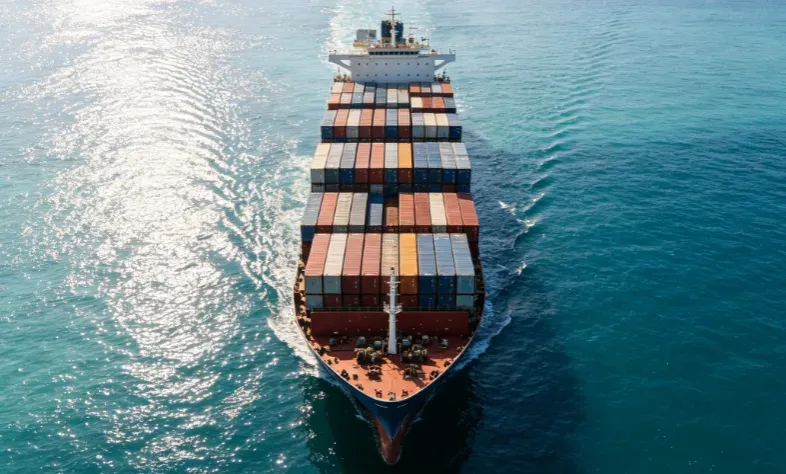
Shenzhen does not have one port. It has two, on opposite sides of the city, and the one you choose decides how long your cargo to Chile sits on the water. Book a full container out of Yantian in the east and a mainline vessel calls there directly; load the same container at Shekou or Chiwan in the west and it may barge or feeder to Hong Kong first. Same city, same supplier, a difference of five to eight days on a lane where Christmas stock either lands or misses its window.
That is the practical problem at the centre of shipping from Shenzhen to Chile in 2026. This guide is written for importers and e-commerce sellers moving consumer electronics, LED lighting, mobile accessories, appliances and general merchandise from the Pearl River Delta to Santiago, Valparaíso and the northern free zone at Iquique — and it deals with the three decisions that actually move your landed cost: which Shenzhen terminal, which box size, and whether your supplier sends the Form F certificate that turns Chile’s 6% duty into 0%. I have quoted these rates from fifteen years of loading at both terminals for Dantful.US, and the country-level overview sits on our shipping from China to Chile page if you want the wider picture first.
Shipping Cost from Shenzhen to Chile: September 2026 Rates from Yantian and Shekou
These are realistic September 2026 port-to-port quotes including ocean freight, BAF, origin terminal handling and documentation in Shenzhen, and destination charges in Chile — but excluding Chilean import taxes:
| Loading port → destination | 20GP | 40GP | 40HQ |
|---|---|---|---|
| Yantian → San Antonio | $1,850–$3,400 | $2,700–$4,900 | $2,850–$5,100 |
| Yantian → Valparaíso | $1,900–$3,450 | $2,750–$4,950 | $2,900–$5,150 |
| Shekou/Chiwan → San Antonio | $1,900–$3,500 | $2,750–$5,000 | $2,900–$5,200 |
| Yantian → Iquique | $2,400–$4,300 | $3,300–$5,700 | $3,450–$5,900 |
| Yantian → Antofagasta | $2,500–$4,450 | $3,400–$5,900 | $3,600–$6,100 |
Yantian is marginally cheaper to the two central ports because the direct strings call there and there is no feeder leg. The northern ports cost 25–30% more: the voyage is longer, and Iquique and Antofagasta are usually served by a relay or an intra-South-America feeder rather than a direct Asia call.
Under about 12–15 CBM, LCL groupage out of Shekou is the cheaper route at $90–$200 per CBM (minimum 1 CBM, plus a $25–$50 origin documentation fee and destination deconsolidation). Urgent or high-value cargo goes by air: Shenzhen Bao an (SZX) to Santiago (SCL) at $4.5–$8.0 per kg for 100–500 kg. Our sea freight from China to Chile guide tracks how the carrier mix behaves across the year.
Peak-season alert: September to December is Chilean Christmas restocking, and rates to San Antonio and Valparaíso rise 15–30% with them. Add Chinese New Year in late January, when Yantian and Shekou space disappears two to three weeks ahead. Book three to four weeks out for a fixed sailing.
The Three Surcharges That Decide a Shenzhen–Chile Quote
Ocean freight is the number everybody compares, and it is not the number that decides the invoice. On this lane, three line items move more than the base rate:
| Charge | When it bites | Typical 2026 figure |
|---|---|---|
| BAF/CAF fuel surcharge | Moves with bunker prices every month | $180–$420 per 40ft |
| PSS peak season surcharge | September to December, WCSA services | $300–$600 per 40ft |
| Container imbalance / equipment fee | When Chile imports more than it exports, empties pile up at San Antonio | $80–$250 per box |
| Free time at destination | Standard is 5–7 calendar days before detention starts | $55–$110 per box per day after |
Ask for those four line by line before you compare forwarders. A quote that looks $400 cheaper at the ocean line and hides a PSS and an equipment imbalance fee is not cheaper.
Sea Freight Transit Time from Shenzhen to Chile: Yantian Direct vs Hong Kong Relay
Transit time on this lane is decided at the booking, not by the vessel speed:
| Sailing | Port-to-port | Typical service pattern |
|---|---|---|
| Yantian → San Antonio (direct) | 28–35 days | Asia–West Coast South America mainline, weekly |
| Yantian → Valparaíso (direct) | 29–36 days | Same string, Valparaíso call before or after San Antonio |
| Yantian → San Antonio via Busan or Manzanillo | 36–44 days | Used when direct space is full in peak season |
| Shekou/Chiwan → Hong Kong feeder → WCSA | 35–43 days | Barge or feeder to Hong Kong, then mainline |
| Yantian → Iquique / Antofagasta | 33–42 days | Relay, often transshipped at San Antonio |
| Chilean customs clearance | 2–4 working days | Clean documents, no SAG inspection |
| Inland delivery, San Antonio → Santiago | 1–2 days | 2–3 days to Concepción or the south |
Two Shenzhen-specific factors are worth planning around. First, the eastern terminals and the western terminals are not interchangeable on the same booking — Yantian sits beside the Yantian International Container Terminals, one of the largest single container facilities in the world, with deep water and the direct South America calls; Shekou Container Terminals and Chiwan are smaller and rely more on feeder connections. Second, 18 and 19 September are Chile’s national holidays, and the days around them slow clearance, trucking and port gates in San Antonio — if your vessel berths in that window, budget three extra days.
Why a Shenzhen Booking Can Beat a Guangzhou One to Chile
Both cities are in Guangdong, and both ship to the same Chilean ports, but the Deltas work differently. Guangzhou loads at Nansha (deep water, mainline) or Huangpu (riverside, groupage). Shenzhen loads at Yantian (mainline) or Shekou/Chiwan (west side). Yantian is Asia’s busiest export gateway for electronics, which means more direct sailings and more weekly capacity to South America than the Nansha strings. Where Shenzhen loses is on volume: Yantian is a busier port, so cut-offs are tighter and late documentation is rejected without discussion. If you compare the two origins, our Guangzhou to Chile guide uses the same rate structure so you can put the numbers side by side. For a Shenzhen-origin timeline across the whole Americas, see how long shipping from Shenzhen to the Americas takes.
Yantian or Shekou: Which Shenzhen Port Ships Your Container to Chile
This is the decision most importers never make consciously, and it is worth 5–8 days:
| Yantian (YICT) | Shekou / Chiwan (SCT) | |
|---|---|---|
| Location | East Shenzhen, Dapeng Bay | West Shenzhen, Nanshan |
| Best for | FCL, direct mainline sailings | LCL groupage, small FCL, Dongguan cargo |
| Chile routing | Direct Asia–WCSA calls | Feeder to Hong Kong or transshipment |
| Truck time from Bantian / Longgang | 25–45 min | 70–100 min |
| Truck time from Bao an / Nanshan | 70–110 min | 20–40 min |
| Cut-off discipline | Tight, strictly enforced | Slightly more flexible |
| Free time at origin | 5–7 days | 5–7 days |
A simple rule that has held for years: electronics consolidated in Longgang, Bantian or Futian go out of Yantian; cargo from Bao an, Nanshan or Dongguan that is being grouped with other suppliers goes out of Shekou. If your supplier is in Huaqiangbei, the electronics market district in Futian, both terminals are roughly a two-hour round trip, and the deciding factor becomes the sailing, not the truck. Never let a forwarder book Shekou purely because it is closer to their own warehouse — on a direct-sailing week that choice costs you a week.
20ft vs 40ft Container Cost from Shenzhen to Chile: Choosing the Right Box
Shenzhen cargo is usually light and bulky — speakers, monitors, plastic houseware, LED fixtures — so volume, not weight, picks the box:
| Box | Practical loading | Best when | Cost to San Antonio (Sept 2026) |
|---|---|---|---|
| 20GP | 25–28 CBM, up to 21–24 t on Chilean roads | 15–28 CBM of cargo | From $1,850 |
| 40GP | 54–56 CBM | 30–55 CBM | From $2,700 |
| 40HQ | 62–65 CBM | 40–65 CBM, bulky low-density goods | From $2,850 |
Per CBM, the arithmetic is blunt: a 20ft carrying 25 CBM at $1,850 works out at $74 per CBM, while a 40HQ carrying 62 CBM at $2,850 is $46 per CBM. If your supplier can pack 40 CBM or more into one drop, the high cube is the cheaper container even though the headline number is bigger. Where the 20ft wins is on a partial order you would otherwise split into two LCL shipments: at 18–22 CBM, one 20ft beats 20 CBM of groupage at $90–$200 per CBM almost every time. For the full breakdown of box prices on this lane, see our guide to how long shipping from China to Chile takes and its transit tables.
Two practical notes from loading at Yantian. Chilean trucking limits axle weight more tightly than the container itself, so a 20ft packed to 26 tonnes will be split at destination — keep road-legal weight in mind, not just the container rating. And VGM (verified gross mass) must be filed before the cut-off; a supplier who “will weigh it later” is a delayed booking.
Air Freight from Shenzhen to Chile: SZX Rates and the Chargeable-Weight Rule
Air is the right answer for a smaller share of this trade than most sellers assume, but for launch stock, spare parts and seasonal top-ups it is the difference between selling in December and selling in January:
| Service | Chargeable weight | Rate (Sept 2026) | Door-to-door time |
|---|---|---|---|
| Express courier (DHL/UPS/FedEx) | Under 30 kg | $9–$15 per kg | 3–6 days |
| Air express line, consolidated | 30–150 kg | $5–$9 per kg | 5–9 days |
| Direct/priority air cargo | 300 kg and above | $4.5–$8.0 per kg | 4–8 days |
| Sea + last-mile (sea-express) | From 0.5 CBM | $130–$190 per CBM delivered | 32–42 days |
There is no non-stop freighter from Shenzhen to Santiago, so direct air cargo usually transships once — through Hong Kong, Seoul/Incheon, Doha or Madrid — before landing at SCL. That is why a “3-day” air quote becomes a 6-day delivery.
The volumetric rule is where Shenzhen air quotes fall apart. Airlines bill the greater of actual and volumetric weight, and volumetric weight = length × width × height (cm) ÷ 6000. A Bluetooth speaker carton measuring 62 × 45 × 38 cm bills at 17.67 kg on the volumetric formula while the scale says 9 kg — you pay almost double for air. Consumer electronics are the most exposed category on this lane, so repack, remove retail display packaging where the buyer allows it, and always give your forwarder carton dimensions before you compare rates.
Our industry insight: the single most common air-quote correction we make for Chile is the carton measurement. Quotes built on supplier-declared weights come back 30–50% higher once the cartons are actually measured at the warehouse.
E-commerce Shipping from Shenzhen to Chile: Parcels, Marketplaces and DDP Delivery
Shenzhen is the world’s densest cross-border e-commerce supply base, and Chile is one of Latin America’s fastest-digitalising markets, so this lane has its own rules. Four practical routes exist for a seller restocking a Chilean marketplace warehouse, a Shopify store or a Mercado Libre operation:
| Route | Good for | Cost basis | Time |
|---|---|---|---|
| Courier (DHL/UPS/FedEx) | Samples, launches, single high-value items | Per kg + fuel | 3–6 days |
| Air express line with DDP | 20–150 kg replenishment, marketplace stock | Per kg, duties included | 5–9 days |
| Sea groupage + delivery (sea-express) | 0.5–12 CBM, routine restocks | Per CBM, delivered | 32–42 days |
| FCL to your 3PL in Santiago or San Antonio | 15 CBM and above | Per container | 30–38 days |
One 2026 change matters more than the rest. Chile closed its low-value VAT loophole: since 25 October 2025 (Ley 21.713), courier imports up to USD 500 have paid the full 19% IVA, and platforms and sellers are expected to collect it. If your landed-cost sheet still assumes parcels under $41 arrive tax-free, your DDP price to a Chilean customer is now 19% short. The low-value duty exemption on small parcels is a separate, much lower threshold — do not confuse the two.
Door to door here means the service, not the Incoterm. DDP and DAP are the two Incoterms used to quote it: under DDP the forwarder includes Chilean duties and IVA in one fixed price, under DAP you pay them on arrival. Most e-commerce sellers want DDP because the customer sees a single delivered number — but confirm which term is on the quote, because the 19% IVA is exactly the line that gets forgotten. If you are weighing service levels, our freight forwarder from China to Chile guide covers how to compare them, and merchants already shipping Shenzhen-origin e-commerce to the region use the same playbook as our Shenzhen to Uruguay route.
Chile Customs Clearance for Shenzhen Cargo: Form F, 19% IVA and SAG Inspection
Chilean clearance is genuinely one of the cleanest in South America, and it still punishes paperwork errors harder than the port does. The structure is simple:
- Arancel (customs duty): Chile applies a flat 6% ad valorem on CIF value as its baseline rate.
- China–Chile FTA: in force since 2006 and upgraded in 2019, it drops most manufactured goods to 0% — but only with a valid Form F certificate of origin.
- IVA: 19% on CIF plus duty, payable at clearance by the importer.
- SAG inspection: the agricultural and livestock service inspects food, plants, wood packaging, animal products and some consumer goods; it adds days, not weeks, when the paperwork is complete.
- Importer requirements: a Chilean RUT tax number and a licensed agente de aduanas to file, unless you ship DDP and your forwarder handles it.
The Form F failure mode is worth spelling out. The certificate must be issued before the vessel sails, match your goods line by line — HS codes, quantities, descriptions, exporter name — and be presented at clearance. Arrive without it and Chile applies the full 6% and generally does not refund it afterwards. On a $20,675 CIF shipment, that is $1,476 of avoidable cost once the extra IVA on the duty is counted. Under-declaring to compensate is a much worse idea: Chilean customs publishes minimum reference values and holds cargo for inspection when a declared price falls below market.
Documents Your Shenzhen Supplier Must Send Before the Cut-off
- Commercial invoice (exporter name, RUT of the Chilean importer, HS codes, unit values, FOB terms)
- Packing list with carton dimensions and weights per item
- Bill of lading, telex or original release per your letter of credit
- Form F certificate of origin for the 0% duty rate
- MSDS and UN38.3 test report for any lithium battery product; a dangerous goods declaration for power banks
- Import licence or SAG permit for regulated categories (food contact, cosmetics, telecommunications equipment)
Every one of those must agree on the supplier name and the HS codes. The fastest clearance I have seen on this lane came from a supplier who emailed the packing list dimensions a week before the cut-off; the slowest came from a mislabelled HS code that turned a two-day clearance into nine.
How to Ship from Shenzhen to Chile: A Shenzhen Electronics Order Costed to Santiago
Here is the sequence, and then the arithmetic on a real-sized order:
- Confirm the Incoterm with your supplier. Buy FOB Yantian or FOB Shekou so you control the freight and the sailing choice.
- Pick the terminal with your forwarder, based on where the cargo is physically consolidated, not on which port is closer to the forwarder’s office.
- Book three to four weeks ahead in the September–December window, and note the 18–19 September Chilean holidays when planning delivery.
- Get the Form F issued before sailing — this single document is the difference between 6% and 0% duty.
- File VGM and confirm the cut-off with the actual carton weights, not estimates.
- Pre-clear in Chile. Your agente de aduanas files before berthing; IVA is settled at release.
- Arrange inland delivery to Santiago (1–2 days) or your 3PL warehouse, then reconcile the landed cost against the quote.
Now the money. A Shenzhen supplier ships one 20ft of LED fixtures and mobile accessories, FOB Yantian $18,000, 22 CBM and 6,800 kg, 4,000 sellable units:
| Cost line | Amount | Note |
|---|---|---|
| FOB Yantian | $18,000 | Supplier invoice |
| Ocean freight + origin charges | $2,600 | Yantian → San Antonio, includes BAF |
| Marine insurance | $75 | ~0.35% of CIF |
| CIF San Antonio | $20,675 | Duty base |
| Duty with Form F | $0 | 6% = $1,240 without the certificate |
| IVA 19% on CIF | $3,928 | Recoverable only against Chilean sales |
| Destination charges + delivery to Santiago | $620 | THC, documentation, one SAG check |
| Landed cost | $25,223 | $6.31 per unit against a $4.50 FOB unit price |
Without Form F, the same container lands at $26,699 — $1,476 more for one missing document. Run that number across four containers a year and the certificate is worth a small van.
If your cargo is lighter and you are testing the market, the same order at 6 CBM goes LCL out of Shekou at roughly $90–$200 per CBM plus delivery, and the landed cost per unit rises, which is precisely why the first order is usually the LCL one and the second is a 20ft.
Ready to compare Shenzhen and Guangzhou loading options for your next Chile order? Send us the carton list and the destination city through our contact page and we will price Yantian and Shekou side by side, with the Form F requirement spelled out.
Frequently Asked Questions
How much does it cost to ship from Shenzhen to Chile in 2026?
In September 2026 a 20ft container from Yantian to San Antonio runs $1,850–$3,400 and a 40ft high cube $2,850–$5,100, excluding Chilean taxes. LCL from Shekou is $90–$200 per CBM, and air freight from Shenzhen Bao an (SZX) to Santiago (SCL) is $4.5–$8.0 per kg for 100–500 kg.
How long does it take to ship from Shenzhen to Chile?
Direct Yantian sailings reach San Antonio and Valparaíso in 28–35 days port to port. Relaying through Busan or Manzanillo takes 36–44 days, and Shekou or Hong Kong feeder services add about a week. Add 2–4 working days for customs clearance plus 1–3 days of inland delivery to Santiago. Air freight is 4–8 days door to door.
Should I load my container at Yantian or Shekou?
Use Yantian for full containers: the Asia–West Coast South America mainlines call there directly and the truck run from Bantian or Longgang is short. Use Shekou or Chiwan when your cargo is consolidated in Bao an or Nanshan, or when you ship LCL groupage, since the western terminals host the densest consolidation warehouses for Shenzhen and Dongguan cargo.
Do I pay import duty on Shenzhen goods in Chile?
Chile applies a flat 6% ad valorem duty on CIF value, but under the China–Chile Free Trade Agreement — in force since 2006 and upgraded in 2019 — most goods enter at 0% with a valid Form F certificate of origin. You still pay 19% IVA on the CIF value plus duty.
Can I ship small e-commerce orders or samples from Shenzhen to Chile?
Yes. Parcels under about 30 kg are cheapest by express courier at $9–$15 per kg, air express lines handle 30–150 kg at $5–$9 per kg, and sea groupage with last-mile delivery works from about 0.5 CBM at $130–$190 per CBM delivered. Since 25 October 2025 Chile collects the full 19% IVA on courier imports up to USD 500, so a DDP price has to carry that cost.
Can I ship power banks or lithium batteries from Shenzhen to Chile?
Yes, but not as ordinary cargo. Lithium battery goods need an MSDS, a UN38.3 test report and usually a dangerous goods declaration with a carrier-approved packing method; power banks are UN3480 and normally require a Class 9 booking. Declare the battery content on the invoice and the bill of lading, and expect DG space to be booked earlier and priced higher.
Get a Shenzhen–Chile Quote for Your Next Yantian Booking
Rates to Chile move with the season, the carrier and the box — and the terminal you load at changes both the schedule and the price. Tell us what you are shipping, where in Shenzhen it is consolidated, and where in Chile it needs to arrive, and we will come back with a Yantian and a Shekou option, the Form F checklist for your product, and a landed-cost figure you can take to your buyer. Start at our contact page or ask for the country overview on the China to Chile shipping page.