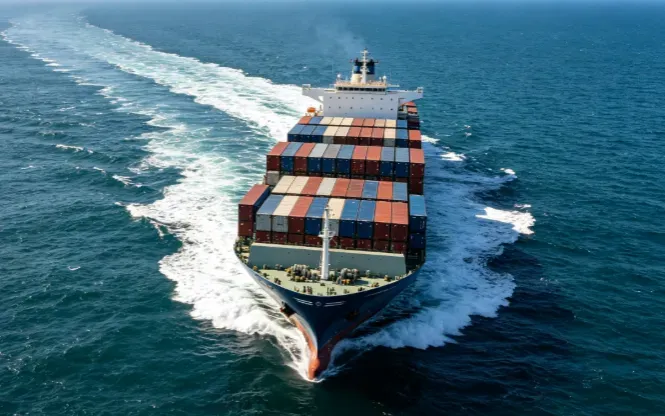
China has been Chile’s largest trading partner for over a decade, with bilateral trade surpassing $50 billion annually. However, navigating the logistics can be challenging. Whether you face unexpected delays in SICNEX or miss out on 0% FTA duty because of paperwork errors, choosing the right freight forwarder from China to Chile is the key to protecting your margins.
In this comprehensive guide, we will break down the exact shipping costs, transit times, and customs procedures for September 2026. You will learn how to choose the right shipping method—whether that is high-volume ocean freight or urgent air delivery—and how to select the best port for your cargo, avoiding the hidden traps that cost importers thousands of dollars every year.
Shipping Cost from China to Chile: September 2026 Freight Forwarder Rates
Understanding the true shipping cost from China to Chile requires looking past “all-in” generic quotes. A reliable freight forwarder will itemize origin charges, core freight rates, destination terminal handling charges (THC), and customs clearance fees.
The logistics market in late 2026 has stabilized following earlier fluctuations, but the peak season (August through October) continues to drive up prices as retailers stock up for the end-of-year holidays. Below is a detailed breakdown of what you should expect to pay when shipping cargo from major Chinese ports (like Shanghai, Shenzhen, or Ningbo) to primary Chilean gateways (like San Antonio or Valparaíso).
| Cost Component | Typical FCL Cost (20ft) | Typical LCL Cost | Notes & Variables |
|---|---|---|---|
| Origin Pickup & Export Customs | $150 – $400 | $50 – $150 | Depends on factory location and inspection requirements. |
| Origin THC & Documentation | $150 – $350 | $30 – $80 | Standard terminal handling at the Chinese departure port. |
| Ocean Freight (Port to Port) | $2,500 – $4,200 | $100 – $180 per CBM | Direct services cost a premium but save 5-10 transit days. |
| Destination THC & Port Charges | $200 – $450 | $50 – $120 | Charged by San Antonio or Valparaíso terminals. |
| Customs Broker (DUS Filing) | $80 – $150 per entry | $80 – $150 per entry | Filed by a licensed Chilean agente de aduanas. |
| Inland Delivery in Chile | $150 – $600 | $80 – $250 | Trucking from the port to Santiago or regional distribution centers. |
Our Industry Insights: The “Hidden” LCL Deconsolidation Fee Many first-time importers choose LCL (Less than Container Load) based on a low origin freight quote (e.g., $50 per CBM), only to be hit with massive destination deconsolidation fees upon arrival in Chile. A transparent freight forwarder from China to Chile will provide the destination charges upfront. Always ask your forwarder to include destination warehouse and handling fees in your initial quote to avoid a 300% markup when your cargo arrives at San Antonio.
Shipping Time from China to Chile: Sea, Air, and Transit Delays
When planning your inventory cycle, the shipping time from China to Chile is just as critical as the cost. Because of the vast distance (roughly 19,000 kilometers across the Pacific), transit times can vary significantly depending on the routing, the carrier, and the mode of transport.
Sea Freight Transit Times
Direct sea freight from major Chinese hubs (Shanghai, Shenzhen, Ningbo) to central Chilean ports (San Antonio, Valparaíso) takes approximately 25 to 33 days. If your forwarder books a transshipment route (often via Mexico or Panama), you should add 5 to 10 days to the total ocean transit.
Air Freight Transit Times
For urgent shipments, air freight is the fastest option. Since there are no direct cargo flights between China and Chile, airlines route shipments through major hubs like Miami (MIA), São Paulo (GRU), or Madrid (MAD) before landing at Arturo Merino Benítez International Airport (SCL) in Santiago. Door-to-door air freight typically takes 3 to 7 days.
Factors Affecting Total Delivery Time
The time on the water or in the air is only part of the equation. Total door-to-door delivery time is affected by:
- Export Customs in China: 1 to 2 days.
- Chilean Import Clearance (SICNEX): A clean DUS declaration clears in 2 to 4 working days.
- SAG Inspections: If your goods are regulated (e.g., agricultural products, wooden packaging), the Servicio Agrícola y Ganadero inspection can add 2 to 5 days.
- Inland Transport: Moving cargo from San Antonio to a Santiago warehouse usually takes 1 to 2 days after release.
Sea Freight from China to Chile: FCL Shipping vs LCL Shipping
Sea freight from China to Chile handles over 90% of the bilateral trade volume. Choosing the right container strategy depends entirely on your cargo volume, budget, and supply chain demands.
FCL Shipping from China to Chile: High-Volume Solutions
FCL shipping from China to Chile (Full Container Load) is the most cost-effective method when your cargo volume exceeds 15 cubic meters (CBM). In this model, you rent the entire container—either a 20ft standard, a 40ft standard, or a 40HQ (High Cube)—ensuring that your goods are not mixed with cargo from other importers.
FCL offers better security, faster handling at the port, and lower per-unit freight costs. It is the preferred choice for Chilean retailers importing consumer electronics, furniture, automotive parts, and mining equipment.
LCL Shipping from China to Chile: Cost-Effective Consolidation
If your cargo is under 15 CBM and you cannot justify the cost of an entire container, LCL shipping from China to Chile (Less than Container Load) is the answer. Your freight forwarder will consolidate your goods with other shipments heading to Chile inside a single container.
While LCL saves money on the ocean freight itself, it requires extra time at both ends for consolidation in China and deconsolidation at the Chilean port. It is an excellent strategy for small and medium-sized enterprises (SMEs) testing new product lines or importing smaller batches of high-value goods.
Air Freight from China to Chile: Fast Transit for Urgent Cargo
When inventory stockouts threaten your sales or you are transporting high-value electronics and precision machinery, air freight from China to Chile becomes the necessary choice.
Air freight rates are significantly higher than ocean freight, typically ranging from $4.60 to $9.00 per kilogram in late 2026. The exact rate depends heavily on the weight tier:
| Weight Tier | Estimated Rate (USD/kg) | Best For |
|---|---|---|
| 45 - 100 kg | $5.00 – $9.00 | Urgent samples, critical spare parts. |
| 100 - 300 kg | $4.60 – $8.50 | Small commercial restocking, high-value electronics. |
| 300 - 500 kg | $4.30 – $8.00 | Mid-sized urgent shipments. |
| 500+ kg | $4.20 – $7.50 | Large commercial air cargo programs. |
Real-Life Scenario: Mastering the 6000 Rule Airlines charge based on whichever is greater: the actual weight or the volumetric (dimensional) weight. The formula used for air freight is Length × Width × Height (in cm) ÷ 6000. We recently helped a Chilean importer shipping lightweight LED displays. Their actual weight was 200 kg, but due to bulky packaging, the volumetric weight was calculated at 450 kg. By advising the supplier to optimize the packaging dimensions, we reduced the chargeable weight to 280 kg, saving the importer over $1,000 in air freight costs.
Door to Door Shipping from China to Chile: Hassle-Free DDP Logistics
For many e-commerce sellers, dropshippers, and small businesses, dealing with Chilean customs bureaucracy is a daunting task. Door to door shipping from China to Chile—specifically under DDP (Delivered Duty Paid) terms—removes this friction completely.
In a DDP arrangement, your freight forwarder handles the entire supply chain from the supplier’s factory in China to your designated address in Chile. This includes:
- Origin pickup and export customs.
- International sea or air freight.
- Payment of Chilean import duties and the 19% IVA.
- Final last-mile delivery.
This method is highly attractive because you receive a single, predictable invoice. You do not need a Chilean RUT (tax ID) or an importer registration in the SICNEX system, as the forwarder’s local entity acts as the importer of record.
Customs Clearance from China to Chile: SICNEX, DUS, and SAG
The success of your import operation hinges on customs clearance from China to Chile. The Chilean customs authority (Servicio Nacional de Aduanas) operates the SICNEX electronic system to process declarations.
To clear commercial goods, a licensed customs broker must file a DUS (Declaración Única de Aduana). A clean filing requires meticulous documentation prepared by your freight forwarder in China:
- Bill of Lading (B/L) or Air Waybill (AWB)
- Commercial Invoice
- Packing List
- Certificate of Origin (Form F)
If your shipment contains regulated products, such as agricultural goods, food items, chemicals, or items with wooden packaging, it will trigger an inspection by the SAG (Servicio Agrícola y Ganadero). Ensure that all wooden pallets are properly fumigated and stamped with the ISPM-15 mark to prevent your cargo from being rejected or destroyed at the port.
Import Tariff from China to Chile: 0% FTA Duty and 19% IVA
One of the biggest advantages of sourcing from China is the China-Chile Free Trade Agreement (FTA), which has been in force since 2006. Because of this agreement, the import tariff from China to Chile for over 98% of product categories is 0%.
To claim this exemption, your freight forwarder must provide a valid Certificate of Origin issued in China. Without this document, standard Chilean duties (typically around 6%) will apply.
However, zero duty does not mean zero taxes. All imports are subject to Chile’s Value Added Tax (IVA), which is 19%. The IVA is calculated on the CIF value (Cost, Insurance, and Freight) plus any applicable duties. Because the FTA reduces the duty to zero, your tax burden is effectively 19% of the CIF value.
Our Industry Insights: The Invoice Mismatch Trap The most common reason cargo gets delayed in Chilean customs is a mismatch between the Commercial Invoice and the Certificate of Origin. Even a minor discrepancy in product descriptions, quantities, or HS codes can cause customs officials to reject the FTA claim, forcing you to pay the 6% standard duty and delaying release by a week. A professional freight forwarder cross-checks these documents before the vessel even departs China.
Which Port is Best? Major Chilean Gateways
Selecting the right port can save you hundreds of dollars in inland trucking costs. A competent freight forwarder will route your cargo based on your final destination, not just default to the biggest port.
- San Antonio: The largest container gateway in Chile, handling roughly 60% of national traffic. It has the deepest draft and the most direct Asia calls. It is the default choice for goods destined for Santiago and central Chile.
- Valparaíso: The historic alternative to San Antonio, serving the same central region. It is often used when San Antonio experiences congestion or strikes.
- Iquique (ZOFRI): Located in the north, this port hosts the Zona Franca (Free Trade Zone). Goods landed here can be stored, repacked, and re-exported (to Bolivia or Peru) without paying Chilean duties or IVA. It is heavily utilized by the northern retail sector.
- Antofagasta / Mejillones: The primary gateways for Chile’s massive mining industry, ideal for importing heavy machinery and supplies directly to the copper and lithium regions, avoiding a 1,300 km truck ride from the central ports.
- Lirquén / San Vicente: Located in the Biobío region, these ports are perfect for forestry, agricultural, and industrial imports destined for southern Chile.
How to Choose the Best Shipping Agent from China to Chile
With hundreds of logistics companies offering services, how do you find the best shipping agent from China to Chile? Look for these key indicators of competence:
- Direct Service Evidence: Ask the forwarder which carrier they use and their weekly rotation to San Antonio or Valparaíso. A good agent will provide actual transit days based on direct sailings, rather than vague estimates.
- Transparent, Itemized Quotes: Reject any “all-in” quotes that do not break down origin charges, ocean freight, destination THC, and customs fees. Transparency is your best defense against hidden costs.
- FTA Expertise: Ensure the forwarder understands how to apply for the Certificate of Origin (Form F) and has a strict internal process for cross-checking documents to guarantee your 0% duty claim.
- Strong Local Network: The best forwarders have robust partnerships with licensed Chilean customs brokers who have direct access to the SICNEX system and extensive experience dealing with SAG regulations.
- Gateway Logic: If your warehouse is in Antofagasta and the forwarder defaults to quoting delivery via San Antonio, they lack local geographical knowledge and will cost you unnecessary inland trucking fees.
FAQ: People Also Ask
How much does a freight forwarder charge from China to Chile?
A forwarder’s fees are built into the freight quote. For September 2026, expect $2,500–$4,200 for a 20ft container to San Antonio, $100–$180 per CBM for LCL, and $4.60–$9.00 per kg for air freight, excluding Chilean import taxes and destination THC.
Is importing from China to Chile subject to duty?
Thanks to the China-Chile Free Trade Agreement, more than 98% of goods enter Chile at 0% duty when accompanied by a valid Certificate of Origin. However, you must still pay the 19% IVA (Value Added Tax) calculated on the CIF value.
What is the cheapest way to ship from China to Chile?
For shipments over 15 CBM, FCL (Full Container Load) sea freight is the cheapest method per unit. For smaller shipments, LCL (Less than Container Load) sea freight is the most economical choice. Air freight should only be used for urgent or high-value cargo.
How long does it take to ship from China to Chile?
Direct sea freight takes 25 to 33 days port-to-port. Door-to-door transit, including customs clearance and delivery, typically takes 28 to 38 days. Air freight is much faster, taking 3 to 7 days door-to-door.
What are the best Incoterms for shipping to Chile?
FOB (Free On Board) and EXW (Ex Works) are the most common for experienced importers who want to control their ocean freight costs. DDP (Delivered Duty Paid) is highly recommended for e-commerce sellers and beginners who want a completely hands-off logistics experience.
Conclusion
Successfully importing from China to Chile requires more than just finding the lowest ocean freight rate. It demands a strategic approach to selecting the right gateway, leveraging the Free Trade Agreement to eliminate duties, and ensuring flawless documentation to sail through the SICNEX and SAG clearance processes.
By partnering with a knowledgeable freight forwarder, you can avoid costly delays, prevent hidden destination charges, and build a resilient supply chain that keeps your business competitive in the Chilean market.
Ready to optimize your logistics? Contact Dantful.US today for a transparent, itemized quote for your shipments from China to Chile, and let our experts handle the complexities of international trade for you.