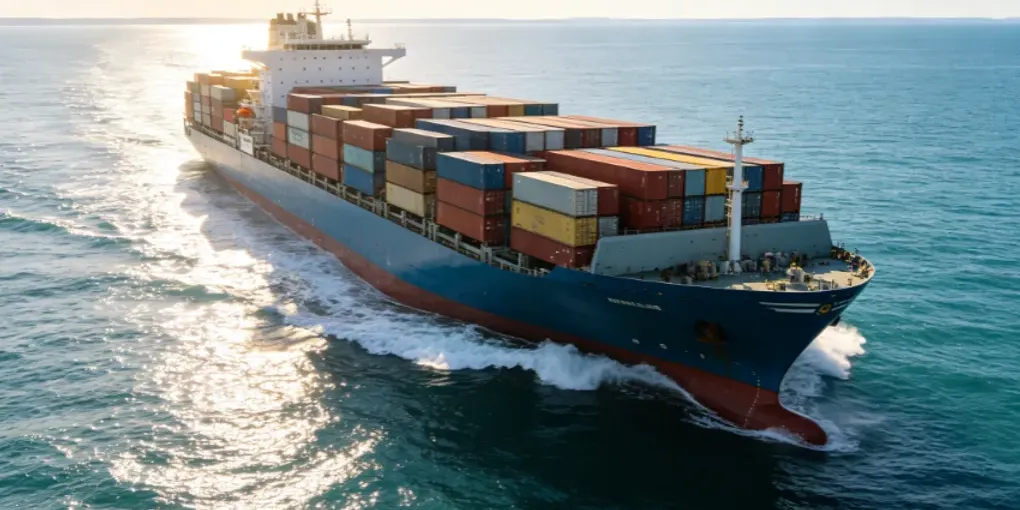
China has been Peru’s largest trading partner for more than a decade, and the Pacific lane between them is now the fastest-changing sea freight corridor in South America. For years, importers of Chinese electronics, machinery, vehicles and textiles waited on services that called Callao after long pendulum voyages; since November 2024, the picture has been redrawn by Chancay, the Chinese-built deep-water megaport 80 km north of Lima whose dedicated direct sailings reach Shanghai in about three weeks.
That is the 2026 reality this guide is built around: sea freight from China to Peru now means choosing between direct services, transit times of 22–32 days, port-to-port rates that have stabilized after the 2024–2025 volatility, and a customs regime where the China–Peru Free Trade Agreement lets most goods enter at 0% duty. Below are the September 2026 FCL and LCL numbers, the Callao-versus-Chancay decision, the ports beyond Lima, and the SUNAT paperwork — grounded in 15 years of forwarding practice at Dantful.US International Logistics. Start with our shipping from China to Peru guide for the full menu of options.
The 2026 Game Changer: Direct Sailings to Chancay
Opened in November 2024 during APEC week in Lima, the Port of Chancay is the flagship of Chinese infrastructure investment in South America. Built by Cosco Shipping Ports with Peruvian mining partner Volcán, its first phase adds around one million TEU of annual capacity, with deeper expansion planned. The immediate effect on shippers was structural: the first direct China–Chancay express voyages cut the ocean leg from Shanghai to about 23–25 days, roughly a week faster than older pendulum routings, and 2026 schedules now include regular direct calls from Chinese ports.
How the two gateways compare for an importer:
| Factor | Callao | Chancay |
|---|---|---|
| Location | Conurbated with Lima | ~80 km north of Lima |
| Share of Peru containerized imports | ~90% (still the hub) | Growing fast from a small base |
| China services | Many direct loops + transshipment options | Dedicated direct express loops (Cosco-led) |
| Typical Shanghai transit | 24–30 days | 23–26 days |
| Best for | Lima/central coast, any carrier, feeder to Paita/Matarani | Fast direct transit, northern Lima distribution, large volumes |
| Watch out for | Peak-season berthing congestion | Still-developing inland/logistics ecosystem |
The practical advice in September 2026: do not let anyone route your Peru cargo “via” Chancay as a secondary port of call — use it when the direct express schedule matches your supply chain, and use Callao when you need carrier choice, transshipment flexibility or delivery into Lima itself. Both ports serve the same importers, and a good forwarder quotes both before booking.
Main Sea Routes from China to Peru: Direct vs Transshipment
Peru sits on the Asia–West Coast South America pendulum, so direct services from the main Chinese loading ports are frequent:
| Route | Type | Typical Transit | Notes |
|---|---|---|---|
| Shanghai → Callao | Direct | 24–30 days | Weekly loops; the workhorse lane |
| Shenzhen/Yantian → Callao | Direct | 22–28 days | Southern origins shave 1–3 days |
| Ningbo → Callao | Direct | 25–31 days | Frequent; second biggest volume |
| Qingdao → Callao | Direct | 28–35 days | Northern China; fewer weekly calls |
| Shanghai → Chancay | Direct express | 23–26 days | Dedicated China–Chancay loops |
| Any origin → Callao | Transshipment (Busan/HK/Singapore/Manzanillo MX) | 30–40 days | Useful for secondary origins and tight equipment seasons |
Transit time is not door-to-door time: add 1–3 working days for SUNAT clearance after arrival and a few hours of trucking from Callao or Chancay to a Lima warehouse. The departure port changes both rate and schedule — our shipping from Ningbo to Peru and shipping from Guangzhou to Peru guides break down those differences port by port.
Sea Freight Costs from China to Peru: September 2026 FCL Rates
Rates below are realistic all-in port-to-port September 2026 ranges for FCL at Callao (Chancay express pricing is comparable, occasionally a small premium for the dedicated loop):
| Origin → Callao | 20ft FCL | 40ft FCL | 40ft HQ |
|---|---|---|---|
| Shanghai → Callao | $2,400–$4,000 | $3,600–$5,900 | $3,800–$6,200 |
| Shenzhen/Yantian → Callao | $2,300–$3,900 | $3,500–$5,800 | $3,700–$6,100 |
| Ningbo → Callao | $2,500–$4,100 | $3,700–$6,100 | $3,900–$6,400 |
| Qingdao → Callao | $2,700–$4,400 | $4,000–$6,400 | $4,200–$6,700 |
| Shanghai → Chancay (direct express) | $2,600–$4,200 | $3,900–$6,200 | $4,100–$6,500 |
September 2026 reality check: West Coast South America rates have settled well below the 2024–2025 peaks, but the August–November peak season still adds 15–30% to base rates, and equipment (especially 40HQ) tightens before the Lunar New Year rush. Booking 3–4 weeks ahead with a rate-validity window remains the cheapest insurance on the lane.
What is inside an FCL quote? Ocean freight, BAF/CAF fuel charges, origin THC and export documentation. At destination, expect $150–$350 per container in Callao or Chancay terminal handling (THC, delivery order, port charges) plus Peruvian IGV and any duty — always ask for an itemized all-in quote so the “low ocean rate” does not hide destination extras.
LCL: Sea Freight for Smaller Shipments
Under roughly 15 CBM, LCL at $90–$170 per CBM is the economical route: your cargo shares a container, consolidates at origin (allow 3–5 extra days), and deconsolidates at Callao. The mechanics are identical to the region’s biggest lane — our LCL shipping from China to Brazil guide walks through them — and above ~15 CBM a full container beats LCL per-CBM pricing. First-time importers often run LCL for the first two or three orders, then switch to FCL once volumes are proven.
Peruvian Ports Beyond Callao: Paita, Matarani and Ilo
Most China cargo is destined for Lima, but Peru is a long country and the right port saves a week of trucking:
- Paita (north) — the gateway for Piura, Chiclayo and Trujillo. Strong reefer and agro-export facilities; container volumes from Asia are smaller but growing, and northern importers avoid the 800+ km of trucking from Callao.
- Matarani (south) — operated by Tisur, the natural gateway for Arequipa, Cusco and Puno, and the transit port for cargo continuing toward Bolivia. China services call less frequently than at Callao, so plan around weekly or fortnightly rotations.
- Ilo (far south) — a mineral port with niche container capacity; useful for southern mining and industrial cargo but rarely the cheapest option from Asia.
If your final destination is outside Lima, ask your forwarder to price the regional port option against Callao plus inland trucking — the ocean leg to Paita or Matarani can cost slightly more while the total door cost lands lower.
Air Freight When Only Speed Will Do
Sea freight moves 8–15 times more cargo per dollar, but Peru importers use air when the goods are worth more than the wait: samples, spare parts, high-value electronics and e-commerce replenishment. Air cargo lands at Jorge Chávez International (LIM) in Lima, usually connecting through Miami (MIA), São Paulo (GRU) or Panama City (PTY). September 2026 airport-to-airport rates:
| Weight Tier | Rate (USD/kg) | Transit |
|---|---|---|
| 45–100 kg | $4.6–$7.0 | 4–8 days |
| 100–300 kg | $4.0–$6.5 | 3–7 days |
| 300–500 kg | $3.8–$6.0 | 3–6 days |
| 500+ kg | $3.5–$5.8 | 3–6 days |
| Express courier | $7–$12 | 2–5 days |
A minimum charge of roughly $60–$150 applies to most air shipments.
Sea vs air on the Peru lane:
| Factor | Sea Freight | Air Freight |
|---|---|---|
| Transit (port/airport to Lima) | 22–35 days | 3–8 days |
| Cost per kg (typical) | $0.3–$0.7 (container equivalent) | $3.5–$7.0 |
| Minimum charge | ~$90–$170 per CBM (LCL) | $60–$150 per shipment |
| Best for | Volume, heavy cargo, cost control | Urgency, high value, light cargo |
Volumetric weight rule: air freight bills on the greater of actual and volumetric weight — length × width × height (cm) ÷ 6000. Keep packaging dense or the chargeable weight climbs fast.
Peruvian Customs and the China–Peru FTA Advantage
Peru customs is administered by SUNAT (Superintendencia Nacional de Aduanas y de Administración Tributaria). The importer needs a RUC tax registration and files an electronic DAM (Declaración Aduanera de Mercancías) through a registered customs broker (agente de aduana). Clean, well-documented sea freight typically clears in 1–3 working days after arrival; random inspections add time, so match the invoice, packing list and bill of lading down to the last digit.
Duties and taxes on a sea freight shipment from China:
- Import duty: under the China–Peru FTA (in force since March 2010), the large majority of Chinese manufactured goods enter at 0% with a valid certificate of origin — electronics, machinery, auto parts, plastics and most consumer goods. Sensitive lines (some textiles, clothing, footwear) still carry duties in the 6–11% band, and cargo shipped without a certificate pays the general (MFN) rate
- IGV: 18% (16% IGV + 2% IPM) — charged on CIF + duty
- ISC: selective consumption tax on fuels, alcohol and luxury goods where applicable
- No dollar-transaction tax: unlike some neighbors, Peru does not add a financial-transaction levy on USD payments
FTA update: In November 2024, during APEC week in Lima, China and Peru signed a protocol upgrading the FTA — adding e-commerce, customs cooperation and expanded zero-tariff coverage. The upgrade consolidates Peru’s position as the most China-integrated Pacific market in South America; always ship with the certificate of origin so your goods capture every preference available today.
Worked example — one 40ft container, two scenarios:
| Item | Scenario A: FTA-covered electronics | Scenario B: No certificate, textile cargo |
|---|---|---|
| Cargo FOB value | $30,000 | $30,000 |
| Freight (Shanghai → Callao, 40ft) | $3,800 | $3,800 |
| Insurance | $150 | $150 |
| CIF value | $33,950 | $33,950 |
| Import duty | 0% = $0 (FTA certificate) | 11% = $3,735 |
| IGV (18% of CIF + duty) | $6,111 | $6,783 |
| Total taxes | $6,111 | $10,518 |
The same container costs $4,407 more in taxes when it sails without the certificate of origin — a line item that dwarfs most freight savings. Container documentation standards follow the same pattern across the region, and if you prefer a duty-paid, door-to-door structure instead of managing port-to-port formalities yourself, an experienced forwarder is where that switch pays off.
Sea Freight from China to Peru: Step by Step
- Get an itemized quote — cargo details, Incoterm preference, Callao vs Chancay, and every destination charge shown separately
- Book the sailing — 3–4 weeks ahead; confirm whether your service is direct or transshipped and which Peruvian port it calls
- Deliver to the Chinese terminal — your supplier ships EXW/FOB; watch the cut-off, usually 24–48 hours before departure
- Export clearance in China — the forwarder handles customs, documentation and loading
- Ocean transit — 22–32 days direct, 30–40 via transshipment
- Arrival and SUNAT clearance — your broker files the DAM with the RUC, pays duty and IGV, and obtains release (1–3 working days)
- Final delivery — trucking from Callao or Chancay to your Lima warehouse, or inland to your region
A full door-to-door sea freight cycle runs 30–45 days from factory pickup to delivery. What a forwarder should be doing at every step — and how to hold one accountable — is covered in our sea freight forwarder from China guide.
How to Save on Sea Freight to Peru
- Always ship with the FTA certificate of origin — it is the difference between 0% and full duty; a $4,000+ tax swing per container on many cargoes
- Book off-peak — avoid August–November and the pre-Lunar New Year rush; Q1 rates typically run 10–20% lower
- Use southern China origins for speed, compare for cost — Shenzhen and Guangzhou shave days off the transit; Shanghai and Ningbo usually have the deepest weekly frequency
- Match the port to the destination — Callao for Lima, Paita for the north, Matarani for the south; let the forwarder price port-plus-trucking against port-only
- Move LCL to FCL above ~15 CBM — the per-CBM cost drops roughly in half
- Ask about the Chancay express — when the direct schedule aligns, it cuts a week out of the ocean leg versus transshipment routings
Frequently Asked Questions
Q: How much does sea freight from China to Peru cost in 2026?
A: In September 2026, a 20ft container runs $2,400–$4,200 and a 40ft container $3,600–$6,300 port to port at Callao or Chancay. LCL is $90–$170 per CBM, and air freight $3.5–$7.0 per kg. Peruvian IGV of 18% applies on top.
Q: How long does sea freight from China to Peru take?
A: 22–32 days port to port on direct sailings — Shanghai to Chancay in 23–26 days on the express loop, Shanghai to Callao in 24–30 days — and 30–40 days via transshipment. Add 1–3 working days for SUNAT clearance.
Q: Are there direct ships from China to Peru?
A: Yes. Direct Asia–West Coast South America services to Callao have run for years, and dedicated China–Chancay express loops since November 2024 now make direct the default choice for most China–Peru cargo.
Q: Callao or Chancay — which port should I choose?
A: Callao for Lima, carrier choice and transshipment flexibility (~90% of Peru containerized imports). Chancay for the fastest direct China transit and northern Lima distribution, as long as your inland logistics are set up for it.
Q: What duties and taxes do I pay on sea freight from China to Peru?
A: Under the China–Peru FTA, most goods enter at 0% with a certificate of origin; sensitive textiles, clothing and footwear pay 6–11%. SUNAT then charges IGV of 18% on CIF + duty. An FTA upgrade protocol was signed in November 2024.
Ship from China to Peru with a Forwarder Who Knows the New Lane
Sea freight from China to Peru in 2026 rewards planning: direct express services through Chancay, mature weekly loops through Callao, FTA paperwork that saves thousands per container, and regional ports that shorten the last mile. With the September 2026 numbers above and a forwarder who quotes both gateways, your cargo moves on the schedule and at the cost you budgeted — not the one the market imposes.
Ready to ship? Contact Dantful.US for a free, itemized sea freight quote from any Chinese port to Callao, Chancay, Paita or Matarani.