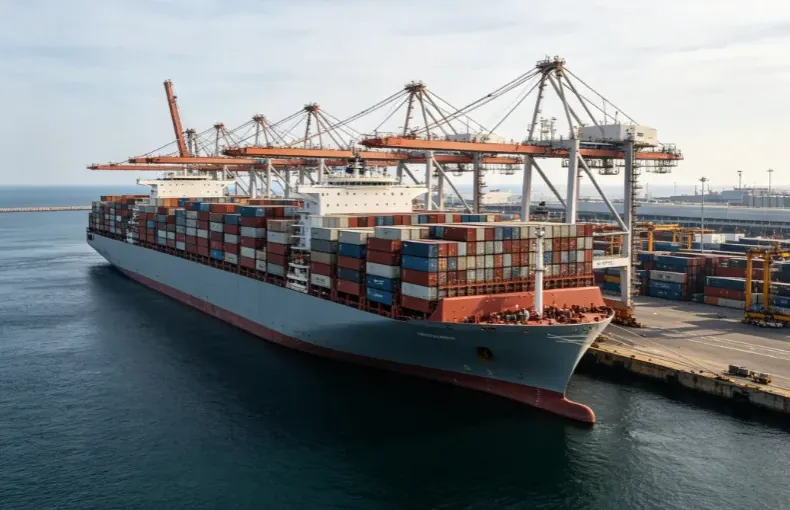
Colombia imported more than $13 billion of Chinese goods last year, and almost every kilo of it arrived on a container ship. Yet the single most expensive mistake importers make on this lane is not negotiating the ocean rate — it is choosing the wrong coast. A 40GP that lands in Cartagena for a Medellín buyer is a bargain; the same box that lands in Buenaventura for the same buyer can add four days of trucking through the Andes and $1,200 in inland cost.
This guide covers sea freight from China to Colombia as it actually works in October 2026: the two-coast decision, FCL and LCL rates by origin port, real transit times, the DIAN duty and IVA math, and how to move cargo from the terminal to Bogotá, Medellín or Cali without paying twice for the same kilometre.
Colombia’s Two-Coast Split: Why Your Port Choice Decides Your Cost
Colombia is the only major market in South America with genuine gateways on two oceans, and the country’s geography turns that into a hard fork in your logistics plan. There is no cheap rail corridor crossing the Andes; the cargo moves on trucks, on roads whose cost per kilometre varies enormously with altitude and distance.
Four things decide which coast wins:
- Your delivery address. Bogotá, Cali, Pereira and the entire Cauca Valley are Pacific-side markets. Medellín sits between the two but favours Cartagena. Barranquilla, Santa Marta and the Atlantic coast are Caribbean-side.
- Sailing frequency. Cartagena is a major Caribbean transshipment hub with multiple weekly calls; Buenaventura has fewer direct services and its peak-season congestion is well documented.
- Cargo risk tolerance. Buenaventura clears faster when it is quiet and much slower when it is not (September–November import peaks). Cartagena is the more predictable option for e-commerce restocks.
- Inland rate structure. Colombian trucking is priced per lane, not per kilometre. A lane with heavy backhaul demand — Cartagena to Medellín, for example — can be cheaper than a shorter lane without it.
If you take one thing from this article: ask your forwarder for a port-to-door quote on both coasts before you book the ocean leg. The ocean rate difference between the two gateways is usually small. The inland difference is not.
Buenaventura: The Pacific Gateway for Bogotá, Cali and the Cauca Valley
Buenaventura handles the majority of Colombia’s Pacific container volume and is the natural entry point for anywhere west of the Andean cordillera.
Why importers choose it: direct or transshipment services from Shanghai, Ningbo and Shenzhen via Balboa or the Colón hub; shorter inland trucking to Cali (roughly 3 hours), Palmira, Yumbo and the Cauca Valley industrial corridor; the shortest realistic total transit to Bogotá (about 6–8 hours by road from the port).
What to watch: congestion and dwell time fluctuate hard here. Terminal handling and inspection can add days in peak periods, and empty return logistics occasionally push truckers into surcharges. If your cargo arrives in the first half of October, expect the port to be mid-way through its pre-year-end import rush.
Buenaventura suits: textile and apparel importers supplying Cali and Medellín manufacturers, machinery for the Valle del Cauca plants, and consumer goods destined for Bogotá distribution centres.
Cartagena, Barranquilla and Santa Marta: The Caribbean Side
The Caribbean coast handles the remainder of Colombia’s box volume and beats the Pacific on schedule reliability.
Cartagena is the country’s most important Caribbean hub: the widest choice of weekly sailings from Asia, strong transshipment connections, and a customs infrastructure that handles large volumes efficiently. For a shipment headed to Medellín, Bogotá (via the northern corridor) or anywhere on the Atlantic coast, Cartagena is usually the fastest door-to-door option even when its ocean transit looks longer on paper.
Barranquilla serves the Magdalena River corridor and the Atlantic industrial belt. Transits are longer — 36–48 days from Shanghai — and sailings are thinner, but for cargo destined for the Barranquilla free zone or river-served distribution the extra days are cheap compared with trucking from another port.
Santa Marta is the specialist: bananas, fertiliser, bulk and project cargo. For standard containerised imports it is rarely the best commercial choice, but it occasionally wins on project and out-of-gauge work.
A practical note on Zonas Francas (free trade zones): Colombia operates dozens of them, including Barranquilla, Cartagena, Bogotá, Cali and Medellín. Goods entering a zona franca are not subject to arancel or IVA until they leave for the national customs territory, which makes the free zone a legitimate cash-flow tool for importers who re-export or process goods. The zone you pick can therefore override the coast decision — check it before you book.
Sea Freight Rates from China to Colombia: October 2026
Rates below are port to port, exclude origin and destination charges, and reflect October 2026 market conditions. They are starting points for negotiation, not final invoices.
| Mode | Origin (China) | Destination (Colombia) | Estimated cost | Main rate drivers |
|---|---|---|---|---|
| FCL 20GP | Shanghai / Shenzhen | Buenaventura / Cartagena | $2,400 – $3,300 | General Rate Increases (GRI) |
| FCL 40GP | Shanghai / Shenzhen | Buenaventura / Cartagena | $3,600 – $5,200 | Peak season surcharges |
| FCL 40HQ | Shanghai / Ningbo | Cartagena | $3,700 – $5,400 | Equipment availability |
| LCL (sea) | Major Chinese ports | Buenaventura / Cartagena | $70 – $125 per CBM | 1 CBM minimum, deconsolidation fees |
| Air freight (for comparison) | PVG / SZX | Bogotá (BOG) | $5.50 – $9.00 per kg | Fuel and security surcharges |
Two patterns are worth understanding before you compare quotes:
Origin port matters less than you think on the ocean leg and more than you think on land. Shanghai and Ningbo usually offer the lowest base rate to both Colombian coasts because of sailing frequency. Shenzhen is competitive to Buenaventura but weaker to Cartagena.
Peak season is real and it is scheduled. From mid-September through November, carriers push GRIs and peak season surcharges onto this lane, and space to Cartagena tightens first because that is where the transshipment connections are. Booking three to four weeks ahead in this window typically saves 10–20% against a last-minute booking — often more than the discount you would win by haggling.
FCL vs LCL to Colombia: Where the Break-Even Sits
Most first-time importers to Colombia overpay by choosing the wrong loading mode rather than the wrong rate.
LCL is billed per CBM with a minimum of 1 CBM, plus destination charges (deconsolidation, handling, documentation) that are often charged as a flat fee regardless of volume. That flat fee is what kills small-but-not-tiny shipments: below 5 CBM you pay almost the same as 8 CBM because the fixed charges dominate.
FCL gives you the whole box, eliminates deconsolidation and destination CFS charges, and clears customs as a single unit — which matters in Colombia, where DIAN inspections of consolidated cargo can be slower.
The practical break-even on this lane sits around 13–15 CBM or 12,000 kg. Below that, LCL usually wins. Above it, a 20GP wins on total cost and on clearance speed. Between 15 and 25 CBM, ask for both quotes and compare door-to-door totals, not port-to-port rates — this is exactly the band where a modest ocean-rate difference flips the outcome.
If your volumes are growing month over month, a useful exercise is to price your last three shipments both ways. Importers on this lane frequently discover they have been paying a 20–30% premium for LCL on cargo that would have filled a 20GP.
For a deeper look at the loading maths, our guide to LCL shipping from China to the USA walks through the same calculations with worked cubic-metre examples that apply to any destination.
Transit Times from China to Colombia by Route and Coast
The table below reflects port-to-port or airport-to-airport times for the main origin-destination pairs on this lane.
| Mode | Route | Transit time | Notes |
|---|---|---|---|
| Sea · FCL | Shanghai (Yangshan) → Buenaventura | 30–40 days | Direct WCSA or via Balboa |
| Sea · FCL | Shanghai → Cartagena | 32–45 days | Caribbean hub, most frequent services |
| Sea · FCL | Shanghai → Barranquilla | 36–48 days | River port, thinner schedule |
| Sea · FCL | Shenzhen (Yantian) → Buenaventura | 28–38 days | Strong South China coverage |
| Sea · FCL | Shenzhen (Yantian) → Cartagena | 32–44 days | Usually via transshipment |
| Air | Shanghai (PVG) → Bogotá (BOG) | 4–9 days | Airport to airport |
| Express courier | Major Chinese cities → nationwide | 4–7 days | Door to door, small parcels |
Door to door, add 3–7 days for DIAN clearance and inland delivery on top of the times above. A realistic end-to-end figure from Shanghai to a Bogotá warehouse is 36–48 days, and to Medellín via Cartagena 38–50 days.
What moves these numbers: transshipment via Balboa or Colón, Buenaventura congestion during peak import periods, LCL consolidation waits when your cargo misses a weekly cut-off, and — the one nobody plans for — the time your paperwork spends waiting rather than your vessel.
DIAN, Arancel and 19% IVA: The Landed-Cost Math
Sea freight is only the first line of your invoice. Colombia applies three layers on top of the CIF value (goods + freight + insurance):
- Arancel (import tariff). Most industrial goods carry 0%, 5%, 10% or 15% under Colombia’s MFN schedule. Colombia has no free trade agreement with China, so Chinese-origin goods pay the standard rate — with the exception of some capital goods and raw materials that qualify for reduced rates. Anti-dumping duties apply to specific product categories, particularly in textiles, footwear and steel, and they are worth checking by HS code before you commit.
- IVA (VAT) at 19%. Calculated on the CIF value plus the arancel, not on the goods value alone. This is the line that surprises most first-time importers.
- Customs service and handling. The declaration, inspection (if selected), terminal charges and broker fees.
A worked example makes it concrete. Assume a $30,000 CIF shipment of hardware at a 10% arancel:
| Line | Calculation | Amount |
|---|---|---|
| CIF value | Goods + freight + insurance | $30,000 |
| Arancel | 10% of CIF | $3,000 |
| IVA base | CIF + arancel | $33,000 |
| IVA | 19% of the base | $6,270 |
| Customs service, broker, terminal | Fixed and variable fees | $500 – $900 |
| Total landed | $39,770 – $40,170 |
That is roughly 33% above the invoice value. Note what happened to IVA: because it is charged on the duty-inclusive base, every point of arancel costs you 1.19 points of tax. Reducing a 15% tariff to 5% through correct classification saves more than most importers expect.
Practical steps that reduce this legally: confirm the HS code with your Colombian broker before production starts (not before shipping), check whether your product qualifies for an arancel reduction, use Plan Vallejo if you import inputs for re-export, and route goods through a zona franca if your business model allows it.
From the Port to Bogotá, Medellín, Cali and the Free Zones
Clearing customs gets your container out of the terminal. Getting it to your warehouse is a separate negotiation, and on this lane it is where budgets quietly blow up.
Rough inland reference times and cost drivers:
- Buenaventura → Cali: 3–4 hours, the cheapest major inland lane in the country.
- Buenaventura → Bogotá: 6–8 hours, a mountain route where weight limits and tolls are the main cost variables.
- Cartagena → Medellín: 12–14 hours, well-served with competitive backhaul rates.
- Cartagena → Bogotá: 16–20 hours; often still cheaper than the Pacific alternative when Buenaventura is congested.
- Cartagena → Barranquilla: 2–3 hours, the short Atlantic lane.
Three cost traps to watch:
Demurrage and detention. Colombian terminals grant limited free days, and both the container and the terminal clock run while your declaration is being processed. If DIAN selects your shipment for inspection, the clock does not stop. Build the inspection window into your plan rather than paying for it afterwards.
Container return. Empty return must go to the carrier-nominated depot, which is not always the terminal you collected from. On Buenos Aires-style inland routings that difference can be several hundred dollars.
Weight limits. Colombian road rules restrict axle loads, and overweight containers are split at cost to you. If you are importing dense goods, discuss the axle-load plan before you pack.
How to Bring Your Colombia Sea Freight Cost Down
Six levers that actually work on this lane, in order of impact:
- Fix the coast before you fix the rate. A door-to-door comparison of both gateways frequently beats every other saving available.
- Book 3–4 weeks ahead during peak season. Space is the scarce commodity from September to November, not price.
- Cross the FCL threshold deliberately. Consolidate two LCL shipments into one 20GP if the combined volume clears 15 CBM.
- Ship to a single port of discharge consistently. Splitting volume across Buenaventura and Cartagena destroys the negotiating position you build with consistent volumes.
- Verify the HS code early. Arancel reductions and anti-dumping exclusions are decided before the vessel sails, not after.
- Use the free zones if your model allows it. Deferring IVA and arancel on goods you will re-export or process is a cash-flow gain, not a tax dodge.
If you want a second pair of eyes on the numbers, our 20ft and 40ft container cost guide for Colombia breaks the same lane down by container size with month-specific figures, and the freight forwarder guide for Colombia covers how to evaluate a partner before you hand over your first booking.
Frequently Asked Questions
How much does sea freight from China to Colombia cost in October 2026?
A 20GP container runs $2,400–$3,300 and a 40GP or 40HQ runs $3,600–$5,200 from Shanghai or Shenzhen to Buenaventura or Cartagena. LCL is billed at $70–$125 per CBM with a 1 CBM minimum, and port-to-door delivery adds roughly $300–$900 per container depending on the inland destination.
Should I ship to Buenaventura or Cartagena?
Buenaventura is the Pacific gateway and the shorter option for Bogotá, Cali and the Cauca Valley. Cartagena is the Caribbean hub with the most frequent sailings and usually the fastest clearance; it is the better choice for Medellín, Barranquilla, the Atlantic coast and cargo that cannot risk Pacific congestion. Choosing the wrong coast can add $600–$1,500 in inland trucking on a 40GP.
How long does sea freight take from China to Colombia?
Port to port, Shanghai to Buenaventura is 30–40 days and Shanghai to Cartagena is 32–45 days. Shenzhen departures to Buenaventura run 28–38 days. Add 3–7 days for DIAN clearance and inland delivery, so a realistic door-to-door figure is 34–50 days.
What import taxes will I pay on sea freight to Colombia?
Colombia charges an arancel (tariff) that ranges from 0% to 15% on most industrial goods, plus IVA at 19% calculated on the CIF value plus duty. A 10% arancel on a $30,000 CIF shipment adds $3,000, and the 19% IVA adds a further $6,270, so budget roughly 30% on top of the invoice value.
Is LCL or FCL cheaper for shipping to Colombia?
Below roughly 13–15 CBM, LCL is usually cheaper even after destination charges. Above 15 CBM, a 20GP container costs less per CBM and clears faster. As a rule of thumb, once your cargo passes 15 CBM or 12,000 kg, ask for both quotes — the FCL option often wins by $400–$1,200.
Do I need a customs broker in Colombia?
Yes. DIAN requires import declarations to be filed through a licensed Sociedad de Comercialización Internacional or customs agency (agencia de aduanas) registered in the country. A freight forwarder with a Colombian partner handles both the ocean leg and the declaration, which is why using one point of contact usually costs less than splitting the shipment between two vendors.
Move Your Colombia Cargo with a Forwarder Who Works Both Coasts
Dantful.US has moved freight on the China-Colombia lane for more than fifteen years, and we quote both coasts as standard practice — not as a favour. That means you see the Buenaventura door-to-door number next to the Cartagena one, with DIAN clearance, inland trucking and the duty estimate in the same table, before you commit to a booking.
If you are planning your next container from Shanghai, Ningbo or Shenzhen — or you suspect your current LCL shipments should already have been FCL — send us the cargo details and we will come back with a port-to-door comparison for both Colombian gateways. For air cargo on an urgent timeline, our air freight guide for Colombia covers the Bogotá routing, and for city-specific sailings see our origin port guides for Shanghai, Shenzhen and Ningbo.
Ready to price it properly? Visit our Colombia shipping route hub or contact our team with your cargo dimensions and delivery address — we will confirm the coast, the rate and the landed cost in one reply.