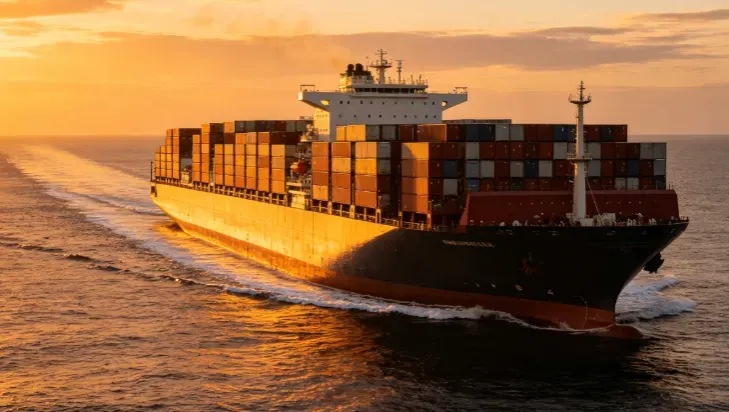
Every container shipment to Colombia starts with a question most guides never ask: which coast? Colombia is the only major South American market with serious container ports on both the Caribbean and the Pacific, and the two coasts behave completely differently. Cartagena gets the frequent direct services from Asia and the lowest ocean rates; Buenaventura sits a two-day truck ride closer to Bogotá, Medellín and Cali but costs more to reach by sea.
China is Colombia’s second-largest trading partner — bilateral trade hit US$21.02 billion in 2024, up 11.7%, with Chinese exports to Colombia worth US$14.78 billion: electronics, smartphones, machinery, textiles, auto parts and e-commerce goods. If you are importing any of these, the practical question is how much a 20ft or 40ft container costs from China to Colombia in 2026 — and the answer starts with choosing your arrival port. In September 2026, expect $2,300–$4,600 for a 20ft container and $2,800–$5,500 for a 40ft container all-in to Colombian ports (excluding import taxes). Based on 15 years of forwarding experience at Dantful.US International Logistics, here is the complete 20ft vs 40ft cost picture, coast by coast. For the full range of options, start with our shipping from China to Colombia guide.
20ft vs 40ft Container Cost from China to Colombia at a Glance
| Container | Typical September 2026 Rate | Usable Volume | Best For |
|---|---|---|---|
| 20ft FCL (20GP) | $2,300–$4,600 | ~25–28 CBM | 15–28 CBM, heavy cargo, first orders |
| 40ft FCL (40GP) | $2,800–$5,500 | ~58–60 CBM | 28–58 CBM, regular imports |
| 40ft HQ (40HC) | $3,000–$5,800 | ~68 CBM | Voluminous light cargo (furniture, textiles, e-commerce) |
| LCL (shared container) | $120–$280 per CBM | Under ~15 CBM | Trial orders, small shipments |
September 2026 reality check: Pacific rates have eased from the 2024–2025 peak, but peak-season surcharges (September–November) and Panama Canal draft restrictions in dry months can push FCL prices to the top of these ranges. Booking 3–4 weeks ahead locks in standard pricing.
Cartagena or Buenaventura: The Two-Coast Decision
This is the decision that changes your container bill more than any other. Colombia’s Caribbean ports — Cartagena first, then Barranquilla and Santa Marta — receive the direct Asia services and handle the majority of the country’s containerized imports. Buenaventura, on the Pacific, is the natural gateway for the interior but has thinner ocean coverage. The trade-off in September 2026:
| Factor | Via Cartagena (Caribbean) | Via Buenaventura (Pacific) |
|---|---|---|
| Direct services from Asia | Most frequent (many weekly calls) | Fewer; frequent transshipment via Panama or Cartagena |
| Typical ocean rate (20ft) | $2,300–$4,100 | $2,500–$4,600 |
| Typical ocean rate (40ft) | $2,800–$5,000 | $3,000–$5,500 |
| Transit time from Shanghai | 32–42 days | 35–48 days |
| Distance to Bogotá by road | ~1,000 km (2–2.5 days truck) | ~510 km (12–18 hours truck) |
| Distance to Medellín | ~660 km | ~460 km |
| Congestion risk | Low–moderate | Historically higher; improves with new terminal capacity |
| Best for | Caribbean coast buyers, e-commerce, full containers | Bogotá/Medellín/Cali importers who value inland savings |
The math: paying $200–$500 more for ocean to Buenaventura can still be cheaper overall for Bogotá buyers, because inland trucking from Cartagena adds $700–$1,200 per container. But if you need speed and schedule certainty, Cartagena’s weekly direct sailings beat a Panama transshipment every time. The decision framework — ocean savings vs inland savings — is exactly what a forwarder with agents at both ports should quantify for you, the same way we break down inland legs in our door-to-door vs port-to-port shipping pros and cons article.
20ft & 40ft FCL Rates by Origin Port
Rates below are realistic all-in September 2026 ocean freight ranges to the two main gateways, excluding Colombian import taxes. Southern Chinese ports (Shenzhen, Guangzhou) and Hong Kong typically price 5–10% below Shanghai and Ningbo on this lane because of denser Asia–South America capacity:
| Origin Port → Destination | 20ft FCL | 40ft FCL | 40ft HQ |
|---|---|---|---|
| Shanghai → Cartagena | $2,300–$3,800 | $2,800–$4,700 | $3,000–$4,900 |
| Shenzhen / Yantian → Cartagena | $2,300–$3,900 | $2,800–$4,800 | $3,000–$5,000 |
| Ningbo → Cartagena | $2,350–$3,900 | $2,850–$4,800 | $3,050–$5,000 |
| Qingdao → Cartagena | $2,600–$4,300 | $3,100–$5,200 | $3,300–$5,400 |
| Guangzhou → Cartagena | $2,400–$4,000 | $2,900–$4,900 | $3,100–$5,100 |
| Shanghai → Buenaventura | $2,500–$4,300 | $3,000–$5,300 | $3,200–$5,500 |
| Shenzhen → Buenaventura | $2,500–$4,400 | $3,000–$5,400 | $3,200–$5,600 |
| Ningbo → Buenaventura | $2,550–$4,400 | $3,050–$5,400 | $3,250–$5,600 |
What is inside an FCL quote? Ocean freight, BAF/CAF fuel surcharges, origin THC and documentation, and destination charges (THC, delivery order, customs systems fee). Duties and IVA are collected separately by DIAN. For the busiest corridor in detail, see our shipping from Shanghai to Colombia guide.
Which Container Size Fits Your Cargo?
The price gap between a 20ft and a 40ft is only 20–30%, while the volume difference is more than double — so the 40ft is almost always the better cost-per-CBM deal once your cargo passes about 15 CBM.
| Specification | 20ft Container | 40ft Container | 40ft HQ |
|---|---|---|---|
| Internal dimensions (L×W×H) | 5.90 × 2.35 × 2.39 m | 12.03 × 2.35 × 2.39 m | 12.03 × 2.35 × 2.69 m |
| Usable volume | ~25–28 CBM | ~58–60 CBM | ~68 CBM |
| Max payload | ~28,200 kg | ~26,500 kg | ~26,300 kg |
| Typical cost premium | — | +20–30% vs 20ft | +8–12% vs 40GP |
| Cost per CBM (September 2026) | ~$90–$185/CBM | ~$48–$95/CBM | ~$44–$85/CBM |
When to choose a 20ft: your cargo is heavy relative to its size — machinery, tiles, steel products, auto parts. Heavy goods hit the 20ft’s payload limit long before its volume.
When to choose a 40ft or 40ft HQ: bulky but light cargo — furniture, mattresses, textiles, e-commerce stock. Colombian importers of household goods and apparel standardize on 40ft HQ equipment because two 20ft containers cost roughly 50–60% more than one 40ft with similar capacity.
Air Freight Alternative for Urgent Cargo
Not every shipment fits a container. When a 20ft or 40ft quote feels too slow for small urgent cargo, air freight to El Dorado International Airport (BOG) in Bogotá — usually via a connection in Miami (MIA) or Panama City (PTY) — is the alternative, at $4.5–$9.5 per kg:
| Weight Tier | September 2026 Rate (USD/kg) | Transit |
|---|---|---|
| 45–100 kg | $5.5–$9.5 | 4–8 days |
| 100–300 kg | $5.0–$9.0 | 4–8 days |
| 300–500 kg | $4.8–$8.5 | 4–7 days |
| 500+ kg | $4.5–$8.0 | 4–7 days |
| Express courier (DHL/FedEx/UPS) | $8–$15 | 3–6 days |
Volumetric weight rule: air freight is billed on chargeable weight — actual weight vs length × width × height ÷ 6000 (in cm), whichever is higher. A 100 kg carton of 1.0 × 1.0 × 1.0 m is charged as 167 kg, so bulky light cargo is far cheaper by sea. A full breakdown of air options on this lane is in our air freight from China to Colombia guide.
Air vs Sea: The Real Trade-Off
| Factor | 20ft/40ft Sea Freight | Air Freight |
|---|---|---|
| Transit time | 30–48 days | 4–8 days |
| Cost per kg (typical) | $0.3–$0.6 (containerized) | $4.5–$9.5 |
| Cost per CBM (typical) | $90–$185 (20ft) | $2,300–$4,500 |
| Minimum charge | Container basis | ~$150–$250 per shipment |
| Best for | Bulk, heavy, non-urgent | High-value, urgent, perishable, spare parts |
Use air when the goods are worth more than the freight or a delay costs more than the premium — electronics, medical devices, production-line spare parts, samples. For everything else, a container wins on cost per unit by 5–10 times.
Colombian Customs & Taxes on Your Container
The freight quote is only half the picture. Colombia’s customs authority DIAN (Dirección de Impuestos y Aduanas Nacionales) processes import declarations electronically through the MUISCA platform, and levies taxes on the CIF value (cost + insurance + freight):
- Import duties (gravamen arancelario): 0–20% of CIF for most consumer and industrial goods — electronics often 0–15%, textiles and footwear 15–20%, and some agricultural goods up to 35%. Check the exact HS-code rate before booking.
- IVA (value-added tax): 19% — charged on CIF + duty.
- Consumption tax: extra on alcohol, tobacco, soft drinks and some vehicles.
- No preferential FTA: Colombia has no free trade agreement with China (its FTAs cover the US, EU, Korea and others), so standard tariffs apply — unlike Chile or Ecuador.
- Andean Customs Value Declaration: mandatory when the import value reaches FOB US$5,000, filed through the customs broker.
- Import registration: certain goods need prior registration via the VUCE platform (ventanilla única de comercio exterior).
Worked Example: Landed Cost of a 20ft Container
| Item | Value (USD) |
|---|---|
| Freight (Shanghai → Cartagena, 20ft) | $3,200 |
| Cargo value (electronics) | $25,000 |
| Duty (10% of CIF $28,200) | $2,820 |
| IVA (19% of CIF + duty = $31,020) | $5,894 |
| Total taxes payable | ≈ $8,714 |
| Full landed cost | ≈ $36,914 |
Clearance typically takes 2–4 working days for a clean shipment with correct HS codes and the commercial invoice, packing list and bill of lading.
Transit Times to Cartagena and Buenaventura
| Route | Typical Transit | Notes |
|---|---|---|
| Shanghai → Cartagena | 32–42 days | Weekly direct services; most reliable option |
| Shenzhen → Cartagena | 30–40 days | Strong carrier coverage from South China |
| Ningbo → Cartagena | 32–42 days | Good frequency |
| Qingdao → Cartagena | 35–45 days | Northern China add-on |
| Shanghai → Buenaventura | 35–48 days | Often via Panama or Cartagena transshipment |
| Shenzhen → Buenaventura | 33–46 days | Feeder connection typical |
| Air freight (to BOG) | 4–8 days | Then truck to any city |
Remember that transit time ≠ delivery time: add 2–4 days for arrival, DIAN clearance and trucking to your warehouse.
How to Get the Lowest Container Rate to Colombia
- Move up to 40ft once you pass ~28 CBM — per-CBM cost drops roughly in half
- Use Shanghai, Shenzhen or Hong Kong as origin — the cheapest load ports on this lane; Qingdao and northern ports add $200–$500 per container
- Compare Cartagena vs Buenaventura on landed cost, not ocean rate — inland trucking can erase a $300 ocean saving
- Book off-peak — avoid September–November and the pre-Lunar New Year rush
- Classify your HS code correctly — a correct classification can cut duty by several points; a wrong one triggers DIAN penalties and delays
- Compare itemized quotes, not headline prices — a real quote separates ocean freight, BAF, THC and destination charges. The same cost logic applies on the region’s other lanes, as we show in our 20ft & 40ft container cost from China to Paraguay guide
Frequently Asked Questions
Q: How much does a 20ft container cost from China to Colombia in 2026?
A: Expect $2,300–$4,600 all-in to port in September 2026, depending on origin, destination port and season. Add Colombian import duties (0–20% of CIF) and 19% IVA for the full landed cost.
Q: How much does a 40ft container cost from China to Colombia?
A: A 40ft FCL runs $2,800–$5,500 (40ft HQ $3,000–$5,800). The 40ft costs only 20–30% more than a 20ft while carrying more than double the volume, so it is the better deal above ~28 CBM.
Q: Which Colombian port should I use?
A: For the Caribbean coast and most direct sailings, use Cartagena. For Bogotá, Medellín or Cali importers, Buenaventura can cut inland trucking by $400–$700 per container despite higher ocean rates — run the landed-cost comparison before choosing.
Q: Why is shipping to Buenaventura more expensive than Cartagena?
A: Fewer direct Asia calls mean transshipment via Panama or Cartagena, adding $100–$300 per container, plus historically higher congestion and equipment-repositioning costs.
Q: What taxes do I pay on a container imported from China to Colombia?
A: DIAN collects import duties (0–20% of CIF, some goods up to 35%) plus 19% IVA on CIF + duty, and consumption taxes on alcohol, tobacco and some vehicles. Colombia has no FTA with China, so no preferential rate applies.
Q: Should I ship 20ft, 40ft or air freight from China to Colombia?
A: Under ~15 CBM use LCL; 15–28 CBM or heavy cargo use a 20ft; above 28 CBM use a 40ft or 40ft HQ; and use air only for urgent, high-value or perishable goods — it costs 5–10 times more per unit than sea.
Ship Your Container to Colombia with Rates You Can Trust
Colombia’s container trade runs on a two-coast decision: the ocean rate to Cartagena or Buenaventura, the inland trucking leg, DIAN duties and 19% IVA all have to line up before you book. With realistic September 2026 rates and a forwarder who works both coasts, your first 20ft or 40ft shipment can be budgeted to the dollar.
Ready to ship? Contact Dantful.US for a free, itemized 20ft/40ft quote — we handle everything from Chinese port pickup to delivery in Bogotá, Medellín, Cali or anywhere in Colombia.