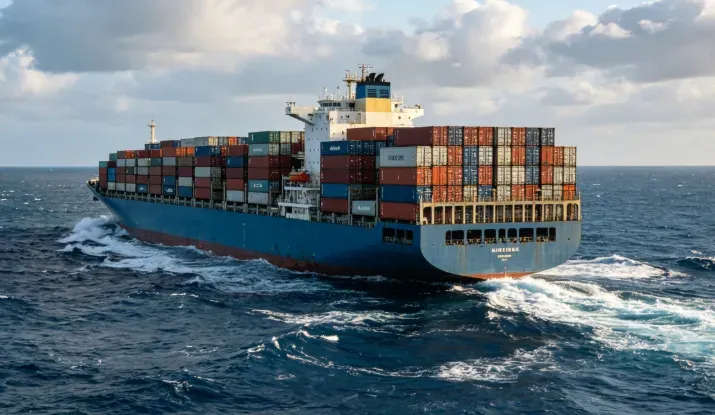
You’re a Taiwanese manufacturer — maybe you produce printed circuit boards in Hsinchu, auto parts in Taichung, or industrial molds in Tainan. A buyer in São Paulo just sent you a purchase order, and their first question is the one every exporter dreads: “When will my goods arrive?” If you’ve never shipped to Brazil before, you’re about to learn that the answer isn’t a single number — it depends on the mode you choose, the port you leave from, and, most critically, how well you prepare for Brazilian customs. Getting your shipping time from Taiwan to Brazil wrong doesn’t just annoy your buyer — it can trigger stockouts, penalty clauses, and cash flow headaches that ripple through your entire supply chain.
In this guide, I’ll walk you through exactly how long each shipping method takes — from sea freight and air freight to express courier — using real carrier schedules and port-pair data. But more importantly, I’ll show you where the time actually goes. Because port-to-port transit is only half the story. The real clock starts ticking the moment your goods leave the factory floor, and it doesn’t stop until they’re physically inside your buyer’s warehouse in Brazil. By the end of this article, you’ll have a clear, realistic picture of your total door-to-door timeline — including the Brazil customs factor that no other guide covers properly.
Shipping time from Taiwan to Brazil Take
If you need a number right now to share with your buyer, here’s the at-a-glance comparison. These are real-world ranges based on current carrier schedules and operational experience on the Taiwan-Brazil trade lane.
| Shipping Method | Port-to-Port / Airport | Door-to-Door Total | Best For |
|---|---|---|---|
| Sea Freight FCL | 30–40 days | 35–55 days | Bulk cargo, heavy machinery, full container loads |
| Sea Freight LCL | 20–46 days | 30–60 days | Smaller shipments under 14 CBM, lower urgency |
| Air Freight | 3–5 days (airport-to-airport) | 5–10 days | High-value goods, electronics, urgent orders |
| Express Courier | N/A (fully door-to-door) | 3–6 days | Samples, documents, small parcels under 100 kg |
One important caveat: The wide range in door-to-door times — especially for sea freight — comes almost entirely from one variable: Brazil customs clearance. If your shipment hits the Green Channel, you add 1–2 days. If it lands in the Red Channel, you can add two weeks or more. We’ll cover exactly how this works in Section 6.
What Are You Shipping? Why Your Cargo Type Determines Your Timeline Strategy
Before we dive into the detailed breakdowns by mode, it’s worth understanding why different Taiwan exports to Brazil call for different timeline strategies:
- Electronics & PCBs: High value-to-weight, time-sensitive. Air freight in the +100 kg to +500 kg bracket balances speed and cost.
- Auto parts & machinery: Heavy, predictable volumes. Sea freight FCL is the default — lower per-unit cost keeps margins healthy.
- Plastic molds & industrial tooling: Irregular shipments. LCL sea freight often fits, but consolidation adds 3–7 days at each end.
- Seasonal consumer goods: Hard delivery deadlines. Add at least 10 days buffer — a missed retail season means dead inventory.
Your cargo dictates your mode. Your mode determines your timeline.
How Many Days by Sea from Taiwan to Brazil?
Ocean freight carries the overwhelming majority of Taiwan-Brazil trade by volume. It’s the most cost-effective option, but the transit time demands planning. For a dedicated breakdown of ocean services on this lane, see our guide on Sea Freight from Taiwan to Brazil.
Container Shipping Time by Port Pair
There are no direct sailings from Taiwan to Brazil. Every container vessel makes at least one transshipment — typically at a major hub like Singapore, Port Klang (Malaysia), or Colombo (Sri Lanka) — where your container is transferred to a vessel on the Asia-ECSA (East Coast South America) service. Each transshipment adds 2–5 days of dwell time. For a broader look at vessel routing options from Asia to Brazil, check our overview of Shipping Routes from China to Brazil.
Here are the typical port-to-port transit times based on current carrier schedules:
| Taiwan Departure Port | Brazil Arrival Port | Typical Transit | Primary Carriers | Sailing Frequency |
|---|---|---|---|---|
| Kaohsiung (KHH) | Santos (SSZ) | 30–40 days | Evergreen, Yang Ming, Hapag-Lloyd | Weekly |
| Keelung (KEL) | Santos (SSZ) | 33–42 days | CMA CGM, COSCO | Every 1–2 weeks |
| Taichung (TXG) | Santos (SSZ) | 36–40 days | Evergreen, Wan Hai | Every 1–2 weeks |
| Taipei (TPE) | Santos (SSZ) | 33–38 days | Hapag-Lloyd, MSC | Every 1–2 weeks |
| Kaohsiung (KHH) | Paranaguá (PNG) | 35–45 days | Various | Bi-weekly |
Kaohsiung to Santos is the most common routing — Kaohsiung is Taiwan’s largest port, and Santos handles roughly 40% of containerized imports entering Brazil. Northern Taiwan factories (Taipei, Hsinchu, Taoyuan) typically ship from Keelung; central/southern factories use Kaohsiung or Taichung.
FCL vs. LCL: Does Consolidation Add Time?
The short answer is yes — and by more than most shippers expect.
- FCL (Full Container Load): 30–40 days port-to-port. Your container moves as a sealed unit — no unpacking, no sorting, no waiting for other cargo at any transfer point. If you can fill a 20ft or 40ft container, FCL gives you the most predictable timeline. For container-specific logistics on this corridor, see our guide on Shipping Containers from China to Brazil.
- LCL (Less than Container Load): 20–46 days port-to-port. The wider range comes from consolidation — your cargo waits 3–5 days at a Taiwan warehouse for a shared container to fill, then another 3–7 days at the Brazilian port for deconsolidation and sorting. LCL containers only depart when full, adding schedule unpredictability during slow periods.
For shipments under 14 CBM without a hard deadline, LCL is cost-effective. For tight timelines, FCL is worth the premium — even at 60–70% container utilization.
Taiwan Container Shipping Schedules & Booking Lead Time
The Asia-ECSA trade lane is well-served by Taiwan’s carriers. Evergreen Marine (headquartered in Taoyuan) operates weekly sailings from Kaohsiung and Taichung. Yang Ming, Wan Hai, and global carriers Hapag-Lloyd, CMA CGM, MSC, and COSCO provide additional capacity.
- FCL: Book 3–4 weeks ahead. During peak season (October–January), lead time can stretch to 5–6 weeks.
- LCL: Book 2–3 weeks ahead — more flexible schedules, but longer transit.
Work backwards from your buyer’s deadline: target arrival → subtract customs clearance (Section 6) → subtract ocean transit (30–45 days) → subtract Taiwan export handling (3–5 days) → that’s your latest factory-ready date.
Air Freight from Taiwan to Brazil
When 30–40 days on the water is too long — whether because your buyer needs inventory urgently, your product has a short shelf life, or you’re shipping high-value electronics where tied-up capital during ocean transit eats into your margin — air freight is your answer. For a complete guide to air services on this route, read our dedicated post on Air Freight from Taiwan to Brazil.
TPE to Brazil: Flight Times vs. Total Logistics Times
All air cargo from Taiwan departs from Taiwan Taoyuan International Airport (TPE). There are no direct cargo flights from TPE to Brazil. Every shipment involves at least one stop — common transit hubs include Dubai (DXB), Los Angeles (LAX), Amsterdam (AMS), Istanbul (IST), and Doha (DOH).
| Route | Flight Time (Wheels Up → Wheels Down) | Total Airport-to-Airport | Door-to-Door Estimate |
|---|---|---|---|
| TPE → GRU (São Paulo) | ~1 day 7 hours | 3–5 days | 5–10 days |
| TPE → VCP (Campinas) | ~1 day 6 hours | 3–6 days | 5–11 days |
| TPE → GIG (Rio de Janeiro) | ~1 day 8 hours | 4–7 days | 6–12 days |
GRU (Guarulhos International Airport) in São Paulo is Brazil’s primary air cargo gateway and offers the most frequent connections. VCP (Viracopos) in Campinas is an increasingly attractive alternative — it’s less congested than GRU, handles a growing share of Brazil’s air freight, and sits closer to several major industrial zones in São Paulo state.
Major carriers on the TPE-Brazil air freight corridor include Emirates SkyCargo, Turkish Cargo, KLM Cargo, Lufthansa Cargo, Qatar Airways Cargo, and Taiwan’s own EVA Air Cargo (which connects through its regional hubs).
How Weight Affects Your Air Freight Timeline
Air freight operates in weight brackets — heavier shipments often move faster because they’re prioritized for consolidation.
| Weight Bracket | Door-to-Door Time | Est. Rate (USD/kg) | Best For |
|---|---|---|---|
| +45 kg | 4–7 days | $6.00–10.00 | Small urgent orders, prototypes |
| +100 kg | 3–6 days | $5.50–8.50 | Mid-size electronics shipments |
| +300 kg | 3–5 days | $5.00–7.50 | PCB batches, semiconductors |
| +500 kg | 3–4 days | $4.50–6.50 | Larger production runs |
| +1,000 kg | 3–4 days | $4.00–5.80 | Bulk air freight, full pallets |
For Taiwan’s flagship export — electronics and PCBs — the +300 kg bracket delivers door-to-door in under a week at rates justifiable once you account for working capital tied up during 35+ days of ocean transit.
Air Freight vs. Express Courier for Taiwan-Brazil Shipments
Air freight means a forwarder books cargo space with an airline — cheaper per kg above ~100 kg, but requires separate customs brokerage at both ends.
Express courier (DHL, FedEx, UPS) bundles pickup, air transport, customs clearance, and final delivery — faster for small shipments because the courier handles customs in-house, often pre-clearing while the shipment is airborne.
Rule of thumb for Taiwan→Brazil: Under 100 kg, use express courier (3–6 days door-to-door). Over 100 kg, air freight through a forwarder delivers better economics at nearly the same speed.
Taiwan to Brazil Door-to-Door: Where the Time Actually Goes
This is the section no competitor guide offers — because most “shipping time” articles stop at port-to-port. But unless your buyer is picking up cargo at the Santos terminal (and handling their own customs), port-to-port is only part of the picture. For a full breakdown of end-to-end logistics on this lane, see our guide on Door to door shipping from Taiwan to Brazil.
The 5-Leg Timeline: A Real Door-to-Door Breakdown
Every Taiwan-to-Brazil shipment, regardless of mode, goes through five distinct legs. Here’s where the days are spent:
| Timeline Leg | Sea Freight FCL | Air Freight (+100 kg) | Express Courier |
|---|---|---|---|
| 1. Factory Pickup → Port/Airport | 1–3 days | 0.5–1 day | 0.5–1 day |
| 2. Taiwan Export Customs | 1–2 days | 0.5–1 day | Included in service |
| 3. International Transit | 30–40 days | 1–2 days (flight time) | 2–4 days |
| 4. Brazil Import Customs Clearance | 2–15+ days | 1–7 days | 0.5–2 days |
| 5. Last-Mile Delivery in Brazil | 1–3 days | 0.5–2 days | Included in service |
| TOTAL DOOR-TO-DOOR | 35–63 days | 4–12 days | 3–8 days |
Look at Leg 4 for sea freight: 2–15+ days. That’s not a typo. The single largest source of timeline uncertainty in the entire Taiwan-Brazil supply chain is Brazilian customs. We’ll cover exactly why — and how to minimize it — in Section 6.
Express Courier Delivery Times: DHL, FedEx, UPS from Taiwan to Brazil
For small, urgent shipments, express couriers are the fastest door-to-door option:
- DHL Express / FedEx International Priority / UPS Worldwide Express: 3–6 business days door-to-door. Customs clearance is bundled into the service, and tracking is real-time. These three carriers have the strongest networks on the Taiwan-Brazil lane. For end-to-end logistics on this route, also see our guide on Door to Door Shipping from China to Brazil.
- Taiwan Post EMS (Express Mail Service): 7–15 days. More affordable but slower, with less granular tracking. Works for non-urgent documents and low-value samples.
- SF Express International: 4–6 working days. Expanding its Taiwan-Brazil coverage and worth considering for e-commerce parcels.
Express couriers are ideal for samples, prototypes, replacement parts, and e-commerce orders — basically, anything under 100 kg where speed matters more than freight cost per kilogram.
DDP Shipping from Taiwan to Brazil: What It Means for Your Timeline
DDP (Delivered Duty Paid) is an Incoterm where the seller (or the forwarder acting on the seller’s behalf) takes full responsibility for the shipment — including paying all Brazilian import duties, taxes, and handling clearance. For a detailed look at how DDP works on Brazil-bound shipments, read our guide on DDP shipping from China to Brazil. For Brazilian importers without a CNPJ (Brazilian company tax registration) or RADAR license (import authorization in the SISCOMEX system), DDP is the simplest path to getting goods into the country.
How DDP affects your timeline:
- DDP sea freight: 40–60 days total. The extra 5–10 days beyond standard door-to-door covers tax calculation, payment processing via SISCOMEX, and the additional documentation layer that DDP requires.
- DDP air freight: 5–10 days total. The customs complexity is compressed because air freight shipments at Brazil’s airports (especially GRU and VCP) benefit from dedicated express clearance lanes.
At Dantful.US International Logistics, we manage DDP shipments from Taiwan and China to Brazil on a daily basis. Our team pre-calculates the full tax liability (II, IPI, PIS/COFINS, ICMS) before the cargo even leaves Taiwan, so there are no surprises at the Brazilian border — and no extra days lost to tax disputes.
How Long Does Brazil Customs Clearance Take for Taiwan Shipments?
If you take away only one thing from this guide, let it be this: Brazilian customs is the most unpredictable variable in your entire shipping timeline. It can add one day or it can add three weeks. The difference comes down to documentation quality, NCM code accuracy, and pure statistics.
The Four Inspection Channels: Green, Yellow, Red, and Grey
Every import declaration submitted to Brazil’s SISCOMEX system (the country’s integrated foreign trade platform) is automatically risk-assessed and routed to one of four inspection channels. You have no direct control over which channel your shipment gets — but you can heavily influence the outcome through preparation.
| Channel | % of Shipments | What Happens | Clearance Time | Your Goal? |
|---|---|---|---|---|
| Green | ~60–70% | Automatic release. No document check, no physical inspection. | 1–2 days | ✅ This is what you want. |
| Yellow | ~20–25% | Document audit only. Customs reviews your Commercial Invoice, Packing List, and B/L for discrepancies. | 2–5 days | Fixable with clean docs. |
| Red | ~5–10% | Full physical cargo inspection + document audit. Customs opens your container and examines goods against declared NCM codes and values. | 5–15+ days | Plan for this if it’s your first Brazil shipment. |
| Grey | ~1–2% | Suspected fraud investigation — typically triggered by under-invoicing, NCM code manipulation, or valuation discrepancies. | 15–60+ days | 🔴 Avoid at all costs. Fines can reach 100–500% of the value difference. |
How to maximize your chances of landing in Green:
- NCM code accuracy is non-negotiable. Brazil uses the NCM (Nomenclatura Comum do Mercosul) system — a Mercosur-specific HS code extension. One wrong digit flags your entire declaration for review. If you’re exporting electronics from Taiwan, the NCM Chapter 85 codes are complex and frequently scrutinized. Work with a forwarder who knows Taiwan’s export product mix and can map it correctly to Brazilian NCM codes.
- Your Commercial Invoice, Packing List, and Bill of Lading must match perfectly. If the invoice says 12 pallets but the B/L says 12 packages, expect Yellow at minimum. Every quantity, weight, dimension, and value must be consistent across all three documents.
- Never under-invoice to save on import duties. Brazilian customs authorities are highly sophisticated at detecting valuation fraud. The Grey Channel isn’t theoretical — it’s a real and costly consequence.
Essential Documents for Taiwan-to-Brazil Clearance
Here’s your document checklist. Missing any one of these can add days to your clearance timeline:
- Commercial Invoice (Fatura Comercial): Must include exact NCM codes for every product line, unit values, total values, the applicable Incoterm (FOB, CIF, DDP, etc.), and the country of origin (Taiwan).
- Packing List (Romaneio de Embarque): Detailed breakdown of weights, dimensions, and contents per package — must match the Commercial Invoice and B/L exactly.
- Bill of Lading (B/L) for sea freight or Airway Bill (AWB) for air freight.
- Import License (LI): Required for many categories of goods from Taiwan — including electronics, medical devices, chemicals, and food products. Check whether your product requires an LI before you ship. Applying for an LI after cargo arrives adds weeks.
- Certificate of Origin: Issued by Taiwan’s Bureau of Foreign Trade. May reduce import duties if your product qualifies under any applicable trade preference arrangements.
- ISPM 15 Compliance Certificate: Brazil strictly enforces ISPM 15 — the international standard for wood packaging. Any wooden pallets, crates, or dunnage must be heat-treated and stamped with the ISPM 15 mark. Non-compliant wood packaging can be destroyed or repatriated at the shipper’s expense.
Realistic Buffer: How Many Extra Days to Budget
Based on operational experience managing Taiwan-Brazil shipments:
| Your Situation | Recommended Buffer Beyond Carrier Schedule |
|---|---|
| First-time importer to Brazil | 10–15 extra days |
| Experienced importer with clean SISCOMEX history | 3–7 extra days |
| Shipping DDP through a specialist forwarder | 2–5 extra days (clearance time cut 30–50% through pre-vetted documentation) |
Pro Tip: Pre-lodge your import declaration via SISCOMEX the moment your vessel departs Taiwan. Don’t wait until it’s approaching Santos. Early lodgment means customs processing can begin while your container is still crossing the ocean — and if any documentation issues surface, you have weeks (not hours) to resolve them.
External Delays: Typhoons, Peak Seasons & Santos Congestion
- Taiwan Typhoon Season (June–October): Port closures can delay Kaohsiung/Keelung departures by 2–5 days.
- Brazil Peak Import Season (October–January): Pre-Christmas and pre-Carnival restocking congests Santos, adding 5–10 days.
- Santos Structural Congestion (Year-Round): Latin America’s busiest port operates near capacity — budget 3–5 extra days regardless of season.
- Pre-Chinese New Year (January–February): Taiwan factory closures spur an export rush. Book 4+ weeks ahead or risk missing your sailing.
Cheapest and Fastest Way to Ship from Taiwan to Brazil
By now you have a clear picture of how long each mode takes. The next question every importer asks is: “What’s the cheapest way — and is it worth the extra time?” Let’s break down the cost-speed trade-off. For more detailed pricing, see Shipping Cost from China to Brazil and How much to ship a container from China to Brazil.
Three Paths: Budget, Balanced, and Express
| Path | Shipping Mode | Transit Time (Door-to-Door) | Estimated Cost | Best For |
|---|---|---|---|---|
| Budget | Sea Freight LCL | 30–60 days | $90–$200 per CBM | Small volumes, cash-flow-sensitive shipments |
| Balanced | Sea Freight FCL (20ft) | 35–55 days | $2,800–$3,800 per container | Regular commercial shipments, machinery, auto parts |
| Balanced | Air Freight (+300 kg) | 5–10 days | $5.00–$7.50 per kg | Electronics, mid-size urgent orders |
| Fastest | Express Courier | 3–6 days | Premium (weight-based) | Samples, prototypes, urgent replacements |
The Hidden Cost of a “Cheap” Slow Shipment
Freight cost alone doesn’t tell the full story. A slower shipment carries costs that don’t appear on your freight invoice:
- Inventory carrying cost: Goods tied up for 50 days on the water are capital that can’t be used for anything else. For a $50,000 shipment, 50 days of ocean transit at a 10% annual cost of capital costs you roughly $685 — before you’ve paid a cent of freight.
- Stockout risk: If your buyer runs out of inventory while your container is somewhere between Singapore and Santos, the lost sales — and potentially lost customer relationships — dwarf any freight savings.
- Demurrage & detention: Brazilian ports typically offer 7–14 days of free time for import containers. If customs clearance takes longer (Red Channel), you’re paying daily storage fees — typically $50–$150 per day for a 20ft container after free time expires.
- Peak season congestion surcharges: During October–January, carriers impose PSS (Peak Season Surcharge) of $200–$500 per container on the Asia-ECSA route. This is separate from the base freight rate and applies regardless of your booking lead time.
A “cheap” LCL shipment at $150/CBM that takes 46 days and incurs 5 extra days of port storage can easily end up costing more in total than a well-planned FCL shipment taking 35 days — especially once you factor in the business cost of the delay.
DDP Landed Cost Example: 500 kg of PCBs from Taoyuan to São Paulo
Here’s a real DDP calculation — the kind your forwarder should provide before you commit.
Scenario: 500 kg of PCBs from Taoyuan (TPE) to São Paulo (GRU) via air freight on DDP terms. CIF value: $25,000.
| Step | Item | Calculation | Amount (USD) |
|---|---|---|---|
| 1 | Air Freight | 500 kg × $5.50/kg | $2,750 |
| 2 | CIF Value | Goods ($25,000) + Freight + Insurance (~$100) | $27,850 |
| 3 | II (Import Duty) | 16% on CIF (NCM 8534.00.00) | $4,456 |
| 4 | IPI | 0% (IT/electronics typically exempt) | $0 |
| 5 | PIS/COFINS | ~9.25% on CIF + II | $2,988 |
| 6 | ICMS (São Paulo) | ~18% cascading on total | $5,815 |
| — | Total DDP Landed Cost | Everything included | ~$41,009 |
This is why comparing freight rates without understanding Brazil’s tax structure is a mistake — duties and taxes are often 2–3× the freight cost itself.
Shipping from Taiwan vs. China to Brazil
If you manufacture in both Taiwan and mainland China — or if you’re considering where to consolidate your Brazil-bound shipments — this comparison matters. For a comprehensive overview of the China-Brazil lane, visit our guide on Shipping from China to Brazil.
Transit Time Head-to-Head
| Origin Port | Destination Port | Typical Ocean Transit | Key Advantage |
|---|---|---|---|
| Shenzhen (Yantian/Shekou), China | Santos, Brazil | 28–35 days | Most frequent sailings on Asia-ECSA; some near-direct services |
| Shanghai, China | Santos, Brazil | 30–38 days | Largest vessel capacity; competitive rates |
| Kaohsiung, Taiwan | Santos, Brazil | 30–40 days | Less origin port congestion; Taiwan’s largest deep-water port |
On paper, China’s main ports hold a 2–5 day transit advantage thanks to higher sailing frequency, larger vessel deployment, and a handful of near-direct services that skip one transshipment. But transit time isn’t the whole story. For more on the China side of this equation, see our dedicated guides on Sea Freight from China to Brazil and Air freight from China to Brazil.
When Shipping from Taiwan Directly Is the Smarter Choice
- Your goods are already in Taiwan. Trucking a container from Taichung to Shenzhen — including cross-strait transit — adds 2–4 days and $500–$800. That erases China’s transit advantage.
- Your Brazilian buyer requires “Made in Taiwan” Certificate of Origin. For electronics and machinery, “Made in Taiwan” carries a market premium — and requires a Taiwan-issued Certificate you can’t get from a Chinese port.
- Taiwan’s ports have faster turnaround during peak season. Kaohsiung and Keelung are less congested than Shenzhen or Shanghai during October–January. Smoother origin handling can offset a slightly longer ocean leg.
When Consolidating via Shenzhen or Hong Kong Makes Sense
- Multi-origin sourcing: You’re buying components from both Taiwan and mainland China factories and shipping them together as one consolidated order to Brazil. Working with a Freight Forwarder from China to Brazil can streamline this multi-origin coordination.
- Volume too small for direct Taiwan consolidation: Your LCL shipments from Taiwan alone aren’t enough to fill regular consolidations — but combined with your China-origin cargo, they hit the volume threshold for more frequent sailings.
- Rate competitiveness: Shenzhen and Hong Kong aggregate massive cargo volumes on the Asia-ECSA trade lane, which translates into more competitive freight rates. Dantful.US, headquartered in Shenzhen with partner networks across Taiwan’s ports, helps clients evaluate both origin options and pick the one that optimizes their specific timeline and budget.
FAQs
How long does sea freight take from Taiwan to Brazil?
30–40 days port-to-port for FCL (Full Container Load) and 20–46 days for LCL (Less than Container Load). Door-to-door, including Taiwan export handling and Brazil customs clearance, plan for 35–63 days depending on your customs inspection channel.
What’s the fastest way to ship from Taiwan to Brazil?
Express courier via DHL, FedEx, or UPS delivers in 3–6 business days door-to-door with customs clearance included. For shipments over 45 kg, air freight offers a comparable 5–10 day door-to-door timeline at a lower per-kilogram cost.
How long does Brazil customs clearance take for Taiwan shipments?
Green Channel (60–70% of shipments): 1–2 days. Yellow Channel (document audit): 2–5 days. Red Channel (physical inspection): 5–15+ days. Grey Channel (fraud investigation): 15–60+ days. Accurate NCM codes and complete documentation are your strongest defense against Red and Grey Channel delays.
Can I ship DDP from Taiwan to Brazil?
Yes — and for many importers, it’s the recommended approach. DDP sea freight takes 40–60 days total; DDP air freight takes 5–10 days. A specialized freight forwarder handles all import duties, taxes (II, IPI, PIS/COFINS, ICMS), and customs clearance on your behalf.
How long do DHL, FedEx, and UPS take from Taiwan to Brazil?
3–6 business days door-to-door, with customs clearance included in the service. Taiwan Post EMS is a more affordable alternative at 7–15 days, though with less tracking granularity.
What documents do I need for the fastest possible Brazil customs clearance?
A Commercial Invoice with exact NCM codes per product line, a Packing List matching the B/L or AWB exactly, any required Import License (LI), a Taiwan Certificate of Origin, and ISPM 15 compliance certification for any wood packaging materials.
Get A Free Shipping Quote