

Are you wondering how much it really costs to ship a 40ft container from China to Brazil in 2026? With global trade dynamics constantly shifting, understanding the factors that impact container shipping costs—including ocean freight rates, customs fees, and the best shipping methods—is crucial for smart logistics planning.
In this comprehensive guide, we break down the essential costs, routes, and risk-avoidance tips. As a highly professional logistics provider with over 15 years of dedicated experience in the Americas trade lanes (including the US, Mexico, and South America), Dantful.US International Logistics is here to help you manage every aspect of shipping between China and Brazil.
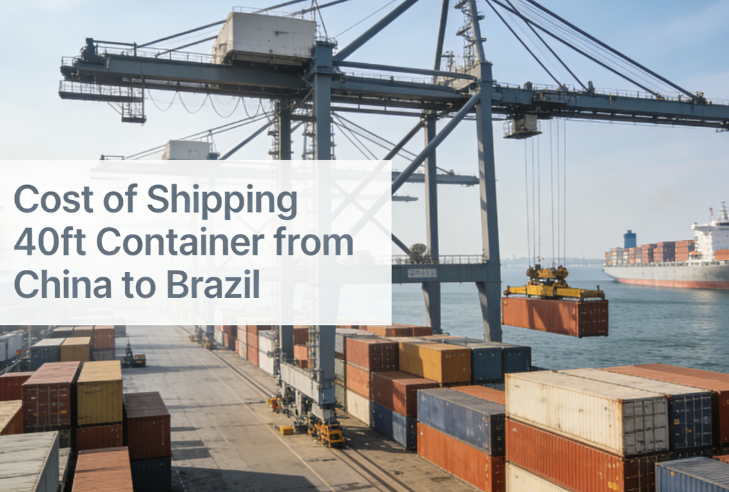
Overview of Shipping a 40ft Container from China to Brazil
Shipping a 40ft container from China to Brazil is a major logistical undertaking. As experts in the Americas dedicated lines, we see firsthand how the right shipping strategy directly impacts delivery time, cost efficiency, and supply chain resilience.
What Is a 40ft Container and Its Typical Uses?
A 40ft container is one of the most common standards in international shipping. Officially known as a 40-foot general-purpose or dry container, it measures about 12.03m (length) x 2.35m (width) x 2.39m (height), with a total capacity of approximately 56 CBM (Cubic Meters). There is also the 40ft High Cube (40HQ), offering around 68 CBM for higher-volume shipments.
Typical uses include:
- Shipping bulk manufactured goods, machinery, and electronics.
- Transporting large quantities of raw materials.
- Consolidating mixed cargo for importers and exporters.
Main Shipping Routes from China to Brazil
The main shipping routes connecting China and Brazil traverse the Pacific and Atlantic Oceans, typically passing through the Panama Canal or the Cape of Good Hope.
Common routes include:
- East China (Shanghai/Ningbo) → Panama Canal / Cape of Good Hope → Santos (Brazil)
- South China (Shenzhen/Guangzhou) → Singapore transshipment → Rio de Janeiro
- North China (Qingdao/Tianjin) → Transshipment hub → Itajaí or Paranaguá
These routes are optimized for both direct FCL and consolidated LCL shipments. Note: Draft restrictions or congestion at the Panama Canal can occasionally force carriers to reroute, impacting transit times.
Key Ports in China and Brazil
Selecting the right ports is essential for optimizing shipping costs and transit time.
Major ports in China:
| Port Name | Region | Key Cargo Types |
|---|---|---|
| Shanghai | East China | Electronics, machinery, textiles |
| Ningbo | East China | Bulk cargo, machinery, chemicals |
| Shenzhen | South China | Consumer goods, electronics |
| Qingdao | North China | Chemicals, bulk, textiles |
Major ports in Brazil:
| Port Name | Region | Key Cargo Types |
|---|---|---|
| Santos | Southeast | General cargo, coffee, machinery |
| Rio de Janeiro | Southeast | Chemicals, vehicles, electronics |
| Itajaí | South | Machinery, textiles, foodstuffs |
| Paranaguá | South | Agricultural, industrial goods |
Solution Selection: Decision Framework
When planning your shipment to Brazil, choosing the right transport mode is critical. Here is a decision framework to guide your choice:
| Transport Mode | Applicable Conditions | Cost Range (2026) | Transit Time | Best For |
|---|---|---|---|---|
| Sea Freight (FCL 40ft) | Volume > 18 CBM, not extremely time-sensitive. | $2,800 – $5,200 / container | 28–40 Days | Large wholesale orders, machinery, heavy raw materials. |
| Sea Freight (LCL) | Volume < 15 CBM, flexible timeline. | $65 – $120 / CBM | 35–45 Days | Small to medium shipments, testing new markets. |
| Air Freight | High-value, urgent, or perishable goods; usually < 2 CBM or < 500 kg. | $5.50 – $8.50 / kg | 5–8 Days | Electronics, samples, emergency parts. |
Standards & Influencing Factors: Rates are Port-to-Port / Airport-to-Airport estimates. Actual costs fluctuate based on fuel prices, peak seasons (Aug-Nov), and carrier capacity. Transit times do not include destination customs clearance delays.
Major Factors Influencing the Cost of Shipping a 40ft Container
Understanding what drives shipping costs is key for optimizing your supply chain.
Ocean Freight Rates and Market Volatility (2026 Data)
Ocean freight rates represent the largest single cost component. These rates are dynamic and fluctuate based on global supply, demand, and carrier capacity.
In early 2026, the market has stabilized slightly compared to previous years. The average ocean freight rate for a 40ft container from China to Brazil fluctuates between $2,800 – $5,200 USD (excluding surcharges), depending on market conditions.
| Month (2026) | Low (USD) | High (USD) | Market Condition |
|---|---|---|---|
| January | 2,900 | 4,500 | Pre-Chinese New Year Rush |
| March | 2,800 | 4,200 | Post-Holiday Normalization |
| June | 3,200 | 5,200 | Mid-Year Peak Season Prep |
Impact of Fuel Prices and Surcharges
BAF (Bunker Adjustment Factor) or fuel surcharges are tied to the global price of marine fuel.
Typical surcharges (2026 estimates):
| Surcharge Type | Range (USD/40ft) | Trigger Conditions |
|---|---|---|
| BAF | 150 – 250 | Fluctuations in global oil prices |
| PCS (Port Congestion) | 100 – 250 | Severe backups at origin or destination ports |
| PSS (Peak Season) | 200 – 500 | Applied during high-demand months (Aug-Nov) |
Detailed Breakdown of Shipping Costs
Here is a breakdown of the major expenses you should anticipate when shipping to Brazil.
Port Charges and Documentation Costs
Local fees must be factored in at both origin and destination:
| Fee Type | China (Origin) | Brazil (Destination) | Notes |
|---|---|---|---|
| THC (Terminal Handling Charge) | USD 200 – USD 350 | USD 300 – USD 550 | Charged by terminals for loading/unloading |
| Documentation Fee | USD 40 – USD 80 | USD 60 – USD 120 | BL issuance, export/import declarations |
| Customs Clearance (Brokerage) | USD 50 – USD 100 | USD 200 – USD 400 | Fees for licensed customs brokers |
Customs Clearance Fees and Taxes in Brazil
Brazil has one of the most complex customs systems globally. Importers must be registered in the RADAR system to use Siscomex (the integrated foreign trade system).
- Import Duties & Taxes: Calculated based on the product’s HS code and CIF value. The average import duty (II) is 10–20%.
- IPI (Industrialized Products Tax): 0-15% depending on the goods.
- PIS/COFINS: Social contributions totaling around 9.25% – 11.75%.
- ICMS (Value-Added Tax): Ranges from 17–25% depending on the destination state.
Compliance Warning: Under-reporting values or misclassifying HS codes can lead to severe fines and cargo confiscation by the Receita Federal. Always work with experienced Americas line specialists like Dantful.US to audit your documents before departure.
Transit Time and Delivery Schedules
Transit times largely depend on the origin and destination ports, chosen shipping route, and the type of shipping service.
| Origin Port (China) | Destination Port (Brazil) | Typical Transit Time (Days) | Notes |
|---|---|---|---|
| Shanghai | Santos | 28-35 | Direct & transshipment options |
| Shenzhen | Itajaí | 32-40 | Usually via transshipment |
| Ningbo | Rio de Janeiro | 33-41 | Via various hubs |
Factors Affecting Delays:
- Port Congestion: Strikes or capacity issues at Santos.
- Customs Inspections: Brazil uses a risk-channel system (Green, Yellow, Red, Gray). Red or Gray channels mean physical inspections and document audits, adding 5-15 days.
How to Reduce Shipping Costs and Risks
- Optimize Packaging: Maximize your container space to reduce the per-unit cost.
- Advance Booking: Book 3-4 weeks in advance during peak seasons to secure better rates and guaranteed space.
- Ensure Flawless Documentation: Discrepancies between the Commercial Invoice, Packing List, and Bill of Lading are the #1 cause of delays in Brazil.
- Leverage Americas Line Experts: Partner with Dantful.US International Logistics. With deep expertise in Latin American and US routes, we offer integrated Door to Door, Customs Clearance, and Insurance solutions, ensuring predictable costs.
FAQs
Q1: What is the average cost of shipping a 40ft container from China to Brazil in 2026?
A: The sea freight cost typically ranges from $2,800 to $5,200 USD, depending on the route and market conditions. This excludes customs duties, taxes, and local handling fees in Brazil.
Q2: How long does it take for a 40ft container to reach Brazil from China?
A: Typical sea freight transit time is 28–40 days. However, customs clearance in Brazil can add an additional 3-10 days depending on the inspection channel.
Q3: What are the most important documents needed for customs clearance in Brazil?
A: The key documents are: Commercial Invoice, Bill of Lading (must show NCM/HS code and CNPJ of the importer), Packing List, and Certificate of Origin. The importer must also have an active RADAR license.
Q4: Does Dantful.US International Logistics provide door-to-door service to Brazil?
A: Absolutely. With over a decade of experience in the Americas dedicated lines, we offer a full suite of services—including Sea Freight, Air Freight, Customs Clearance, Insurance, and Door to Door delivery.
Ready to streamline your logistics? Contact our team at Dantful.US International Logistics today for a custom shipping quote and expert supply chain solutions tailored to the Americas market!
Leave a reply