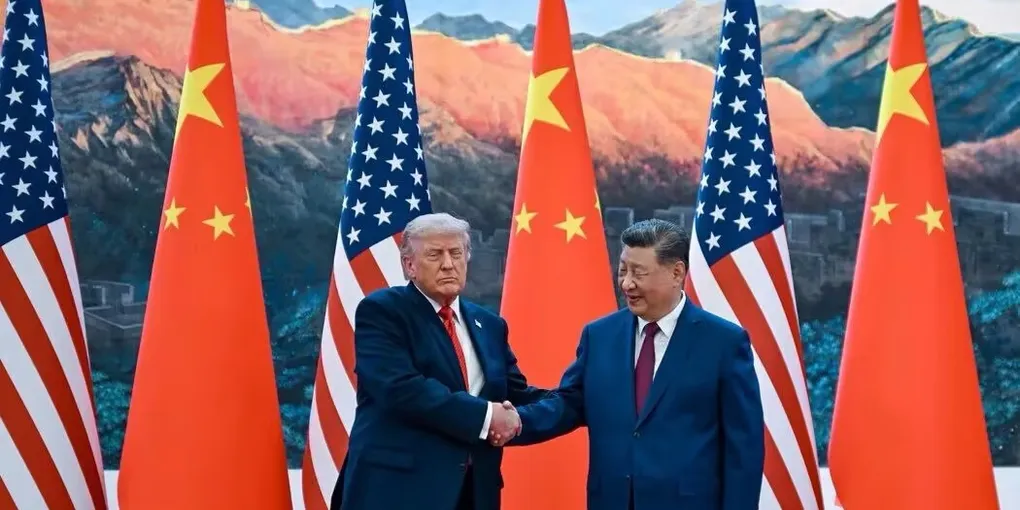
As high-level meetings between the United States and China return to global headlines, the logistics industry is once again asking a familiar question:
Will tariffs finally begin to ease?
This week, U.S. President Donald Trump met with Chinese President Xi Jinping in Beijing for talks covering trade, technology, energy, and geopolitical tensions. Multiple international media outlets reported that trade and economic cooperation were among the central topics of discussion, although no major tariff rollback has been officially announced so far. (AP News)
For the freight forwarding and cross-border logistics industry, however, the significance of these meetings is not purely political.
Supply chains do not wait for official press releases to react.
They move when importers begin changing purchasing behavior.
And that process may already be starting.
The Logistics Industry Is Not Watching Politics — It Is Watching Cargo Flow
One common misunderstanding outside the logistics sector is the belief that tariffs are mainly diplomatic tools.
In reality, tariffs directly influence operational decisions across the supply chain.
A 10% or 25% tariff shift can affect:
- sourcing strategy
- inventory planning
- landed cost calculations
- warehouse demand
- ocean freight bookings
- customs compliance risk
- cross-border e-commerce profitability
This is why every sign of stabilization in U.S.-China relations immediately attracts attention from importers, manufacturers, and freight forwarders.
The industry is not asking:
“Will the two governments become friendly again?”
The industry is asking:
“Will businesses regain enough confidence to increase orders?”
Those are very different questions.
The Most Important Signal Is Not Diplomacy — It Is Importer Confidence
Even without immediate tariff reductions, diplomatic stabilization can still influence trade activity.
Importers make decisions based on expectations as much as policy.
If U.S. buyers begin to believe that:
- tariff pressure may stop escalating,
- trade relations may become more predictable,
- or supply chain risks may gradually stabilize,
then procurement behavior changes long before official policy changes.
This can lead to:
- earlier peak-season bookings,
- increased inventory rebuilding,
- tighter vessel capacity,
- and stronger warehouse demand.
In logistics, perception often moves faster than legislation.
China Was Never Fully Replaced
Over the past several years, many companies attempted to reduce dependence on Chinese manufacturing through “China Plus One” strategies.
Production shifted partially toward:
- Vietnam
- Thailand
- Mexico
- India
But in practice, global supply chains never truly detached from China.
Many companies discovered that while final assembly could move elsewhere, China still dominated:
- upstream manufacturing ecosystems,
- industrial components,
- packaging supply chains,
- machinery,
- raw materials,
- and production scalability.
As a result, supply chains became geographically diversified, but often operationally more complicated.
This matters enormously for freight forwarders.
Because more fragmented sourcing structures create:
- more transshipment activity,
- more customs complexity,
- longer lead-time coordination,
- and greater inventory risk.
In other words:
The world diversified around China, but not fully away from China.
Tariff Discussions Matter Most to Certain Industries
Not every sector reacts equally to tariff developments.
The industries most sensitive to U.S.-China tariff changes are usually those with:
- large shipping volumes,
- price-sensitive margins,
- and strong exposure to U.S. consumer demand.
This includes:
- furniture,
- consumer electronics,
- home appliances,
- automotive parts,
- building materials,
- and cross-border e-commerce goods.
For these industries, even small changes in tariff expectations can affect procurement timing.
A buyer who believes future trade conditions may improve could decide to:
- place larger orders,
- shorten purchasing hesitation,
- or rebuild inventory earlier than expected.
That directly affects cargo movement.
Why Freight Forwarders Are Paying Attention to Customs Risk
Ironically, periods of possible policy transition often increase compliance pressure.
When trade policies become uncertain, importers usually become more cautious about:
- HS code classification,
- country-of-origin declarations,
- anti-circumvention investigations,
- valuation accuracy,
- and customs documentation consistency.
This is particularly important as U.S. authorities continue paying close attention to transshipment structures involving Southeast Asia.
At the same time, businesses are under pressure to balance:
- tariff exposure,
- compliance risk,
- and supply chain resilience.
This is changing the role of freight forwarders themselves.
Today, customers increasingly expect logistics providers to understand not only transportation, but also:
- trade regulation,
- customs strategy,
- sourcing structure,
- and geopolitical supply chain risk.
This is why experienced partners like Dantful.US are increasingly acting as supply chain advisors.
Not just cargo movers.
The Market Still Needs to Separate Headlines From Reality
Despite renewed diplomatic engagement, there are still major structural disagreements between the United States and China.
Recent reporting suggests that sensitive issues such as semiconductor export controls remain unresolved, highlighting how difficult a full economic reset would be. (Reuters)
That is why experienced logistics companies are generally cautious about making dramatic predictions.
The idea that tariffs will suddenly disappear, or that global trade conditions will immediately normalize, is unrealistic.
Supply chains do not reorganize overnight.
Businesses have already spent years redesigning procurement structures around resilience, diversification, and geopolitical uncertainty.
Much of that structural shift is likely permanent.
What the Industry Should Really Be Watching Next
The most important indicator over the next several months may not be diplomatic language itself.
It may be whether real-world operational data begins to change.
The logistics industry will likely pay closer attention to:
- container booking volumes,
- U.S. inventory cycles,
- warehouse occupancy,
- ocean freight demand,
- and peak-season procurement activity.
Because ultimately, cargo flow reveals business confidence far more accurately than political statements.
For freight forwarders, manufacturers, and importers, the question is no longer simply whether tariffs will fall.
The deeper question is whether global businesses are beginning to believe that the U.S.-China trade environment is becoming predictable again.
And in global logistics, predictability changes everything.
For readers who want to follow ongoing developments around the recent summit and trade discussions, coverage from Reuters and AP News provides additional reporting on the latest negotiations and policy signals.
Get A Free Shipping Quote