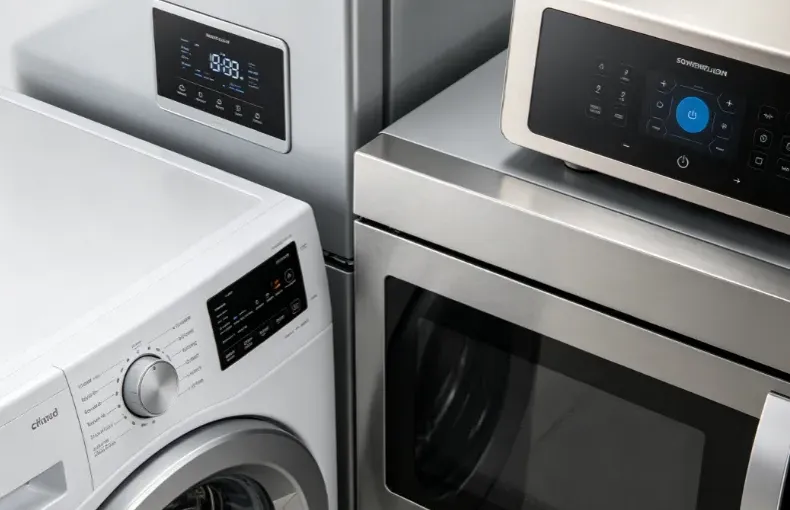
Worried that Shipping Household Appliances from China to USA will turn into a margin-killing mess of hidden fees, broken cargo, customs delays, and compliance issues? That concern is justified. Appliances are not “generic home goods.” They are heavier, more fragile, more regulated, and far less forgiving when the wrong shipping plan is used.
If you are sourcing refrigerators, washers, microwaves, range hoods, blenders, coffee makers, or other electrical appliances from China, this guide walks you through the practical decisions that matter most in the U.S. market: which shipping method fits your cargo, how landed cost is really built, what Section 301 exposure means, when UL Certification or ETL matters, and how to avoid the common mistakes we see on shipments headed to California, Texas, Florida, New Jersey, and other major receiving markets. For a broader overview of all lane options, transit benchmarks, and service categories beyond appliances, see our shipping from China to USA route page.
What Counts as Household Appliances and Why They Ship Differently
In freight terms, household appliances usually fall into two broad groups:
- Large appliances: refrigerators, freezers, washing machines, dryers, dishwashers, ovens, and range hoods
- Small appliances: air fryers, blenders, mixers, coffee makers, rice cookers, kettles, and countertop ovens
That distinction matters because the logistics profile is different. Large appliances are cube-heavy, top-heavy, and more exposed to impact damage. Small appliances are often easier to ship, but they introduce other challenges such as retail packaging integrity, electrical certification, battery issues on cordless models, and product labeling compliance.
Several shipping terms show up repeatedly in appliance imports:
- FCL (Full Container Load): you book a full container for your cargo only
- LCL Shipping from China to USA: your freight shares container space with other shippers
- Door-to-Door Service: pickup in China plus delivery to your U.S. warehouse, store, Amazon prep point, or final address
- Customs Clearance: the formal import process with U.S. Customs and Border Protection (CBP)
- HS Codes / HTSUS Codes: tariff classification codes that determine duty treatment
- Bill of Lading (B/L) and Airway Bill (AWB): core transport documents
- ISF (Importer Security Filing): required for ocean imports into the United States
- Customs Bond: financial security required for most formal entries
While Shipping Furniture from China to USA shares some logistical parallels with appliances — large dimensions, heavy pieces, and destination scheduling — the electronics, compliance requirements, and fragility profile of household appliances create a distinct risk profile that demands more specialized planning. A scratched dining chair may still be usable. A dented refrigerator door, cracked induction panel, or 220V-only countertop appliance can become unsellable immediately in the U.S. market.
Best Ways to Ship Large Appliances from China to USA
The right shipping method depends on cargo type, order size, destination, and sales channel.
| Shipping Method | Best For | Typical Transit Time | Main Trade-Off |
|---|---|---|---|
| LCL sea freight | Small trial orders, mixed SKUs, low-volume importers | 28-40 days | Lowest upfront spend, but more handling and higher damage risk |
| FCL sea freight | Large appliances, fragile cargo, regular wholesale orders | 25-35 days | Best control and lower handling, but higher minimum spend |
| Air freight | Urgent replenishment, higher-value small appliances | 5-9 days | Fast, but volumetric weight can make bulky cargo expensive |
| Express courier | Samples, spare parts, urgent warranty replacements | 3-7 days | Very fast, but rarely cost-effective for full commercial appliance orders |
For most importers, sea freight remains the default option. If you are shipping refrigerators, washers, or dishwashers, FCL is usually safer because those products do not tolerate repeated warehouse handling well. Every extra touchpoint increases the chance of dented side panels, broken control knobs, cracked glass, and damaged retail cartons.
LCL still has a place, especially for smaller kitchen appliances or early-stage orders. If you are testing a supplier with 3-8 CBM of air fryers, mixers, or kettles, LCL can make sense. But for fragile electrical products, the “cheapest” booking often becomes expensive later if the cartons arrive crushed, labels are unreadable, or the outer packaging is no longer acceptable for Amazon or retail distribution.
In real U.S. receiving scenarios, we often see this pattern:
- California importers favor Los Angeles/Long Beach for speed into West Coast distribution
- Texas buyers compare Houston direct arrivals with West Coast entry plus inland trucking or rail
- New Jersey and New York importers may accept a longer sailing into Newark if it reduces inland delivery cost
- Southeast distributors often compare Savannah with West Coast routings depending on inventory urgency
That is why the “best” port is not always the closest port in China. The better question is: where does your freight need to be delivered and how much inland cost are you willing to absorb after customs release?
FCL vs LCL for Shipping Appliances from China
As a working rule:
- Under 8-10 CBM: LCL is often financially acceptable
- Around 10-13 CBM: compare both carefully
- Above 13 CBM or with fragile large appliances: FCL is often the smarter choice
That threshold is not only about freight cost. It is also about cargo integrity. With appliances, the lower handling count in FCL often matters more than the rate sheet.
When Air Freight Makes Sense
Air freight household appliances China to USA is most realistic for:
- High-margin small appliances
- Replacement inventory for a fast-moving U.S. SKU
- Product launches with hard retail deadlines
- Warranty replacement units or critical spare parts
Keep in mind that air freight is billed on chargeable weight, so bulky but light products can surprise you. A small microwave or air fryer can consume more budget than expected once carton dimensions are converted into volumetric weight. For a deeper look at rates, chargeable weight rules, and security screening, see our Air freight from China to USA guide.
Cost to Ship Household Appliances from China to USA in 2026
The cost to ship household appliances from China to USA is never just an ocean rate or air rate. U.S. importers need to budget for the full landed picture.
Typical Freight Ranges
| Cost Item | Practical Market Range | Notes |
|---|---|---|
| FCL 20GP | $2,200-$2,800 | Varies by season, carrier, and destination |
| FCL 40HQ | $3,000-$4,200 | Common for larger appliance loads |
| LCL sea freight | $90-$120 per CBM | Base linehaul only; destination charges still matter |
| Air freight | $6-$9 per kg | Heavily affected by chargeable weight |
| Express courier | $10-$15 per kg | Usually reserved for samples or urgent replenishment |
Those numbers are useful starting points, not final quotations. Appliance shippers should also plan for:
- Origin pickup and export handling in China
- U.S. destination terminal charges
- Customs Clearance and brokerage (see our 2026 US customs clearance for imports from China guide for a full walkthrough)
- Duties and Taxes
- Customs Bond
- Drayage, chassis, and delivery appointment fees
- Liftgate or residential surcharges for final-mile deliveries
- Cargo insurance
- Storage, demurrage, or exam-related costs if customs intervention occurs
A More Realistic LCL Example
Competitor content often shows a neat “LCL total” and stops there. In real U.S. operations, a 2 CBM appliance shipment may look more like this:
| Item | Example Cost |
|---|---|
| Ocean freight | $160 |
| Origin fees in China | $50 |
| U.S. destination handling | $120 |
| Customs and basic duty estimate | $60 |
| Broker / bond / filing-related costs | $75-$180 |
| Last-mile appointment delivery | $80-$220 |
| Likely all-in range | $545-$790 |
That gap is exactly why importers complain about “hidden fees.” The base freight was not false. It just was not the whole cost.
What Drives Price Up Fast
For appliance cargo, these are the biggest cost drivers:
- Large carton dimensions and poor packaging efficiency
- Peak season bookings before Q4 retail demand
- Mixed destinations in the United States
- Customs exams at arrival
- Residential delivery requirements
- White-glove handling expectations
- Special handling for refrigerants, batteries, or fragile glass components
For West Coast importers, ocean transit to Los Angeles may look attractive on paper, but the real bottleneck can come after discharge: port release, chassis availability, drayage scheduling, and warehouse appointments. For importers shipping into Texas, Florida, or the Midwest, paying a little more for the right inland routing can be cheaper than fixing a poorly planned arrival later.
Import Duties on Household Appliances from China to USA
This is where many generic shipping articles become dangerously incomplete.
When importing Chinese-origin appliances into the United States, you are not just looking at a base duty rate. Depending on the exact product and tariff treatment, your landed cost may include:
- Base duty under the relevant HTSUS classification
- Additional Section 301 duties for many China-origin goods
- Merchandise Processing Fee (MPF)
- Harbor Maintenance Fee (HMF) for ocean entries
- Customs bond costs
- Brokerage and filing fees
- Potential additional exposure from other trade remedy programs depending on classification
The most important principle is simple: the correct HS code drives the rest of the import math. For a broader analysis of how tariff policy affects your landed cost, read our How U.S.-China Trade Tariffs Are Evolving in 2025: What Importers Need to Know update, which covers Section 301 layers, exclusion opportunities, and practical budgeting strategies.
Common Appliance Classification Areas to Review
| Product Type | Common HTSUS Area to Review | Importer Note |
|---|---|---|
| Refrigerators / freezers | 8418 | Refrigerant type, configuration, and capacity can matter |
| Dishwashers | 8422 | Consumer vs commercial distinctions may affect treatment |
| Washing machines | 8450 | Capacity and product design details matter |
| Microwave ovens | 8516 | Check electrical and product-specific details carefully |
| Coffee makers, kettles, toasters, air fryers | 8516 | Small appliance subheadings vary by function |
| Range hoods / ventilation units | 8414 or related headings | Air-moving equipment may classify differently than cooking appliances |
This table is a starting point only. U.S. importers should verify the exact 10-digit code before shipment, especially when margins are tight. Misclassification is one of the most expensive avoidable errors in appliance importing.
Customs Steps U.S. Buyers Should Expect
For most ocean shipments, the process looks like this:
- Confirm product classification and importer data before cargo departs China
- File ISF (10+2) on time for ocean shipments
- Arrange a Customs Bond
- Submit entry documents at arrival
- Clear any partner government agency requirements if applicable
- Release cargo and move to drayage or final delivery
If your shipment is selected for review or exam, costs and timing can shift quickly. This is one reason appliance importers should never cut corners on carton marking, invoice descriptions, valuation accuracy, or document consistency.
UL Certification Requirements for Appliances Imported from China
One of the most practical questions U.S. buyers ask is whether UL Certification requirements for appliances imported from China are mandatory.
The honest answer is: not every appliance import is handled the same way, but many products effectively need recognized safety compliance to sell smoothly in the U.S. market. Even when a mark is not explicitly required at the port for every scenario, retailers, marketplaces, insurers, distributors, and commercial buyers often expect evidence that the product has been tested to relevant U.S. safety standards.
For appliances, the compliance conversation may include:
- UL Certification
- ETL as a commonly accepted alternative
- FCC Certification for products with Wi-Fi, Bluetooth, or other wireless functions
- DOE / Energy Star considerations for energy-consuming appliance categories
- CPSC rules, especially for consumer safety and labeling
- California-specific review, including Prop 65, for products sold into that market
The Voltage Mistake That Ruins Otherwise Good Shipments
China standard power is typically 220V/50Hz. The U.S. market expects 110-120V/60Hz for most household use. That means plug type is only part of the issue.
Common real-world problems include:
- A countertop appliance works in the factory test room but is not suitable for U.S. household voltage
- A retailer rejects inventory because packaging or manuals do not match U.S. electrical specs
- A returns wave starts because buyers need step-down transformers for a product marketed as ready to use
For kitchen appliances and other consumer-facing products, this is not a minor technical detail. It is a sales readiness issue.
Compliance Planning Advice
Before production is complete, confirm:
- Final voltage and frequency configuration for the U.S. market
- Product labels and carton marks
- User manual language and warnings
- Packaging compliance for batteries if included
- Safety test reports and factory documentation
- Whether your U.S. customer requires UL, ETL, or specific retailer acceptance standards
If you plan to sell into California, ask the compliance question early rather than after the container is already on the water. California buyers are often less tolerant of incomplete labeling or unresolved compliance questions.
Packaging and Damage Prevention for Appliance Shipping
Packaging is where many appliance import programs win or lose money.
Generic advice like “use stronger cartons” is not enough. Appliances need packaging built around how the product fails in transit.
Packaging Priorities by Appliance Type
| Appliance Type | Main Risk | Packaging Priority |
|---|---|---|
| Refrigerators / freezers | Dents, tilt damage, compressor issues | Upright loading, corner protection, anti-tip stability |
| Washing machines / dryers | Vibration, side impact, cosmetic damage | Base support, shock absorption, secure strapping |
| Microwaves / ovens | Glass breakage, front-panel damage | Face protection, foam support, crush resistance |
| Small kitchen appliances | Retail carton damage, internal shifting | Inner fitment, pallet stability, moisture control |
| Smart appliances | Electronics and control board sensitivity | Anti-static protection, dry packing, careful stacking |
For ocean freight, moisture is a real issue. Appliance cargo moving from humid loading environments in China to U.S. ports can face condensation inside containers. Importers often underestimate “container rain” until they open the doors and see wet cartons, softened packaging, or oxidation on exposed components.
To reduce that risk, consider:
- Desiccants
- Moisture barriers
- Better pallet stretch wrapping
- Stronger outer carton specification
- Crating for high-value or fragile large appliances
- Clear “this side up” handling controls where appropriate
For refrigerators and freezers, upright transport is especially important. If a supplier loads them carelessly to save a few cubic meters, the downstream warranty cost in the U.S. can erase the entire freight savings.
Insurance and Claims Readiness
If you import appliances regularly, Cargo Insurance should not be an afterthought. Claims are easier to win when the documentation was prepared before the shipment moved.
Best practice includes:
- Pre-loading photos
- Clear carton labels and SKU counts
- Seal number records
- Packing list matched to pallet count
- Delivery exception notes signed at receipt
- Immediate damage photos before unpacking everything
For U.S. warehouse deliveries, train receiving teams not to sign “clean” PODs automatically when cartons show crush marks, wet spots, or tipped pallets.
Door-to-Door Shipping Appliances from China to USA
Door to door shipping appliances from China to USA is attractive because it reduces coordination between supplier, forwarder, customs broker, trucker, and receiving warehouse. For a step-by-step walkthrough of what the door-to-door model covers from pickup to final delivery, see our Door to Door Shipping from China to USA guide.
Standard Door-to-Door Flow
- Supplier pickup in China
- Export customs handling
- Main carriage by sea or air
- U.S. arrival and Customs Clearance
- Drayage or inland move
- Final delivery to warehouse, store, 3PL, or Amazon-related facility
DDP vs DDU vs FOB for Appliance Imports
| Term | Good Fit | Watch-Out |
|---|---|---|
| FOB | Importers who want rate transparency and their own customs control | More coordination required on the U.S. side |
| CIF | Buyers who want supplier-arranged ocean freight only | Destination charges and customs still need clarity |
| DDP | Buyers who want a one-stop logistics solution | Must define duty treatment, liability, and compliance scope carefully |
| DDU / DAP-style structures | Buyers who want transport arranged but taxes separated | Can still create confusion at arrival if responsibilities are vague |
For first-time importers, DDP shipping from China to USA feels simple because duties and delivery are bundled into one quote. For experienced U.S. importers, FOB shipping from China to USA combined with your own customs broker and freight forwarder often gives better control. The better model depends on how much visibility you want over customs valuation, tariff payment, and last-mile cost.
If your cargo is going to Amazon prep facilities, retail distribution centers, or 3PLs with appointment windows, the delivery side matters just as much as the ocean booking. A container released in Long Beach is not “done” if the receiving location in California, Texas, or New Jersey cannot take the delivery for several more days.
How to Choose a Freight Forwarder for Shipping Household Appliances from China to USA
Appliance shippers should expect more than a freight quote. A capable Freight Forwarder should help you think through risk, compliance, packaging, and delivery planning.
Ask these questions before booking:
- Can you advise whether this shipment should move by FCL or LCL?
- Have you handled refrigerators, washers, range hoods, or small kitchen appliances on this route before?
- Can you support HS code review and flag likely tariff issues?
- How do you handle cargo insurance and claims support?
- Can you manage delivery appointments for U.S. warehouses or Amazon-related facilities?
- What happens if CBP holds or exams the cargo?
- What documentation do you need from the supplier before departure?
Red flags include vague duty estimates, no discussion of voltage or certification, unclear destination fees, and zero interest in carton dimensions or packaging method.
For importers that need a more managed solution, Dantful.US International Logistics is often chosen for one simple reason: appliance shipping is rarely just about freight. It is about aligning supplier pickup, export paperwork, routing, customs handling, and U.S. delivery in a way that protects both the cargo and the margin. That matters even more when the shipment includes fragile large appliances, compliance-sensitive kitchen products, or mixed loads going to multiple U.S. destinations.
FAQ
How much does it cost to import appliances from China?
Most importers should budget beyond the headline freight rate. LCL may start around $90-$120 per CBM and FCL 20GP may start around $2,200-$2,800, but the real landed cost also includes destination charges, customs, bond, duties, delivery, and insurance.
What is the cheapest way to ship appliances from China to USA?
For low-volume cargo, LCL sea freight is usually the lowest entry-cost option. But for fragile or high-value appliances, FCL can be cheaper overall once you factor in reduced handling, lower damage risk, and easier warehouse receiving.
Do I need UL certification for small kitchen appliances?
Not every import scenario is identical, but many U.S. retailers, distributors, and buyers expect recognized electrical safety compliance. For small kitchen appliances, confirm safety testing and labeling expectations before shipment, not after arrival.
Can I ship refrigerators or washing machines by LCL?
You can, but it is usually not the first recommendation. Large appliances are vulnerable to repeated handling and cosmetic damage. For regular import programs or fragile high-value units, FCL is normally the safer approach.
What documents are needed to import household appliances from China?
At minimum, expect a commercial invoice, packing list, transport document, ISF data for ocean freight, customs entry documents, and any compliance documents needed for the specific product category.
Get A Free Shipping Quote